
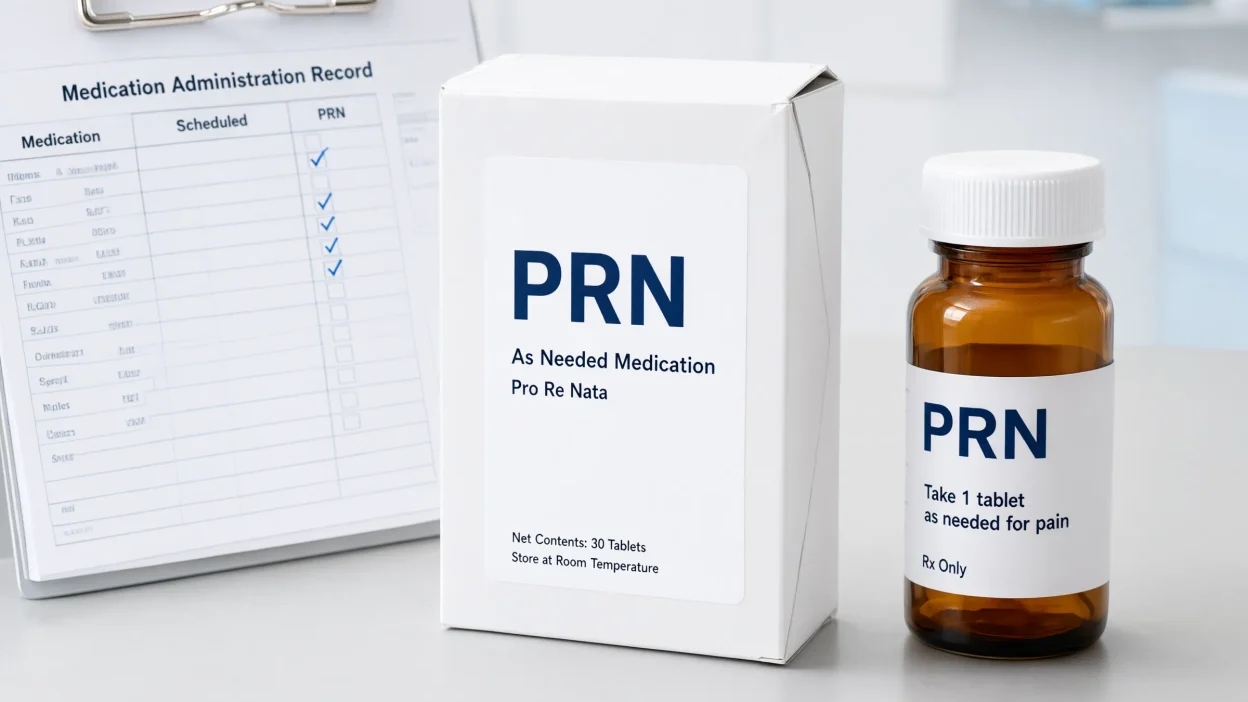
PRN stands for the Latin phrase pro re nata. In simple English, it means “as needed.”
In health care, PRN tells a patient or medical worker that a medicine or treatment may be used when a certain need comes up. It does not always have to be given at the same time every day.
For example, a patient may have a PRN order for pain relief. The medicine can be used when the patient has pain, as long as the order’s rules are followed.
PRN is often used in:
- Doctor’s prescriptions
- Medicine labels
- Hospital records
- Nursing instructions
- Treatment plans
- Medical charts
The term is common in the United States and many other countries.
What Does PRN Stand for in Medical Terms?
In medical terms, PRN stands for pro re nata. The phrase comes from Latin, but health care workers usually explain it as “as needed.”
A PRN order tells staff when a treatment may be used and what need it is meant to address. Depending on the order, that need may be pain, fever, nausea, itching, or another symptom.
The order should also explain the dose, route, timing limits, and other rules when they apply.
Is PRN the Same as “As Needed”?
Yes. In most medical settings, PRN means “as needed.”
However, this does not mean you can take a medicine whenever you want or in any amount. You must follow the prescription or care plan.
For example, a label may say to take one tablet as needed for pain, with a minimum number of hours between doses. The time limit and maximum daily amount still matter.
What Is PRN Used for in Medicine?

Doctors and other health care professionals use PRN orders for symptoms that may not happen all the time. This lets treatment match a person’s needs.
Common examples include the following.
1. Pain Relief
A doctor may prescribe pain medicine PRN after an injury, surgery, or dental treatment.
For example, a prescription may say to take a certain dose as needed for pain. The patient should follow the stated dose and time limits.
Not every pain medicine is safe for every person, so patients should ask their doctor or pharmacist if they have questions.
2. Fever
Some medicines used to lower fever may be ordered PRN.
This means the medicine may be used when the person has a fever, according to the directions. The patient should not exceed the listed dose or give extra doses too soon.
For babies and young children, ask a health care professional about the right medicine and dose.
3. Nausea and Vomiting
A doctor may prescribe medicine PRN for nausea. The patient can use it when nausea occurs, if the prescription allows it.
For example, a person who feels sick after a medical treatment may have an order for medicine to help control nausea.
If vomiting is severe, lasts a long time, or causes signs of dehydration, medical advice may be needed.
4. Allergies and Itching
Some medicines for allergy symptoms may be used as needed.
For example, a doctor may recommend a medicine for occasional itching or other allergy symptoms. The directions depend on the product and the person’s health.
Some allergy medicines can cause sleepiness. Read the label and ask a pharmacist if you are unsure whether it is safe to drive or use other medicines.
5. Anxiety or Sleep Problems
In some cases, a clinician may prescribe medicine PRN for certain episodes of anxiety or trouble sleeping.
These orders need special care because some medicines can cause sleepiness, dependence, or dangerous interactions. Never change the dose or use someone else’s medicine.
A PRN order does not mean that the medicine is safe to take without limits.
6. Breathing Problems
Some inhalers are prescribed for use when breathing symptoms occur. The exact directions depend on the medicine and the person’s treatment plan.
A person with sudden or severe trouble breathing should seek emergency medical help rather than relying only on a routine PRN plan.
7. Other Symptoms
PRN orders may also apply to other symptoms, such as muscle spasms or constipation, depending on the treatment plan.
The important point is that the medicine is linked to a specific need. The prescription or care instructions explain when and how it should be used.
What Does PRN Mean on a Prescription?
When you see PRN on a prescription, it usually means the medicine is intended for use when a certain symptom or need occurs.
The full directions matter. PRN alone does not tell you how much medicine to take, how often to take it, or what symptom it treats.
For example, imagine a label that says:
“Take one tablet by mouth every six hours as needed for pain.”
This example contains several parts:
- Take one tablet: The dose for each use.
- By mouth: How to take the medicine.
- Every six hours: The minimum interval described by the instructions.
- As needed for pain: The reason to take it.
The actual meaning of any prescription depends on its complete wording.
What Does “PRN” Mean on a Medicine Label?
On a medicine label, PRN tells you that the medicine is not necessarily meant to be taken at fixed times regardless of symptoms.
You may take it only when the stated need occurs, within the instructions provided.
However, some medicines must be taken regularly to work well. Do not assume a medicine is optional simply because you see unfamiliar wording. Ask your pharmacist to explain the label if anything is unclear.
What Does “PRN Every 4 Hours” Mean?
If a prescription says a medicine may be taken PRN every four hours, it generally means that a dose may be taken when needed, with at least four hours between doses, according to the complete order.
It does not automatically mean you should take the medicine every four hours around the clock.
Check the maximum number of doses allowed in a day. If the label does not clearly state the limits, ask your pharmacist or prescriber before taking the medicine.
What Does “PRN Pain” Mean?
“PRN pain” means a medicine may be given or taken as needed to help manage pain.
The order should specify which medicine to use and how much to take. It may also include a pain level or other condition that determines when the medicine is appropriate.
Do not take extra medicine if the usual dose does not help. Contact a health care professional for advice.
What Is a PRN Medication?

A PRN medication is a medicine used as needed for a symptom or condition.
Unlike a medicine that must be taken on a fixed schedule, a PRN medicine may be used only when the reason for taking it occurs. The rules depend on the specific prescription.
Examples may include:
- Medicine for occasional pain
- Medicine for nausea
- Medicine for itching
- Certain inhalers for breathing symptoms
- Medicine for other symptoms covered by a clinician’s order
Not all medicines are suitable for PRN use. Some work best when taken regularly, while others have strict limits because of side effects or the risk of harm.
How Do You Know When to Take PRN Medicine?
Follow the prescription label or written care plan. It should tell you what symptom the medicine treats and how to use it.
Before taking a PRN medicine, check these points:
- The reason: Is the medicine intended for the symptom you have?
- The dose: How much should you take?
- The timing: How long must you wait between doses?
- The daily limit: What is the maximum amount allowed in 24 hours?
- Other medicines: Could another medicine contain the same ingredient or cause an interaction?
If any instruction is missing or confusing, contact your pharmacist or prescriber. Do not guess.
Can You Take PRN Medicine Every Day?
Sometimes, but it depends on the medicine and the reason it was prescribed.
A PRN medicine may be needed often for a short time. However, needing it more often than expected may mean that the condition needs to be checked.
For example, frequent use of a medicine for pain, anxiety, or breathing symptoms may require a review of the treatment plan.
Follow the prescribed limits, and tell your health care professional if you need the medicine more often than usual.
What Does PRN Mean in Nursing?
In nursing, PRN means “as needed.” It describes a medicine or treatment that a nurse may provide when a patient meets the conditions in the medical order.
For example, a hospital patient may have a PRN order for pain relief. A nurse checks the patient’s symptoms, reviews the order, and follows the required safety steps before giving the medicine.
A PRN order is different from a scheduled order. A scheduled medicine is planned for set times, while a PRN medicine is given when the stated need occurs and the order permits it.
What Is a PRN Order?
A PRN order is a health care instruction that allows a medicine or treatment to be used when certain conditions are met.
A clear order may include:
- The name of the medicine
- The dose
- The route, such as by mouth
- The symptom or reason for use
- The time between doses
- The maximum amount allowed
- Any extra conditions for use
Health care workers must follow the order and the rules of their workplace. They should not give a medicine simply because it is listed as PRN if the patient does not meet the order’s conditions.
What Does PRN Mean in a Hospital?
In a hospital, PRN orders help staff respond to symptoms that come and go.
For instance, a patient may have a PRN medicine for nausea after surgery. The nurse checks the patient’s condition and follows the order when the medicine is needed.
The process may also include checking allergies, reviewing the last dose, watching for side effects, and recording the treatment.
PRN does not mean that staff can ignore safety checks or give a medicine without following the prescribed instructions.
What Is the Difference Between PRN and Scheduled Medication?
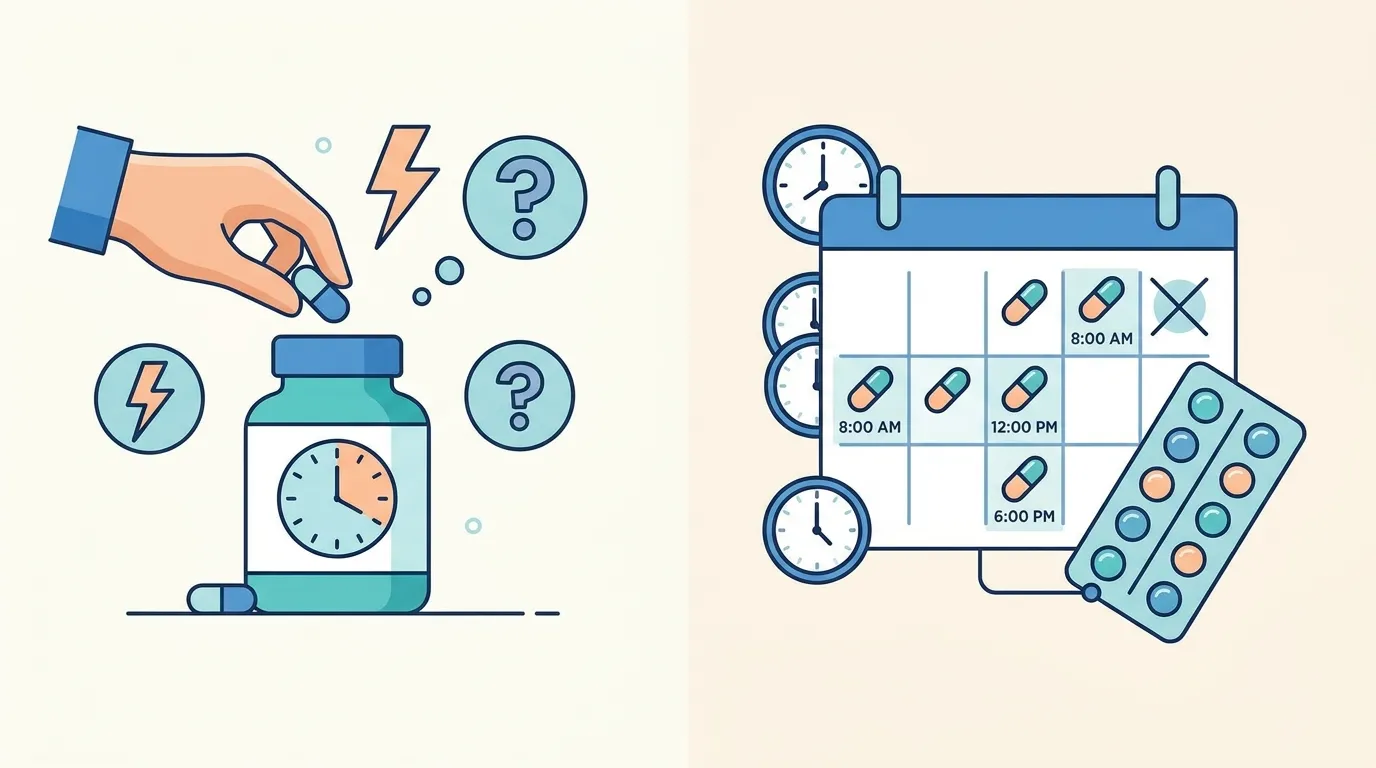
The main difference is when the medicine is used.
A scheduled medicine is taken at set times. A PRN medicine is used when a certain need occurs, within the prescribed limits.
| Feature | PRN medication | Scheduled medication |
| Meaning | As needed | At set times |
| Timing | Depends on symptoms and the order | Follows a planned schedule |
| Example | Medicine for occasional pain | Medicine prescribed every morning |
| Dose limits | Must follow the order | Must follow the order |
| Can you change the plan yourself? | No | No |
Example of PRN Medication
Imagine a person has a prescription for medicine to help with occasional pain.
The label says to take one dose as needed, with a stated minimum time between doses and a daily maximum.
If the person has no pain, they may not need a dose at that time, provided this matches the prescriber’s instructions.
Example of Scheduled Medication
Now imagine a person has a medicine prescribed to be taken every morning.
The medicine should be taken according to the prescribed schedule, even if the person does not notice symptoms, unless their health care professional gives different instructions.
Some medicines are meant to prevent problems rather than treat symptoms after they begin. This is why it is important to understand whether a medicine is PRN or scheduled.
What Are the Benefits of PRN Medication?

PRN medication can help make treatment more flexible. It allows care to respond to symptoms when they occur.
Common benefits include the following.
Treatment When It Is Needed
A patient may not have the same symptoms every day. PRN instructions can allow the person to use medicine when the covered symptom appears.
Less Unneeded Dosing
When a medicine is intended only for occasional symptoms, a PRN plan may prevent doses that are not needed at that moment.
This does not mean that skipping a dose is safe for every medicine. Always follow the instructions for the specific drug.
Care That Fits the Patient’s Needs
In hospitals and care facilities, PRN orders can help staff respond to changing symptoms within an approved treatment plan.
Clear Rules for Use
A well-written PRN order explains when a medicine may be used and sets limits for safe use. Patients and caregivers should understand those rules before giving or taking the medicine.
What Are the Risks of PRN Medication?
PRN medicines can be helpful, but they still carry risks.
Taking Too Much
A person may mistakenly think that “as needed” means they can take another dose whenever symptoms return.
This can lead to taking too much medicine. Follow the minimum time between doses and the maximum daily amount.
Mixing Medicines
Some medicines interact with other drugs, alcohol, or supplements. Others contain the same active ingredient, which may lead to an accidental extra dose.
Ask a pharmacist to check for interactions if you use several medicines.
Missing a Serious Problem
A medicine may reduce a symptom without treating its cause. Repeatedly treating pain, fever, or another symptom without getting help may delay needed care.
Seek medical advice if symptoms are severe, keep returning, or get worse.
Side Effects
PRN medicines can still cause side effects. Depending on the drug, these may include sleepiness, dizziness, stomach problems, or other reactions.
Read the medicine information and ask a health care professional what to watch for.
How to Read Common PRN Instructions
Medical abbreviations can look confusing, but the full instruction often becomes easier to understand when you break it into parts.
Here are a few examples for learning purposes. They are not personal dosing advice.
“Take as Needed for Pain”
This means the medicine may be used when pain occurs, as directed by the prescription.
Check the dose, timing, and daily limit before taking it.
“PRN for Nausea”
This means the medicine may be used when nausea occurs, if the conditions in the order are met.
Follow any instructions about food, timing, or other medicines.
“PRN Every Six Hours”
This generally means the medicine may be used when needed, with the stated interval between doses. It does not necessarily mean a dose is required every six hours.
The complete label may include additional limits.
“PRN at Bedtime”
This may mean a medicine can be used as needed at bedtime, according to the order. It does not mean that the medicine is safe for every person or that an extra dose can be taken during the night.
Ask your pharmacist if you are unsure about the exact meaning.
What Should You Ask Your Doctor or Pharmacist About PRN Medicine?
If you receive a PRN prescription, make sure you understand how to use it.
Consider asking these questions:
- What symptom should I use this medicine for?
- What dose should I take each time?
- How many hours must I wait between doses?
- What is the maximum amount I can take in one day?
- Should I take it with food?
- Can I use it with my other medicines?
- What side effects should I watch for?
- When should I stop using it and seek medical help?
- What should I do if the medicine does not work?
Keep the answers with your medicine instructions. If you care for a child or another person, make sure you understand the directions before giving a dose.
Other Meanings of PRN
Although PRN is best known in medical settings, it can have other meanings depending on the context.
PRN in Nursing Jobs
In the United States, PRN can describe a flexible or as-needed work arrangement in health care.
A PRN nurse may work when a facility needs extra staff rather than following a fixed weekly schedule. The exact arrangement depends on the employer.
PRN workers may have different shift patterns, benefits, or pay rules from full-time staff. These details vary by workplace and employment agreement.
PRN in General Writing
Outside health care, PRN may appear as an abbreviation in a specific organization, document, or professional field.
The meaning depends on how it is used. If you see PRN in a message or document that is not about medicine or work, read the surrounding words to understand its intended meaning.
When the context is unclear, ask the person who used it rather than assuming it always means “as needed.”
Common Mistakes People Make About PRN
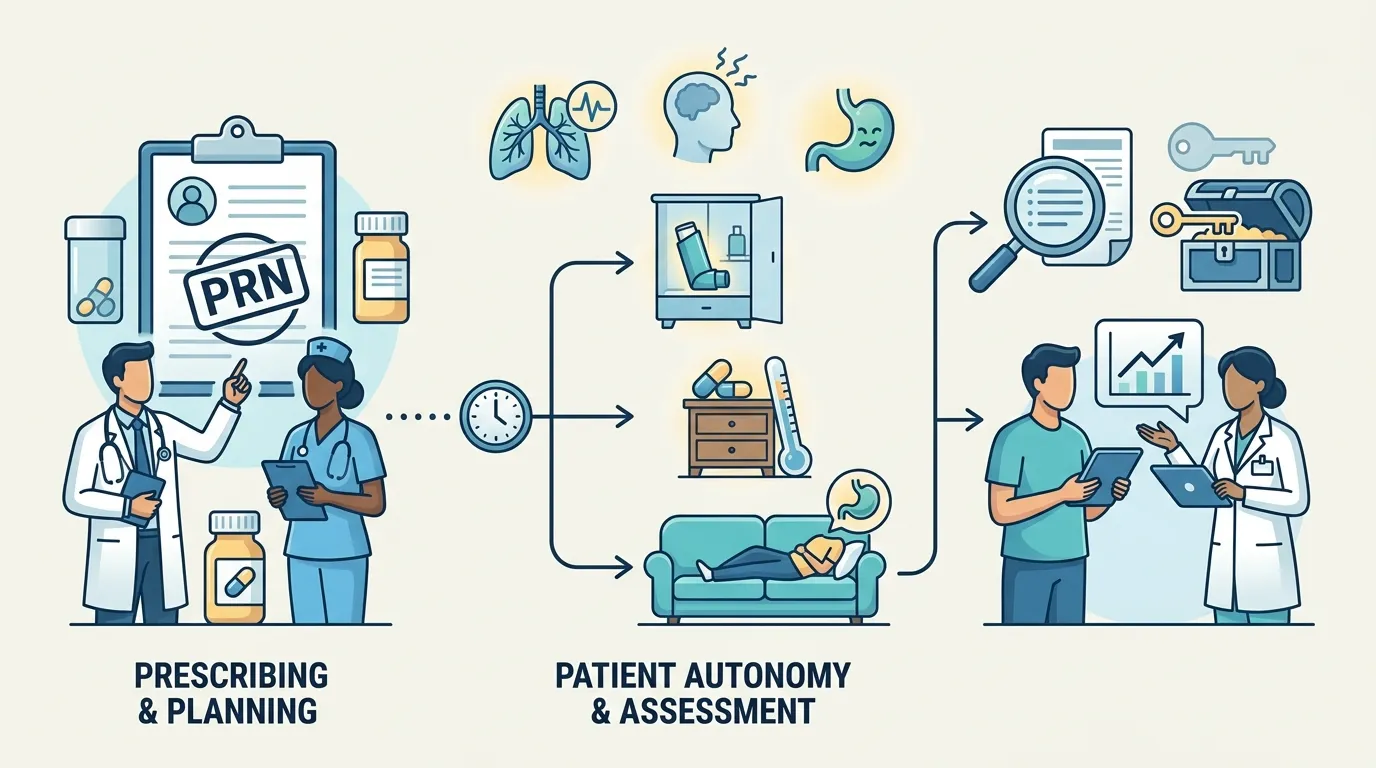
Understanding PRN can help prevent confusion about medicine instructions.
Mistake 1: Thinking PRN Means Take It Every Day
PRN usually means as needed, not automatically every day. Follow the full order.
Mistake 2: Thinking There Is No Dose Limit
Every medicine has its own directions and safety limits. PRN does not remove those limits.
Mistake 3: Taking Another Dose Too Soon
Symptoms may return before another dose is safe. Follow the required interval and maximum daily amount.
Mistake 4: Using Someone Else’s PRN Medicine
A medicine prescribed for another person may be unsafe for you. Never share prescription medicine.
Mistake 5: Ignoring Frequent Symptoms
If you need PRN medicine more often than expected, speak with your health care professional. You may need a review of your condition or treatment plan.
Article Summary
PRN is a common medical abbreviation that means “as needed.” It comes from the Latin phrase pro re nata. Doctors use it to describe medicine or treatment that may be used when a certain symptom or need occurs.
PRN medicines may be prescribed for pain, nausea, allergies, or other symptoms. They differ from scheduled medicines, which are taken at set times.
However, PRN does not mean unlimited use. Patients must follow the prescribed dose, timing, and daily maximum.
In nursing, a PRN order tells staff when a medicine or treatment may be given. Outside medicine, PRN may also describe a flexible, as-needed work arrangement.
If a PRN label is unclear, ask a pharmacist or prescriber before using the medicine.
FAQs
1. What does PRN mean in simple terms?
PRN means “as needed.” In health care, it describes medicine or treatment that may be used when a certain symptom or need occurs, according to the instructions.
2. What does PRN stand for in medical terms?
PRN stands for the Latin phrase pro re nata, which means “as needed” or “as the need arises.”
3. What does PRN mean on a prescription?
On a prescription, PRN means the medicine may be taken or given when the stated need occurs. The full label explains the dose, timing, and other limits.
4. Does PRN mean every day?
No. PRN does not automatically mean every day. It usually means as needed. Follow the directions for your specific medicine.
5. What does PRN mean in nursing?
In nursing, PRN means “as needed.” It refers to a medicine or treatment that may be given when the patient’s condition meets the requirements in the order.
6. What is a PRN medication?
A PRN medication is a medicine intended for use when a specific symptom or need occurs. Examples may include certain medicines for pain, nausea, or itching.
7. What is the difference between PRN and scheduled medication?
PRN medication is used as needed within the prescribed rules. Scheduled medication is taken at planned times, as directed by the prescriber.
8. Can I take PRN medicine whenever I want?
No. You must follow the prescribed dose, time between doses, and maximum daily amount. Ask your pharmacist if the directions are unclear.
9. What does PRN every four hours mean?
It generally means a dose may be used as needed with at least four hours between doses, as specified by the order. Check the maximum daily dose and all other instructions.
10. What does PRN mean in a nursing job?
In a nursing job, PRN usually describes work performed as needed. A nurse may be called in to cover shifts when a facility needs extra staff.
11. Is PRN a prescription drug?
No. PRN is not the name of a drug. It is an abbreviation used to describe when a medicine or treatment may be used.
12. What should I do if I do not understand a PRN label?
Contact your pharmacist or prescriber before taking the medicine if you are unsure about the dose, timing, reason for use, or daily limit. Do not guess.
Conclusion
PRN means “as needed” and comes from the Latin phrase pro re nata. In medicine, it tells you that a drug or treatment may be used when a certain symptom occurs rather than automatically at set times.
You may see PRN on a prescription, medicine label, hospital chart, or nursing order. The term can also describe flexible, as-needed work in nursing.
The most important thing to remember is that PRN does not mean unlimited use. Always follow the full instructions for the medicine, including the dose, time between doses, and daily maximum.
If you have questions, your pharmacist or doctor can explain how to use it safely.
Clarify the urgent breathing warningReduce repeated PRN explanations

Ryan Mitchell creates informative content about word definitions, acronyms, online slang, and modern communication. He enjoys exploring how people use language in text messages, on social media, and in daily life. Ryan focuses on delivering simple explanations and practical examples that help readers quickly understand the meaning of unfamiliar words and phrases.