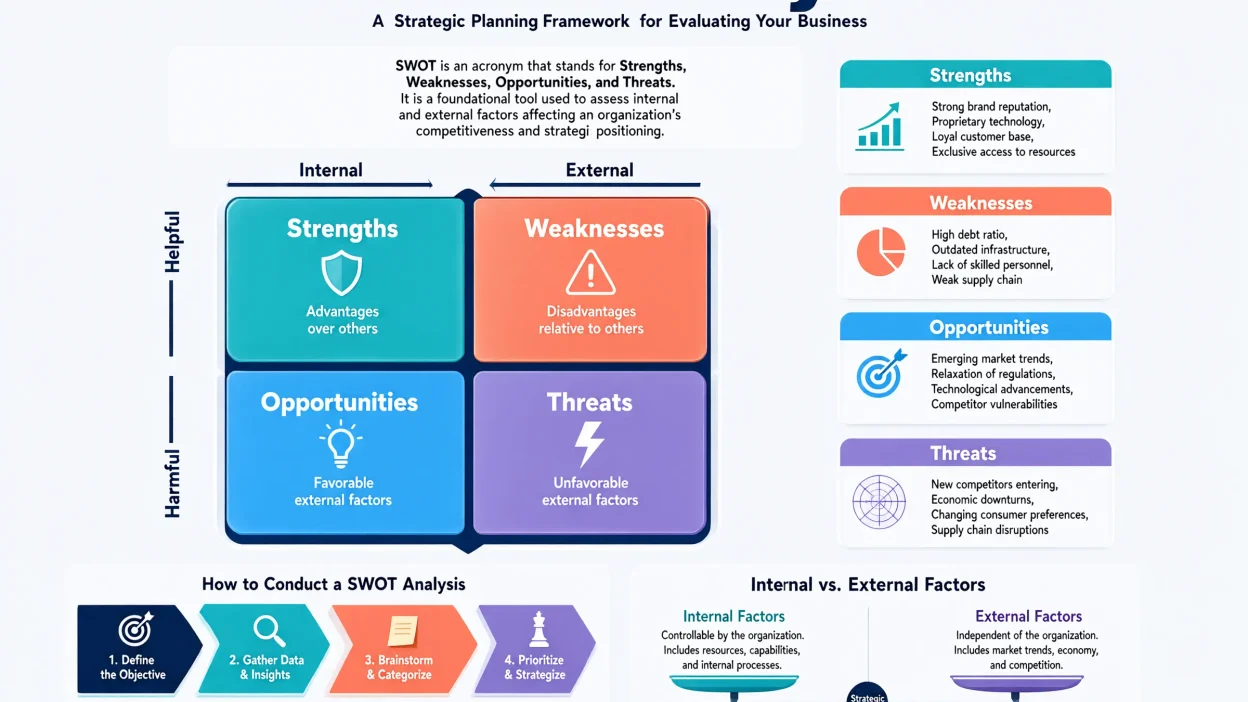
SWOT is an acronym made from the first letters of four words:
- S — Strengths: What you do well or what gives you an advantage.
- W — Weaknesses: What you lack or need to improve.
- O — Opportunities: Outside chances that may help you grow.
- T — Threats: Outside problems that may slow you down or cause harm.
A SWOT analysis puts these four areas together. It gives you a clear view of your current position and helps you plan for the future.
You can use SWOT for many things, such as starting a business, planning a school project, looking for a job, or deciding whether to launch a new product.
What Is a SWOT Analysis?
A SWOT analysis is a simple way to study the good and bad points that may affect a goal, project, or business.
It looks at two types of factors:
- Internal factors: Things inside your control, such as your skills, team, money, and work process.
- External factors: Things outside your direct control, such as market changes, new rules, customer trends, and competition.
Strengths and weaknesses are internal factors. Opportunities and threats are external factors.
This difference matters because you can often work directly on your strengths and weaknesses. External factors may need a different plan because you cannot control them.
Why Is SWOT Important?
A SWOT analysis helps you understand your situation before making a choice.
Instead of guessing, you can use clear facts to guide your next move.
It can help you:
- Find what you already do well.
- Spot areas that need work.
- Find new ways to grow.
- Prepare for possible problems.
- Set clear and useful goals.
- Compare different plans before choosing one.
SWOT does not promise success. It gives you a better starting point for making smart choices.
What Are the Four Parts of SWOT?
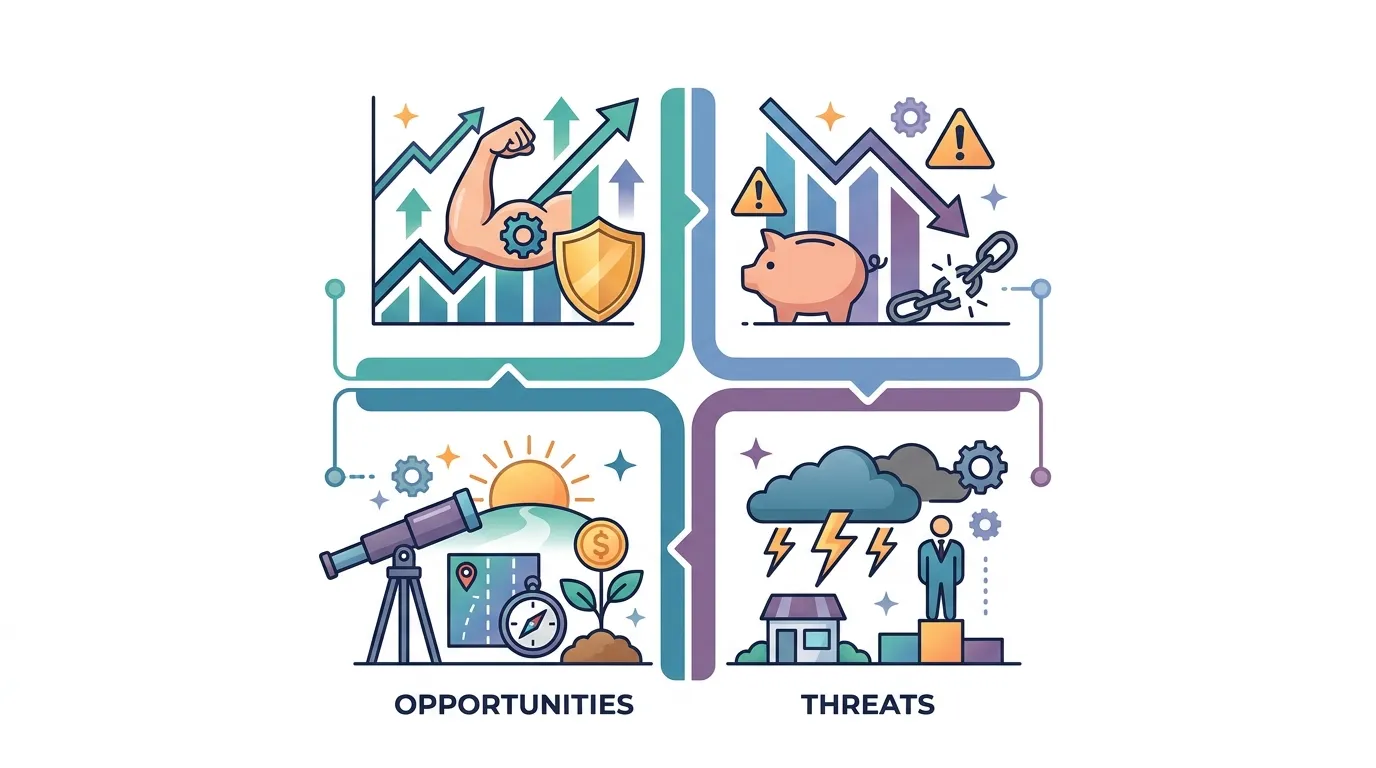
Each part of SWOT answers a different question. Understanding all four makes your analysis more useful.
1. Strengths
Strengths are the things that give you an advantage. They may include skills, tools, resources, good results, or features that set you apart.
For a business, strengths might include loyal customers, a strong brand, helpful staff, or high-quality products.
For a student, strengths might include good writing skills, strong study habits, or the ability to solve problems.
Questions to find strengths:
- What do we do well?
- What makes us different?
- What resources do we have?
- Why do customers choose us?
- What positive feedback do we receive?
Example: A local coffee shop has friendly staff, fresh coffee, and many repeat customers. These are its strengths.
Knowing your strengths helps you use them to reach your goals. It can also help you stand out from others.
2. Weaknesses
Weaknesses are areas where you lack skills, resources, or results. They may make it harder to reach your goals.
For a business, weaknesses could include high costs, poor online service, limited staff, or low brand awareness.
For a student, weaknesses might include poor time management, trouble with math, or a lack of study time.
Questions to find weaknesses:
- What needs to improve?
- Where do we struggle?
- What resources are missing?
- What complaints do we hear?
- What causes delays or extra costs?
Example: A coffee shop has a small seating area and takes too long to serve customers during busy hours. These are weaknesses.
The goal is not to blame anyone. It is to find problems early and decide how to fix them.
3. Opportunities
Opportunities are outside events, trends, or changes that may help you grow. They can open new paths to success.
For a business, opportunities may include growing demand, new customer groups, online sales, or a gap in the market.
For a student, an opportunity might be a free course, a scholarship, a school club, or a chance to learn a new skill.
Questions to find opportunities:
- Are customer needs changing?
- Is there a new market to reach?
- Can we use new tools or technology?
- Are there useful courses or partnerships?
- What needs are not being met?
Example: A coffee shop sees more people ordering drinks online. It could offer online ordering and local delivery to reach more customers.
An opportunity is not a guaranteed win. You still need to check whether it is useful, affordable, and realistic.
4. Threats
Threats are outside factors that may cause problems or make it harder to reach a goal.
For a business, threats may include new competitors, rising supply costs, changing customer habits, or new rules.
For a student, threats might include a lack of access to study tools, a change in exam rules, or fewer available scholarships.
Questions to find threats:
- Who are our main competitors?
- Are costs going up?
- Could customer needs change?
- Are new rules likely to affect us?
- What outside events could hurt our plans?
Example: A new coffee shop opens nearby and offers lower prices. The existing shop may lose some customers.
Finding threats early helps you prepare. You might improve service, offer better value, or build stronger ties with current customers.
SWOT Analysis: Internal vs. External Factors
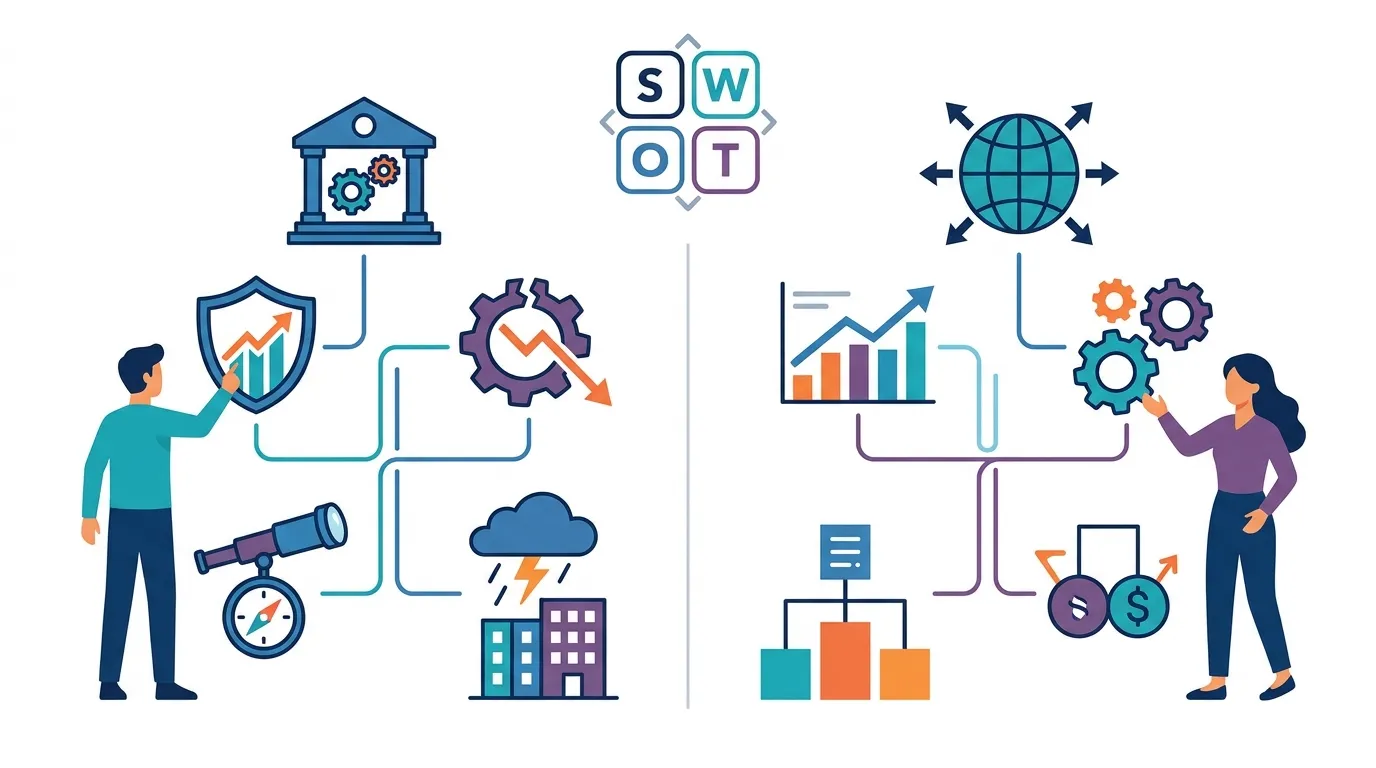
One easy way to understand SWOT is to group its four parts by where they come from.
| Part | Type | Main question |
| Strengths | Internal | What do we do well? |
| Weaknesses | Internal | What do we need to improve? |
| Opportunities | External | What outside chances can help us? |
| Threats | External | What outside risks could hurt us? |
Remember this simple rule: strengths and weaknesses are inside; opportunities and threats are outside.
For example, a business may have skilled workers but an old website. These are internal factors. A growing market may be an opportunity, while a new competitor may be a threat.
Knowing the difference helps you place each point in the right section.
What Does a SWOT Analysis Look Like?
A SWOT analysis often uses a four-part table called a SWOT matrix. Each section holds a list of facts about the person, business, or project being studied.
Here is a simple example for a small bakery.
| Strengths | Weaknesses |
| Fresh baked goods | Small kitchen |
| Friendly service | Limited advertising |
| Loyal local customers | Few delivery options |
| Opportunities | Threats |
| Start online ordering | New bakeries nearby |
| Offer custom cakes | Rising ingredient costs |
| Work with local events | Changes in customer spending |
This table gives the owner a quick view of the bakery’s position.
The next step is to use the information. The owner could promote custom cakes, improve delivery, and track ingredient costs.
The table becomes useful when it leads to clear actions.
How to Do a SWOT Analysis Step by Step
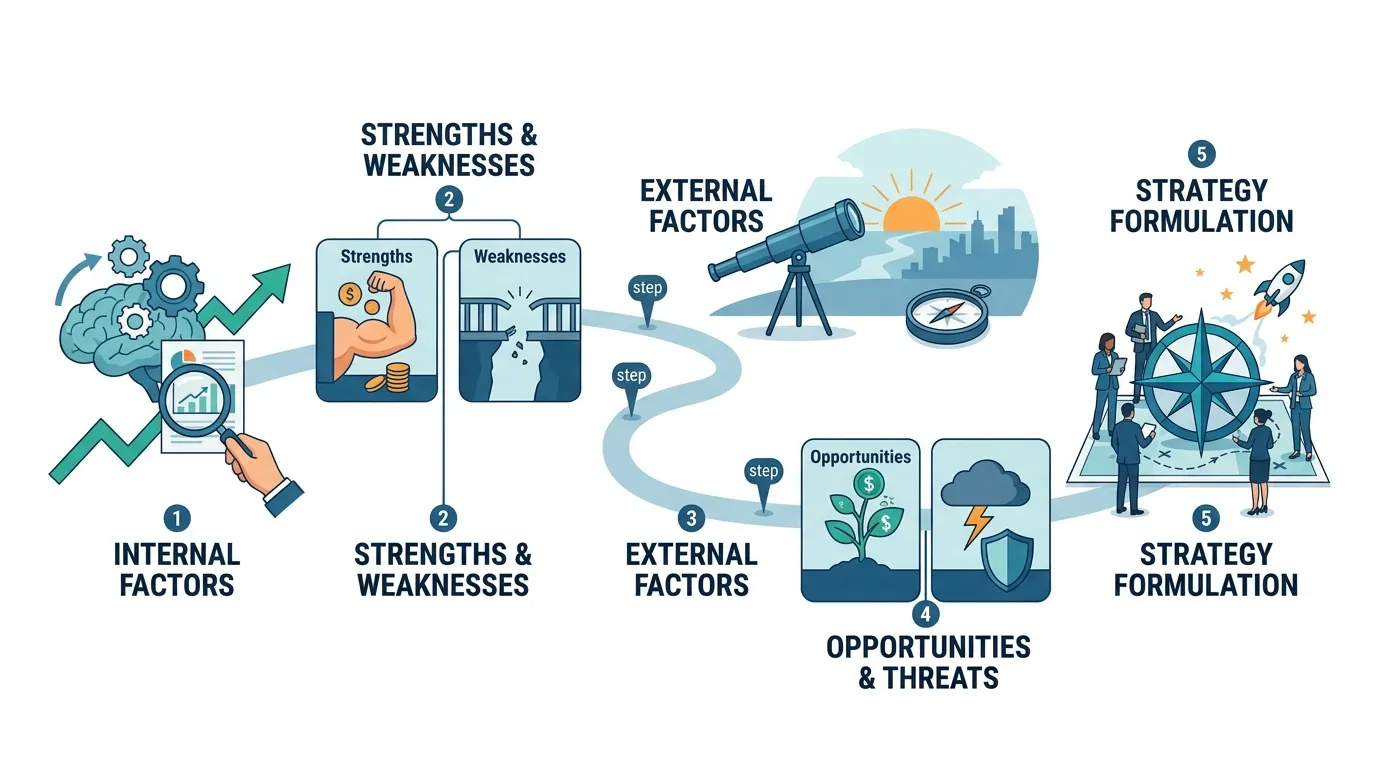
You do not need special software or expert training to create a SWOT analysis. A sheet of paper, a spreadsheet, or a simple document is enough.
Step 1: Set a Clear Goal
First, decide what you want to study. A broad goal can make your analysis confusing.
Instead of writing “improve my business,” choose a clear goal such as “increase online sales over the next six months.”
You might also study a new product, a school project, a career change, or a marketing plan.
A clear goal helps you focus on the facts that matter most.
Step 2: Gather Useful Facts
Look at information that can help you understand your current position. The facts will depend on your goal.
A business might review customer feedback, sales records, costs, staff skills, and competitor activity.
A student might review grades, study habits, available time, and learning resources.
Try to use real facts rather than guesses. If you are unsure about something, mark it as a question to check later.
Step 3: List Your Strengths
Write down the things that are working well. Focus on real advantages that support your goal.
Ask team members, customers, teachers, or trusted friends for their views when useful. Other people may notice strengths that you overlook.
Choose the strengths that matter most. A long list of small details can make it harder to see the main points.
Step 4: List Your Weaknesses
Be honest about the areas that need work. Do not hide problems just because they are hard to discuss.
Look for missing skills, slow processes, limited resources, poor results, or repeated complaints.
Try to describe each weakness clearly. For example, “we reply to customer emails after two days” is more useful than “our service is bad.”
Clear details make it easier to plan a fix.
Step 5: Find Your Opportunities
Look outside your team or personal situation for chances to grow.
Study customer needs, new tools, industry changes, local demand, and possible partnerships. For a student, look at courses, internships, clubs, and scholarships.
Ask which changes could help you reach your goal. Then check whether each chance is realistic.
An opportunity should have a clear reason for being useful, not just sound exciting.
Step 6: Identify Your Threats
Think about outside problems that could affect your plan.
A business may face stronger competition, higher costs, or changes in demand. A student may face limited time, fewer course spaces, or a change in entry requirements.
You cannot prevent every threat, but you can plan how to respond.
For each major threat, ask what you could do if it happens.
Step 7: Review and Rank Your Findings
Once you have filled in all four sections, review each point.
Remove repeated ideas and check facts that seem uncertain. Then rank the points by how much they may affect your goal.
You do not need to fix every weakness at once. Focus on the issues that matter most and the opportunities you can act on.
Step 8: Turn Your Analysis Into an Action Plan
This is the most important step. A SWOT table is only useful if it helps you make decisions.
Choose a few actions, assign responsibility when needed, and set a deadline. Decide how you will measure progress.
For example, a bakery might test online ordering for one month, track each order, and compare the results with its goal.
Review the plan regularly and update your SWOT analysis when important facts change.
SWOT Analysis Example for a Small Business
Imagine a small clothing store that wants to increase sales. The owner uses SWOT to understand what is helping the store and what may hold it back.
Strengths
- Helpful staff who know the products.
- A good location near busy streets.
- Many repeat customers.
- Clothing at several price points.
Weaknesses
- A basic website.
- Few online sales.
- Limited money for advertising.
- Slow stock updates.
Opportunities
- Sell products through an online store.
- Use social media to show new items.
- Offer discounts to loyal customers.
- Add products that local shoppers want.
Threats
- Large online stores with lower prices.
- Rising rent and delivery costs.
- New shops in the area.
- Changes in what customers like.
What Should the Store Do Next?
The owner could start by improving the website and adding a small group of products for online sale. The store could also post regular product updates and ask customers what they want to see.
To deal with threats, the owner could focus on personal service, useful product advice, and a good shopping experience instead of trying to beat every competitor on price.
The owner should track online orders, total sales, customer feedback, and costs to see whether the plan is working.
This example shows how SWOT can connect a list of facts to practical business choices.
SWOT Analysis Examples in Everyday Life

SWOT is not only for companies. You can use it to study personal goals, schoolwork, careers, and group projects.
SWOT Analysis for Students
A student who wants to improve grades might create this table:
- Strengths: Good reading skills and regular class attendance.
- Weaknesses: Poor time management and trouble with math.
- Opportunities: Free tutoring, study groups, and online lessons.
- Threats: A busy schedule and several exams in the same week.
The student could make a weekly study plan, join a study group, and ask for help before the next test.
SWOT Analysis for Personal Growth
Someone who wants to become more confident at work could use SWOT to study their current skills and choices.
- Strengths: Good listening skills and a strong work ethic.
- Weaknesses: Fear of public speaking.
- Opportunities: Training sessions and chances to lead small projects.
- Threats: Limited time and few openings for new roles.
A useful next step might be to practice speaking in small meetings and ask a manager about training.
SWOT Analysis for a New Product
A business planning to launch a new product could study its design, cost, target customers, and market conditions.
- Strengths: A useful design and a skilled team.
- Weaknesses: A small launch budget.
- Opportunities: Growing interest in the product’s main benefit.
- Threats: Similar products and changing supply costs.
The business could test the product with a small group of customers before spending more money on a full launch.
These examples show that SWOT works best when it is tied to one clear goal.
What Are the Benefits of SWOT Analysis?
A SWOT analysis offers several benefits when you use it carefully.
It Is Easy to Use
You can create a SWOT table with basic tools. You do not need special training to list strengths, weaknesses, opportunities, and threats.
It Helps You See the Full Picture
It brings internal and external factors together. This can help you spot issues that might be missed when you focus only on sales, skills, or competitors.
It Supports Better Decisions
SWOT can help you compare choices and think about possible risks before you act. It gives you a simple way to organize facts and questions.
It Helps Set Priorities
The table can show which strengths to use, which weaknesses to fix, and which risks need attention first.
It Encourages Team Discussion
When people share their views, they may find new ideas or notice problems that one person missed. This can lead to a more balanced plan.
What Are the Limitations of SWOT Analysis?
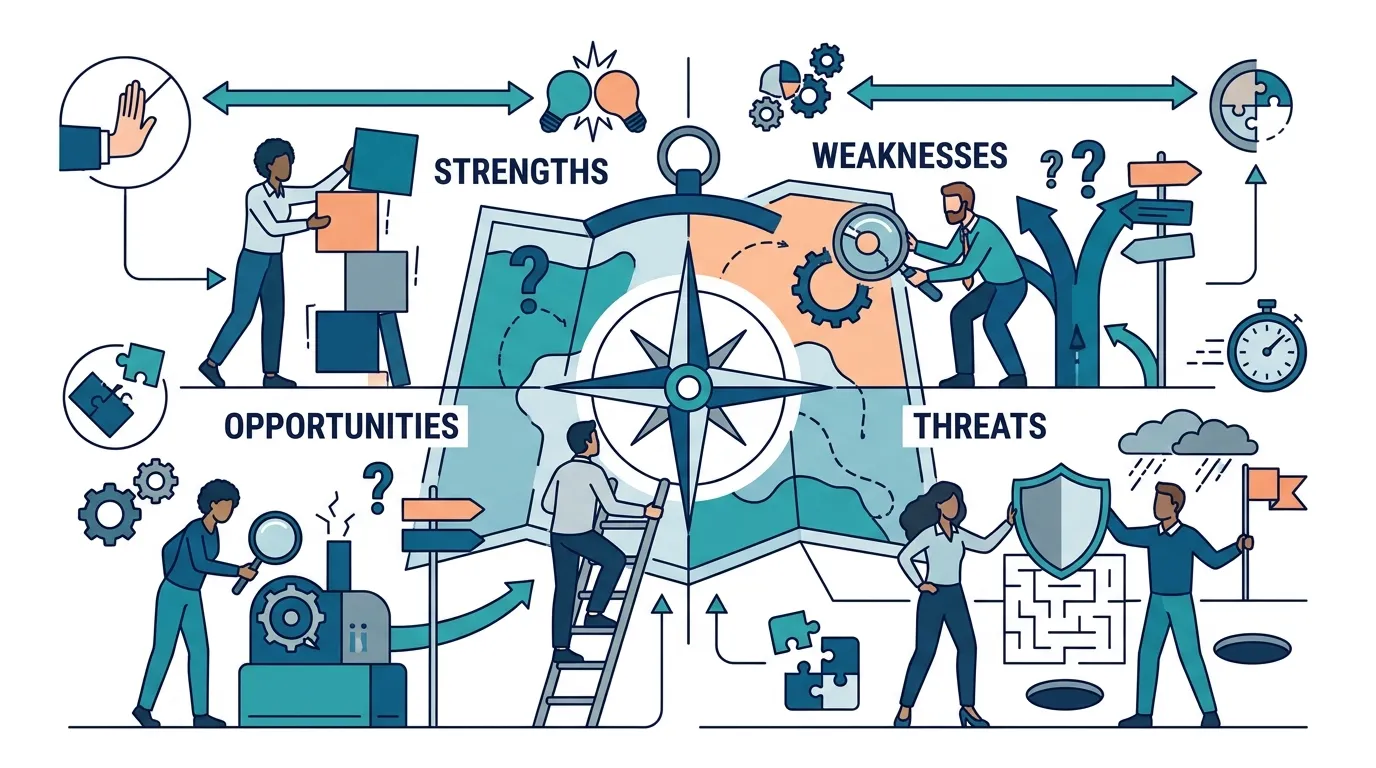
SWOT is useful, but it has limits. It should not be the only tool you use for major decisions.
It Can Be Too General
Statements like “good service” or “strong competition” do not give enough detail. Add facts and examples to make each point clear.
It Can Include Personal Opinions
People may list what they believe is true instead of checking the facts. Ask for evidence when possible and review different views.
It Does Not Rank Every Issue Automatically
A SWOT table does not tell you which point matters most. You must decide which items have the greatest effect on your goal.
It Does Not Give You a Full Plan
SWOT helps you understand a situation, but it does not explain every step needed to solve a problem. You still need goals, deadlines, resources, and ways to measure progress.
It Can Become Outdated
Markets, customer needs, team skills, and outside risks can change. Review the analysis when important changes happen.
Common SWOT Analysis Mistakes to Avoid
Avoid these common mistakes to make your analysis more useful.
- Mixing internal and external factors: Keep strengths and weaknesses inside the organization, and opportunities and threats outside it.
- Using vague points: Replace “poor marketing” with a clear fact, such as “the store has not posted on social media in three months.”
- Listing too many items: Focus on the most important points related to your goal.
- Ignoring evidence: Use sales records, feedback, research, or other facts where possible.
- Treating every opportunity as a sure thing: Check the cost, effort, and chance of success before acting.
- Failing to make a plan: Turn the most important findings into actions with deadlines.
- Never updating the table: Review it as your situation changes.
A strong SWOT analysis is clear, honest, focused, and linked to action.
SWOT vs. PESTLE Analysis: What Is the Difference?
SWOT and PESTLE are both planning tools, but they serve different purposes.
SWOT looks at strengths, weaknesses, opportunities, and threats. It gives you a broad view of internal and external factors affecting a goal.
PESTLE examines six outside forces:
- P — Political: Government choices and public policy.
- E — Economic: Prices, interest rates, jobs, and spending.
- S — Social: Culture, habits, and population trends.
- T — Technological: New tools and changes in technology.
- L — Legal: Laws and rules.
- E — Environmental: Weather, climate, and natural resources.
For example, a bakery could use PESTLE to study rising food prices, new food rules, and changing customer habits. It could then use those findings to identify opportunities and threats in its SWOT analysis.
Use SWOT when you want a simple overall view. Use PESTLE when you need a closer look at outside forces. The two tools can work together.
How to Make Your SWOT Analysis More Effective
Follow these tips to get more value from your analysis.
Keep It Focused
Choose one goal and include only the points that affect it. A SWOT analysis for improving online sales may look different from one for opening a new store.
Use Facts When Possible
Support your findings with customer feedback, sales numbers, research, or other useful information. This reduces guesswork.
Ask Other People for Input
Team members, customers, teachers, and trusted advisers may offer views you have not considered.
Choose a Few Clear Actions
Start with the most important findings. Give each action an owner and deadline, and decide how you will measure success.
Review Your Progress
Check whether your actions are working. Update the analysis when your resources, goals, or outside conditions change.
The aim is not to create a perfect table. The aim is to make a better decision and take useful action.
Article Summary
SWOT stands for Strengths, Weaknesses, Opportunities, and Threats. It is a planning tool that helps people and businesses understand their current position and make better decisions.
Strengths and weaknesses are internal factors. Opportunities and threats are external factors. You can use a SWOT matrix to organize these four areas, rank the most important findings, and create a clear action plan.
SWOT is easy to use, but it works best when you rely on facts, focus on one goal, and review your results over time.
FAQS
1. What does SWOT stand for?
SWOT stands for Strengths, Weaknesses, Opportunities, and Threats. It is a tool used to study the factors that may help or harm a goal, business, or project.
2. What is the main purpose of a SWOT analysis?
The main purpose is to understand a situation and use that information to make better plans. It helps you see what is working, what needs to improve, what chances are available, and what risks you should prepare for.
3. What are the four parts of SWOT?
The four parts are strengths, weaknesses, opportunities, and threats. Strengths and weaknesses are internal factors, while opportunities and threats are external factors.
4. What is an example of a SWOT analysis?
A small bakery might list fresh products as a strength, a small kitchen as a weakness, online ordering as an opportunity, and a new nearby bakery as a threat. The owner can use these findings to plan improvements.
5. Is SWOT analysis used only for businesses?
No. Students, job seekers, project teams, nonprofit groups, and individuals can use SWOT. It can help with school goals, career plans, personal growth, and many other choices.
6. What is the difference between strengths and opportunities?
Strengths are internal advantages you already have, such as skilled workers or strong customer service. Opportunities are outside chances that may help you, such as a growing market or a new partnership.
7. What is the difference between weaknesses and threats?
Weaknesses are internal problems, such as limited staff or poor time management. Threats are outside risks, such as new competitors or rising costs.
8. How do you create a SWOT analysis?
Start with a clear goal. Gather useful facts, list your strengths and weaknesses, identify opportunities and threats, and rank the most important findings. Then create an action plan with deadlines and ways to measure progress.
9. What are the limitations of SWOT analysis?
SWOT can be too general, may include personal opinions, and does not automatically rank issues or provide a complete action plan. It works best when you use evidence and follow it with clear steps.
10. What is the difference between SWOT and PESTLE?
SWOT examines internal strengths and weaknesses along with external opportunities and threats. PESTLE focuses on six types of external forces: political, economic, social, technological, legal, and environmental.
11. How often should you update a SWOT analysis?
Update it when your goals, resources, market, or other important conditions change. For an active project or business plan, reviewing it every few months can be helpful, but the right timing depends on how quickly things change.
12. Can SWOT analysis help with personal goals?
Yes. You can use it to understand your skills, find areas to improve, discover learning opportunities, and prepare for outside challenges. It works best when you connect the findings to specific actions.
Conclusion
SWOT means Strengths, Weaknesses, Opportunities, and Threats. It is a simple way to understand where you stand, what you can improve, and what may affect your success.
Businesses use it to plan growth, while students and individuals use it to reach personal goals.
To create a useful SWOT analysis, start with one clear goal, list the four areas, check your facts, and focus on the most important findings.
Then turn those findings into a practical action plan.
Remember, a SWOT table alone will not solve every problem. Its real value comes from how you use the information.
When you review your situation honestly and take clear steps, SWOT can help you make more informed choices and prepare for what comes next.
Add a concise SWOT answer near the topTrim repeated SWOT explanations and examples

Ryan Mitchell creates informative content about word definitions, acronyms, online slang, and modern communication. He enjoys exploring how people use language in text messages, on social media, and in daily life. Ryan focuses on delivering simple explanations and practical examples that help readers quickly understand the meaning of unfamiliar words and phrases.