
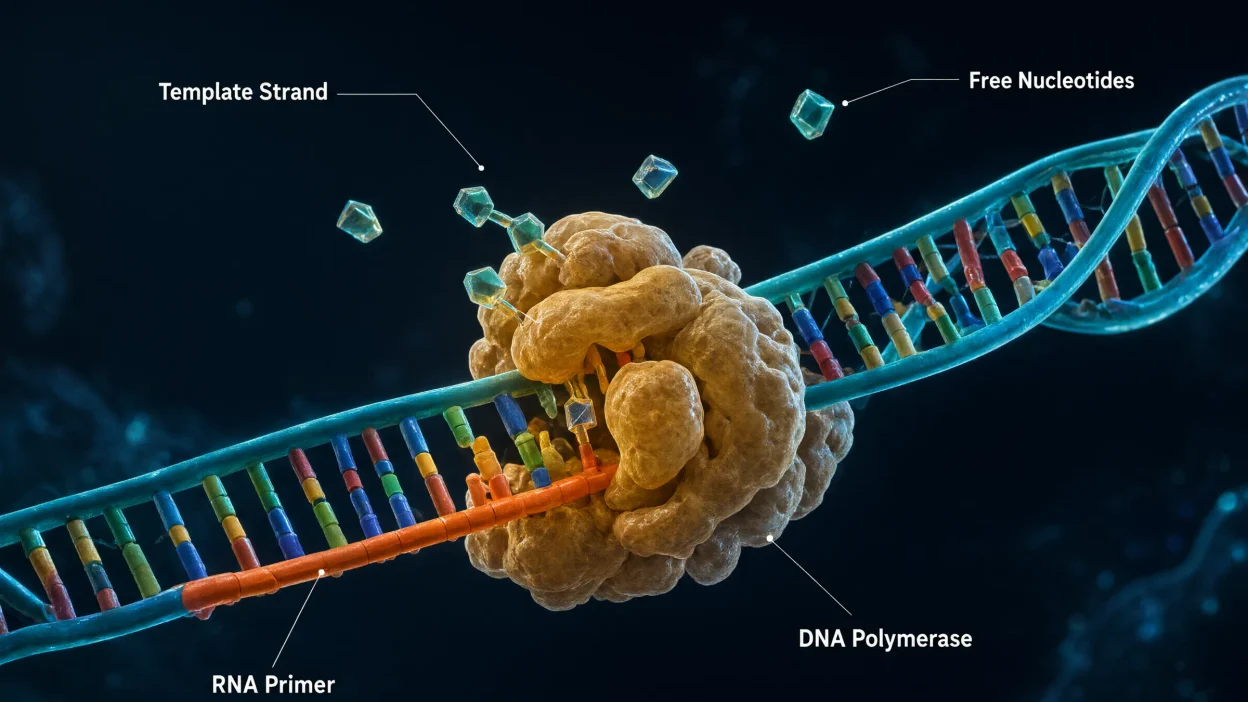
PCR stands for polymerase chain reaction. It is a laboratory method used to make many copies of a specific part of DNA.
DNA carries genetic information in living things. Some viruses also carry genetic material that can be detected with PCR-based methods.
A sample may contain only a tiny amount of this material, making it hard to study. PCR helps solve this problem by copying the selected genetic section many times.
Think of PCR as a copy machine for DNA. It makes enough copies for a lab to detect or study the target.
What Is the Full Form of PCR?
The full form of PCR is:
- P: Polymerase
- C: Chain
- R: Reaction
Each word has a role in the process.
- Polymerase is an enzyme that helps build new DNA.
- Chain refers to the repeated steps that create more copies.
- Reaction describes the process that takes place in the lab.
Together, these words describe a method used to copy a selected piece of DNA.
What Does PCR Mean in Simple Words?
In simple terms, PCR is a way to make many copies of a small piece of genetic material.
For example, a lab may use PCR to check a sample for genetic material from a certain virus. If the material is present, copying it can help the lab detect it.
What Is a PCR Test?
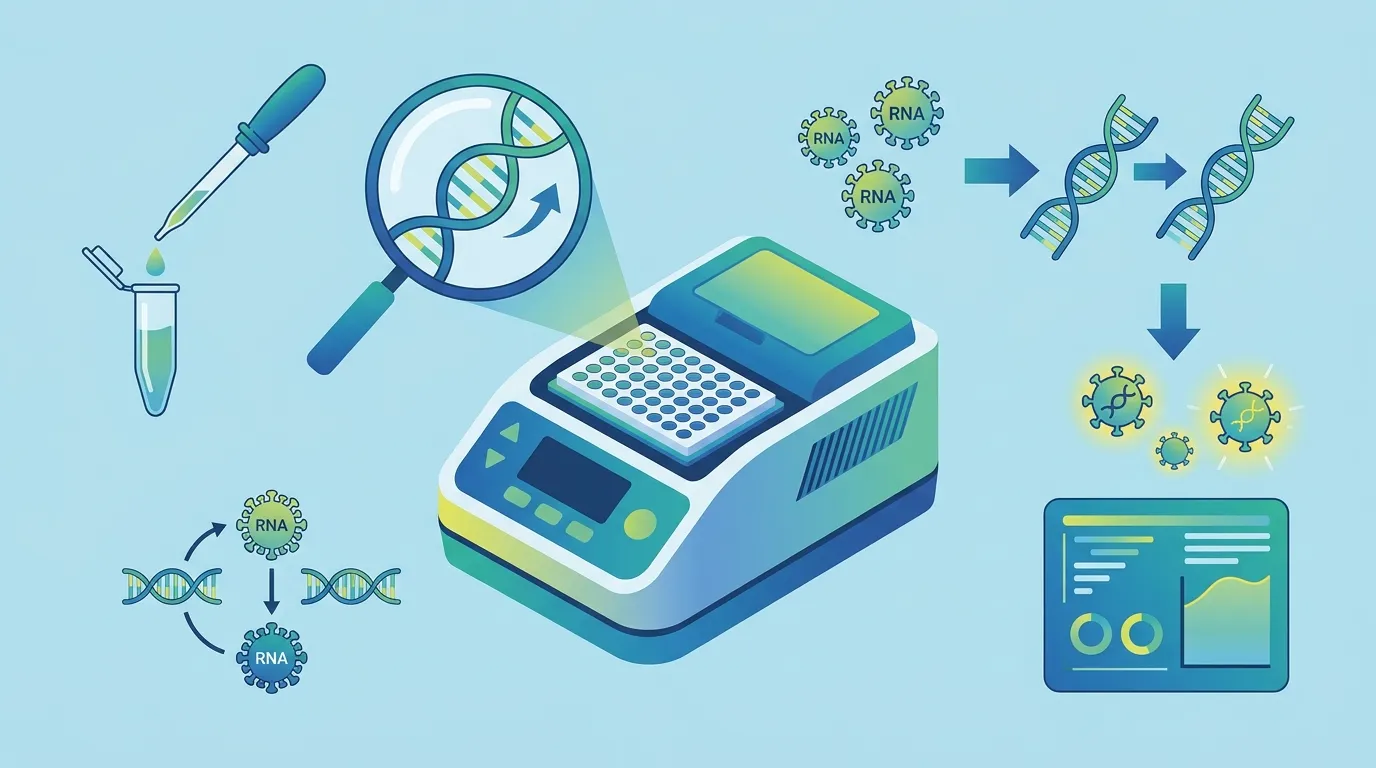
A PCR test is a lab test that uses the polymerase chain reaction method to detect a specific genetic target.
The sample may come from the nose, throat, blood, or another part of the body. The type of sample depends on what the test is designed to detect.
PCR tests can help doctors find certain infections and support other types of medical testing. They are also used in research labs to study DNA and genes.
What Does a PCR Test Detect?
A PCR test looks for a specific piece of genetic material. The target may come from a virus, a bacterium, or a person’s own DNA.
PCR-based tests can help:
- Detect certain viral infections.
- Find genetic material from some bacteria.
- Identify selected changes in DNA.
- Support the study of inherited conditions.
- Help researchers study genes and diseases.
- Examine DNA in forensic investigations.
Each PCR test is designed for a particular target. A single test does not check for every infection or disease.
Is PCR the Same as a COVID-19 Test?
No. PCR is a testing method, while a COVID-19 test checks for the virus that causes COVID-19.
Some COVID-19 tests use PCR to detect the virus’s genetic material. Other tests, such as antigen tests, look for viral proteins instead.
PCR can also be used to detect targets linked to many other conditions. It is not limited to COVID-19.
How Does PCR Work?
PCR works by copying a selected piece of DNA over and over. A special machine controls the temperature during the process.
The reaction uses DNA, primers, DNA polymerase, and other materials needed to build new DNA strands.
Step 1: Denaturation
The sample is heated to separate the two strands of double-stranded DNA.
You can think of this step as opening a zipper. Each strand can then serve as a guide for making a new strand.
Step 2: Annealing
The sample is cooled so that short DNA pieces called primers can attach to matching sections of the target DNA.
Primers help show where copying should begin.
Step 3: Extension
An enzyme called DNA polymerase adds DNA building blocks to the primers. This creates new DNA strands.
The process produces more copies of the selected section.
Step 4: Repeat the Cycle
The machine repeats these steps many times. Each cycle can increase the amount of target DNA.
After enough cycles, the lab may have enough material to detect the target or measure how much is present.
How Long Does a PCR Test Take?
The time depends on the type of test, the lab, and the sample.
The PCR process may take an hour or more, but the full testing process can take longer. Sample collection, preparation, quality checks, and reporting all affect when results are ready.
Some labs return results on the same day. Others may take longer.
What Are the Different Types of PCR?
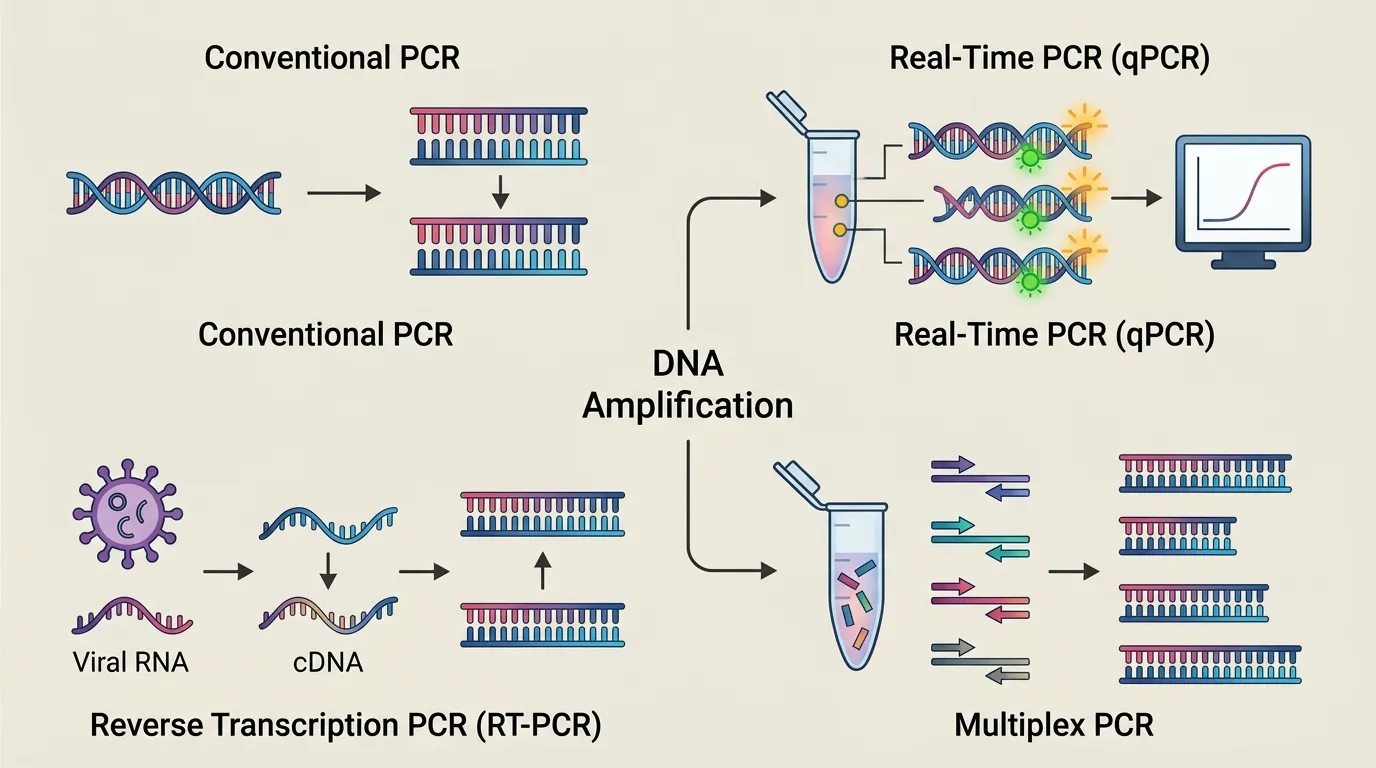
There are several types of PCR. Each one is used for a different purpose.
1. Conventional PCR
Conventional PCR makes many copies of a selected DNA section. The lab checks the final product after the copying process is complete.
It is used in research, teaching, and some laboratory tests.
2. Real-Time PCR
Real-time PCR is also called quantitative PCR, or qPCR. It tracks the copying process as it happens.
This method can help measure the amount of target genetic material in a sample. It is used in research and some medical tests.
3. Reverse Transcription PCR (RT-PCR)
Some viruses carry RNA rather than DNA as their genetic material. Standard PCR copies DNA, so RNA must first be converted into DNA.
Reverse transcription PCR uses an enzyme to make this change before the copying step.
This method is useful for detecting certain RNA targets.
4. Real-Time RT-PCR
Real-time RT-PCR combines reverse transcription with real-time PCR. It first converts RNA into DNA and then tracks the copying process.
Some tests for the virus that causes COVID-19 use this method.
5. Multiplex PCR
Multiplex PCR uses several sets of primers in one reaction to look for more than one genetic target.
This can help a lab test for several related organisms or genetic markers at the same time, if the test has been designed for that purpose.
What Does a Positive PCR Test Mean?
A positive PCR result usually means the test detected the genetic target it was designed to find.
For example, a positive PCR test for a specific virus means that the test found genetic material from that virus in the sample.
The exact meaning depends on the test and the person’s situation.
Does a Positive PCR Test Always Mean You Are Sick?
No. A positive result does not always tell you whether you have symptoms or how ill you may become.
Some tests can detect genetic material that remains after an infection is no longer active. A positive result may also need to be considered alongside symptoms, medical history, and other test results.
If your test is related to an infection, follow the advice of your health care provider.
What Does a Negative PCR Test Mean?
A negative PCR result usually means the test did not detect the target genetic material in the sample.
This may be reassuring, but it does not always rule out an infection or another condition.
The result can depend on when the sample was taken, how it was collected, and how much target material was present.
Can a PCR Test Be Negative Even If You Have an Infection?
Yes. A false-negative result happens when a test does not detect a target that is actually present.
Possible reasons include:
- The test was taken too early or too late.
- The sample did not contain enough material.
- The sample was not collected properly.
- The target level was below the test’s detection limit.
- A problem occurred during sample handling.
If you have symptoms or a known exposure, ask a health care professional whether you need another test.
What Does an Inconclusive PCR Result Mean?
An inconclusive PCR result means the test did not give a clear positive or negative answer under the lab’s reporting rules.
This may happen when the test signal is unclear, the sample has a problem, or the result does not meet the test’s rules for a clear answer.
The next step depends on the test. A health care provider or lab may recommend a new sample or another test.
An inconclusive result does not automatically mean that you have an infection.
Why Are PCR Tests Important?
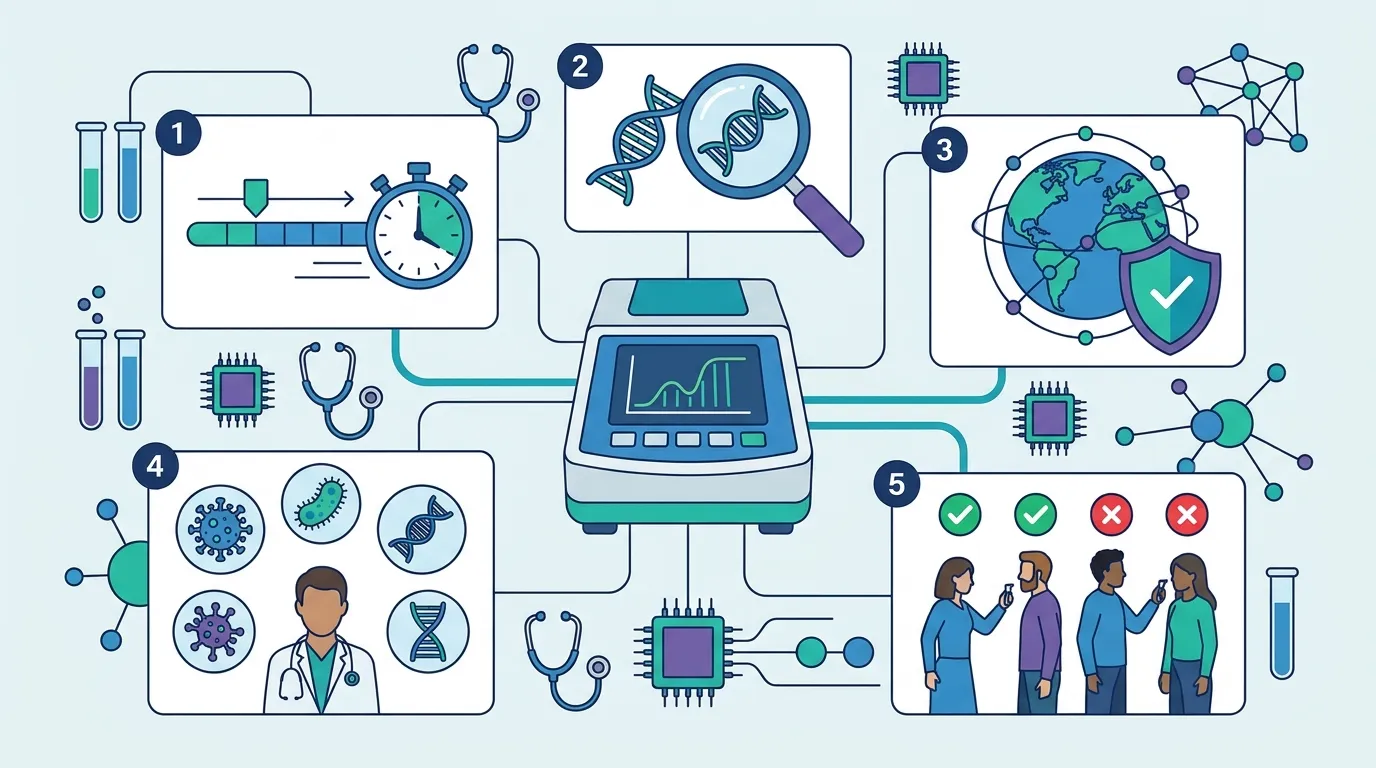
PCR tests are important because they can detect small amounts of specific genetic material. This makes them useful in health care, science, and other fields.
Detecting Infections
PCR can help detect genetic material from certain viruses and bacteria. The results may help a doctor understand what is causing an illness.
PCR-based tests are used for COVID-19 and other infections, depending on the test.
Studying Genetic Conditions
PCR can help doctors and scientists study selected areas of DNA. Some tests use PCR to look for genetic changes linked to certain inherited conditions.
PCR is one of several tools used in genetic testing.
Supporting Cancer Research
PCR-based methods can help researchers study gene changes linked to cancer. Some clinical tests also use PCR to look for specific genetic markers.
PCR alone does not diagnose every type of cancer. The right test depends on the medical question.
Helping With Forensic Science
Forensic experts can use PCR to make more copies of DNA found in a sample.
This may help them study small amounts of DNA collected during an investigation. The evidence must still be collected, handled, and reviewed with care.
Supporting Scientific Research
PCR is widely used in biology labs. Scientists use it to study genes, compare DNA samples, and examine genetic material from many types of organisms.
It has become an important tool in modern biology.
What Is the Difference Between PCR and an Antigen Test?
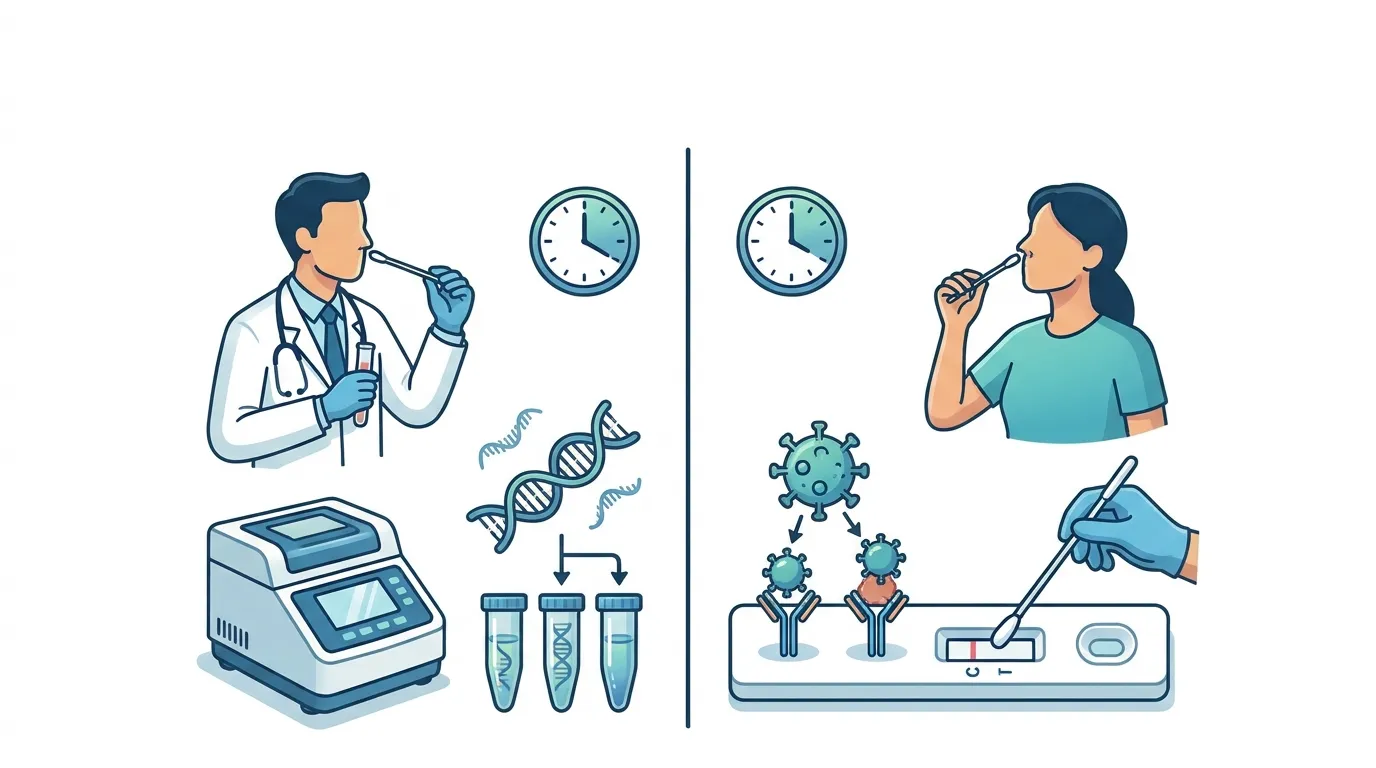
PCR tests and antigen tests can both help detect certain infections, but they look for different things.
| Feature | PCR test | Antigen test |
| What it detects | Specific genetic material | Specific proteins |
| How it works | Copies target genetic material to help detect it | Detects target proteins through a test reaction |
| Where it is used | Often in a laboratory | Often at home, in clinics, or in other settings |
| Time to results | Depends on the test and lab | Often faster |
| Sensitivity | Often more sensitive for the same target | May be less sensitive, depending on the test and situation |
Neither method is perfect. The best choice depends on the infection, symptoms, timing, and current testing advice.
What Is the Difference Between PCR and RT-PCR?
PCR usually refers to a method that copies DNA. RT-PCR includes a reverse transcription step that converts RNA into DNA before copying.
The letters can be confusing because RT-PCR is sometimes used informally to mean real-time PCR. In scientific terms, RT usually means reverse transcription, while qPCR means quantitative PCR.
Real-time RT-PCR combines both methods. It converts RNA into DNA and tracks the copying process as it happens.
When reading a medical report or science article, check the full name of the method if the difference matters.
What Does PCR Mean on a Medical Report?
If you see PCR on a medical report, it usually refers to a test that detects or studies genetic material. The exact meaning depends on the full test name.
Your report may include a result such as positive, negative, detected, not detected, or inconclusive.
When reading your report, check these details:
- Test name: Which virus, bacterium, or genetic target was tested?
- Result: Was the target detected?
- Sample type: Was the sample taken from the nose, blood, or another source?
- Lab notes: Does the report suggest more testing or follow-up?
Do not use the letters PCR alone to decide what a result means. If you are unsure, ask your health care provider or the lab that performed the test.
Does PCR Have Other Meanings?
Yes. PCR can stand for different things in different fields. However, in medicine and biology, it commonly means polymerase chain reaction.
The right meaning depends on the words around the abbreviation.
PCR in Science and Medicine
In discussions about DNA, RNA, genes, viruses, and lab testing, PCR usually means polymerase chain reaction.
PCR in Business and Other Fields
A business report or technical document may use PCR as an abbreviation for a different term.
If you see PCR outside a medical or scientific setting, read the surrounding sentence or check the document’s list of abbreviations to find the intended meaning.
Common Mistakes People Make About PCR
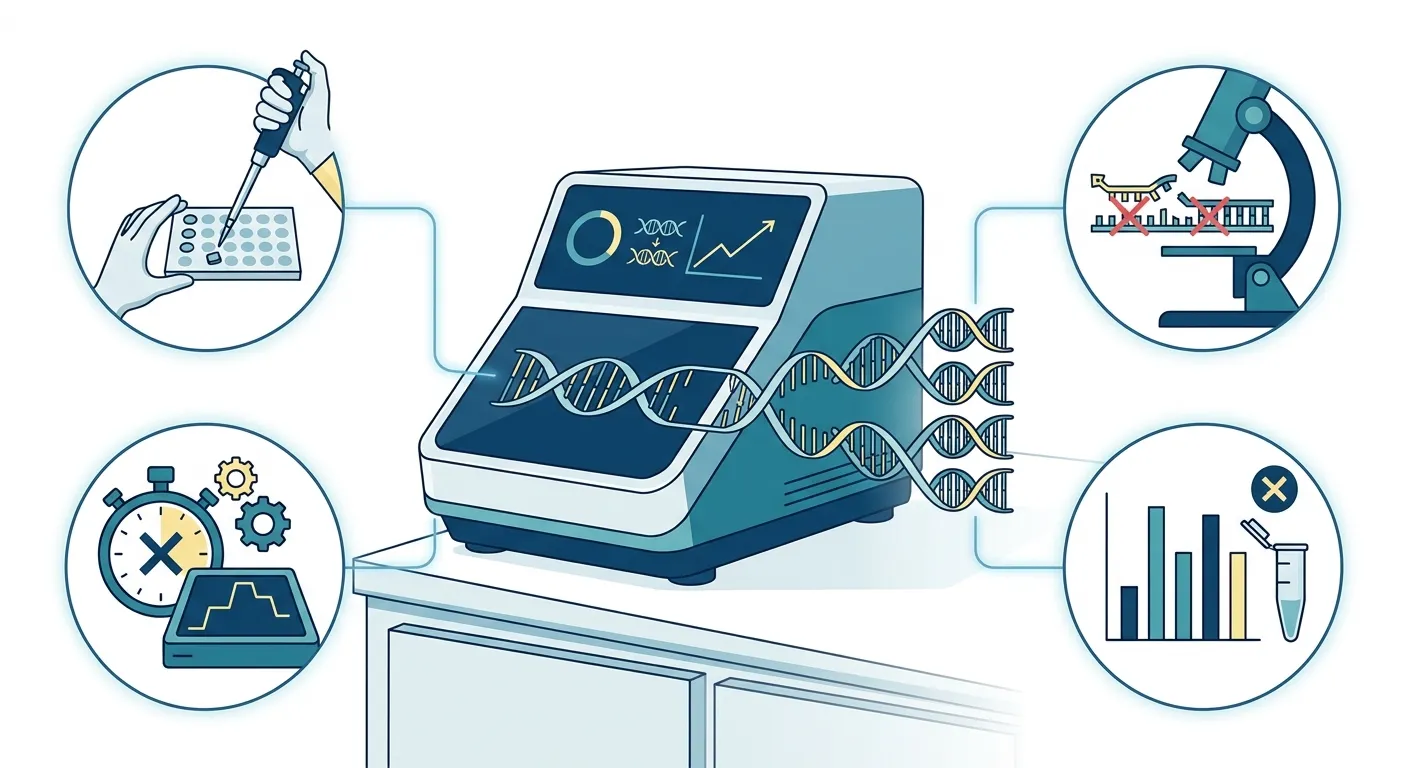
Understanding these common mistakes can help you use the term correctly.
Thinking PCR Is a Disease
PCR is not a disease. It is a laboratory method used to detect or study genetic material.
Thinking Every PCR Test Checks for COVID-19
PCR can test for many different genetic targets. The full name of the test tells you what it is designed to detect.
Assuming a Negative Result Rules Out Every Infection
A negative result means the target was not detected in that sample. Timing and sample quality can affect the result.
Assuming a Positive Result Shows How Sick Someone Is
A positive result does not, by itself, measure the severity of an illness. It must be understood in the context of the specific test and the person’s health.
Confusing PCR With RT-PCR
PCR and RT-PCR are related, but RT-PCR includes a step for converting RNA into DNA. Real-time testing is another feature that can be combined with this process.
FAQS
1. What does PCR mean in simple words?
PCR stands for polymerase chain reaction. It is a lab method that makes many copies of a selected piece of DNA so it can be detected or studied more easily.
2. What does PCR stand for in medical terms?
In medical terms, PCR stands for polymerase chain reaction. It is used in tests that detect specific genetic material from viruses, bacteria, or other targets.
3. What is a PCR test used for?
A PCR test is used to detect specific genetic material in a sample. It can help test for certain infections and support genetic research.
4. Is PCR the same as a COVID-19 test?
No. PCR is a testing method. A COVID-19 test checks for the virus that causes COVID-19, and PCR is one method that can be used for that purpose.
5. What does a positive PCR result mean?
A positive PCR result usually means the test detected its target genetic material. It does not automatically show how severe an illness is.
6. What does a negative PCR result mean?
A negative result usually means the target was not detected in the sample. It may not rule out an infection in every situation.
7. How long does a PCR test take?
The time depends on the test and the lab. The lab process may take an hour or more, but sample handling and reporting can make the total wait longer.
8. Is PCR more accurate than an antigen test?
PCR tests are often more sensitive than antigen tests, but results depend on the test, sample, timing, and how the test is used. Neither method is perfect.
9. What is RT-PCR?
RT-PCR stands for reverse transcription polymerase chain reaction. It converts RNA into DNA before copying it. The term is sometimes confused with real-time PCR, so the full test name is helpful.
10. Can PCR detect bacteria?
Yes. PCR can detect genetic material from specific bacteria when a test is designed to look for them.
11. Does PCR detect DNA or RNA?
Standard PCR copies DNA. When the target is RNA, a reverse transcription step is usually needed first. Real-time RT-PCR can track the copying process while testing for an RNA target.
12. What should I do if my PCR result is inconclusive?
Follow the lab’s or health care provider’s instructions. You may need a new sample or another test, depending on why the result was unclear.
Article Summary
PCR stands for polymerase chain reaction. It is a laboratory method that makes many copies of a selected piece of DNA, helping scientists detect or study genetic material.
PCR tests can help detect certain viruses and bacteria, support genetic testing, and aid scientific research.
A positive result usually means the target was detected, while a negative result means it was not detected in the sample. Neither result should be interpreted without considering the test and the situation.
PCR, RT-PCR, and real-time PCR are related methods, but they are not always the same. PCR is used in medicine, biology, and forensic science.
Conclusion
PCR stands for polymerase chain reaction. It is a useful lab method that copies a selected piece of DNA so it can be detected or studied.
Doctors and scientists use PCR-based methods to test for certain infections, study genes, and support research.
A positive PCR result usually means the target was detected, while a negative result means it was not found in the sample.
However, no result should be viewed on its own. The meaning depends on the specific test and the person’s situation.
Now that you know what PCR means, you can better understand the term when you see it on a medical report or science website.
If you have questions about your own results, speak with a health care professional for guidance.

Ryan Mitchell creates informative content about word definitions, acronyms, online slang, and modern communication. He enjoys exploring how people use language in text messages, on social media, and in daily life. Ryan focuses on delivering simple explanations and practical examples that help readers quickly understand the meaning of unfamiliar words and phrases.