
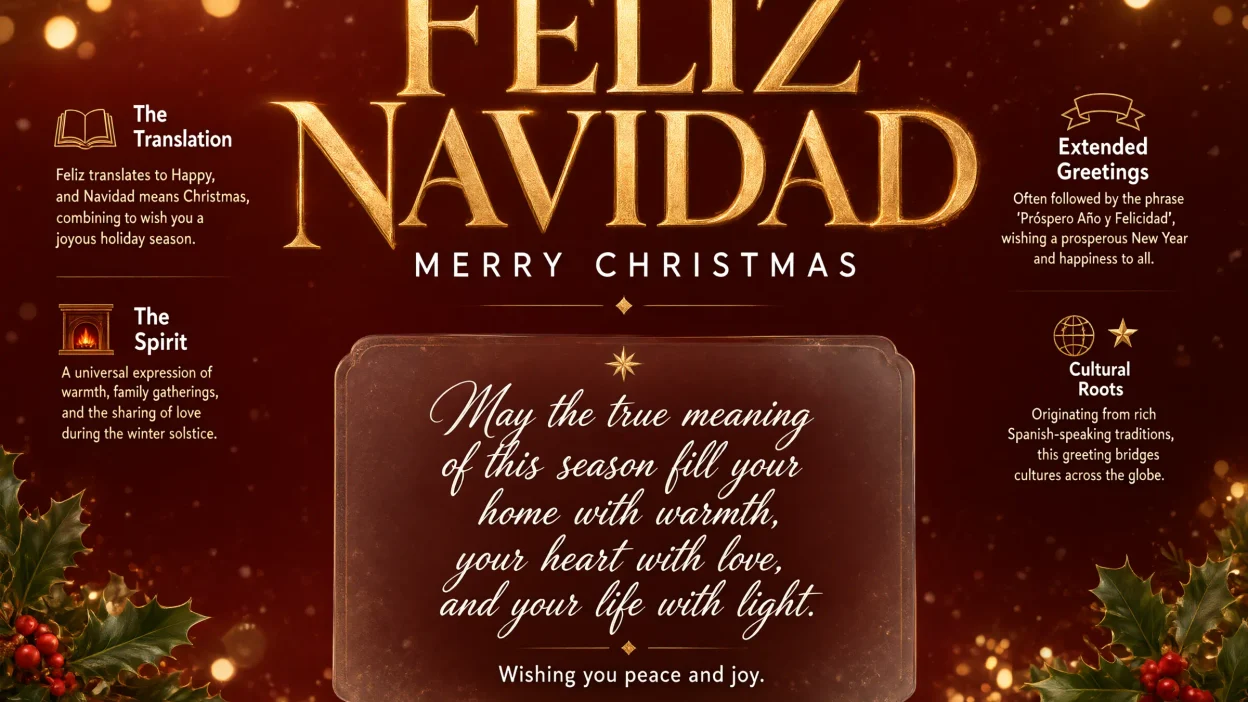
Feliz Navidad means “Merry Christmas” in English.
It is a Spanish phrase used to wish someone happiness during Christmas. People say it to friends, family members, coworkers, neighbors, and even strangers during the holiday season.
Here is a simple breakdown:
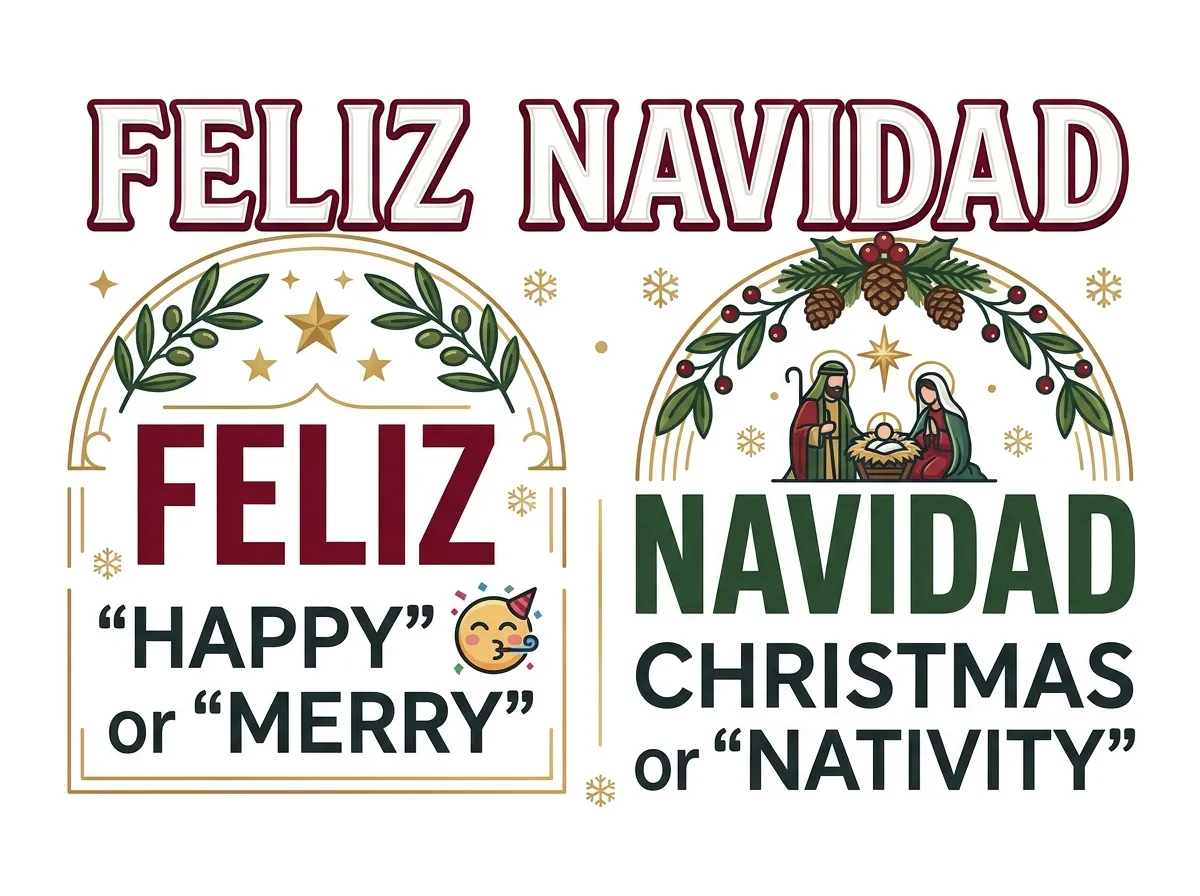
- Feliz: Happy or joyful.
- Navidad: Christmas or the Christmas season.
Together, the words form a warm holiday greeting: “Merry Christmas!”
For example, if your Spanish-speaking friend says, “¡Feliz Navidad!”, they are wishing you a happy Christmas.
You can use the phrase in person, in a text message, on a greeting card, or in a social media post. You do not need to speak Spanish fluently to use it.
A Simple Example
Imagine you are visiting a friend during the holidays. Your friend smiles and says, “¡Feliz Navidad!”
You can understand this as:
“Have a Merry Christmas!”
You can reply with “¡Feliz Navidad!” too. It is a friendly and natural way to return the greeting.
What Does Each Word in Feliz Navidad Mean?
Understanding each word can help you remember the phrase and use it with confidence.
What Does Feliz Mean?
The Spanish word feliz means “happy.” It can also describe a feeling of joy or good fortune.
For example:
- Feliz cumpleaños means “Happy birthday.”
- Feliz año nuevo means “Happy New Year.”
- Estoy feliz means “I am happy.”
In each example, the word feliz expresses happiness or joy.
What Does Navidad Mean?
The Spanish word Navidad means “Christmas.” It refers to the holiday that celebrates the birth of Jesus Christ in Christian tradition.
People may use Navidad when talking about Christmas Day, Christmas celebrations, or the wider holiday season.
For example:
- La Navidad está cerca means “Christmas is near.”
- La cena de Navidad means “Christmas dinner.”
- Decoraciones de Navidad means “Christmas decorations.”
When feliz and Navidad are put together, they create the familiar greeting “Merry Christmas.”
How Do You Pronounce Feliz Navidad?
Feliz Navidad is commonly pronounced:
feh-LEES nah-vee-DAHD
The strongest sounds are “LEES” in feliz and “DAHD” in Navidad.
Here is a simple guide:
| Spanish word | Easy pronunciation | English meaning |
| Feliz | feh-LEES | Happy |
| Navidad | nah-vee-DAHD | Christmas |
| Feliz Navidad | feh-LEES nah-vee-DAHD | Merry Christmas |
The Spanish letter z in feliz sounds like an “s” in most of Latin America, including Mexico. In much of Spain, it is pronounced more like the “th” sound in “think.”
You do not need a perfect accent to say the phrase. A friendly smile and a warm tone are enough to share the greeting.
How Do You Use Feliz Navidad in a Sentence?
You can use Feliz Navidad in many everyday situations during the Christmas season. It works as a greeting, a message, or a way to wish someone well.
1. When Greeting Friends and Family
You can say:
“¡Feliz Navidad, familia!”
This means “Merry Christmas, family!”
It is a warm way to greet loved ones during a holiday gathering.
2. In Text Messages
You can send a simple message such as:
“¡Feliz Navidad! I hope you have a wonderful holiday with your family.”
This mixes Spanish and English in a friendly way. It may be especially natural when texting someone who speaks both languages.
3. In Holiday Cards
You can write:
“¡Feliz Navidad y próspero Año Nuevo!”
This means “Merry Christmas and a prosperous New Year!”
It is a common type of holiday greeting that shares good wishes for both Christmas and the coming year.
4. At Work or School
You can say Feliz Navidad to a Spanish-speaking coworker, teacher, classmate, or neighbor.
For example:
“¡Feliz Navidad! I hope you enjoy your time off.”
It is polite and friendly, much like saying “Happy holidays” or “Merry Christmas” in English.
5. On Social Media
People often use Feliz Navidad in captions, holiday photos, and festive posts.
For example:
- “¡Feliz Navidad a todos!”
- “Wishing everyone a Feliz Navidad!”
- “Family, food, and love. ¡Feliz Navidad!”
The phrase can help make a holiday message feel warm and personal.
How Do You Reply to Feliz Navidad?
If someone says Feliz Navidad to you, the easiest response is to say “¡Feliz Navidad!” back.
You can also use a longer reply depending on the situation.
Common Replies in Spanish
1. ¡Feliz Navidad para ti también!
Meaning: Merry Christmas to you too!
Use this when someone wishes you a Merry Christmas and you want to return the greeting.
2. ¡Igualmente!
Meaning: Same to you!
This is a short and natural response. It works well when someone shares a holiday greeting.
3. ¡Muchas gracias! ¡Feliz Navidad!
Meaning: Thank you very much! Merry Christmas!
This is a polite and friendly reply.
4. ¡Feliz Navidad y próspero Año Nuevo!
Meaning: Merry Christmas and a prosperous New Year!
This is a good choice when you want to wish someone well for both holidays.
Which Reply Is Best?
For most everyday situations, simply saying “¡Feliz Navidad!” is enough. If you are learning Spanish, “¡Igualmente!” is another useful phrase to remember.
What Is the Difference Between Feliz Navidad and Merry Christmas?
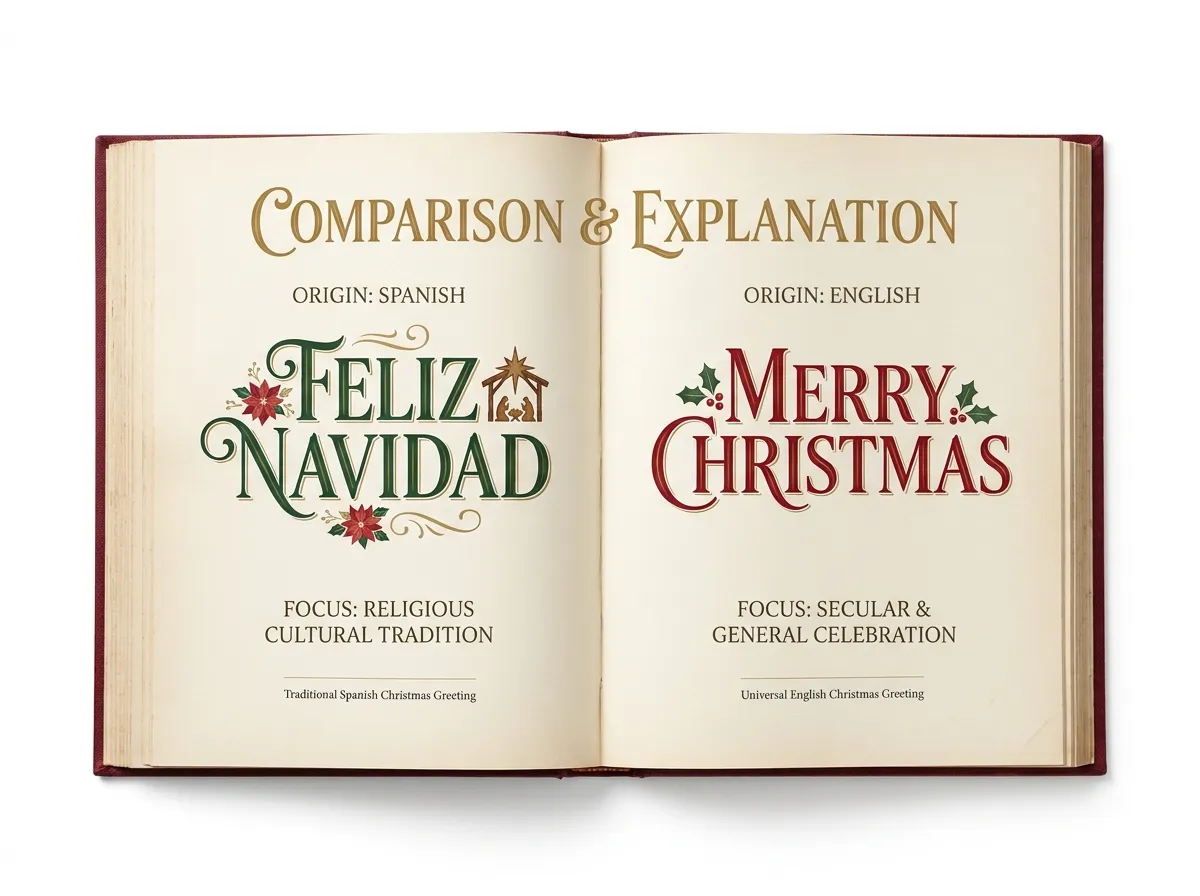
Feliz Navidad and Merry Christmas have the same basic meaning. The main difference is the language.
| Feature | Feliz Navidad | Merry Christmas |
| Language | Spanish | English |
| Meaning | Merry Christmas | Merry Christmas |
| Common use | Spanish-speaking communities | English-speaking communities |
| Tone | Warm and festive | Warm and festive |
Both phrases express good wishes during Christmas.
You can use Feliz Navidad even if you are speaking mostly English. Many people in the United States use Spanish holiday greetings because of their family backgrounds, friendships, or cultural traditions.
Neither phrase is more correct than the other. The best choice depends on the person you are greeting and the language they understand.
What Is the Origin of Feliz Navidad?
Feliz Navidad comes from Spanish, a language that developed from Latin and is spoken across Spain, Latin America, and many communities around the world.
The word feliz is related to the Latin word felix, which can mean happy, fortunate, or successful. Navidad comes from the Latin word nativitas, meaning birth.
In Christian use, Navidad refers to Christmas and the celebration of the birth of Jesus Christ.
Over time, Feliz Navidad became a common way to share Christmas wishes in Spanish-speaking communities.
Today, the phrase is understood in many parts of the world. It appears in songs, films, greeting cards, advertisements, and holiday conversations.
Why Is Feliz Navidad So Popular?
Feliz Navidad is popular because it is short, easy to remember, and full of holiday spirit. It is also used by millions of Spanish speakers around the world.
Several factors have helped the phrase become familiar to English speakers.
1. Spanish-Speaking Communities
Spanish is widely spoken in the United States. Many families use Spanish greetings as part of their daily lives and holiday traditions.
During Christmas, Feliz Navidad may be heard at family gatherings, community events, schools, and workplaces.
2. Christmas Music
Christmas songs have helped introduce the phrase to people who do not speak Spanish.
One of the best-known examples is the song “Feliz Navidad” by Puerto Rican singer-songwriter José Feliciano. Released in 1970, the song combines a simple Spanish Christmas greeting with English holiday wishes.
Its catchy tune and repeated lyrics have made it a lasting holiday favorite.
3. Movies and Television
Christmas movies and television shows often include Spanish holiday greetings. These moments help people recognize and remember the phrase.
4. Holiday Cards and Social Media
The phrase is common on Christmas cards, decorations, gift tags, and online posts. Its short length makes it easy to add to photos and holiday messages.
What Does the Song Feliz Navidad Mean?
The song “Feliz Navidad” shares the same basic meaning as the phrase: “Merry Christmas.”
José Feliciano wrote and recorded the song in 1970. It combines Spanish and English, making it easy for people from different language backgrounds to sing along.
The song’s central message is to wish people a Merry Christmas and a happy New Year.
Its simple words and cheerful melody have helped it become a popular part of Christmas celebrations in the United States and many other countries.
The song also shows how music can bring people together across languages and cultures.
When someone mentions Feliz Navidad in a conversation about music, they may be referring to the song rather than the greeting itself. Context helps you understand which meaning they intend.
How Is Feliz Navidad Celebrated in Different Cultures?
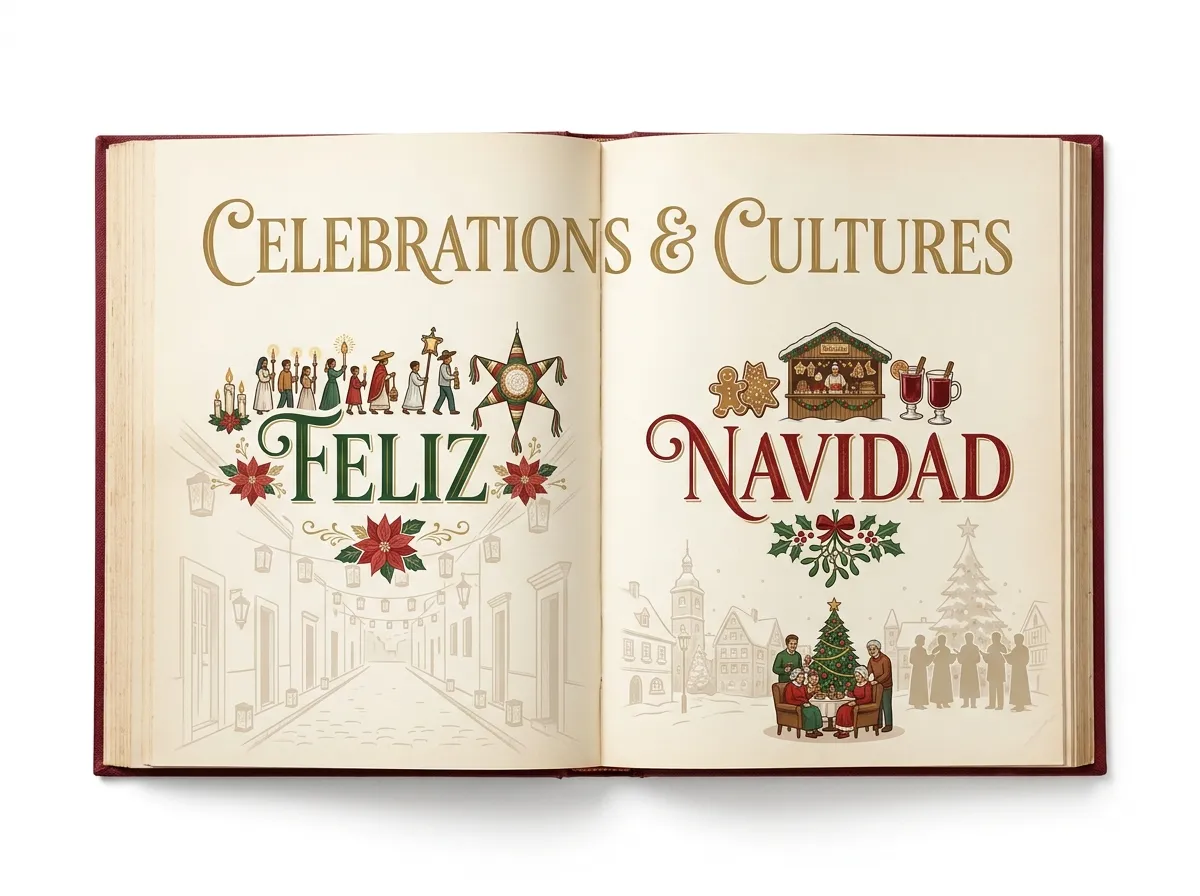
Feliz Navidad is used across many Spanish-speaking communities, but Christmas traditions vary from place to place.
The phrase itself remains a simple holiday greeting. The way people celebrate Christmas may depend on family customs, local history, religion, and regional traditions.
Christmas in Mexico
In Mexico, Christmas celebrations may include family meals, church services, decorations, and posadas. Posadas are gatherings that take place in the days leading up to Christmas and are linked to the journey of Mary and Joseph in Christian tradition.
People may say Feliz Navidad while visiting family, attending celebrations, or exchanging gifts.
Christmas in Puerto Rico
In Puerto Rico, Christmas is often marked by family gatherings, music, special foods, and community celebrations. Some families enjoy parrandas, which are festive musical visits to friends and relatives.
Feliz Navidad is a familiar greeting during these celebrations.
Christmas in Spain
In Spain, people may use Feliz Navidad when greeting friends, relatives, and coworkers. Holiday traditions can include special meals, Christmas markets, nativity scenes, and celebrations that continue into January.
Christmas in the United States
In the United States, Feliz Navidad is often used by Spanish-speaking families and by people who want to share a greeting in Spanish.
It can be heard at school events, holiday parties, workplaces, neighborhood gatherings, and family celebrations.
These examples show that the phrase has a shared meaning even when local customs differ.
Is Feliz Navidad Religious or Secular?
Feliz Navidad can be used in both religious and secular settings.
For Christians, Christmas is a religious holiday that celebrates the birth of Jesus Christ. In this setting, the greeting may be part of a church service, family prayer, or other faith-based celebration.
However, many people also use Feliz Navidad as a general holiday greeting. They may say it while exchanging gifts, sending cards, or wishing friends a happy holiday.
The phrase itself simply means “Merry Christmas.” It does not require a person to explain their religious beliefs.
As with any holiday greeting, it is helpful to consider the setting and the preferences of the person you are speaking with.
Common Mistakes to Avoid When Using Feliz Navidad
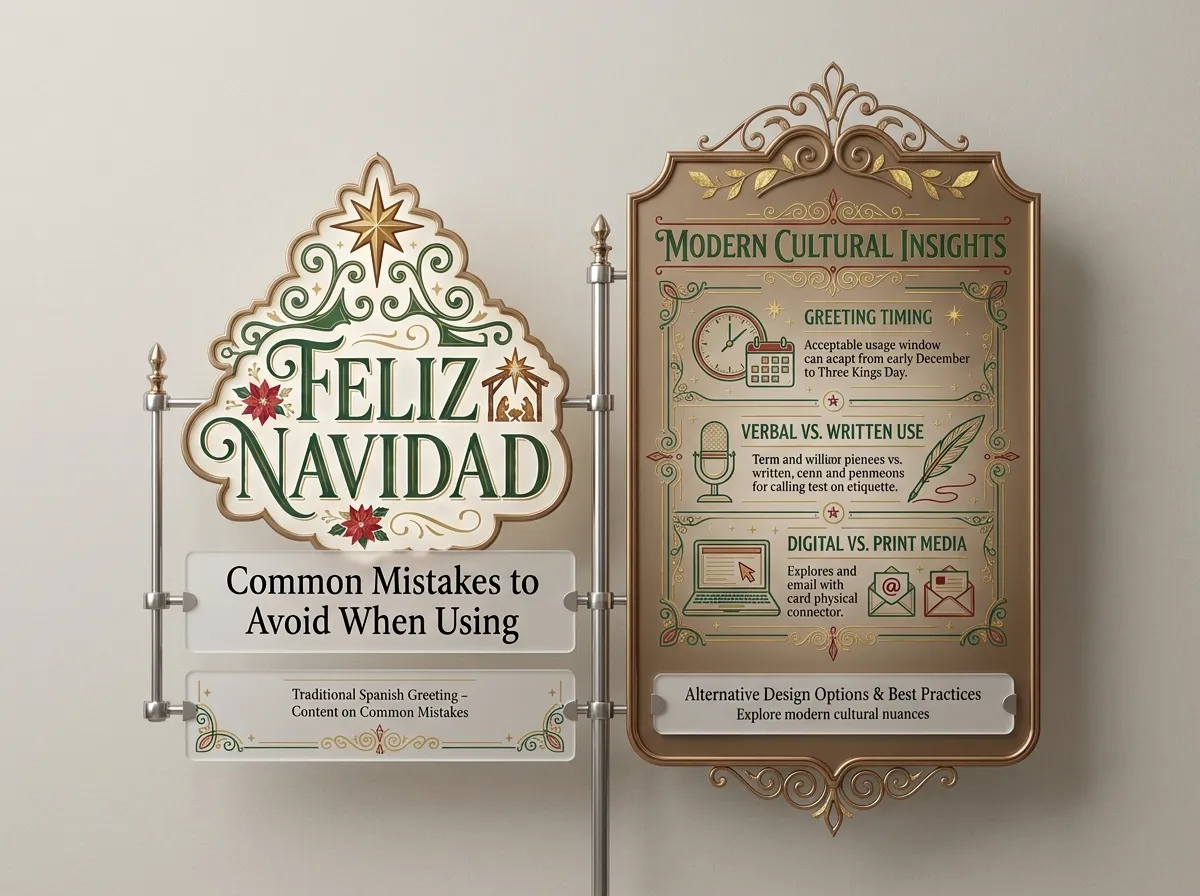
Feliz Navidad is easy to use, but a few simple tips can help you get it right.
1. Do Not Confuse It With Happy New Year
Feliz Navidad means “Merry Christmas,” not “Happy New Year.”
The Spanish phrase for Happy New Year is Feliz Año Nuevo.
You can combine the two greetings by saying:
“¡Feliz Navidad y próspero Año Nuevo!”
2. Do Not Forget the Meaning of Navidad
Navidad means Christmas. It does not mean holiday in every situation.
If you want to wish someone happy holidays in a broader sense, Felices fiestas is another useful Spanish phrase.
3. Remember That Pronunciation Can Vary
Spanish accents differ across countries and regions. The pronunciation guide in this article is a simple starting point, not the only possible accent.
4. Use the Phrase Naturally
You do not need to add a long Spanish sentence. A simple Feliz Navidad is enough for most greetings.
If you are unsure what else to say, return the greeting with a smile.
Related Spanish Holiday Phrases to Know
If you want to learn more Spanish greetings, these phrases are useful during the holiday season.
| Spanish phrase | English meaning |
| Feliz Navidad | Merry Christmas |
| Feliz Año Nuevo | Happy New Year |
| Felices fiestas | Happy holidays |
| Feliz Nochebuena | Merry Christmas Eve |
| Muchas felicidades | Best wishes or congratulations, depending on context |
| Que tengas una feliz Navidad | May you have a Merry Christmas |
| Paz y amor | Peace and love |
| Te deseo lo mejor | I wish you the best |
These phrases can help you write holiday cards, send messages, or greet Spanish-speaking friends.
Remember that some expressions may vary by country and situation. A short greeting is often the easiest choice when you are learning.
Article Summary
Feliz Navidad means “Merry Christmas” in English. It is a Spanish greeting used to share joy and good wishes during the Christmas season.
The phrase combines feliz, meaning happy, with Navidad, meaning Christmas. It is common in Spanish-speaking countries and communities around the world, including the United States.
You can use Feliz Navidad in person, in text messages, on holiday cards, or in social media captions. A simple reply is to say Feliz Navidad back or use ¡Igualmente!, which means “Same to you!”
The phrase is also known through José Feliciano’s popular 1970 Christmas song. Whether used in a song, a family gathering, or a holiday message, Feliz Navidad is a warm way to spread Christmas cheer.
FAQS
1. What does Feliz Navidad mean in English?
Feliz Navidad means “Merry Christmas” in English. It is a Spanish greeting used to wish someone joy during the Christmas season.
2. What does Feliz mean in English?
Feliz means “happy” or “joyful” in Spanish. It appears in greetings such as Feliz cumpleaños, meaning “Happy birthday.”
3. What does Navidad mean in English?
Navidad means “Christmas” in English. It refers to the Christmas holiday and, depending on context, the wider Christmas season.
4. How do you pronounce Feliz Navidad?
A common Latin American pronunciation is “feh-LEES nah-vee-DAHD.” Pronunciation varies slightly across Spanish-speaking regions.
5. How do you reply to Feliz Navidad?
You can reply with “¡Feliz Navidad!” or “¡Igualmente!”, which means “Same to you!” You can also say “¡Muchas gracias! ¡Feliz Navidad!” to thank the person and return the greeting.
6. Is Feliz Navidad Spanish or Mexican?
Feliz Navidad is Spanish, not a phrase used only in Mexico. It is common in Spain, Mexico, and many other Spanish-speaking countries.
7. Does Feliz Navidad mean Happy New Year?
No. Feliz Navidad means “Merry Christmas.” Happy New Year is Feliz Año Nuevo in Spanish.
8. Who sings the song Feliz Navidad?
José Feliciano, a Puerto Rican singer-songwriter, wrote and recorded the famous song “Feliz Navidad” in 1970.
9. Can non-Spanish speakers say Feliz Navidad?
Yes. Anyone can use Feliz Navidad to wish someone a Merry Christmas. It is a friendly greeting, and you do not need to speak Spanish fluently.
10. What is the difference between Feliz Navidad and Felices fiestas?
Feliz Navidad means “Merry Christmas,” while Felices fiestas means “Happy holidays.” The second phrase is broader and can be used for the holiday season in general.
11. Is Feliz Navidad formal or informal?
Feliz Navidad works in both formal and informal situations. You can use it with family, friends, coworkers, neighbors, and people you meet during the holiday season.
12. What does Feliz Navidad mean on social media?
On social media, Feliz Navidad usually means “Merry Christmas.” People use it in captions, holiday greetings, photos, videos, and festive messages.
Conclusion
Feliz Navidad means “Merry Christmas” in English. The phrase comes from Spanish, with feliz meaning happy and Navidad meaning Christmas. It is a simple, warm greeting used by people around the world during the holiday season.
You can say it to friends, family, coworkers, and neighbors, or use it in a card, text, or social media post. If someone wishes you Feliz Navidad, you can reply with the same phrase or say ¡Igualmente!
From everyday conversations to José Feliciano’s famous Christmas song, Feliz Navidad has become a familiar way to share holiday joy across cultures. Now that you know its meaning and pronunciation, you can use it with confidence.

Ryan Mitchell creates informative content about word definitions, acronyms, online slang, and modern communication. He enjoys exploring how people use language in text messages, on social media, and in daily life. Ryan focuses on delivering simple explanations and practical examples that help readers quickly understand the meaning of unfamiliar words and phrases.