

HOA stands for Homeowners Association. It is an organization that manages a shared residential community and helps keep it in good shape.
An HOA is common in many parts of the United States. You may find one in a neighborhood of single-family homes, a condominium building, a townhouse community, or a planned housing development.
The main goal of an HOA is to manage shared property, maintain community standards, and help protect the value and appearance of homes.
For example, imagine you live in a neighborhood with a swimming pool, a playground, and shared walking paths.
Someone must pay to clean the pool, repair the paths, and care for the playground. The HOA collects money from homeowners to help cover these costs.
An HOA may also set rules about how homes and shared spaces can be used.
These rules are usually listed in documents that homeowners receive when they buy a property.
Simple example: If a home listing says the property has a $150 monthly HOA fee, it means the owner must pay $150 each month to the association, unless the payment terms say otherwise.
HOA fees are usually separate from your mortgage, property taxes, and homeowners insurance.
What Does an HOA Do?
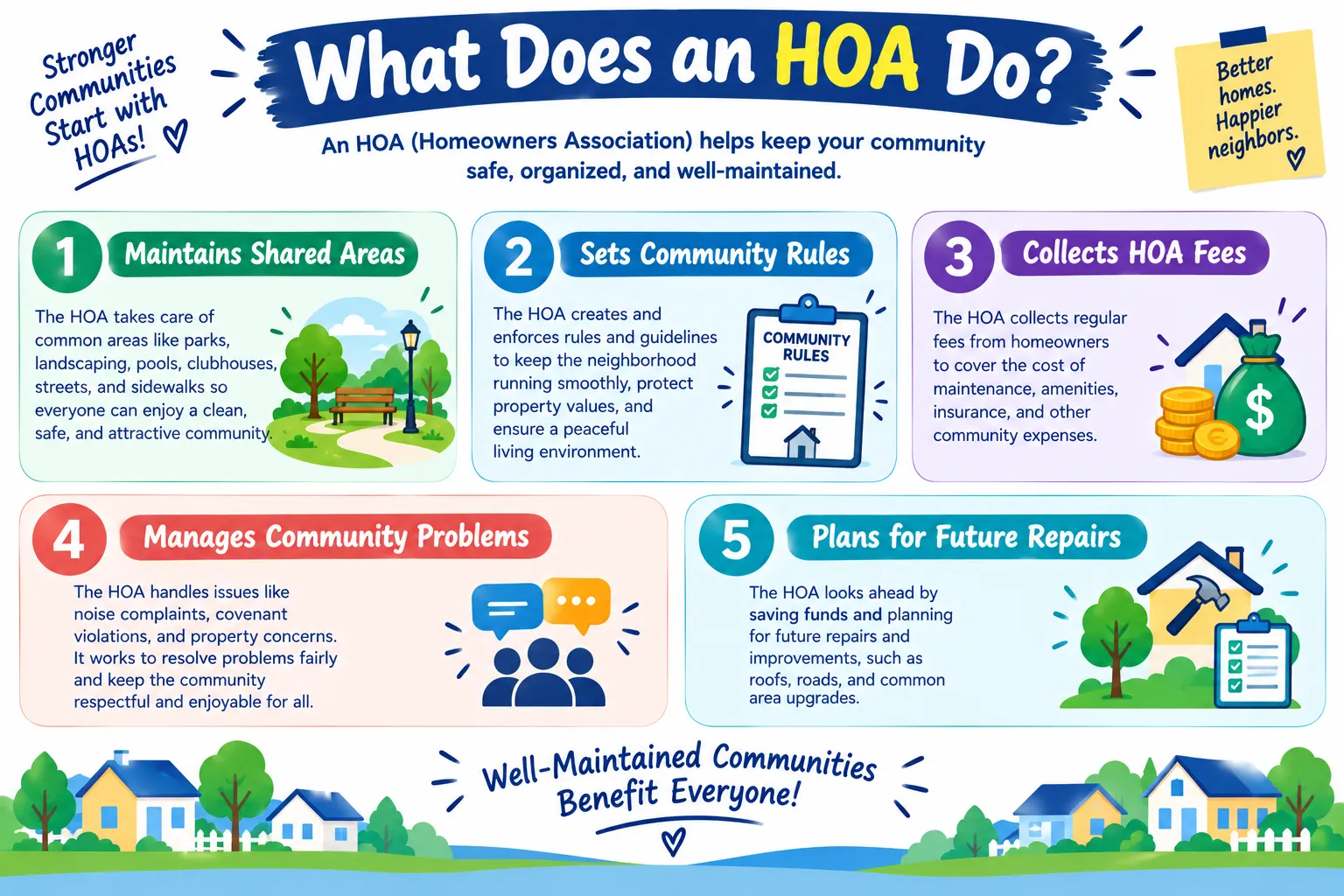
An HOA helps manage the community and takes care of shared responsibilities. Its exact duties depend on the community’s rules and governing documents.
Maintains Shared Areas
Many HOAs care for places that residents share, such as:
- Parks and playgrounds
- Swimming pools and fitness rooms
- Clubhouses
- Walking paths
- Shared gardens
- Private roads and sidewalks, where applicable
For example, an HOA may hire a company to cut the grass in a shared park or clean the community pool.
Sets Community Rules
An HOA may create rules to help keep the neighborhood safe, clean, and consistent.
Rules may cover:
- Lawn care and landscaping
- Exterior paint colors
- Parking and vehicle storage
- Noise levels
- Pets
- Fences and home additions
- Trash bins and outdoor storage
Not every HOA has the same rules. Some have strict limits, while others allow homeowners more freedom.
Manages Community Problems
An HOA may respond to complaints about noise, parking, property care, or misuse of shared spaces.
It may send notices when a homeowner breaks a rule.
The process for warnings, fines, and appeals depends on the governing documents and applicable state law.
How Does a Homeowners Association Work?
An HOA usually operates under a set of governing documents.
These documents explain how the association is run, what rules apply, and what homeowners must do.
The HOA Board
Many HOAs have a board of directors. Board members are often homeowners who are elected by other members of the association.
The board may:
- Approve budgets
- Review maintenance needs
- Hire service companies
- Enforce community rules
- Arrange meetings
- Plan repairs and improvements
Some HOAs hire a professional management company to handle daily tasks, collect payments, and respond to residents.
HOA Governing Documents
The documents that guide an HOA may include:
Declaration of Covenants, Conditions, and Restrictions (CC&Rs): These explain many of the rules and limits that apply to homes in the community.
Bylaws: These describe how the association operates, including board elections and meetings.
Rules and regulations: These provide more detailed guidance about things such as parking, pets, pools, and shared facilities.
Articles of incorporation: If the HOA is incorporated, these documents help establish the association as a legal organization.
The names and legal effect of these documents can vary by state and community.
How Much Are HOA Fees?
There is no single fee for every HOA. Some communities charge less than $50 per month, while some condominium buildings charge several hundred dollars or more.
According to the U.S. Census Bureau, the national median monthly condo or HOA fee was $135 in 2024. About 3 million U.S. owner households paid more than $500 per month. <Cite refs={“turn923766search11″”turn923766search11”}/>
Here is a simple example of how fees can differ:
| Community type | Possible monthly fee |
| Neighborhood with basic shared services | 25–100 |
| Community with a pool and clubhouse | 100–300 |
| Townhouse community with shared upkeep | 150–400 |
| Condo building with elevators and shared facilities | 300–700 or more |
<text color=”secondary” size=”sm”>These are illustrative ranges, not fixed national prices. Actual fees can be lower or higher depending on the community.</text>
What Do HOA Fees Cover?
HOA fees may pay for:
- Lawn care and landscaping
- Pool and clubhouse upkeep
- Cleaning shared hallways and entrances
- Repairs to shared property
- Insurance for common areas or shared structures
- Private road maintenance
- Security services, where offered
- Management and administrative costs
- Savings for future repairs
Are HOA Fees Paid Monthly?
Many HOAs collect fees every month, but some collect them quarterly or once a year.
For example, if your HOA charges $180 per month, your yearly cost is:
$180 × 12 = $2,160 per year.
You should include this cost in your home budget along with your mortgage, property taxes, insurance, utilities, and repairs.
What Is a Special Assessment?
A special assessment is an extra payment that an HOA may charge when regular dues and savings are not enough to cover an expense.
Imagine a condo building needs a major roof repair that costs more than the association has saved. Depending on its documents and state law, the HOA may charge owners an additional amount to help pay for the work.
If 50 owners each owe a $2,000 assessment, the association would collect $100,000.
What Are HOA Rules and Regulations?
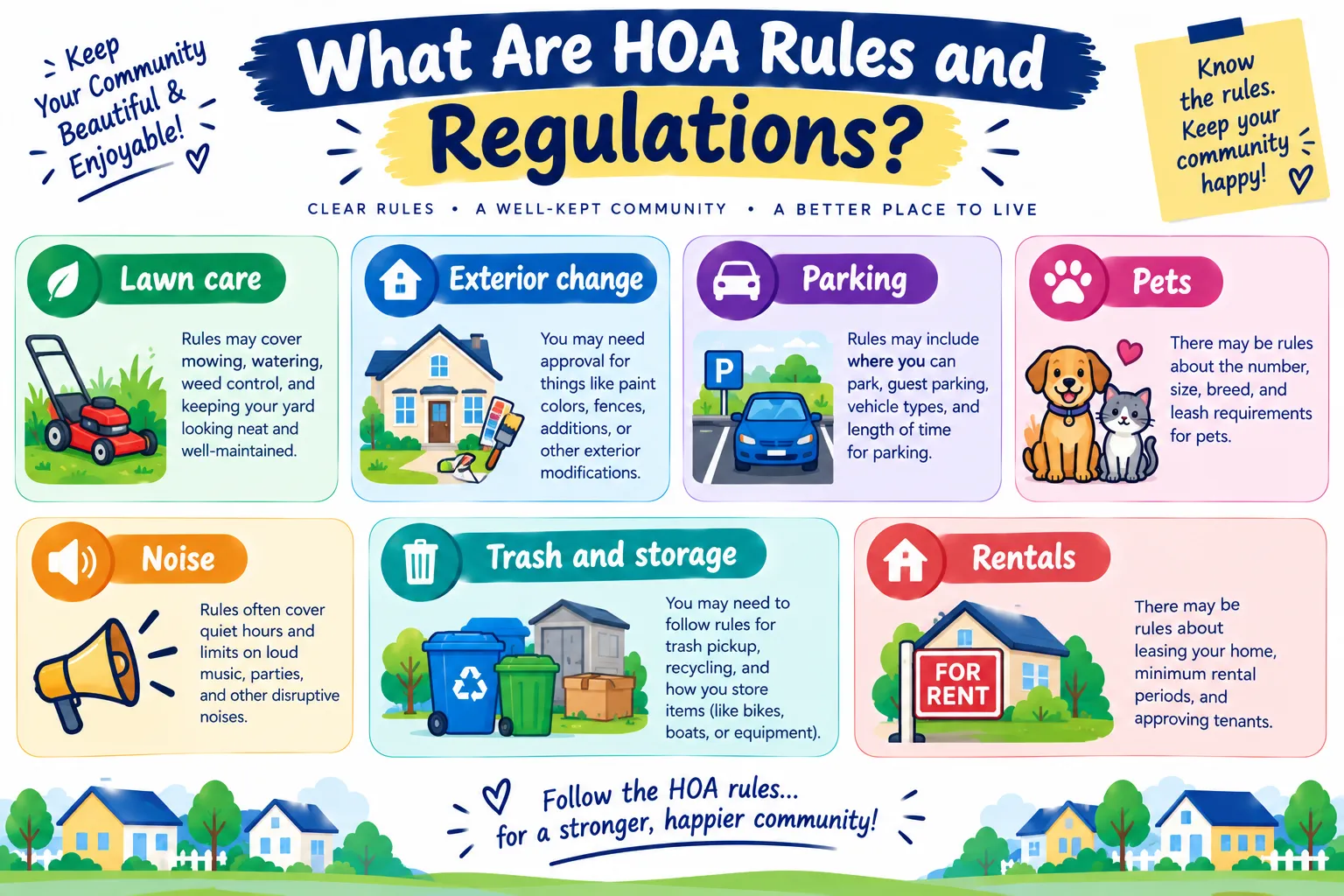
HOA rules explain what homeowners can and cannot do within the community.
The rules aim to protect shared spaces and maintain certain standards, but they can also limit personal choices.
The exact rules depend on the association’s governing documents and applicable law.
Common HOA Rules
Lawn care: You may need to keep your grass trimmed and remove weeds.
Exterior changes: You may need approval before changing your home’s paint color, roof, fence, or front door.
Parking: The HOA may limit where residents park cars, boats, trailers, or recreational vehicles.
Pets: Some associations set rules for pet size, number, noise, or use of shared spaces. The rules must comply with applicable law.
Noise: An HOA may set quiet hours or restrict activities that disturb neighbors.
Trash and storage: You may need to follow rules about trash bins, outdoor furniture, and stored items.
Rentals: Some HOAs limit short-term rentals or set other rental requirements. Buyers who plan to rent out a property should review these rules before making an offer.
What Happens If You Break an HOA Rule?
The process depends on the HOA documents and local law. It may include:
- A warning or notice of violation.
- A chance to correct the problem.
- A hearing or review, where required.
- A fine or other permitted action if the violation continues.
For example, if you leave a vehicle in a restricted area, the HOA may send a notice asking you to move it.
If you do not correct the issue, further action may follow under the association’s rules.
You should read any notice carefully. If you believe the HOA made a mistake, check the appeal process and keep copies of your messages and documents.
What Are the Pros and Cons of Living in an HOA?
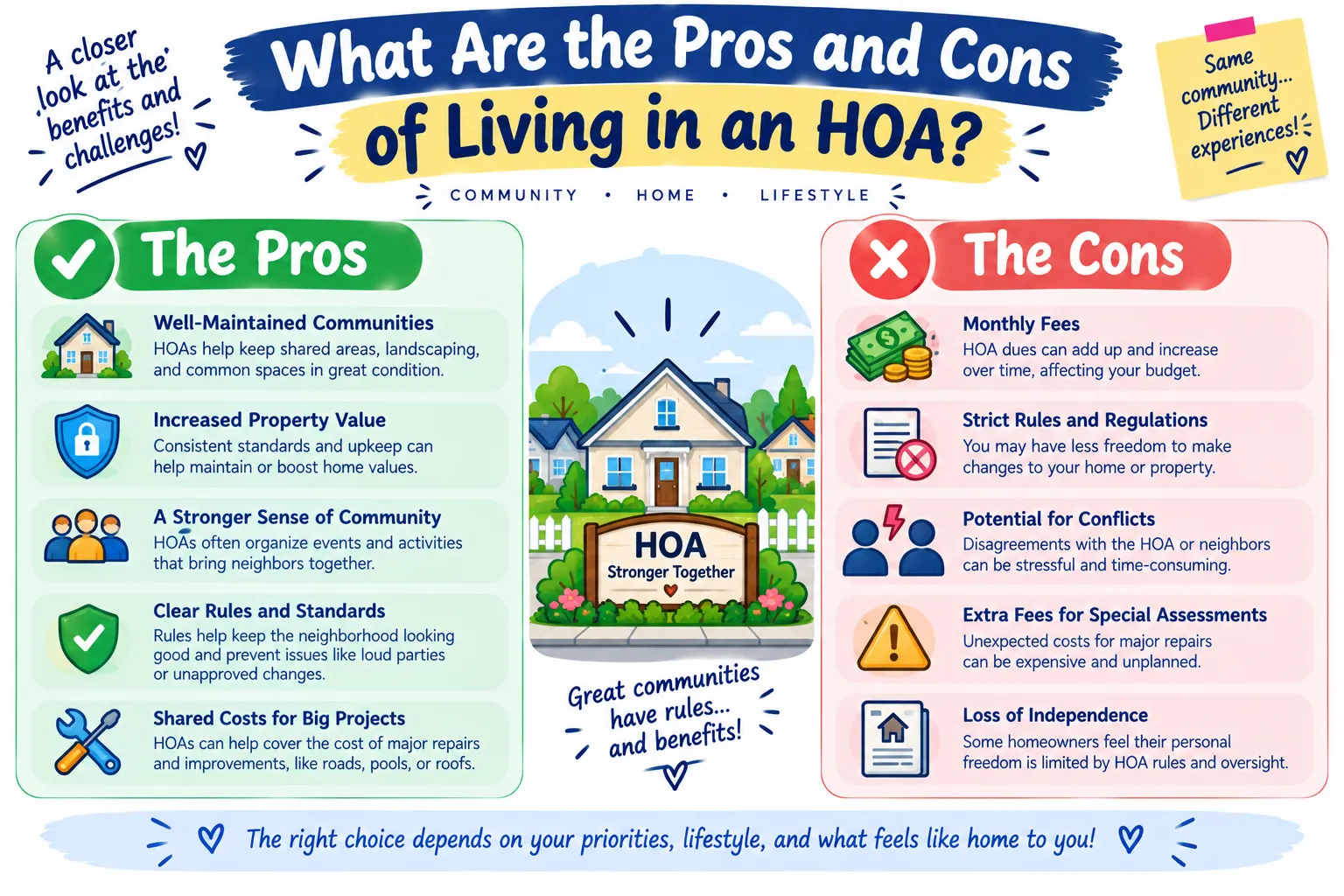
Living in an HOA community can be helpful for some homeowners and frustrating for others. Your experience often depends on the quality of the association, the fees, and how much freedom you want over your property.
Benefits of an HOA
Well-kept shared areas
An HOA can arrange regular care for parks, pools, gardens, and other common spaces.
Access to amenities
Some communities offer pools, gyms, playgrounds, walking paths, or clubhouses that residents can use.
Shared maintenance
In certain communities, the HOA handles tasks that would otherwise require each homeowner to arrange services alone.
Clear community standards
Rules may help limit problems such as neglected lawns, blocked shared roads, or misuse of common areas.
A stronger sense of community
Community events and shared facilities may give neighbors more chances to meet and connect.
Disadvantages of an HOA
1. Extra costs
HOA fees increase the cost of owning a home. Fees may also rise when expenses increase.
2. Limits on personal choices
You may not be free to make every exterior change or use your property exactly as you wish.
3. Extra charges
Special assessments can create unexpected expenses, especially when an association has not saved enough for major repairs.
4. Disputes with the board
Homeowners may disagree with the board about rules, spending, repairs, or how violations are handled.
5. Time and paperwork
You may need to attend meetings, request approvals, read notices, or follow a formal process to resolve problems.
Is an HOA Worth It?
An HOA may be worth the cost if you value shared amenities, managed common areas, and clear community standards.
It may be less appealing if you want more freedom to change your home, keep monthly costs low, or avoid community rules.
The best choice depends on the actual services, financial health, and restrictions of the association. Do not decide based on the fee alone.
Compare what you pay with what you receive.
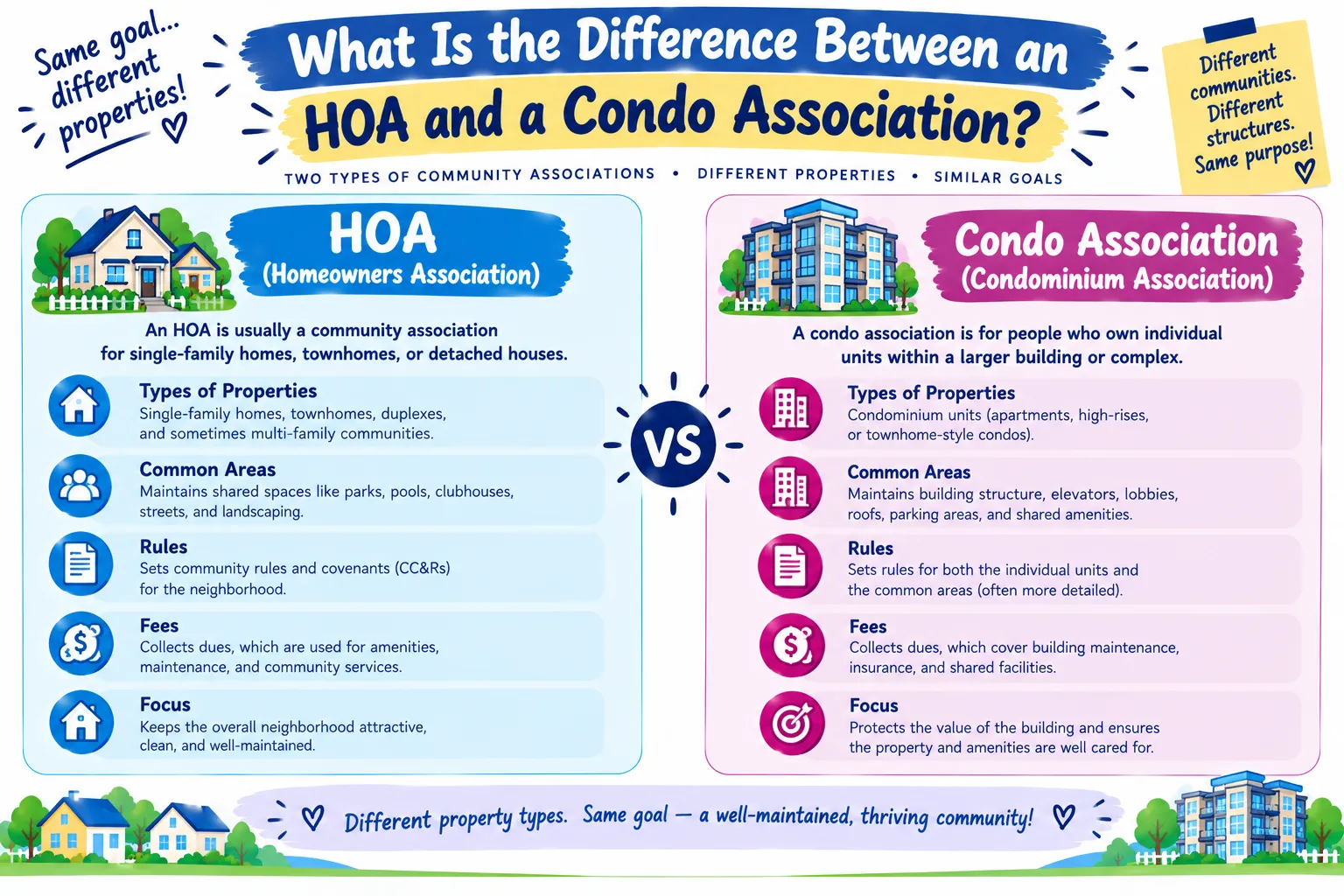
What Is the Difference Between an HOA and a Condo Association?
An HOA and a condo association both help manage residential communities, but they may have different duties.
An HOA often manages shared spaces in a neighborhood of separate houses. A condo association often has more responsibility for shared parts of a building.
| Feature | HOA | Condo association |
| Common property | Parks, roads, pools, or shared spaces | Hallways, elevators, roofs, and other shared building areas |
| Property type | Houses, townhomes, and some condos | Condominium units |
| Maintenance | Depends on the community rules | Often includes more building maintenance |
| Fees | Vary by services and amenities | May be higher when more building services are included |
The terms can overlap. A condominium community may also have a homeowners association, and the association’s legal structure can vary by state.
Before you buy, check which organization manages the property and what its fees cover.
Can You Buy a House Without an HOA?
Yes. Many homes in the United States are not part of a homeowners association.
A house without an HOA may give you more freedom to choose your paint colors, landscape your yard, park vehicles, or make exterior changes.
You also avoid HOA dues if there is no applicable association fee.
However, a home without an HOA is not free from all rules.
City and county laws, building codes, zoning rules, and other recorded restrictions may still apply.
How Can You Tell If a Home Has an HOA?
If you are looking at a home for sale, take these steps:
- Read the listing. Look for an HOA fee or a note about a homeowners association.
- Ask the real estate agent. Confirm whether membership and payments are required.
- Review the property documents. Check for recorded restrictions and association information.
- Ask about extra costs. Find out whether special assessments or fee increases are planned.
- Read the rules before closing. Make sure the restrictions fit your needs.
Do not rely only on the listing. Ask for the current fee schedule, governing documents, and other important records before you commit to buying the home.
What Should You Check Before Buying a Home in an HOA?
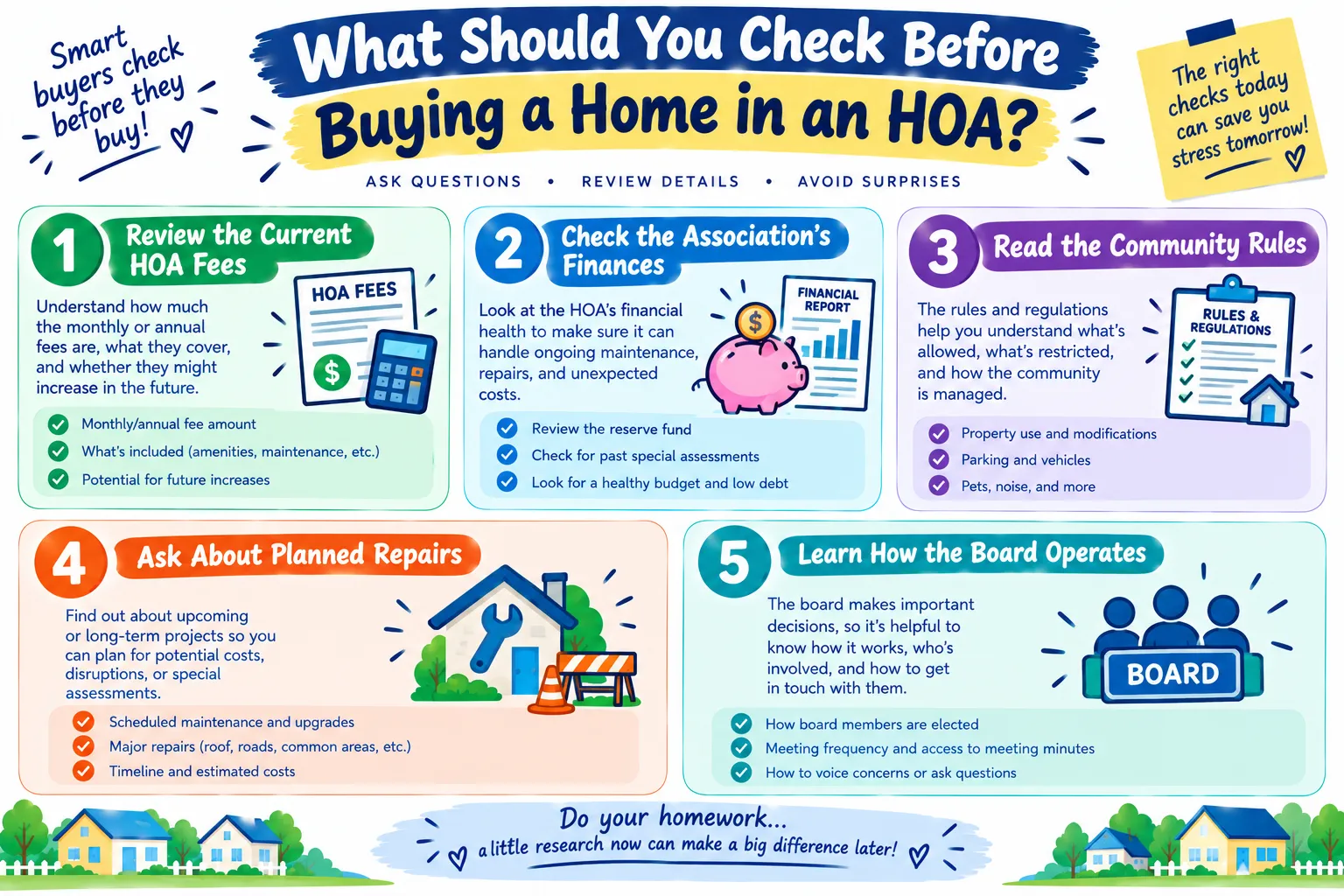
A low HOA fee may look attractive, but it does not always mean the association is in good financial shape.
A higher fee may cover useful services, but you should still check whether the cost is reasonable for your budget.
Use this checklist before buying.
Review the Current HOA Fees
Ask how much you must pay and when payments are due. Find out whether the fee covers monthly services, shared utilities, insurance, or building maintenance.
Compare the cost with similar communities in the same area.
Check the Association’s Finances
Ask to review the current budget and available financial records. If possible, check the reserve study, which estimates the cost of future repairs and whether the association is saving enough to pay for them.
A poorly funded association may need to raise fees or charge special assessments later.
Read the Community Rules
Check the rules about pets, parking, rentals, exterior changes, landscaping, and other matters that affect your daily life.
If you plan to work from home, keep several pets, or rent out your property, pay close attention to any related restrictions.
Ask About Planned Repairs
Find out whether the community needs major repairs. For condos, ask about roofs, elevators, plumbing, exterior walls, and other shared building systems.
Also ask whether the HOA has approved or discussed special assessments.
Learn How the Board Operates
Ask how residents can attend meetings, vote, raise concerns, and request changes to the rules.
A clear process for sharing information and resolving complaints can make community life easier.
Can You Refuse to Pay HOA Fees?
If you own a property in a community where HOA payments are legally required, you generally cannot stop paying simply because you disagree with the board or do not use the amenities.
Unpaid fees may lead to late charges, collection efforts, legal action, or a lien against the property. In some circumstances, state law allows an HOA to seek foreclosure for unpaid assessments.
The exact rules and procedures depend on the state, the type of property, and the association’s governing documents.
Can You Change HOA Rules?
In many communities, homeowners have ways to propose changes to HOA rules. The process depends on the type of rule and the governing documents.
For example, a homeowner may ask the board to change a parking rule or allow a different fence style.
Some changes can be approved by the board. Others may require a vote of homeowners or a formal amendment to the governing documents.
Article Summary
Here are the main points to remember about HOA meaning:
- HOA stands for Homeowners Association.
- An HOA manages shared spaces and may set rules for a residential community.
- HOA fees pay for services, maintenance, and other approved community expenses.
- Fees vary widely based on location, property type, and amenities.
- Special assessments are extra charges that may be needed for major expenses.
- HOA rules can affect parking, pets, landscaping, rentals, and home improvements.
- Living in an HOA community offers benefits but may limit personal freedom.
- Buyers should review the fees, rules, finances, and repair plans before purchasing a home.
FAQ
1. What does HOA stand for?
HOA stands for Homeowners Association. It is an organization that manages shared areas and helps enforce community rules in certain residential neighborhoods, condo communities, and planned developments.
2. What does HOA mean when buying a house?
When buying a house, HOA means the property is part of a community managed by a homeowners association. You may need to pay regular fees and follow the association’s rules.
3. What are HOA fees used for?
HOA fees may cover landscaping, shared facilities, maintenance, management, insurance for common areas, and savings for future repairs. The exact coverage depends on the community.
4. Are HOA fees mandatory?
In many HOA communities, homeowners must pay the required fees as a condition tied to ownership of the property.
However, some neighborhood associations are voluntary. Always check the governing documents and local law.
5. Can an HOA take your house?
In some states and circumstances, an HOA can seek foreclosure over unpaid assessments. This is not automatic, and legal requirements vary.
If you receive a collection or foreclosure notice, seek qualified local legal advice promptly.
6. Can an HOA raise its fees?
Yes, an HOA may be able to raise its fees to cover higher costs or planned expenses. The process and any limits depend on the association’s documents and state law.
7. Do HOA fees include property taxes?
Usually, no. HOA fees and property taxes are separate costs.
Your HOA fee pays for approved community expenses, while property taxes support local government services.
8. Do HOA fees include homeowners insurance?
Not usually for the entire home. An HOA may pay for insurance covering common areas or shared building structures. Homeowners may still need their own policy.
Condo insurance needs depend on the building’s master policy and the unit owner’s responsibilities.
9. What does HOA mean in a condo listing?
In a condo listing, HOA usually refers to the association that manages the building or community. The fee may cover shared maintenance, building insurance, elevators, common utilities, and amenities, depending on the property.
10. Can you live in an HOA community and ignore its rules?
Generally, no. If the rules are valid and apply to your property, you may have to follow them.
You can challenge a rule through the proper process if you believe it violates the governing documents or applicable law.
11. Is an HOA the same as a landlord?
No. A landlord owns or manages a rental property and has responsibilities under a lease. An HOA manages a community and enforces applicable rules.
An HOA does not automatically become your landlord just because you own a home in its community.
12. What does HOA mean in a real estate listing?
It means a homeowners association is connected to the property or community. The listing may also show the association fee, payment schedule, or amenities.
Buyers should confirm these details with the seller or agent.
Conclusion
So, what does HOA mean? It stands for Homeowners Association, an organization that manages shared spaces, collects fees, and sets rules for a residential community.
An HOA can make life easier by handling common areas and providing amenities.
However, it can also add costs and limit some choices about your property.
If you are planning to buy a home, take time to review the HOA fees, rules, financial records, and maintenance plans.
Make sure you understand what your payments cover and what responsibilities remain yours.
The right choice depends on your budget, lifestyle, and personal preferences.
By learning how an HOA works before you buy, you can make a better choice and avoid costly surprises.

Emma Wilson is a writer at MeaningVibz who enjoys exploring emoji meanings, texting expressions, and online communication trends. She helps readers understand how emojis and slang are used in different situations by providing clear explanations and relatable examples for everyday messaging.