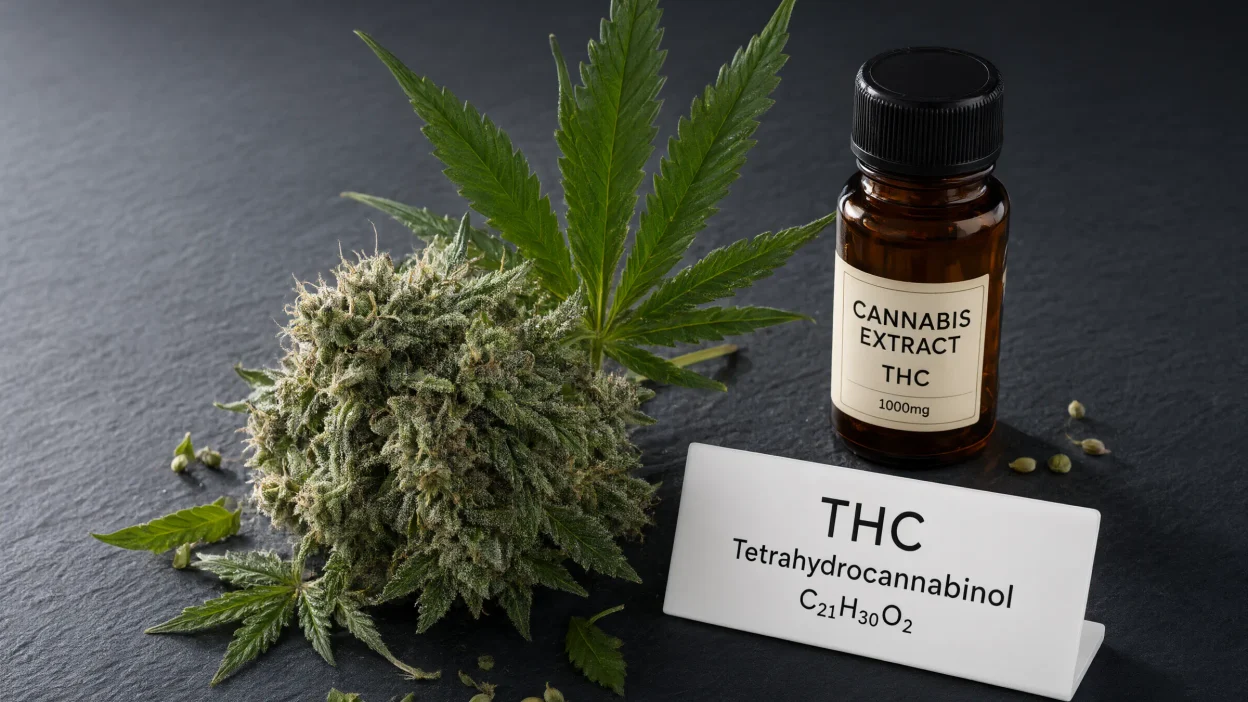
THC stands for tetrahydrocannabinol. It is a chemical compound found in the cannabis plant. The full name may look hard to read, but the basic idea is simple: THC is the main compound in cannabis that causes the high linked to marijuana.
THC can change how the brain works for a short time. It may affect mood, memory, focus, time sense, and body movement. The effects can differ from person to person.
You may see THC mentioned in many places, including:
- Cannabis product labels
- Medical and health articles
- News reports about marijuana laws
- Drug testing information
- Discussions about CBD and hemp
- Research on cannabis and the human body
THC is not the only compound found in cannabis. The plant contains many other compounds, including CBD, which has different effects.
What Is THC?
THC is a type of cannabinoid. Cannabinoids are compounds that interact with a system in the human body called the endocannabinoid system.
This system helps regulate several body functions, such as mood, sleep, appetite, memory, and pain signals. THC can affect this system by acting on certain receptors in the brain and body.
The cannabis plant contains different forms of THC-related compounds. One well-known form is delta-9 THC, which is often the main compound people mean when they say THC.
THC can be found in products such as:
- Cannabis flower
- Oils and extracts
- Edibles, such as gummies
- Drinks containing cannabis compounds
- Some products sold for medical use
The amount of THC in a product can vary widely. A product with a higher THC level may have stronger effects, but the result also depends on the person, the product, and how it is used.
How Does THC Work in the Body?
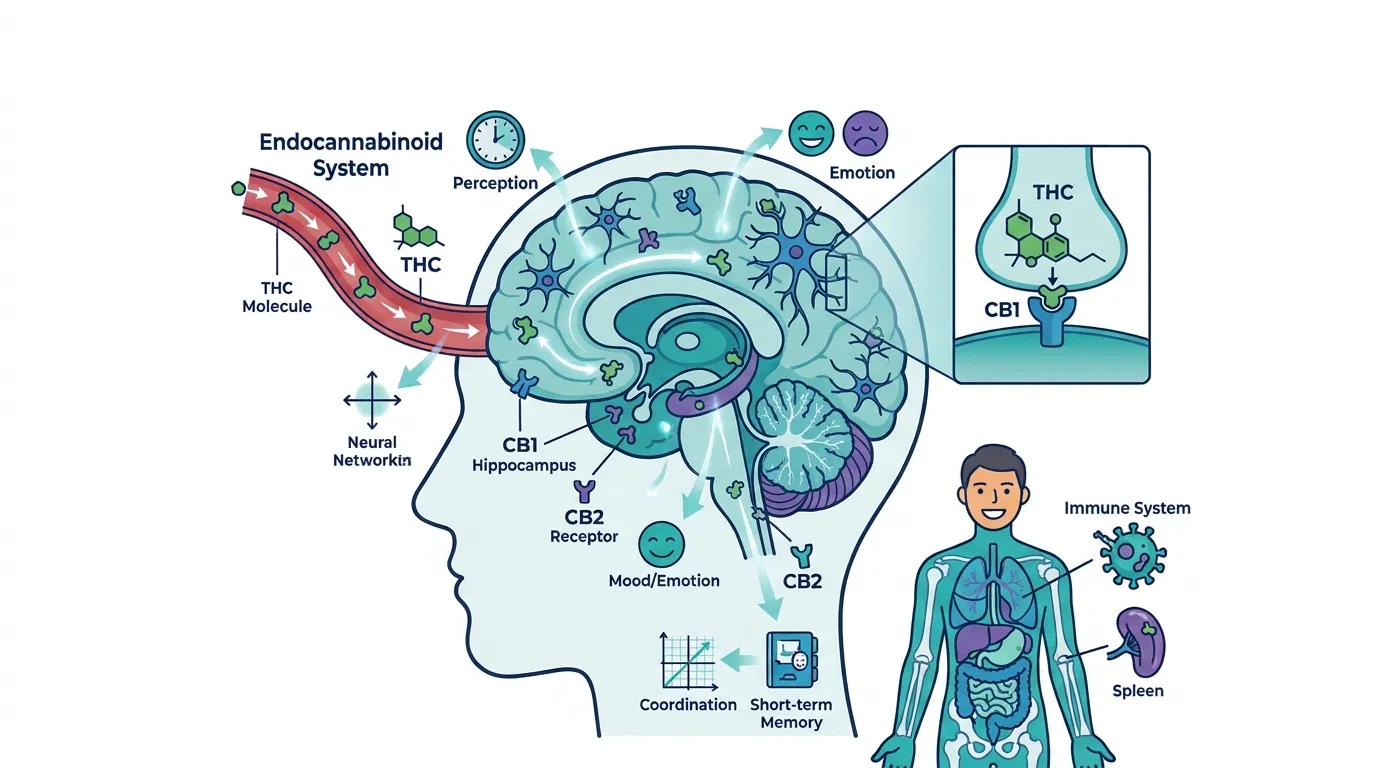
THC works by interacting with the body’s endocannabinoid system. This system contains receptors that help cells send and receive signals.
Two key receptors are called CB1 and CB2. CB1 receptors are common in the brain and central nervous system. THC can bind to these receptors and change how some signals work.
This helps explain why THC may affect several parts of the body and mind.
THC and the Brain
When THC acts on the brain, it can change a person’s mood, memory, attention, and sense of time. Some people feel relaxed or happy. Others may feel nervous, confused, or uneasy.
THC can also affect the brain areas involved in balance and movement. This is one reason a person under its influence may have trouble driving or doing tasks that need quick reactions.
THC and Appetite
THC may increase hunger in some people. This effect is often called getting the “munchies.”
THC can affect the signals involved in hunger and the way food smells or tastes. However, not everyone has the same response.
THC and Memory
THC can make it harder to form new memories while its effects are active. It may also affect attention and learning.
These effects can be more concerning for teens and young adults because the brain continues to develop into the mid-20s.
What Are the Effects of THC?
The effects of THC depend on many factors, including the amount, the product type, a person’s past experience, and their health.
Some effects may feel pleasant, while others can be uncomfortable or unsafe.
Common Short-Term Effects
Possible short-term effects include:
- Feeling high or relaxed
- Changes in mood
- A stronger sense of taste or smell
- Increased appetite
- A different sense of time
- Trouble with short-term memory
- Slower reaction time
- Reduced attention and coordination
- Dry mouth and red eyes
- A faster heart rate
Not every person will notice all these effects. Some may feel calm, while others may feel anxious or have trouble thinking clearly.
Unwanted Effects of THC
THC can also cause unwanted effects, especially when the dose is high or the person is not used to it.
These may include:
- Anxiety or panic
- Fear or suspicious thoughts
- Dizziness
- Confusion
- Nausea
- Poor balance
- Difficulty focusing
- An unpleasant or intense high
In some cases, high doses can cause severe confusion or hallucinations. People with certain mental health risks may be more likely to experience serious problems.
If someone has chest pain, trouble breathing, a seizure, or cannot be awakened after using a cannabis product, seek emergency medical help.
How Long Do THC Effects Last?
There is no single answer because the timing depends on how THC enters the body.
Smoking or Vaping
When cannabis is smoked or vaped, THC enters the blood through the lungs. Effects can begin within minutes. They often feel strongest early on, though some effects may last for several hours.
Reaction time and judgment may remain affected even after the person feels less high.
Edibles
Edibles are foods or drinks that contain THC. The body must digest them before the effects become noticeable.
Effects may take 30 minutes to two hours or longer to begin. They can last much longer than the effects of smoking or vaping, sometimes for several hours.
This delay can make edibles harder to judge. A person may take more before the first amount has fully taken effect.
What Is THC Used For?
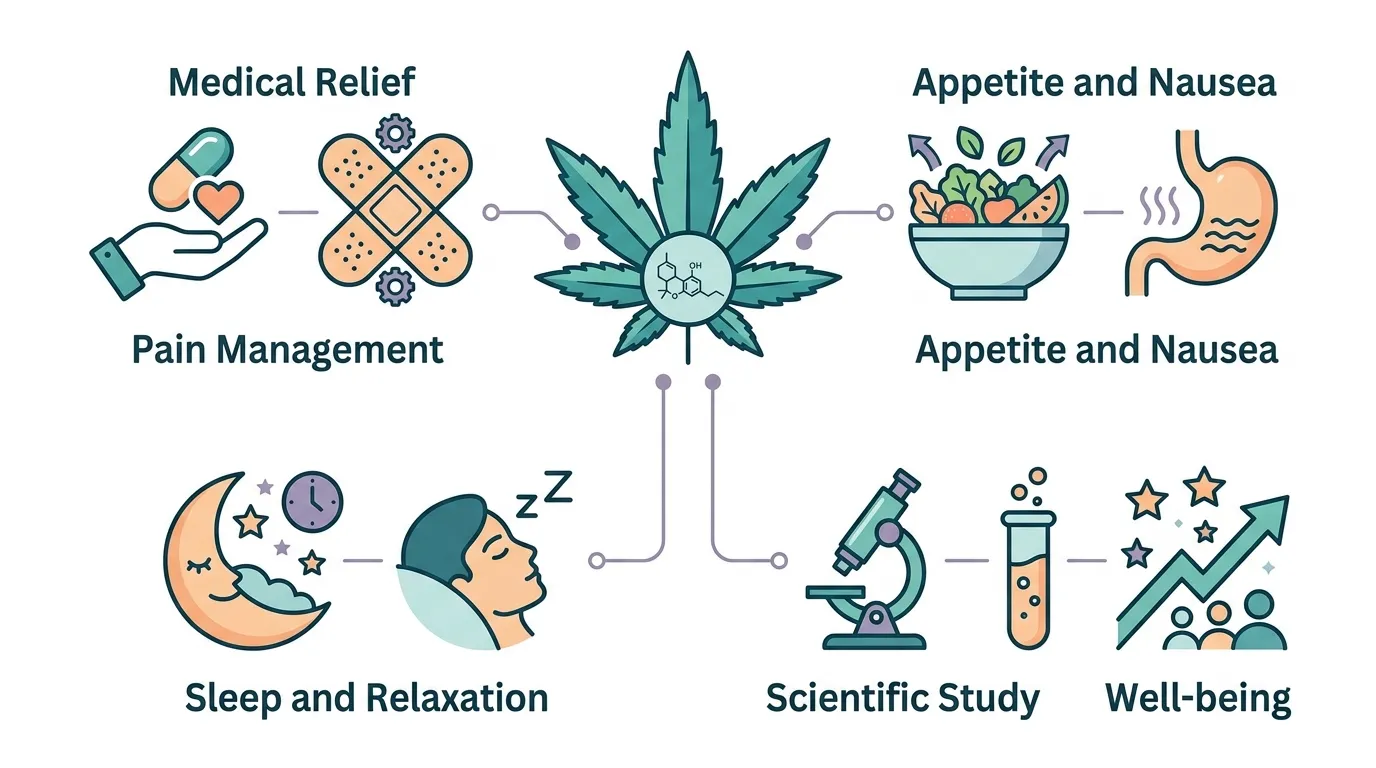
THC is discussed in both medical and nonmedical settings. The legal status and approved uses of THC products vary by state and country.
Medical Uses
Certain THC-containing medicines have approved medical uses. For example, some prescription medicines containing synthetic THC are used to help treat nausea and vomiting caused by chemotherapy or to help with appetite loss in specific medical settings.
Researchers are also studying cannabis compounds for other possible uses. However, evidence varies by condition, and not every product sold as cannabis has been shown to be safe or effective for a medical problem.
A product being sold in a store does not mean it is approved to treat a disease. Anyone considering THC for a health concern should talk with a qualified health professional.
Recreational Use
Some adults use THC for its mind-altering effects. Depending on local law, cannabis products may be legal for adult recreational use in some places and illegal in others.
Legal access does not remove the risks. THC can affect judgment, coordination, and memory, and it may cause unpleasant reactions.
Research
Scientists study THC to better understand how it affects the brain and body. Research looks at its possible medical value, side effects, long-term effects, and differences between product types.
The results can help guide medical decisions and public health rules.
What Is the Difference Between THC and CBD?
THC and CBD are two well-known compounds found in cannabis. Both interact with the body’s endocannabinoid system, but they do not have the same effects.
CBD stands for cannabidiol. Unlike THC, CBD does not usually cause the typical cannabis high.
| Feature | THC | CBD |
| Full name | Tetrahydrocannabinol | Cannabidiol |
| Causes a high | Yes, commonly | No typical high |
| May affect memory | Yes | Not in the same way as THC |
| Common forms | Oils, flower, edibles | Oils, creams, capsules, and other products |
| Medical use | Certain THC medicines have approved uses | One prescription CBD medicine is approved for certain seizure disorders |
| Possible side effects | Anxiety, poor coordination, and memory problems | Tiredness, diarrhea, and drug interactions can occur |
Neither compound is risk-free. CBD products may contain THC, even when the amount is small. Product quality and labeling can also vary.
Can CBD Products Contain THC?
Yes. Some CBD products contain small amounts of THC. Others are made to remove most or all THC.
The three common labels are:
- Full-spectrum CBD: Contains CBD and other cannabis compounds, including some THC where permitted.
- Broad-spectrum CBD: Contains CBD and other cannabis compounds and is generally made to remove THC.
- CBD isolate: Contains mostly CBD, without other cannabis compounds intended to remain.
These labels do not guarantee that a product contains exactly what the seller claims. If THC exposure is a concern, check reliable laboratory test results and the product’s full ingredient information.
What Does THC Mean on a Product Label?
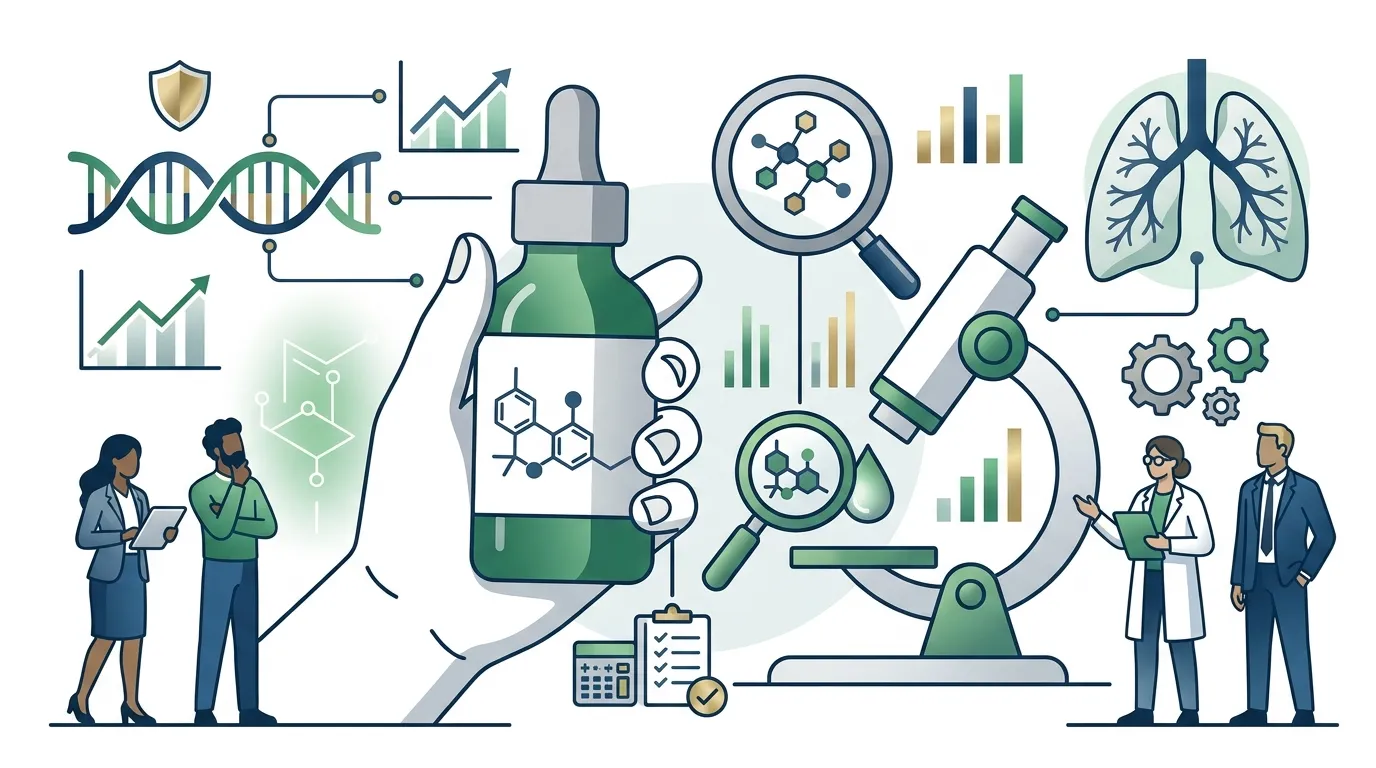
When you see THC on a product label, it usually tells you that the product contains tetrahydrocannabinol or provides information about its amount.
The meaning of a label can depend on the product.
THC Percentage
A THC percentage shows how much THC is present in a product by weight. This is common on cannabis flower and some extracts.
For example, a label showing 20% THC means that THC makes up about 20% of the product’s weight under the stated measurement method.
A higher percentage does not tell you exactly how a person will feel. The amount used, the way it enters the body, and individual sensitivity also matter.
THC in Milligrams
Edibles and other products may list THC in milligrams, often written as “mg.”
For example, a package might list 5 mg of THC per serving and 50 mg for the whole package. These numbers describe different amounts: one serving versus the entire package.
Always check the serving size and the total amount. A package may contain several servings, and eating the whole package can mean taking much more THC than expected.
THC-Free Labels
A label that says “THC-free” means the product is presented as containing no THC. However, the exact meaning and testing standards may vary.
Some products may contain trace amounts that are below a test’s detection limit. If avoiding THC is important for medical, legal, work, or drug-testing reasons, review the available lab report and consult a qualified professional when needed.
What Is the Difference Between Delta-9 THC and Delta-8 THC?
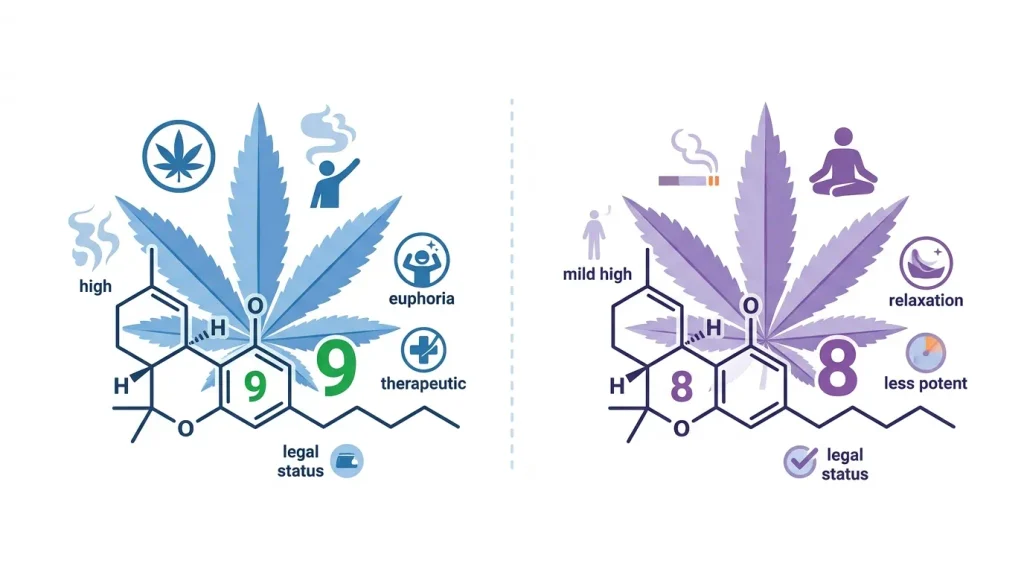
You may also see the terms delta-9 THC and delta-8 THC. They refer to different forms of tetrahydrocannabinol.
Delta-9 THC
Delta-9 THC is the main intoxicating form of THC found in cannabis. It is usually the compound people mean when they talk about the high caused by marijuana.
It can affect memory, attention, mood, coordination, and reaction time.
Delta-8 THC
Delta-8 THC is another form of THC. It can also cause a high, and its effects may feel different from those of delta-9 THC.
Some delta-8 products are made by changing CBD or other compounds through chemical processes. Product strength, purity, and safety can vary. Contaminants or unwanted by-products may be present when production is poorly controlled.
Delta-8 THC is not risk-free just because it may be described as milder. It can still cause impairment and unwanted effects.
Are Delta-8 and Delta-9 THC Legal?
The answer depends on the product, its source, and the laws that apply where it is sold or used.
Federal and state cannabis laws in the United States can differ, and rules may change. Do not assume that a product is legal simply because it is sold online or in a store. Check current official rules for your location.
Can THC Show Up on a Drug Test?
Yes. THC use can lead to a positive drug test, but the result depends on the type of test and what it detects.
Many common drug tests look for THC metabolites. These are substances the body creates as it breaks THC down.
How Long Can THC Be Detected?
There is no fixed detection window for everyone. It depends on factors such as how often a person uses THC, the amount used, body chemistry, and the test method.
- Urine tests: May detect THC metabolites for days or weeks, and sometimes longer after frequent use.
- Blood tests: Often focus on more recent exposure, but detection varies.
- Saliva tests: May detect recent use, though the window differs by test and use pattern.
- Hair tests: May show evidence of past exposure over a longer period, often measured in months.
A positive result does not always prove that a person is currently impaired. Likewise, a negative result does not always prove that a person has never used THC.
Can CBD Cause a Positive THC Test?
It can. Some CBD products contain THC that may contribute to a positive result. Mislabeling or trace contamination can also be a concern.
People who must pass workplace, sports, or other drug tests should understand that using a product labeled CBD does not guarantee a negative result.
No general rule can promise that THC will leave the body within a certain number of hours or days.
What Are the Risks of THC?
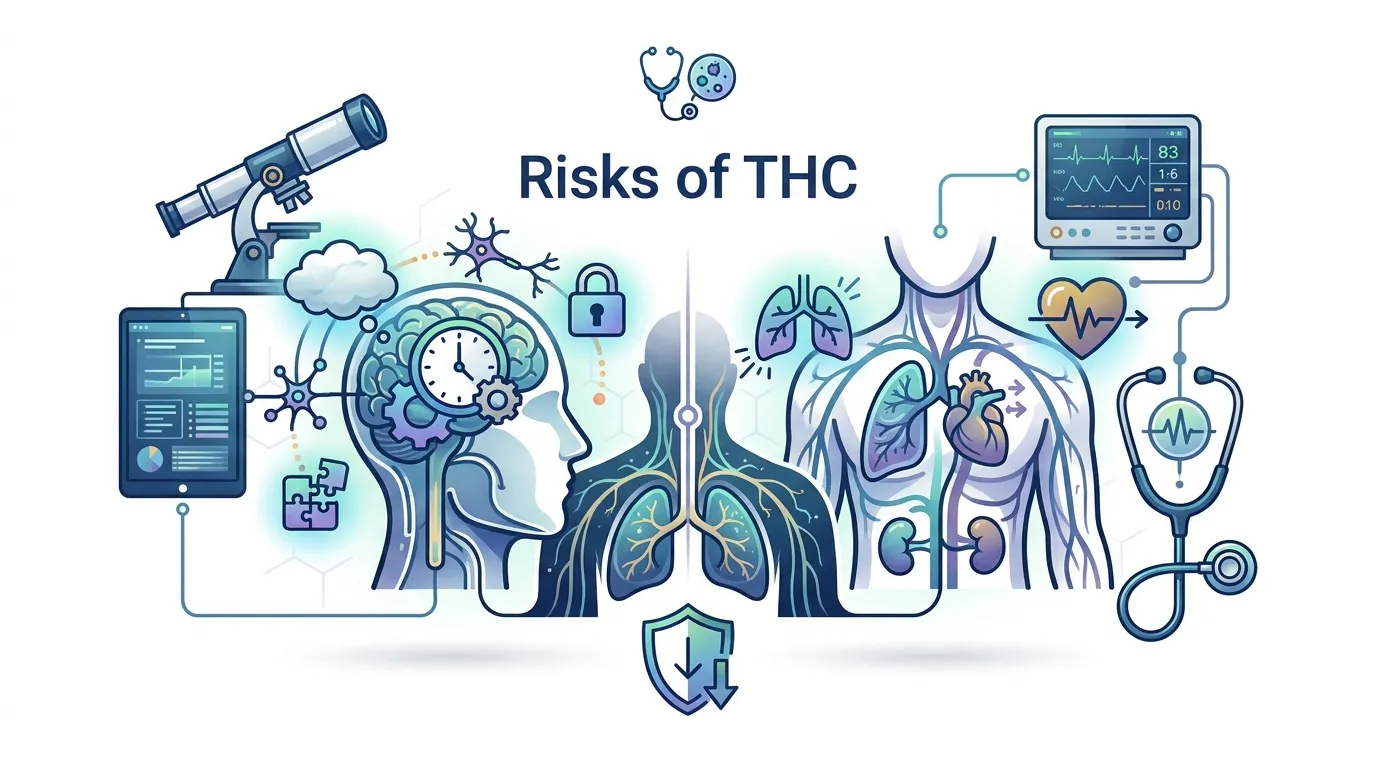
THC can affect both short-term safety and long-term health. The level of risk depends on a person’s age, health, use pattern, product strength, and other factors.
Effects on Driving
THC can slow reaction time, affect judgment, and reduce coordination. These changes can make driving dangerous.
Do not drive after using THC. A person may still be impaired even if the strongest effects seem to have passed. Alcohol and other impairing drugs can increase the danger.
Effects on Young People
The brain continues to develop into the mid-20s. THC use during adolescence and young adulthood may affect attention, memory, learning, and brain development.
Frequent use is also linked to a higher risk of cannabis use disorder and other problems. The level of risk differs among individuals.
Dependence and Cannabis Use Disorder
Some people develop cannabis use disorder, which means cannabis use becomes difficult to control despite negative effects on daily life.
Possible warning signs include:
- Using more than intended
- Trying to stop but being unable to do so
- Spending a lot of time using cannabis
- Missing work, school, or family duties
- Continuing to use despite health or relationship problems
- Feeling strong urges to use cannabis
People who use THC often may also have withdrawal symptoms when they stop. These can include irritability, sleep problems, anxiety, reduced appetite, and cravings.
Support from a health professional can help someone who is struggling to reduce or stop use.
Anxiety and Mental Health
THC may cause anxiety, panic, or suspicious thoughts, particularly at higher amounts. In some people, cannabis use is associated with a greater risk of psychotic symptoms or psychotic disorders.
People with a personal or family history of psychosis may face greater concern. Anyone who experiences severe or lasting changes in thoughts, mood, or behavior after THC use should seek medical advice.
Interactions With Medicines
THC can interact with some medicines and may increase side effects such as drowsiness or dizziness. It may also affect how certain drugs work in the body.
Tell your doctor or pharmacist about cannabis products you use, especially if you take prescription medicines, have a long-term health condition, or are planning surgery.
Is THC Addictive?
THC can be addictive. Not everyone who uses it develops a problem, but repeated use can lead to dependence or cannabis use disorder.
Risk may increase with frequent use, high-THC products, and starting at a young age.
A person may find it hard to stop even when cannabis affects their health, relationships, school, or work. Some people also experience withdrawal symptoms after they reduce or stop regular use.
If THC use is becoming difficult to control, a healthcare professional can help assess the problem and discuss treatment options.
Is THC Legal in the United States?
THC laws in the United States are complex. Some states allow cannabis for adult recreational use, while others allow only certain medical uses or maintain stricter limits.
Federal law and state law may differ. The rules can also vary by THC type, product source, concentration, and intended use.
Keep these points in mind:
- State laws do not all match.
- A medical cannabis program may have specific eligibility and purchase rules.
- Hemp-derived products can still be subject to restrictions.
- Products sold online may not be legal in every state.
- Taking THC across state lines can raise legal issues.
- Employers and other organizations may have their own rules for THC use and testing.
Because laws change, check current state and federal guidance before buying, carrying, or using a THC product.
FAQS
1. What does THC mean in simple terms?
THC stands for tetrahydrocannabinol. It is a compound found in cannabis that can cause a high and affect mood, memory, attention, and coordination.
2. What does THC stand for in medical terms?
In medical and scientific writing, THC stands for tetrahydrocannabinol. The term often refers to delta-9 THC, the main intoxicating compound in cannabis.
3. Is THC the same as marijuana?
No. Marijuana is a term for cannabis material with intoxicating potential, while THC is one of the compounds found in cannabis. The two terms are related but do not mean the same thing.
4. Does THC get you high?
Yes. THC can cause a high by changing how certain brain signals work. The effects may include relaxation, changes in mood, altered time perception, and impaired memory or coordination.
5. Is THC the same as CBD?
No. THC can cause a high, while CBD does not usually cause the typical cannabis high. Both compounds can have side effects, and some CBD products contain THC.
6. How long does THC stay in your system?
It varies. The effects may last hours, but THC metabolites can remain detectable for days or weeks, sometimes longer after frequent use. The detection period depends on the person and the test.
7. Can THC show up on a drug test?
Yes. Many drug tests look for THC metabolites. Some CBD products can also lead to a positive result if they contain THC.
8. Is THC safe?
THC is not risk-free. It can impair memory, judgment, and coordination and may cause anxiety or other unwanted effects. Risks can be greater for young people, frequent users, and people with certain health conditions.
9. Does THC have medical uses?
Yes. Certain THC-containing medicines have approved uses for specific conditions, including some cases of chemotherapy-related nausea and vomiting. Other uses are still being studied, and not every cannabis product is proven to treat a health problem.
10. What does a high THC percentage mean?
It means that THC makes up a larger share of the product’s weight. A higher percentage may indicate greater potency, but it does not predict a person’s exact response.
11. What is delta-8 THC?
Delta-8 THC is a form of THC that can cause intoxicating effects. It differs from delta-9 THC in its chemical structure, and its safety, strength, and legal status depend on the product and location.
12. Can you drive after using THC?
You should not drive after using THC. It can affect reaction time, judgment, and coordination, increasing the risk of a crash.
Article Summary
- THC stands for tetrahydrocannabinol, a compound found in cannabis.
- Delta-9 THC is the main intoxicating form commonly linked to the cannabis high.
- THC can affect mood, appetite, memory, attention, and coordination.
- THC may have medical uses in certain approved medicines, but not every cannabis product is proven to treat disease.
- THC and CBD are different compounds with different effects.
- THC can lead to a positive drug test, and detection times vary.
- THC can cause unwanted effects, dependence, and safety risks.
- THC laws vary across the United States and may change over time.
Conclusion
So, what does THC mean? It stands for tetrahydrocannabinol, a compound in cannabis that can change how the brain and body work.
It is best known for causing the high associated with marijuana, but it also plays a role in medical research and certain approved medicines.
THC can affect mood, appetite, memory, attention, and coordination. Its effects vary based on the product, the amount, and the person using it.
It can also cause unwanted effects, interact with medicines, and lead to a positive drug test.
Understanding THC helps you read product labels, compare THC with CBD, and make informed choices.
If you are considering THC for a health concern, speak with a qualified healthcare professional and check the laws that apply where you live.