Introduction
If you have ever watched a police movie or seen a high-risk police response on the news, you have probably heard the word SWAT.
But what does SWAT stand for, and what does a SWAT team actually do?
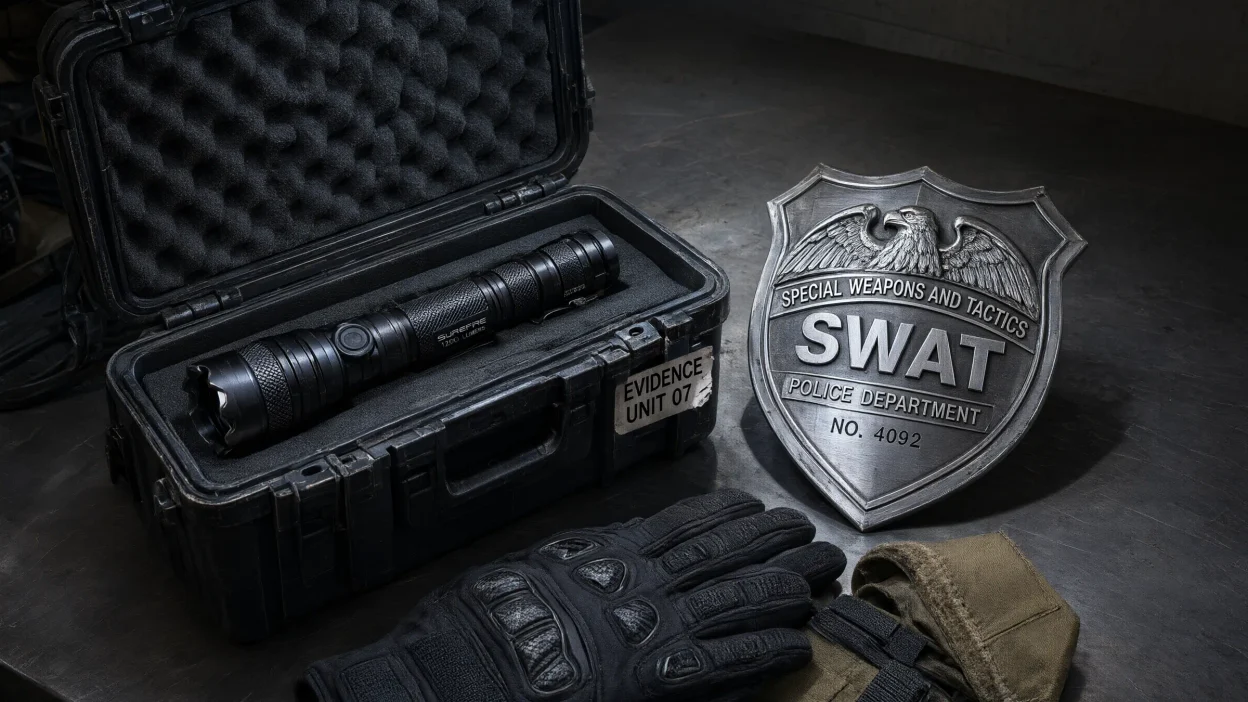
SWAT stands for “Special Weapons and Tactics.” It refers to specially trained law enforcement teams that handle dangerous or unusual situations that may require advanced training, special equipment, and carefully planned tactics.
The FBI uses the same term for its tactical teams. (FBI)
SWAT teams may respond to incidents such as barricaded suspects, hostage situations, high-risk arrests, active shooting scenes, and other serious threats.
However, SWAT is not simply a group of police officers with extra weapons. Members receive specialized training and work as part of a larger emergency response system.
In this guide, you will learn the SWAT meaning, history, duties, training, equipment, and common questions about these specialized police teams.
What Does SWAT Stand For?
SWAT stands for Special Weapons and Tactics.
The acronym breaks down like this:
- S = Special
- W = Weapons
- A = And
- T = Tactics
In the United States, SWAT usually refers to a specialized police or law enforcement team trained to deal with high-risk situations.
The name describes two major parts of the team’s job:
- Special weapons — equipment selected for dangerous situations that regular patrol officers may not normally use.
- Special tactics — carefully planned methods for managing high-risk incidents.
The FBI officially uses Special Weapons and Tactics (SWAT) as the name for its tactical teams.
The FBI says its SWAT agents may handle situations such as barricaded buildings, dangerous arrests, hostage rescues, and difficult terrain operations. (FBI)
What Does SWAT Mean in Simple Words?
In simple terms, SWAT is a specialized police team for very dangerous or complex situations.
Regular police officers handle most calls. A SWAT team may be brought in when an incident presents a level of risk that requires additional training, planning, equipment, or personnel.
The exact duties of a SWAT team can differ from one police department to another.
For example, the Seattle Police Department says its SWAT unit responds to barricaded persons, active shooting scenes, high-risk search warrants, sniper incidents, terrorism threats, and other serious events. (Seattle.gov)
What Does a SWAT Team Do?
A SWAT team’s main purpose is to help law enforcement manage high-risk incidents.
Depending on the agency and situation, SWAT officers may perform several types of duties.
1. Respond to Barricaded Suspects
A person may refuse to leave a building while presenting a serious threat to officers or other people.
In such cases, a SWAT team may be called to help create a safe and controlled response.
The goal is not simply to enter a building. Officers may first work with negotiators and other police units to find a safer way to resolve the situation.
2. Help With Hostage Situations
Hostage incidents can require specialized planning and teamwork.
SWAT personnel may work alongside hostage negotiators and other emergency responders. The FBI notes that its tactical resources can support hostage-taking and kidnapping responses. (FBI)
3. Serve High-Risk Warrants
Some search or arrest warrants involve a known risk of violence.
When a police agency determines that a situation requires a specialized response, SWAT officers may assist with the operation.
The exact procedures vary by department and local law.
4. Respond to Active Threats
SWAT teams may also respond to serious active threats.
For example, Seattle Police lists active shooting scenes among the situations its SWAT unit responds to. (Seattle.gov)
The response depends on the circumstances, the threat, the location, and the policies of the agency.
5. Provide Specialized Support
SWAT officers do not always operate alone.
They can support patrol officers, detectives, negotiators, and other law enforcement agencies during difficult incidents.
Some departments also use SWAT teams for specialized skills such as rappelling, rifle marksmanship, crisis intervention, and less-lethal equipment. (Seattle.gov)
When Do Police Call SWAT?
Police may request a SWAT response when an incident presents a high level of danger or complexity.
Common examples include:
- Barricaded suspects
- Hostage situations
- High-risk arrest warrants
- High-risk search warrants
- Active shooting incidents
- Armed suspects
- Sniper incidents
- Serious terrorism threats
- Large-scale disturbances
- Certain protection assignments
Not every dangerous call results in a SWAT deployment.
The decision depends on factors such as the threat, available information, location, people involved, and the policies of the police agency.
This is important because SWAT teams are specialized resources, not a replacement for regular police patrol.
How Is SWAT Different From Regular Police?
The biggest difference is specialization.
Regular police officers are trained to handle a wide range of daily law enforcement duties.
These can include traffic calls, reports, investigations, public safety calls, and ordinary arrests.
SWAT officers are selected and trained for situations that require additional tactical skills.
For example:
| Regular Police | SWAT |
| Handles everyday police calls | Handles selected high-risk incidents |
| General law enforcement training | Specialized tactical training |
| Routine patrol duties | Specialized response duties |
| Usually first to respond | Often called when additional expertise is needed |
| Standard police equipment | May use specialized equipment |
This does not mean SWAT officers are completely separate from normal police work.
In some agencies, SWAT is a collateral duty. FBI materials explain that its SWAT members still handle their regular case responsibilities while also serving on the tactical team. (FBI)
How Did SWAT Start?
The modern SWAT concept developed in the United States during the 1960s.
The Los Angeles Police Department played an important role in the development of early SWAT teams.
The concept grew from the need for specially trained officers who could respond to situations that were too dangerous or complex for ordinary police responses.
Over time, the idea spread to police departments and other law enforcement agencies across the country.
The FBI later created its own SWAT program. According to the FBI, its SWAT program began in 1973 in a handful of field offices. (FBI)
The FBI says the Wounded Knee occupation in South Dakota in 1973 helped highlight the need for better tactical capabilities. Six FBI field offices established SWAT teams that summer. (FBI)
Why Was SWAT Created?
The basic idea was simple:
Some emergencies require a different level of preparation and specialized response.
Regular officers may be excellent at normal police work, but a barricaded suspect, hostage incident, or heavily armed threat can require a team with specialized skills.
SWAT teams were developed to fill that role.
Is SWAT the Same in Every Police Department?
No.
There is no single SWAT structure used by every police agency.
Different departments may have different:
- Team sizes
- Training programs
- Equipment
- Selection standards
- Response policies
- Specialized roles
- Names for tactical units
Some agencies may use the term SWAT, while others may use names such as Special Response Team (SRT) or another local designation.
The FBI also notes that law enforcement agencies have adopted the SWAT concept in different forms. (FBI: Law Enforcement Bulletin)
So, when someone asks what a SWAT team does, the best answer depends partly on the specific agency.
What Training Does a SWAT Officer Receive?
SWAT officers generally receive specialized training beyond their regular police training.
Training can include areas such as:
- Firearms skills
- Physical fitness
- Team movement
- Crisis response
- Tactical decision-making
- High-risk operations
- Emergency medical skills
- Less-lethal options
- Specialized equipment
- Building and terrain operations
The FBI describes its SWAT selection and training process as rigorous. Its materials also describe specialized training for areas such as firearms, movement, and critical thinking under stressful conditions. (FBI)
Training does not stop after an officer joins a SWAT team. Regular practice is important because tactical situations can be complex and may require fast decisions.
What Equipment Does SWAT Use?
SWAT equipment depends on the agency and mission.
A tactical team may have access to specialized protective and operational equipment, such as:
- Protective helmets
- Body armor
- Shields
- Specialized firearms
- Communication equipment
- Medical supplies
- Breaching tools
- Less-lethal equipment
- Specialized vehicles
The FBI states that its SWAT personnel use specialized equipment and weapons for hazardous operations. (FBI)
It is also important to remember that equipment can change based on the situation. A team responding to a barricaded person may need different equipment from a team supporting an operation in difficult terrain.
Does SWAT Always Use Force?
No.
A common misunderstanding is that calling SWAT automatically means a violent confrontation will happen.
In reality, law enforcement may use negotiation, communication, containment, and other methods to resolve a dangerous situation.
An FBI Law Enforcement Bulletin discussing SWAT operations described negotiation and surrender as important parts of resolving critical incidents and emphasized using force only when necessary. (FBI: Law Enforcement Bulletin)
The exact response depends on the incident and the policies of the agency.
The overall goal is to resolve the situation as safely as possible.
What Is the Difference Between SWAT and the FBI Hostage Rescue Team?
SWAT and the FBI’s Hostage Rescue Team (HRT) are related to tactical law enforcement, but they are not the same thing.
SWAT teams operate within law enforcement agencies and handle a range of high-risk incidents.
The FBI’s HRT is a specialized, full-time federal tactical team. The FBI describes HRT as the U.S. government’s non-military, full-time counterterrorist tactical team. (FBI)
The FBI also has SWAT teams at its field offices.
So, while both involve specialized tactical operations, their missions, organization, and roles are different.
Is SWAT Military?
No. SWAT is a law enforcement function, not a military branch.
SWAT officers are police officers or law enforcement agents.
Their equipment and tactics may sometimes look similar to military equipment or tactics, which is one reason people may confuse the two.
However, their legal authority, organization, and missions are different.
The FBI describes its HRT as a non-military federal tactical team, while SWAT operates as part of law enforcement. (FBI)
What Is a SWAT Team Leader?
A SWAT team leader is responsible for leading the team during its assigned operations.
The exact responsibilities depend on the agency, but leadership may include:
- Planning operations
- Assigning team roles
- Coordinating with other units
- Managing communication
- Making tactical decisions
- Ensuring team members follow department procedures
Leadership is especially important because SWAT operations often involve several officers and other emergency personnel working together.
What Does SWAT Mean in Text Messages?
If someone writes “SWAT” in a text message, the meaning depends on context.
Most commonly, SWAT refers to Special Weapons and Tactics, especially when the conversation is about police, law enforcement, crime, television, or emergencies.
However, swat can also be an ordinary English word.
As a verb, to swat means to hit something quickly, often with a flat object or the hand. For example:
“I tried to swat the fly.”
The acronym SWAT and the ordinary word swat are different uses of the same letters.
There can also be other meanings for SWAT in specialized fields, so context matters.
What Does “Swatting” Mean?
Swatting is different from simply talking about a SWAT team.
In law enforcement, swatting refers to making a false emergency report designed to cause a major police response to a particular location.
The FBI has described swatting as falsely reporting an emergency to cause a SWAT response at an address. (FBI)
Swatting can put innocent people, police officers, and emergency responders at serious risk. It is not the same thing as an actual SWAT operation.
SWAT vs. SRT: Are They the Same?
Not always.
SRT commonly means Special Response Team.
Some police agencies use SWAT as the name of their tactical unit, while others use SRT or another name.
The basic idea can be similar: a specialized law enforcement team that responds to high-risk situations.
However, you should not assume that every SRT and every SWAT team has the same training, equipment, or mission.
The agency’s own policies determine what its tactical unit does.
Common SWAT Acronym Questions
What does SWAT stand for in police terms?
SWAT stands for Special Weapons and Tactics. It is commonly used for specialized law enforcement teams trained to handle high-risk incidents.
What does SWAT stand for in the FBI?
For the FBI, SWAT stands for Special Weapons and Tactics. FBI SWAT teams support high-risk operations such as dangerous arrests, barricaded incidents, and hostage rescues. (FBI)
What does the S in SWAT stand for?
The S stands for Special.
What does the W in SWAT stand for?
The W stands for Weapons.
What does the A in SWAT stand for?
The A stands for And.
What does the T in SWAT stand for?
The T stands for Tactics.
Is SWAT an acronym?
Yes. SWAT is an acronym for Special Weapons and Tactics.
Are all SWAT officers full-time?
No. This depends on the agency. Some SWAT officers have regular police duties in addition to their tactical responsibilities. The FBI, for example, describes SWAT as a collateral duty for its agents. (FBI)
What types of calls does SWAT respond to?
Common examples include barricaded suspects, hostage situations, high-risk warrants, active shooting scenes, sniper incidents, and other serious threats.
The exact list varies by department. (Seattle.gov)
Does every city have a SWAT team?
No. Police agencies differ in size and resources. Some agencies have their own tactical teams, while smaller agencies may rely on regional or neighboring agencies for specialized assistance.
Is SWAT the same as the military?
No. SWAT is part of law enforcement. It is not a military branch.
What is the main purpose of SWAT?
The main purpose is to provide a specialized law enforcement response to high-risk or complex incidents where additional training, equipment, planning, and coordination may be needed.
Article Summary
SWAT stands for Special Weapons and Tactics. It is a term used for specialized law enforcement teams trained to handle high-risk situations.
Key points to remember:
- SWAT means Special Weapons and Tactics.
- SWAT teams are part of law enforcement, not the military.
- They may respond to barricaded suspects, hostage incidents, high-risk warrants, active shooting scenes, and other serious threats.
- SWAT officers receive specialized training.
- SWAT equipment and duties vary by agency.
- The FBI has SWAT teams in its field offices.
- The FBI’s SWAT program began in 1973.
- SWAT is different from the FBI Hostage Rescue Team.
- Swatting is a separate term for making a false report to trigger a major police response.
- Some agencies use names such as Special Response Team (SRT) instead of SWAT.
FAQs
What does SWAT stand for?
SWAT stands for Special Weapons and Tactics. It refers to specialized law enforcement teams trained for high-risk incidents.
Why is it called SWAT?
The name describes the team’s specialized weapons, equipment, and tactics used during dangerous or complex law enforcement situations.
What does a SWAT team do?
A SWAT team provides specialized support during high-risk incidents, which can include hostage situations, barricaded suspects, high-risk warrants, active shooting scenes, and other serious threats.
When was SWAT created?
Modern SWAT teams developed in the United States during the 1960s. The FBI established its own SWAT program in 1973. (FBI)
Is SWAT part of the police?
Yes. SWAT teams are generally specialized units within law enforcement agencies.
Does SWAT mean Special Weapons and Tactics?
Yes. Special Weapons and Tactics is the standard meaning of SWAT in the U.S. law enforcement context.
What is the difference between SWAT and regular police?
Regular police handle a broad range of everyday law enforcement duties. SWAT officers have additional specialized training for selected high-risk situations.
What is swatting?
Swatting is making a false emergency report to trigger a major law enforcement response at a particular location. It is different from a legitimate SWAT call. (FBI)
Conclusion
So, what does SWAT stand for? The answer is Special Weapons and Tactics.
SWAT teams are specialized law enforcement units designed to help manage situations that may be too dangerous or complex for a normal police response.
Depending on the agency, they may assist with barricaded suspects, hostage situations, high-risk warrants, active shooting scenes, sniper incidents, and other serious emergencies.
SWAT teams are not all identical. Their training, equipment, size, and responsibilities can vary between police departments and federal agencies.
The FBI, for example, has its own SWAT program and describes its teams as specialized resources for dangerous operations. (FBI)
In short, SWAT is a specialized law enforcement capability—not a separate military force—and its purpose is to provide trained personnel and resources for high-risk situations.

Emma Wilson is a writer at MeaningVibz who enjoys exploring emoji meanings, texting expressions, and online communication trends. She helps readers understand how emojis and slang are used in different situations by providing clear explanations and relatable examples for everyday messaging.