
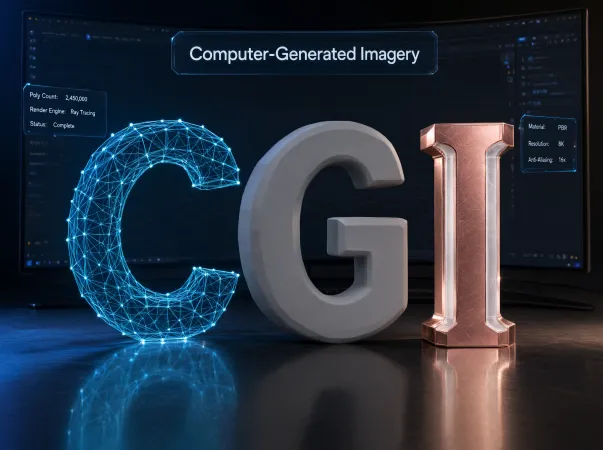
CGI stands for Computer-Generated Imagery.
In simple terms, CGI is visual content made with computers. It can include still images, 2D graphics, 3D objects, animated characters, digital environments, and visual effects.
CGI is especially common in movies, television, video games, animation, simulations, and advertising.
The term is broad. CGI does not only mean realistic movie monsters or huge explosions. A computer-generated object, building, character, background, or animation can also be CGI.
For example:
- A dinosaur created entirely on a computer is CGI.
- A digital spaceship in a movie can be CGI.
- A 3D product image used in an advertisement can be CGI.
- A computer-created character in a video game is CGI.
- A digital building model can be CGI.
So, when someone asks “What does CGI mean?”, the short answer is Computer-Generated Imagery.
What Is CGI?
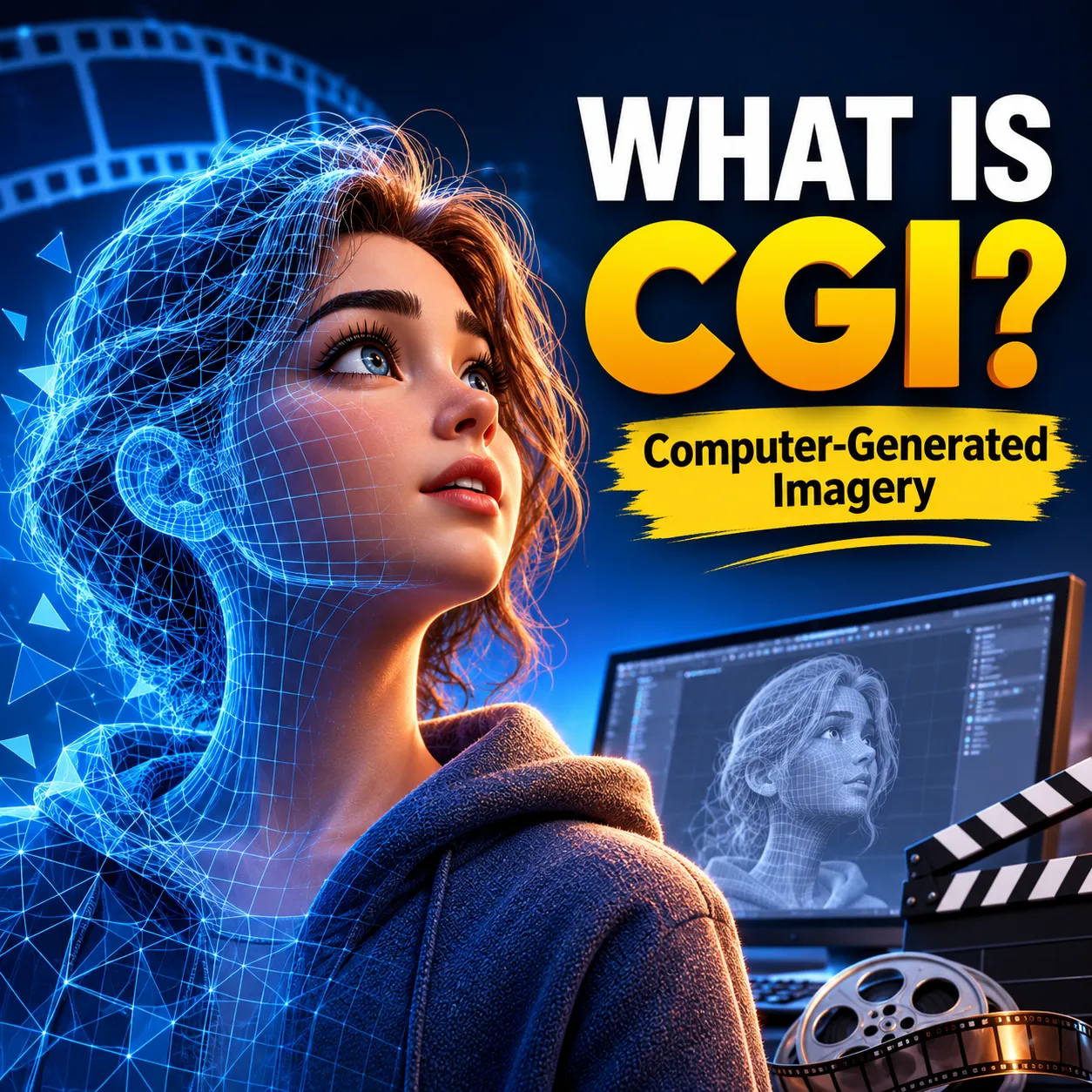
CGI is the process of using computer graphics software to create or change visual content.
Artists can build digital objects and environments, add materials and textures, set up lighting, create movement, and produce a final image or animation through rendering.
CGI may be completely digital, or it may be combined with footage captured by a real camera.
For example, a movie scene might show a real actor standing on a real set. Later, CGI artists could add a digital monster, building, spaceship, or background.
The final shot may look like everything was filmed together.
This is one reason CGI is so useful. It lets creators show things that are difficult, expensive, dangerous, or impossible to capture with a camera.
How Does CGI Work?
Creating CGI can involve several steps. The exact process depends on the project, but a typical 3D workflow includes modeling, texturing, lighting, animation, rendering, and post-production.
1. Modeling
The first step is often 3D modeling.
An artist creates a digital object using specialized software. The object could be a person, animal, vehicle, building, creature, or imaginary object.
Think of modeling as creating the digital shape of something.
For example, if an artist wants to create a CGI car, they first build the car’s shape in 3D software.
2. Texturing
After the model is created, artists can add surface details.
This is called texturing.
A texture can make a digital object look like metal, wood, skin, glass, stone, fabric, or another material.
Without proper textures, a CGI object may look like a simple gray model rather than a finished image.
3. Lighting
Lighting helps make the CGI scene look believable.
Artists can control where light comes from, how strong it is, and how it interacts with objects.
For example, a digital character standing outside at sunset should have lighting that matches the surrounding environment.
Good lighting can make computer-generated objects blend more naturally into a scene.
4. Animation
If the CGI needs to move, artists create animation.
They can make a character walk, run, jump, talk, or fight. They can also animate vehicles, cameras, objects, water, smoke, or other elements.
Not every CGI image is animated. CGI can also be used to create still images.
5. Rendering
Rendering is the process of producing the final computer-generated image from the digital scene.
The computer calculates the objects, materials, lighting, camera position, and other information needed to create the finished image.
Complex scenes can require a large amount of computing power.
6. Compositing and Post-Production
CGI may then be combined with real video or other digital elements.
This process can involve compositing, color adjustments, editing, and other post-production work.
The goal is often to make different elements look like they belong in the same scene.
Where Is CGI Used?
CGI is used in many industries. It is not limited to Hollywood movies.
CGI in Movies
Movies are one of the most familiar places to see CGI.
Filmmakers use it to create:
- Digital characters
- Creatures
- Imaginary worlds
- Space scenes
- Digital buildings
- Vehicles
- Weather effects
- Explosions
- Background environments
- Set extensions
CGI can also be used for small changes that viewers may never notice.
For example, filmmakers may digitally remove an object from a scene or add details to a background.
CGI in TV Shows
Television productions also use computer-generated imagery.
CGI can help create fantasy worlds, science-fiction environments, creatures, environments, and other visual elements.
Modern television can use CGI for both large visual effects and subtle improvements.
CGI in Video Games
CGI is also important in video games.
Game developers create digital characters, environments, weapons, vehicles, buildings, animals, and other objects.
Unlike a single movie frame, game graphics must often be generated while the player interacts with the game.
This makes game graphics a special area of computer-generated imagery.
CGI in Animation
Many modern animated movies and shows use computer graphics.
Instead of recording real actors and locations, creators can build digital characters and environments and animate them inside a computer.
CGI animation can create realistic, cartoon-style, or highly stylized visuals.
CGI in Advertising
Businesses use CGI to create advertisements and product visuals.
For example, a company might create a digital image of a phone, car, shoe, piece of furniture, or package.
CGI can allow marketers to show products from different angles or place them in settings that would be difficult to photograph.
CGI in Architecture
Architects and designers can use CGI to visualize buildings before they are built.
A computer-generated image can show what a building, room, or development could look like.
This can help clients understand a design before construction begins.
CGI is also used for virtual tours and architectural presentations.
What Is the Difference Between CGI and VFX?
One of the most common questions is whether CGI and VFX are the same thing.
They are not exactly the same.
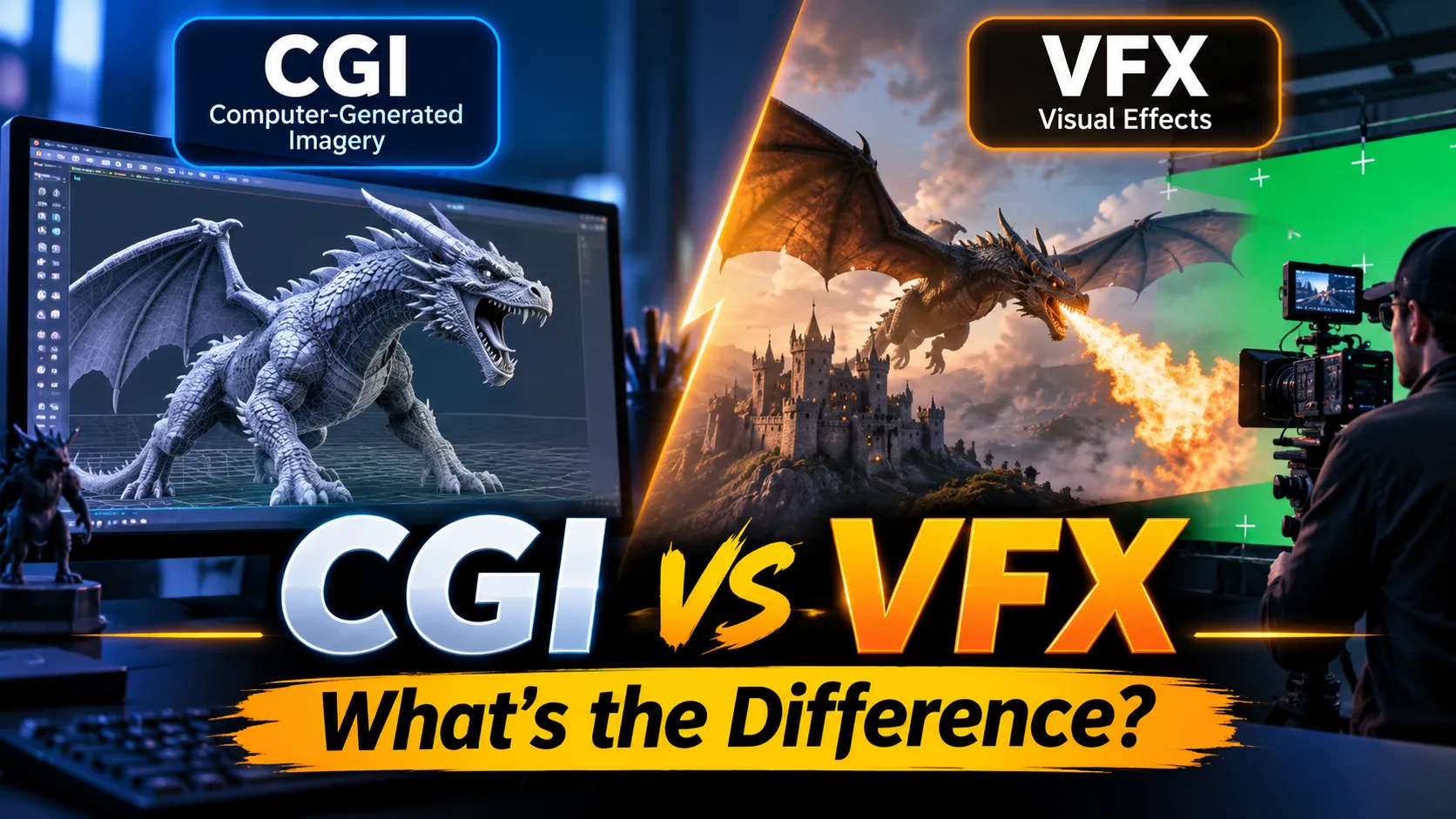
CGI refers to computer-generated imagery.
VFX, or visual effects, is a broader term for creating or changing visual elements, often during post-production.
CGI can be one part of VFX.
For example, imagine a movie scene with a real actor standing in a city.
The production team could use VFX to change the background, add digital buildings, insert a CGI creature, and combine everything into one final shot.
In this example, the creature may be CGI, while the complete process of creating the final visual effect is VFX.
A simple way to remember it is:
CGI = computer-generated visual content
VFX = a broader process of creating or modifying visual effects
CGI is therefore often used as a tool within a larger VFX workflow.
Is CGI Always 3D?
No.
Many people think CGI always means 3D graphics, but that is not necessarily true.
CGI can include both 2D and 3D computer-generated imagery. Digital text, graphics, backgrounds, objects, and other computer-created visuals can fall under the broader CGI category.
2D CGI
2D CGI uses flat digital images or graphics.
Examples can include:
- Digital illustrations
- Animated graphics
- Computer-created backgrounds
- Digital text
- Certain visual effects
3D CGI
3D CGI creates objects and environments with depth.
Examples include:
- Digital characters
- Cars
- Buildings
- Creatures
- Spaceships
- Digital landscapes
3D CGI is especially common in movies, games, animation, and product visualization.
Why Is CGI Important?
CGI gives creators a way to show things that may not be practical to film in the real world.
Imagine a filmmaker wants to show an enormous alien planet. Building a real planet is impossible. Instead, artists can create the planet digitally.
The same idea applies to fantasy creatures, futuristic cities, imaginary vehicles, and many other subjects.
CGI can also save productions from having to build every physical object or location.
However, CGI is not simply about making things look spectacular. It can be used for small details too.
A production may use CGI to remove unwanted objects, extend a set, replace a background, or make a scene look cleaner.
What Are Some Examples of CGI?
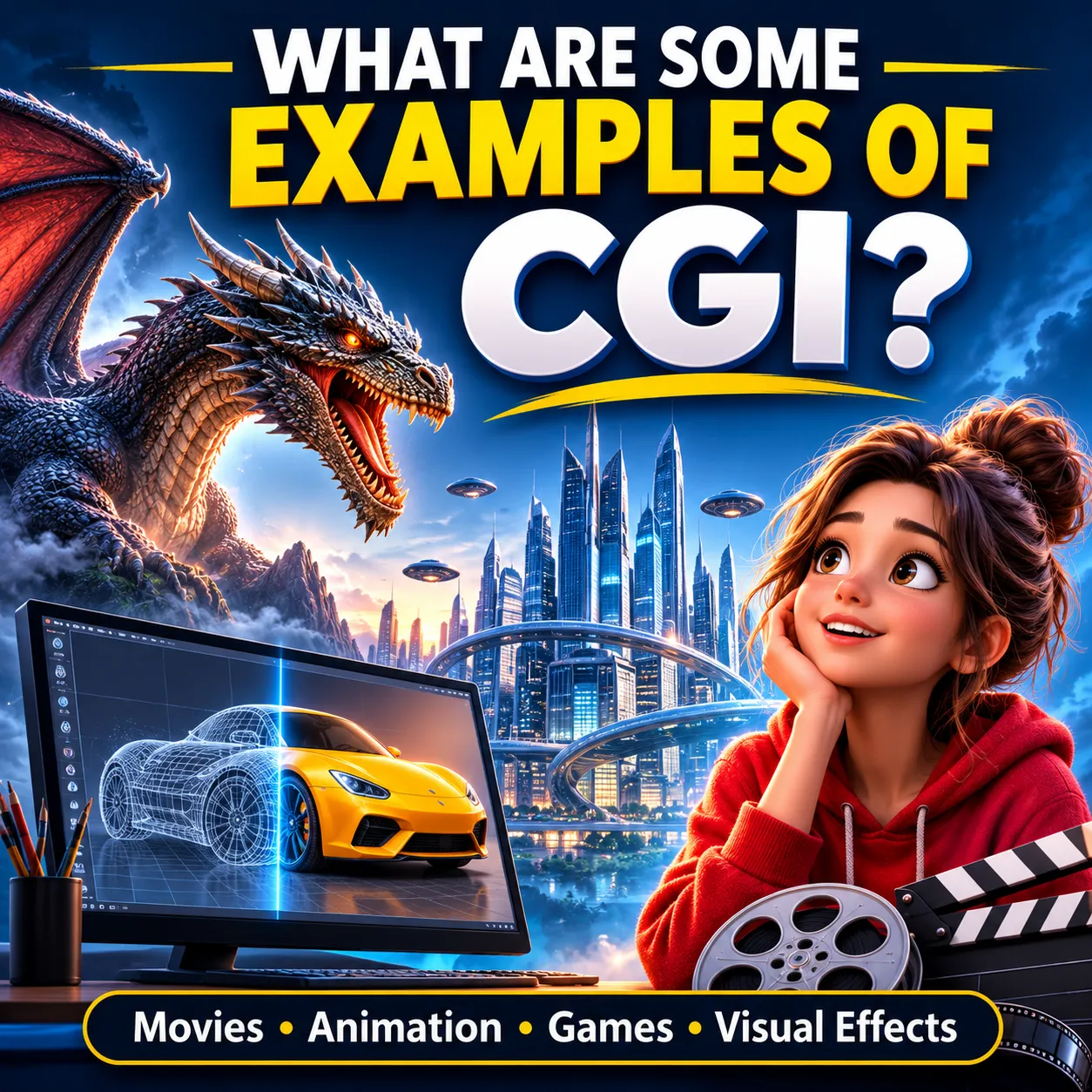
Here are simple examples of computer-generated imagery:
Example 1: A Digital Dinosaur
A dinosaur that is created digitally rather than captured by a camera is CGI.
Example 2: A Fantasy Castle
A castle that exists only inside a computer can be added to a movie scene as CGI.
Example 3: A Digital Product
A company can create a 3D model of a product and render a realistic image for an advertisement.
Example 4: A Video Game Character
A character designed and rendered digitally for a game is computer-generated imagery.
Example 5: A Digital Environment
A filmmaker can create an entire digital environment instead of filming at a real location.
What Is CGI in Movies?
In movies, CGI means computer-generated imagery used to create or enhance visual content.
It can range from a tiny visual adjustment to an entire digital world.
A movie does not need to be fully animated to use CGI. Many live-action movies use CGI alongside real actors, physical sets, props, and camera footage.
This combination can make digital elements appear to exist in the real world.
Modern filmmaking often combines many different techniques rather than relying on CGI alone.
Is CGI the Same as Animation?
No, although the two can overlap.
Animation is the process of creating the appearance of movement.
CGI describes imagery created with computers.
A computer-generated character that moves across a screen can therefore be both CGI and animation.
But CGI can also be a still image. Likewise, animation does not have to be CGI because animation can be created using other methods.
So the terms describe different parts of the creative process.
CGI vs. Practical Effects
Another common comparison is CGI versus practical effects.
Practical effects are physical effects created in the real world.
For example, a production might use:
- Physical props
- Makeup
- Costumes
- Miniatures
- Puppets
- Physical sets
CGI is created digitally.
Many modern productions use both methods. A practical object can provide something real for actors to interact with, while CGI can add elements that would be difficult to create physically.
Using both approaches can give filmmakers more creative options.
What Skills Are Needed to Create CGI?
Professional CGI can involve many different skills.
Depending on the job, artists may specialize in:
- 3D modeling
- Texturing
- Lighting
- Animation
- Rigging
- Rendering
- Compositing
- Visual effects
- Digital sculpting
- Motion graphics
Large productions often have teams of specialists rather than one person doing every task.
Some artists may focus only on creating characters, while others work on environments, lighting, animation, or final compositing.
What Software Is Used for CGI?
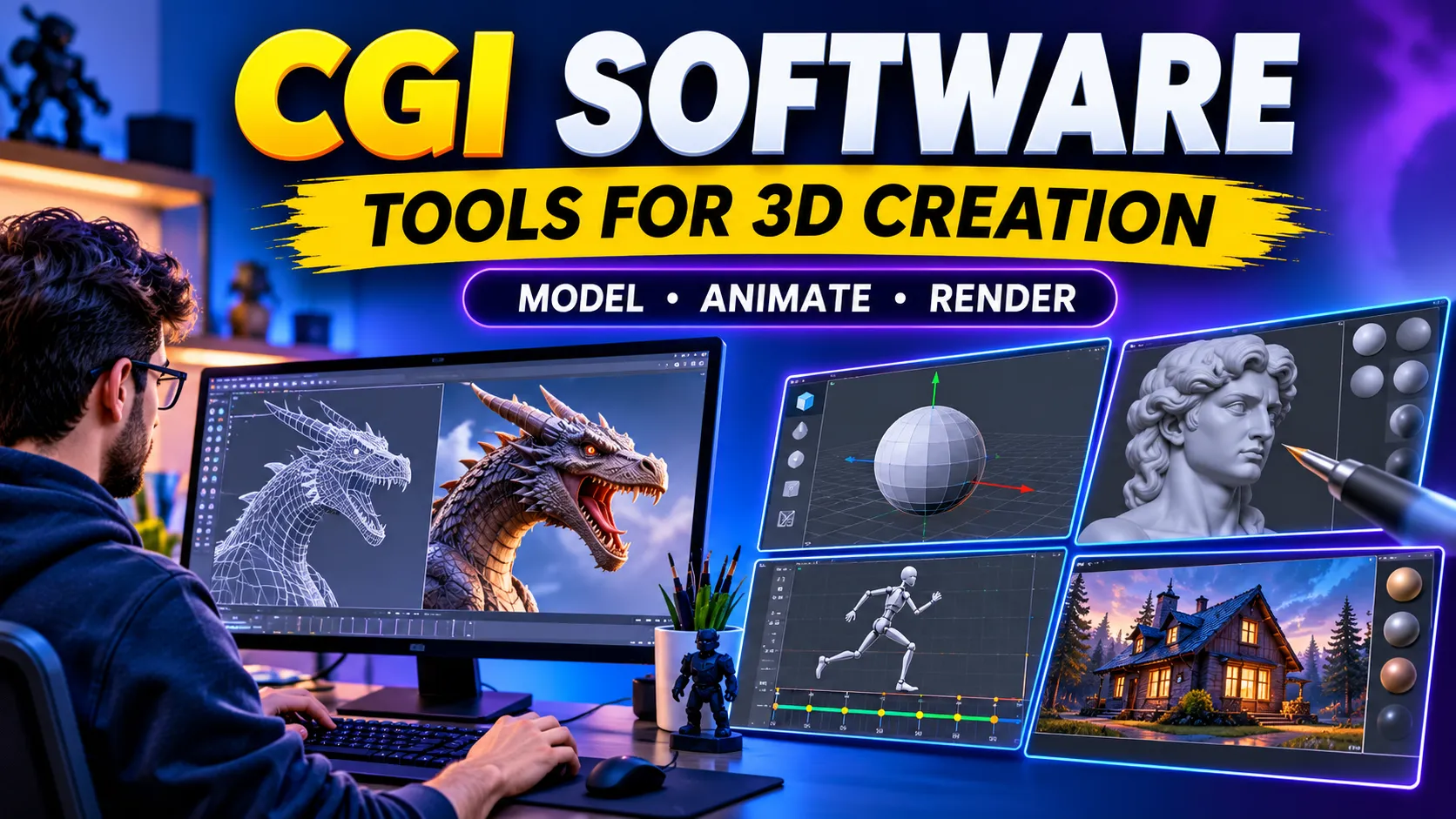
Different CGI artists use different software depending on their work.
Common categories of CGI software include:
- 3D modeling software
- Animation software
- Rendering software
- Digital painting tools
- Compositing software
- Video editing software
Popular tools in the broader CGI and 3D industry include Blender, Autodesk Maya, 3ds Max, and Cinema 4D.
The exact software is less important than understanding the basic workflow: create the digital elements, add materials and lighting, animate when needed, render the result, and combine it with other content.
Does CGI Mean Computer-Generated Image or Imagery?
The most common entertainment and visual-media meaning is Computer-Generated Imagery.
You may sometimes see related wording such as “computer-generated image” or “computer-generated images.”
However, the standard expansion of CGI in film, animation, and visual media is Computer-Generated Imagery.
Does CGI Have Other Meanings?
Yes.
CGI can mean different things depending on the subject.
In web development, CGI can stand for Common Gateway Interface. It refers to a standard way for web servers to communicate with external programs or scripts.
There are also other less common meanings of CGI in different industries and organizations. Acronym databases list multiple definitions, so the surrounding context matters.
However, if you are talking about movies, animation, games, or digital visual effects, CGI usually means Computer-Generated Imagery.
How Can You Tell If Something Is CGI?
Sometimes CGI is easy to spot. A giant monster, imaginary planet, or futuristic city may clearly be computer-generated.
Other CGI can be almost impossible to notice.
Look for things such as:
- Unusual movement
- Lighting that does not match
- Digital-looking textures
- Edges that look unnatural
- Objects that could not physically exist
- Backgrounds that appear too perfect
But modern CGI can be highly realistic. In many scenes, the purpose is not to make viewers notice the computer-generated work.
People Also Ask About CGI
What does CGI stand for in movies?
In movies, CGI stands for Computer-Generated Imagery. It refers to visual content created or enhanced using computer graphics.
What does CGI mean in simple words?
CGI means images or visual elements made with computers. It can be used to create characters, objects, environments, animation, and visual effects.
Is CGI the same as VFX?
No. CGI is a type of computer-generated imagery, while VFX is a broader term for creating or changing visual elements. CGI can be part of a VFX workflow.
Is CGI only used in movies?
No. CGI is also used in video games, animation, advertising, architecture, product visualization, television, simulations, and other fields.
Is CGI always computer-generated?
Yes. The name itself refers to imagery generated using computers. However, CGI can be combined with real camera footage and practical effects.
What is CGI used for?
CGI is used to create or enhance characters, objects, environments, animations, products, backgrounds, and visual effects.
What does CGI stand for in web development?
In web development, CGI stands for Common Gateway Interface, which is different from the Computer-Generated Imagery meaning used in movies and visual media.
Is CGI animation?
CGI and animation are not the same thing. CGI describes computer-generated imagery, while animation describes creating the appearance of movement. A project can use both.
Article Summary
- CGI stands for Computer-Generated Imagery.
- CGI is visual content created with computer graphics.
- It can be 2D or 3D.
- CGI is widely used in movies, TV, video games, animation, advertising, and architecture.
- A typical CGI workflow can include modeling, texturing, lighting, animation, rendering, and compositing.
- CGI is not the same as VFX, although CGI can be part of VFX.
- CGI can be used for large digital worlds as well as small visual changes.
- In web development, CGI can instead mean Common Gateway Interface.
FAQs
What does CGI stand for?
CGI stands for Computer-Generated Imagery. It is visual content created using computer graphics.
What is the full form of CGI?
The full form of CGI is Computer-Generated Imagery.
What is CGI used for?
CGI is used to create digital characters, objects, environments, animations, backgrounds, product images, and visual effects.
What is the difference between CGI and VFX?
CGI is computer-generated imagery, while VFX is a broader field involving the creation or modification of visual elements. CGI is often one part of VFX.
Can CGI be 2D?
Yes. CGI can include both 2D and 3D computer-generated visuals.
Is CGI used in video games?
Yes. Video games use computer-generated characters, environments, objects, effects, and other visual elements.
What does CGI stand for in programming?
In programming and web development, CGI commonly stands for Common Gateway Interface, a standard for communication between web servers and external programs.
Is CGI the same as animation?
No. CGI refers to computer-generated imagery, while animation refers to creating movement. CGI can be used to create animated content.
Conclusion
So, what does CGI stand for? CGI stands for Computer-Generated Imagery.
In simple terms, it is the use of computers to create or enhance visual content.
CGI can produce everything from digital characters and imaginary worlds to realistic product images and small changes in live-action footage.
CGI is now an important part of movies, television, video games, animation, advertising, architecture, and many other creative fields.
It can work alongside real footage, practical effects, animation, and VFX to create visuals that would otherwise be difficult or impossible to make.
One important point is that CGI does not always mean a huge special effect. Sometimes the best CGI is the work you barely notice because it fits naturally into the scene.
And while Computer-Generated Imagery is the meaning most people have in mind when discussing movies and digital art, remember that CGI can also mean Common Gateway Interface in web development. The correct meaning depends on the context.
Read More Posts
What Does SAP Stand For? Meaning, Full Form, and Uses
What Does HR Stand For? Meaning, Role, and Examples
Confederate Flag Symbol Meaning

Emma Wilson is a writer at MeaningVibz who enjoys exploring emoji meanings, texting expressions, and online communication trends. She helps readers understand how emojis and slang are used in different situations by providing clear explanations and relatable examples for everyday messaging.