Introduction
Have you ever bought something online or ordered goods from another country and seen the term FOB on an invoice? You may wonder what it means and who must pay for shipping.
FOB is a common term used in trade, shipping, and business. It helps buyers and sellers understand their duties when goods move from one place to another.
FOB usually stands for Free on Board. It is a shipping term that explains when the seller’s duty ends and the buyer’s duty begins.
You may also see FOB on a bill, a purchase order, or a shipping label. In some settings, it can mean something else, such as “freight on board.” That is why context matters.
What Does FOB Mean?
FOB stands for Free on Board in shipping and international trade. It is a trade term that sets out certain duties for the buyer and seller when goods are shipped.
In simple words, FOB helps answer three key questions:
- Who is in charge of getting the goods ready for shipment?
- Who pays for each part of the trip?
- When does the risk of loss or damage pass to the buyer?
The answers depend on the exact FOB term in the contract.
For example, a US company may buy products from a seller in another country. The seller packs the goods and gets them ready for shipment. The contract says FOB at a named port.
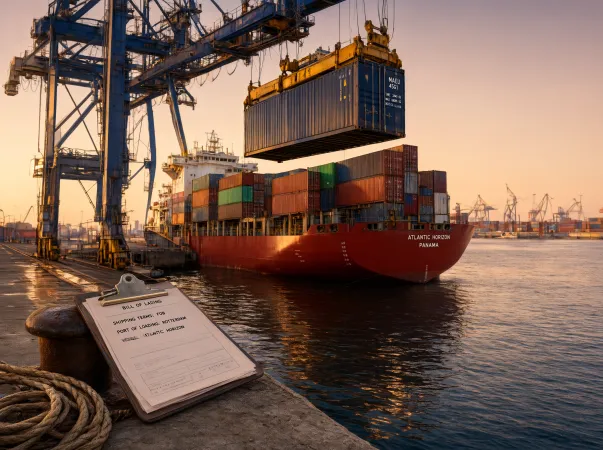
Under the relevant FOB rule, the seller must load the goods on board the ship at that port. Once the goods are on board, the risk passes to the buyer.
The buyer may then be responsible for the main sea trip, insurance if needed, and costs after that point.
FOB does not always mean that shipping is free. It is not a promise that the seller will cover every shipping cost. It is a way to set out duties, costs, and risk under a sales agreement.
What Does FOB Stand for in Shipping?
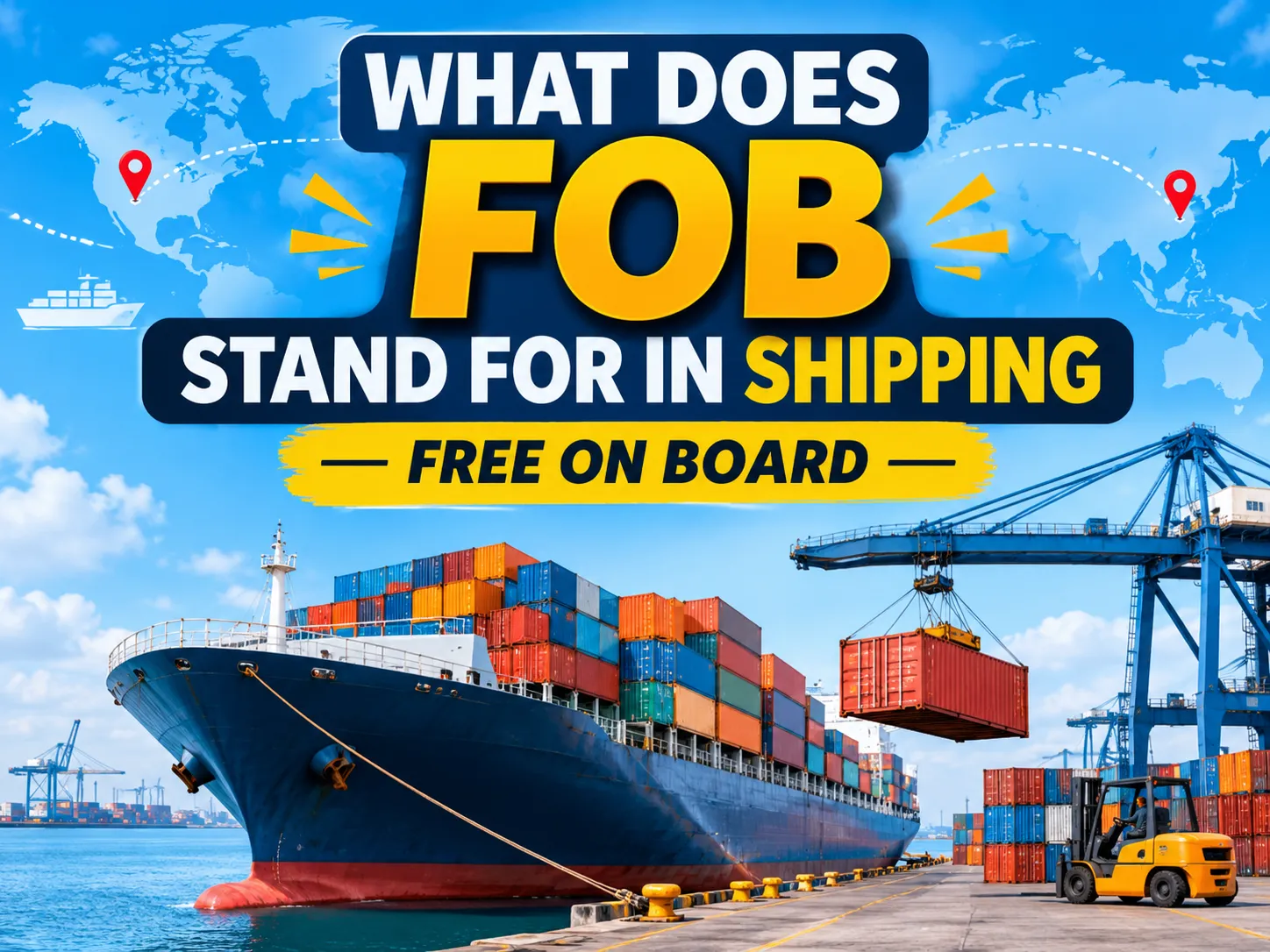
In shipping, FOB stands for Free on Board. It is one of the trade terms used to set rules for the delivery of goods.
These terms are often called Incoterms. They are published by the International Chamber of Commerce (ICC). The current Incoterms rules are Incoterms 2020.
Under Incoterms 2020, FOB is meant for sea and inland waterway transport. The seller delivers the goods when they are loaded on board the vessel named by the buyer at the agreed port of shipment.
What Does “On Board” Mean?
“On board” means the goods have been loaded onto the ship. This point matters because it marks the transfer of risk under the Incoterms FOB rule.
Imagine a seller ships 500 boxes of shoes. The boxes are packed and moved to the port. They are not yet on the ship. Under the FOB rule, the seller still carries the risk at this stage.
Once the boxes are loaded on board, the risk passes to the buyer. If the goods are later lost or damaged during the sea trip, the buyer may bear that risk, subject to the contract and other legal rules.
Is FOB the Same as Free Shipping?
No. FOB does not mean free shipping for the buyer.
The seller may pay some costs, such as moving goods to the port and loading them onto the ship. The buyer usually pays the main sea freight and costs after delivery on board under an Incoterms FOB agreement.
The sales contract should clearly state the agreed port and the exact delivery term.
How Does FOB Work?
FOB sets out the main duties of the seller and buyer during a shipment. The process often follows these steps.
The Buyer Places an Order
The buyer agrees to buy goods from the seller. Both sides decide on the price, amount, delivery port, and shipping terms.
For example, a US store orders 1,000 mugs from a supplier. The contract states FOB Shanghai, China, under Incoterms 2020.
The Seller Prepares the Goods
The seller makes or gathers the goods, packs them, and gets them ready for shipment. The seller must also meet the delivery duties set out in the agreement.
The Goods Move to the Port
The seller handles the steps needed to bring the goods to the agreed port and load them on board the ship, as required by the FOB rule.
The seller must also provide the required proof of delivery and shipping documents.
The Goods Are Loaded on the Ship
This is the key point under FOB. When the goods are loaded on board the vessel at the named port, delivery takes place under the rule, and risk transfers to the buyer.
The buyer should understand that the transfer of risk does not mean the buyer has already received the goods at their own warehouse.
The Buyer Handles the Main Shipment
The buyer usually arranges and pays for the main sea freight. The buyer also handles costs and duties that fall on their side of the agreement.
These may include cargo insurance, unloading, import clearance, tariffs, and delivery to the final location. The exact costs depend on the contract and the shipping route.
Who Pays Shipping Costs Under FOB?
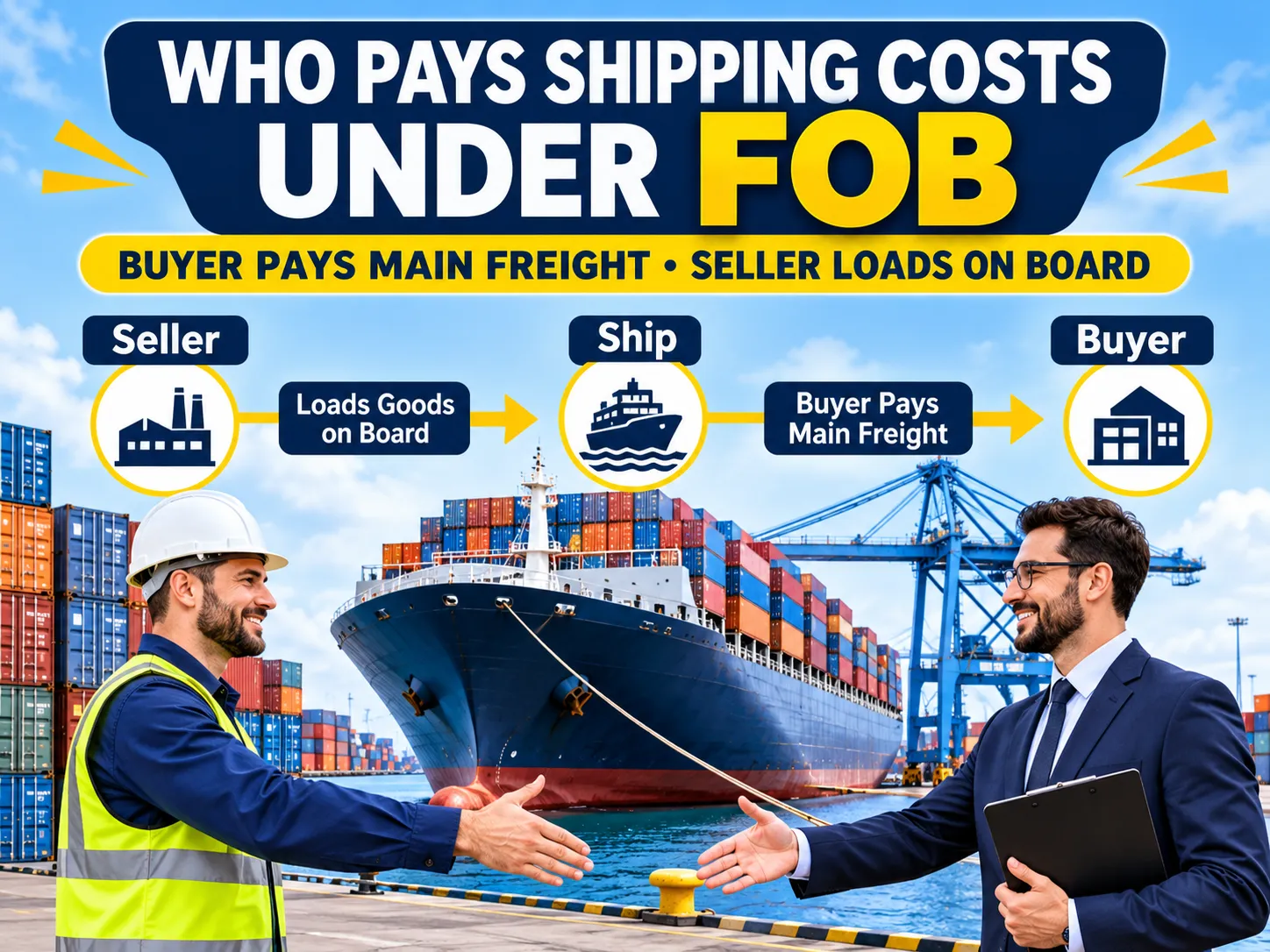
Under an Incoterms FOB agreement, the seller pays the costs needed to deliver the goods on board the ship at the named port. The buyer usually pays the main sea freight and costs that arise after delivery.
Here is a simple guide.
| Cost or duty | Usually responsible under FOB |
| Making or preparing goods | Seller |
| Export packing | Seller |
| Export clearance | Seller |
| Moving goods to the shipment port | Seller |
| Loading goods on board | Seller |
| Main sea freight | Buyer |
| Cargo insurance | Buyer is not required by FOB to buy it, but may choose to |
| Import clearance and duties | Buyer |
| Transport after arrival | Buyer |
This table is a general guide to Incoterms 2020 FOB. The exact contract, local rules, and extra services can affect the final charges.
Does the Seller Pay for Freight Under FOB?
The seller usually pays costs up to delivery on board the vessel. The buyer usually arranges and pays for the main sea freight.
However, the parties may agree to extra services or a different way of billing. Always read the written terms instead of relying on the three letters alone.
Who Pays for Insurance?
Under FOB, neither party is required by the FOB rule to buy cargo insurance for the other party.
The buyer may want insurance because the buyer carries the risk once the goods are on board.
The seller may also have an interest in protecting goods before delivery.
Insurance terms should be agreed separately when needed.
What Is the Difference Between FOB Shipping Point and FOB Destination?
In US domestic sales and accounting, FOB shipping point and FOB destination are common terms. They are often used to explain who pays shipping costs and when ownership or risk is treated as transferred.
These terms are not the same as the formal Incoterms 2020 FOB rule. The meaning of domestic FOB terms can depend on the sales contract and the law that applies.
FOB Shipping Point
FOB shipping point usually means the buyer takes responsibility for the goods once the seller ships them from the agreed point.
For example, a store in Texas buys chairs from a seller in Ohio under FOB shipping point terms. The chairs are sent by truck.
If the agreement puts transit risk on the buyer from the shipping point, the buyer may bear the loss if the chairs are damaged on the way.
The contract should state who arranges and pays for transport.
FOB Destination
FOB destination usually means the seller remains responsible for the goods during transit until they reach the agreed destination.
For example, a company in Florida orders office desks from a supplier in Georgia under FOB destination terms. If the desks are damaged before delivery, the seller may bear the risk under the agreement.
The exact result depends on the contract and the law that applies.
FOB Shipping Point vs. FOB Destination
| Feature | FOB shipping point | FOB destination |
| Common meaning | Buyer takes responsibility at the shipping point | Seller keeps responsibility until destination |
| Transit risk | Usually passes to the buyer at shipment | Usually stays with the seller until delivery |
| Shipping cost | Depends on the contract | Depends on the contract |
| Common use | Domestic sales and accounting | Domestic sales and accounting |
Do not assume that these domestic terms always work the same way as FOB under Incoterms. In international trade, the named port and the selected rules are important.
What Is the Difference Between FOB and CIF?
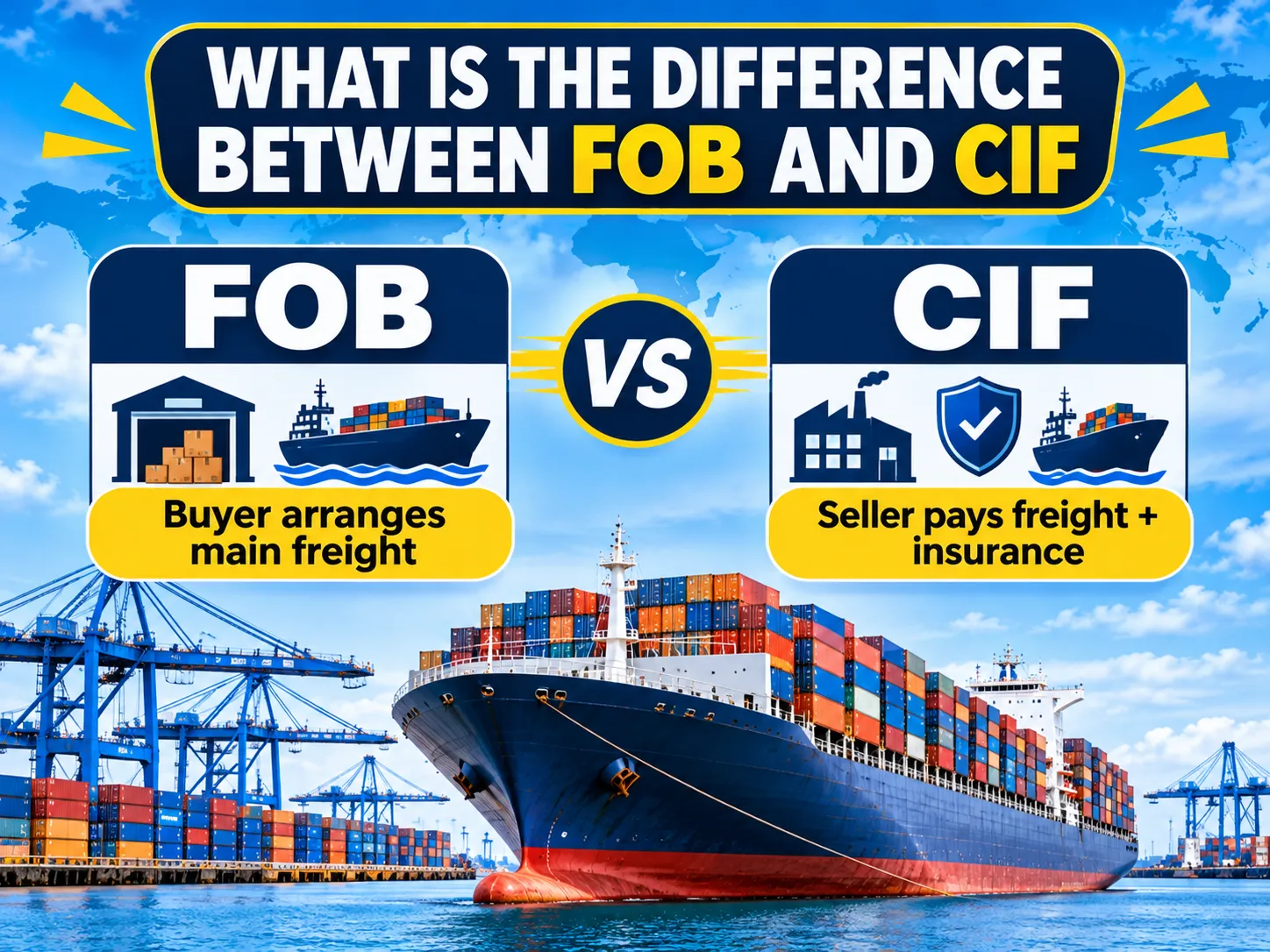
FOB and CIF are two trade terms used in sea shipping. They divide costs and duties between the buyer and seller in different ways.
FOB means the seller delivers the goods on board the ship at the named port. The buyer usually arranges and pays for the main sea freight.
CIF stands for Cost, Insurance, and Freight. Under CIF, the seller arranges and pays for the sea freight and the required minimum cargo insurance to the named destination port.
However, CIF does not mean the seller keeps the risk until the goods reach the destination.
Under CIF, risk generally passes to the buyer when the goods are loaded on board the ship at the port of shipment, as it does under FOB.
What Is the Difference Between FOB and FCA?
FCA stands for Free Carrier. Under FCA, the seller delivers the goods to the carrier or another person chosen by the buyer at the agreed place.
FCA can be used for different types of transport, including road, rail, air, and sea. FOB is meant for sea and inland waterway transport under Incoterms 2020.
When Should You Use FCA Instead of FOB?
FCA is often a better fit when goods are handed to a carrier at a warehouse, container yard, or other location before they are loaded onto a ship.
For container shipments, FCA is often more suitable than FOB. A container may be handed to a terminal operator before it is loaded onto the vessel.
The seller may no longer control the goods at that point, but FOB delivery occurs when the goods are on board.
Choose the term that matches how the goods will actually move.
What Does FOB Mean on an Invoice?
When FOB appears on an invoice, it usually describes a shipping arrangement or delivery term. It may be followed by the name of a port or place.
For example, an invoice may state:
FOB Shanghai, China — Incoterms 2020
This indicates that the parties are using the FOB rule for delivery on board the vessel at the named port in Shanghai.
An invoice may also use FOB in a domestic sale, such as “FOB seller’s warehouse” or “FOB destination.” Those phrases may have a different meaning from international Incoterms FOB.
What Should You Check on an FOB Invoice?
Before paying an invoice, check these details:
- The full name of the shipping port or place.
- Whether the agreement uses Incoterms 2020 or domestic FOB terms.
- Which party pays the main freight.
- Who handles export and import clearance.
- Who bears the risk during each part of the trip.
- Whether cargo insurance is included.
- Which shipping documents must be provided.
If the invoice only says “FOB” without naming the place or rules, ask the seller to clarify the term in writing.
What Does FOB Mean in Accounting?
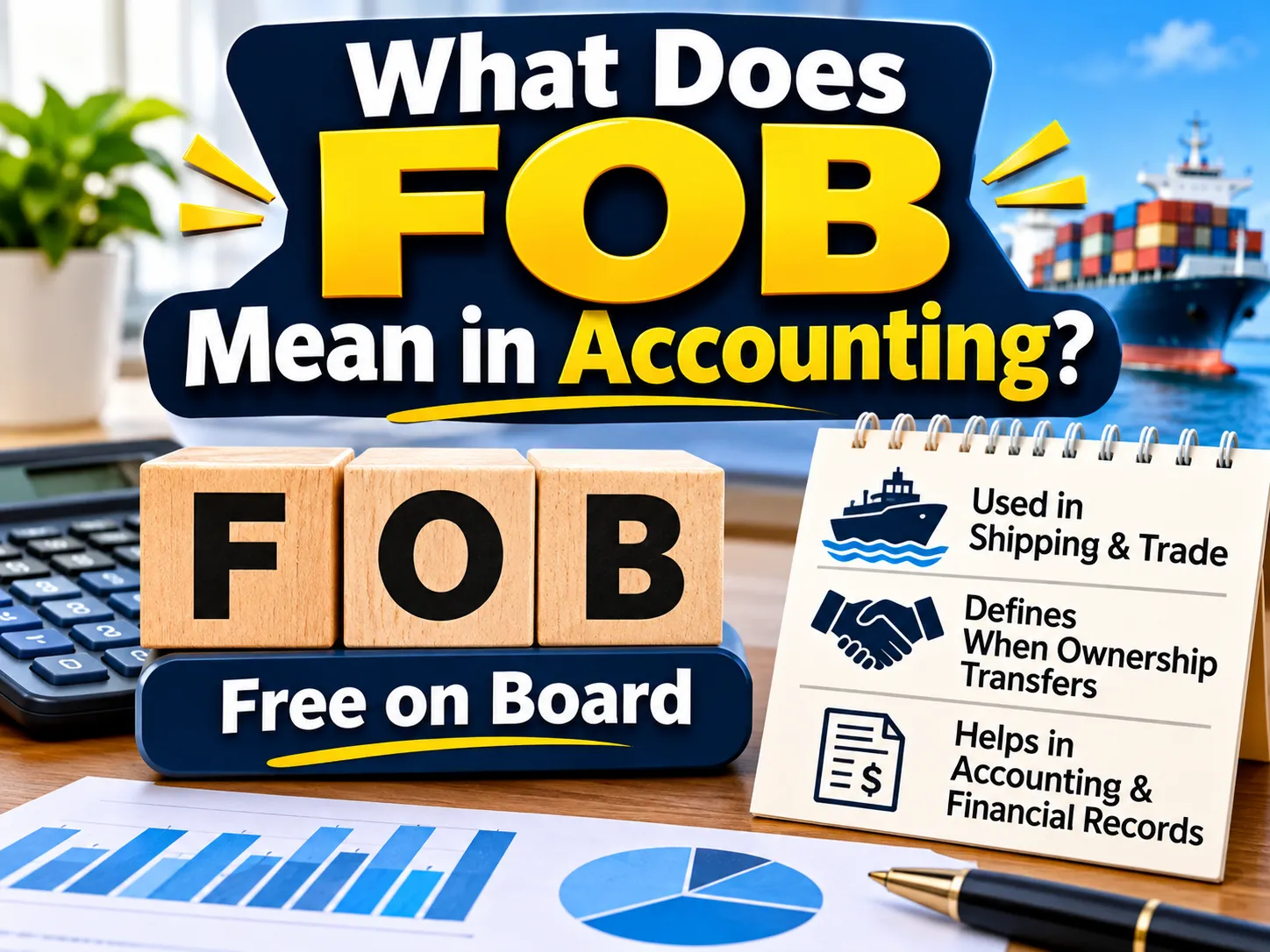
In accounting, FOB terms can help a business decide when goods are treated as delivered and which party may record the goods as inventory during shipment.
The exact accounting treatment depends on the contract, the applicable accounting standards, and when control of the goods transfers.
FOB Shipping Point in Accounting
Under common US accounting practice, goods shipped under FOB shipping point terms may be treated as the buyer’s inventory while they are still in transit, once the relevant transfer conditions are met.
For example, a store buys $5,000 worth of stock. The seller ships the stock on December 30, but it arrives in January.
If the buyer obtained control before year-end under the contract and the applicable rules, the stock may need to be recorded in the earlier accounting period.
FOB Destination in Accounting
With FOB destination terms, goods may remain the seller’s inventory during transit until delivery, if that is when control transfers under the agreement.
For example, a seller sends goods to a buyer on December 30, but they arrive on January 3. If control transfers on arrival, the seller may still report those goods as inventory at the end of December.
These are common examples, not rules that apply to every contract. Businesses should follow their accounting standards and the actual terms of the sale.
Common FOB Examples
The easiest way to understand FOB is to look at how it works in real situations.
A US Business Imports Furniture
A US business buys tables from a supplier in Vietnam. The contract says FOB Ho Chi Minh City, under Incoterms 2020.
The seller prepares the tables, handles export clearance, and loads them onto the ship at the named port. Once they are on board, the risk passes to the buyer.
The buyer arranges the main sea freight and handles import clearance and delivery in the United States.
A Store Buys Goods Within the United States
A store buys products from a supplier under FOB shipping point terms. The products leave the seller’s warehouse on Monday and arrive at the store on Thursday.
If the agreement transfers risk at shipment, the buyer bears the transit risk during those days. The shipping cost still depends on what the contract says.
Common Mistakes to Avoid When Using FOB
FOB is easy to misunderstand if you focus only on who pays for shipping. Keep these common mistakes in mind.
Thinking FOB Means Free Shipping
FOB does not mean that all shipping is free. It divides duties and costs between the buyer and seller.
Confusing Cost With Risk
The party paying a freight charge is not always the party carrying the risk of loss or damage. Under FOB and CIF, risk generally transfers when the goods are loaded on board the ship at the port of shipment.
Using FOB for Every Type of Transport
Under Incoterms 2020, FOB is for sea and inland waterway transport. FCA may be more suitable for goods delivered to a carrier before loading onto a vessel, especially container shipments.
How to Choose the Right FOB Shipping Terms
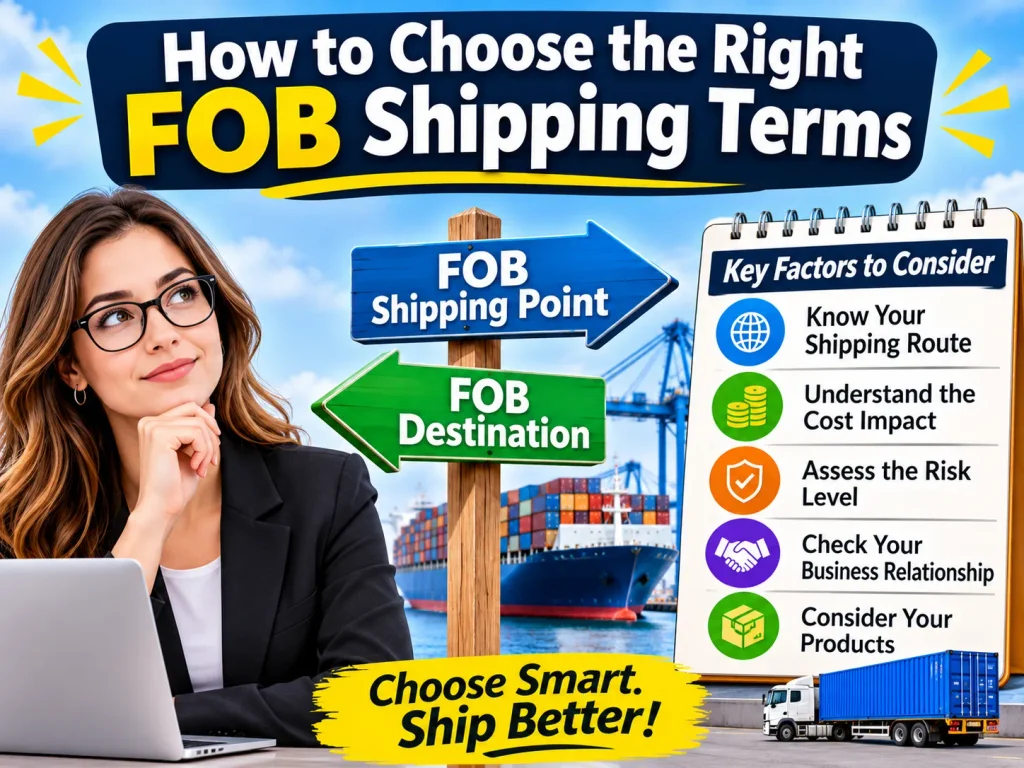
Before choosing FOB, consider how the goods will move and which party can best manage each step.
- Know the transport type. FOB is designed for sea and inland waterway shipping under Incoterms 2020.
- Name the port. Include the exact port of shipment in the contract.
- Set out the costs. Agree on who pays for loading, freight, insurance, unloading, and delivery.
- Understand the risk point. Under FOB, risk passes when the goods are on board the ship at the named port.
- Review insurance needs. Decide whether to buy cargo insurance and who will arrange it.
- Check the paperwork. Make sure both sides understand the invoice, shipping documents, export steps, and import duties.
- Use clear wording. State the selected rule and version, such as “FOB [named port], Incoterms 2020.”
If the shipment uses containers or more than one mode of transport, ask a freight expert whether FCA or another rule is a better match.
Related Searches About FOB
People who search for FOB often want to know how it affects freight charges, delivery, and the risk of damage.
What Does FOB Price Mean?
FOB price is the price quoted for goods under FOB terms. It generally includes the seller’s costs to deliver the goods on board the ship at the named port. It usually does not include the buyer’s main sea freight or import costs.
Always check the quotation to see what it includes.
What Does FOB Origin Mean?
FOB origin is often used in US domestic sales to indicate that responsibility transfers to the buyer at the shipping point. The exact effect depends on the agreement and applicable law.
What Does FOB Destination Mean?
FOB destination usually means the seller keeps responsibility for the goods during transit until they reach the named destination, subject to the contract.
What Does FOB Shipping Point Mean?
FOB shipping point usually means the buyer takes responsibility for the goods once they leave the agreed shipping point. The phrase is commonly used in US domestic sales and accounting.
Article Summary
- FOB usually stands for Free on Board in shipping and trade.
- It sets out delivery duties, costs, and the point when risk passes from seller to buyer.
- Under Incoterms 2020 FOB, the seller delivers goods on board the ship at the named port.
- The buyer usually arranges and pays for the main sea freight.
- FOB does not mean free shipping.
- FOB shipping point and FOB destination are common domestic terms, and their meaning can depend on the contract and applicable law.
- FOB is designed for sea and inland waterway transport. FCA may be better for many container shipments.
- Always name the port, identify the applicable rules, and agree on freight, insurance, and other costs in writing.
FAQs
1. What does FOB stand for?
FOB stands for Free on Board in shipping and international trade. It explains the seller’s delivery duties and when the risk of loss or damage passes to the buyer.
2. Does FOB mean shipping is free?
No. FOB does not mean free shipping. The seller pays costs required to deliver the goods on board the ship at the named port. The buyer usually pays the main sea freight and costs after delivery.
3. Who pays freight under FOB?
Under Incoterms 2020 FOB, the buyer usually arranges and pays for the main sea freight. The seller pays the costs required to deliver the goods on board the vessel at the agreed port.
4. Who is responsible for damaged goods under FOB?
Under Incoterms 2020 FOB, risk passes to the buyer when the goods are loaded on board the ship at the named port. If the goods are damaged after that point, the buyer generally bears the risk, subject to the contract and applicable law.
5. What is the difference between FOB shipping point and FOB destination?
FOB shipping point usually transfers responsibility to the buyer at shipment. FOB destination usually keeps responsibility with the seller until delivery. These terms are commonly used in US domestic sales, and the contract determines their exact effect.
6. What does FOB price include?
An FOB price generally includes the goods and the seller’s costs to deliver them on board the ship at the named port. It usually excludes the buyer’s main sea freight, import duties, and onward delivery costs.
7. Is FOB better than CIF?
Neither term is always better. Under FOB, the buyer usually arranges the main sea freight. Under CIF, the seller pays for sea freight and required minimum insurance to the named destination port. Both generally transfer risk when the goods are loaded on board at the port of shipment.
8. Is FOB used for air freight?
FOB under Incoterms 2020 is intended for sea and inland waterway transport, not air freight. FCA is often a better choice for air shipments and many container shipments.
9. What does FOB mean on a bill or invoice?
FOB usually identifies the delivery or shipping terms. The meaning depends on the context. An international invoice may name a port under Incoterms, while a US domestic invoice may use FOB shipping point or FOB destination.
10. What is the main purpose of FOB?
The main purpose of FOB is to define the seller’s and buyer’s duties, divide certain shipping costs, and establish when the risk of loss or damage transfers during sea transport.
Conclusion
FOB stands for Free on Board and is an important term in shipping and trade. It helps buyers and sellers understand their duties, shipping costs, and risk when goods move from one place to another.
Under Incoterms 2020 FOB, the seller delivers the goods once they are loaded on board the ship at the named port.
The buyer usually pays for the main sea freight and handles costs after that point. FOB does not mean free shipping, and it does not require either party to buy cargo insurance for the other.
The term can mean something different in US domestic sales, especially in phrases such as FOB shipping point and FOB destination.
To avoid extra costs and disputes, always check the contract, name the location, and make sure both parties agree on who pays and who carries the risk.
Read More Posts
What Does AMG Stand For? Mercedes-AMG Meaning Explained
What Does CTE Stand For? Common Uses Explained
Devil’s Advocate Meaning: What Does It Mean?

Emma Wilson is a writer at MeaningVibz who enjoys exploring emoji meanings, texting expressions, and online communication trends. She helps readers understand how emojis and slang are used in different situations by providing clear explanations and relatable examples for everyday messaging.