
Lowkey means something is slight, quiet, private, or not openly shown.
In modern slang, people often use it to express a feeling or opinion in a soft or casual way.
For example:
- “I lowkey love this movie.” — I like this movie more than I may want to admit.
- “I’m lowkey hungry.” — I am a little hungry.
Lowkey can have slightly different meanings depending on the sentence.
Sometimes it makes a statement sound less strong. Other times, it suggests that someone wants to hide a feeling or keep something private.
The Three Main Meanings of Lowkey
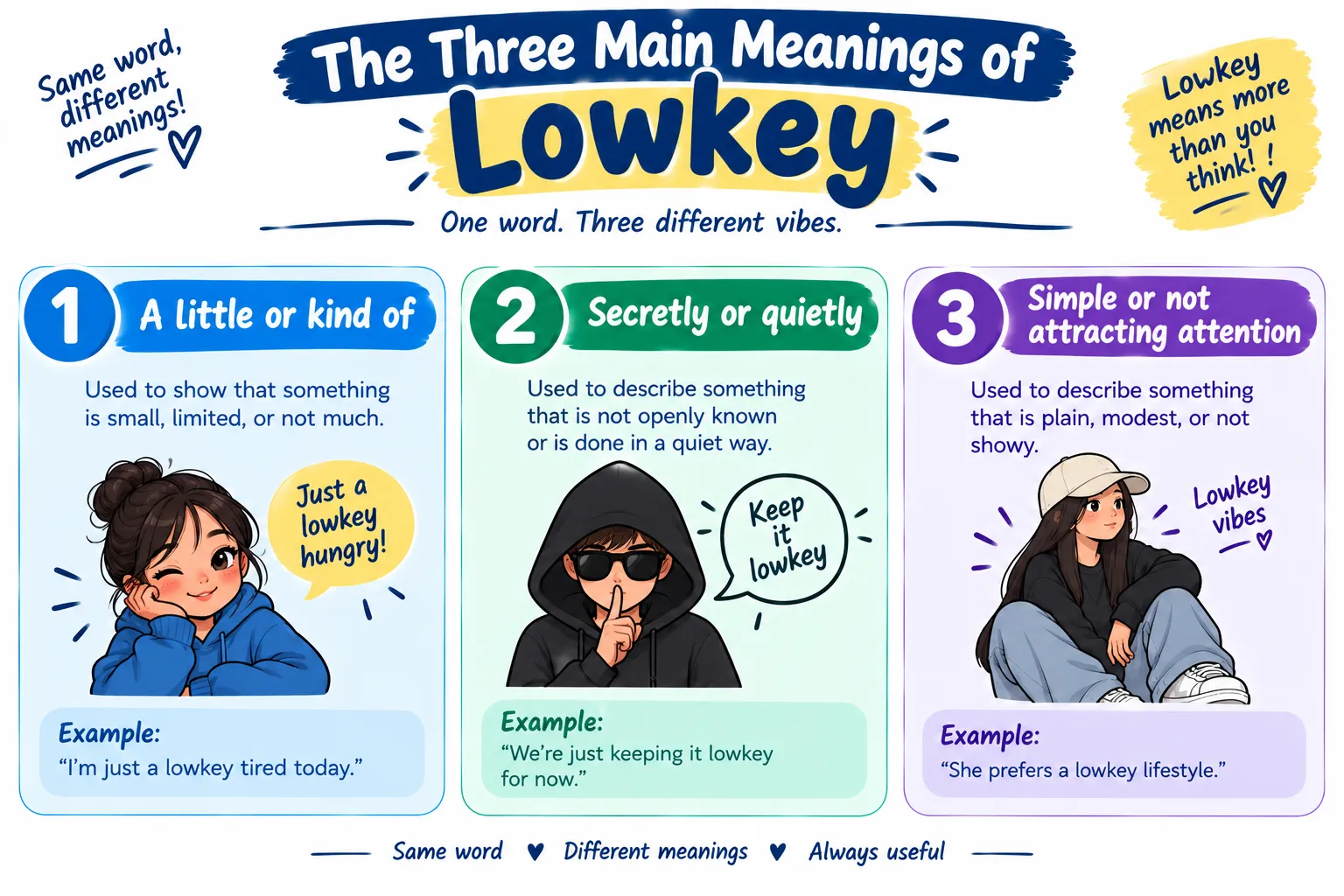
A little or kind of
People use lowkey to make a feeling sound less strong.
Example: “I’m lowkey nervous about the test.”
This means the person feels a bit nervous.
Secretly or quietly
Lowkey can describe a feeling that someone does not want to share openly.
Example: “I lowkey have a crush on him.”
This suggests that the person likes him but may not want everyone to know.
Simple or not attracting attention
When lowkey describes an event, plan, or lifestyle, it can mean quiet, relaxed, or not flashy.
Example: “We had a lowkey birthday dinner.”
This means the dinner was simple and not a big event.
Remember, these meanings can overlap. You need to look at the full sentence to understand what the speaker means.
What Does Lowkey Mean in Slang?
In slang, lowkey often means “kind of,” “a little,” or “secretly.”
It helps people share thoughts and feelings without making them sound too serious or dramatic.
For example, someone might say:
- “I lowkey want to leave.” — I kind of want to leave.
- “That outfit is lowkey amazing.” — That outfit is really good, even if I am saying it casually.
- “I lowkey miss my old school.” — I miss my old school, perhaps more than I openly show.
- “He lowkey annoys me.” — He annoys me a little, or I do not want to say it too strongly.
Lowkey is popular in casual online speech because it makes a message sound relaxed and natural. It can also help someone share an opinion without making a big deal out of it.
What Does Lowkey Mean in Text Messages?
In text messages, lowkey usually means “kind of,” “a little,” or “secretly.” People use it to express their feelings in a simple and informal way.
Here are some common text examples.
Lowkey Meaning in Different Texts
| Text message | What it means |
| “I lowkey miss you.” | I miss you, perhaps more than I admit. |
| “I’m lowkey bored.” | I am a little bored. |
| “I lowkey like him.” | I kind of like him or have a hidden crush. |
| “That was lowkey funny.” | That was quietly or unexpectedly funny. |
| “I lowkey need a break.” | I really feel like I need some rest, said casually. |
| “Keep it lowkey.” | Keep it quiet or private. |
Why Do People Use Lowkey in Texts?
People use lowkey because it can make a message feel less direct.
It can help them talk about a crush, admit a small worry, or share an opinion without sounding too serious.
For example, compare these two messages:
- “I like you.”
- “I lowkey like you.”
The first sounds direct. The second may sound more casual, shy, or playful.
Still, the second message does not always mean the person is hiding their feelings.
The tone and the relationship matter.
What Does Lowkey Mean on TikTok and Instagram?
On TikTok and Instagram, lowkey has much the same meaning as it does in text messages.
People use it in captions, comments, videos, and direct messages to share opinions or feelings in a casual way.
Lowkey on TikTok
On TikTok, you might see comments like:
- “This song is lowkey a masterpiece.”
- “I lowkey needed this video today.”
- “I lowkey want to try this.”
- “That outfit is lowkey fire.”
These phrases mean the person really likes something, feels a certain way, or wants to try something. The word adds a casual tone to the statement.
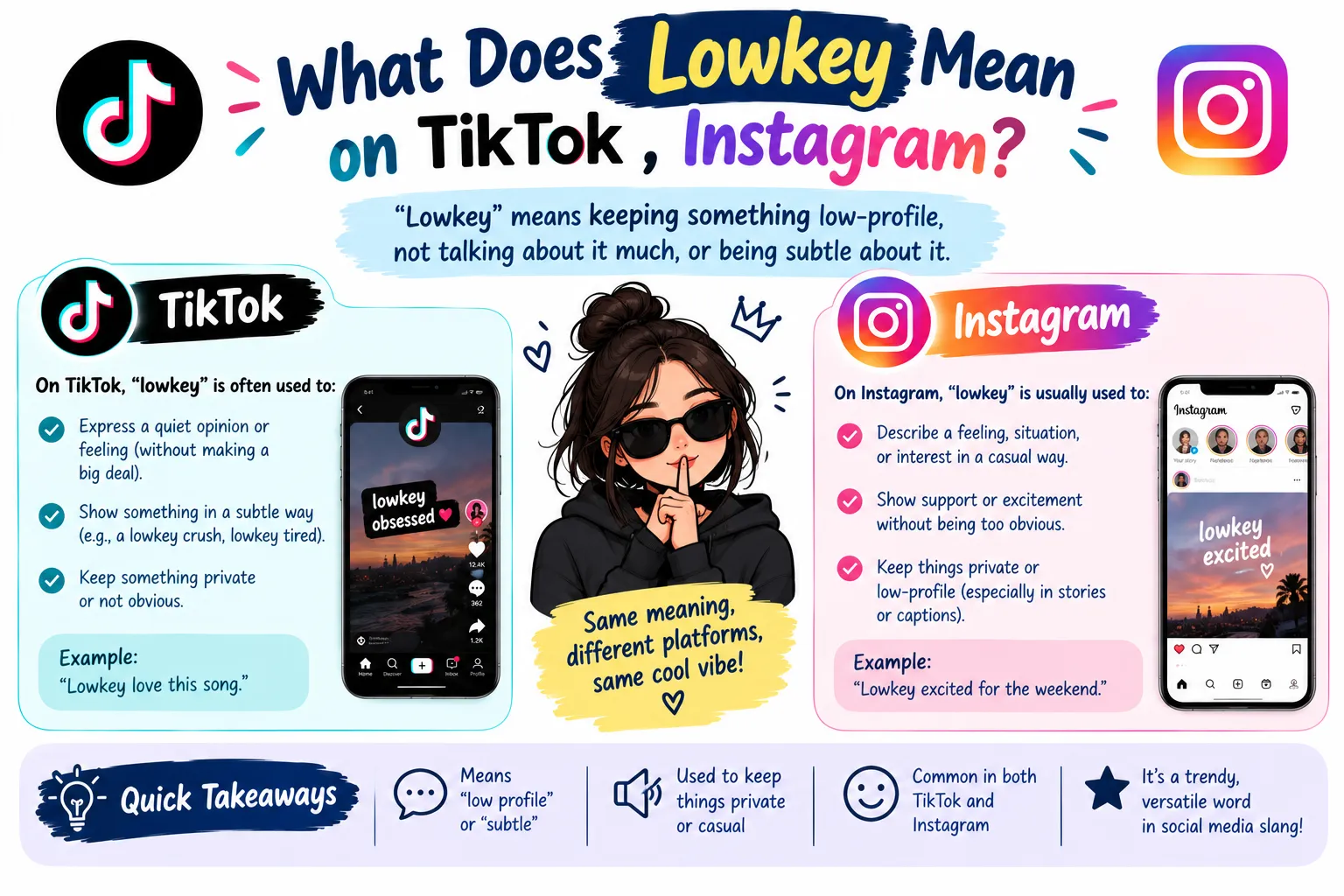
Lowkey on Instagram
On Instagram, people may use lowkey in captions, stories, and private messages.
Examples:
- “Lowkey missing summer.”
- “Lowkey obsessed with this place.”
- “I lowkey need this vacation.”
- “Lowkey proud of myself.”
These messages express feelings without making them sound too dramatic.
In a caption, lowkey can also create a relaxed or playful tone.
What Does Lowkey Mean in a Relationship?
In a relationship, lowkey often means someone has a feeling they are not expressing fully or directly.
It can suggest a crush, missing someone, jealousy, or a wish to spend time together.
For example:
- “I lowkey miss my ex.” — I still miss my ex, even if I do not say it openly.
- “I lowkey like you.” — I have some romantic interest in you, or I am sharing that interest casually.
- “I lowkey get jealous.” — I sometimes feel jealous but may not show it.
- “I lowkey want to see you.” — I would like to see you, though I am not saying it in a very direct way.
Does Lowkey Mean Someone Likes You?
Not always. If someone says, “I lowkey like you,” they may be showing romantic interest.
But the word alone cannot prove how serious they are.
Look at the rest of the conversation. Do they make plans with you? Do they show interest in your life? Do their words and actions match?
A message such as “I lowkey miss you” may show affection, but it does not automatically mean the person wants to restart a relationship.
What Does “Lowkey Love You” Mean?
“Lowkey love you” can mean “I love you, but I am saying it casually or not making a big deal out of it.”
Depending on the relationship, it may be playful, shy, affectionate, or even joking.
It is best not to assume that every use of lowkey carries a hidden romantic message.
What Does Lowkey Mean in Different Situations?
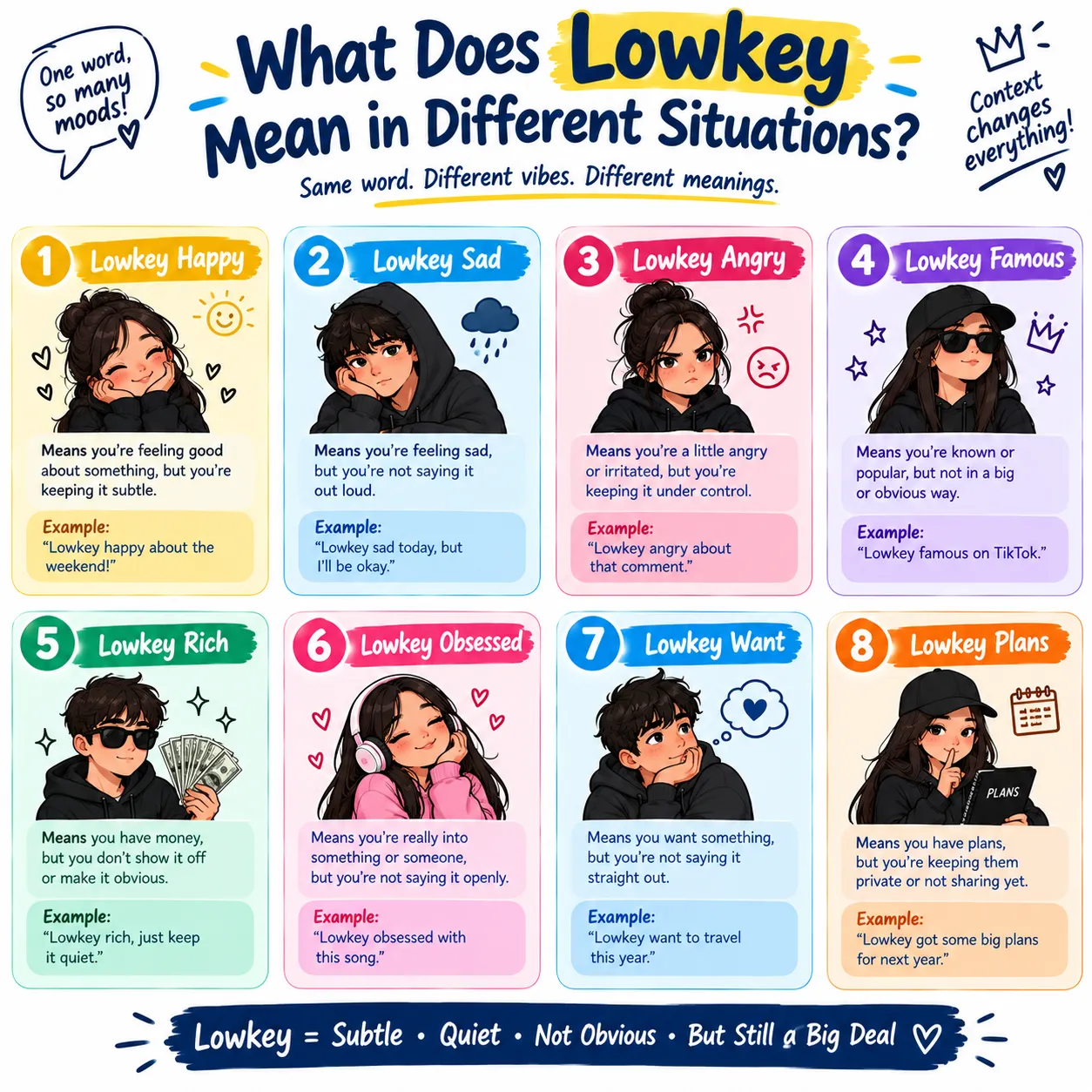
Lowkey can be used in many parts of daily life. Its meaning changes slightly based on what it describes.
Lowkey Happy
“I’m lowkey happy today” means the person feels happy but is expressing it in a calm or casual way.
It may also suggest that the person is happier than they expected to be.
Lowkey Sad
“I’m lowkey sad about leaving” means the person feels some sadness but is not expressing it strongly.
They may be trying to keep the mood light or simply choosing a casual way to share their feelings.
Lowkey Angry
“I’m lowkey angry about what happened” means the person feels some anger or is trying not to make the feeling sound too intense.
The statement can still describe a real feeling, even though the wording sounds mild.
Lowkey Famous
“She is lowkey famous” often means she is well-known in a certain group or has more attention than people might expect.
It can also suggest that someone has a level of fame without acting flashy about it.
Lowkey Rich
“He is lowkey rich” usually means he has a lot of money but does not show it off, or people may not realize how wealthy he is.
The phrase is informal and may be based on someone’s impression rather than confirmed facts.
Lowkey Obsessed
“I’m lowkey obsessed with this show” means the person likes the show a lot. They may be exaggerating for fun or trying to sound casual about their strong interest.
Lowkey Want
“I lowkey want a new phone” means the person kind of wants a new phone or has a desire they are sharing casually.
Depending on the situation, the desire might be mild or quite strong.
Lowkey Plans
“We’re having a lowkey weekend” means the weekend will be calm, simple, or free from big events.
Here, lowkey describes the plans rather than the person’s feelings.
What Is the Difference Between Lowkey and Highkey?
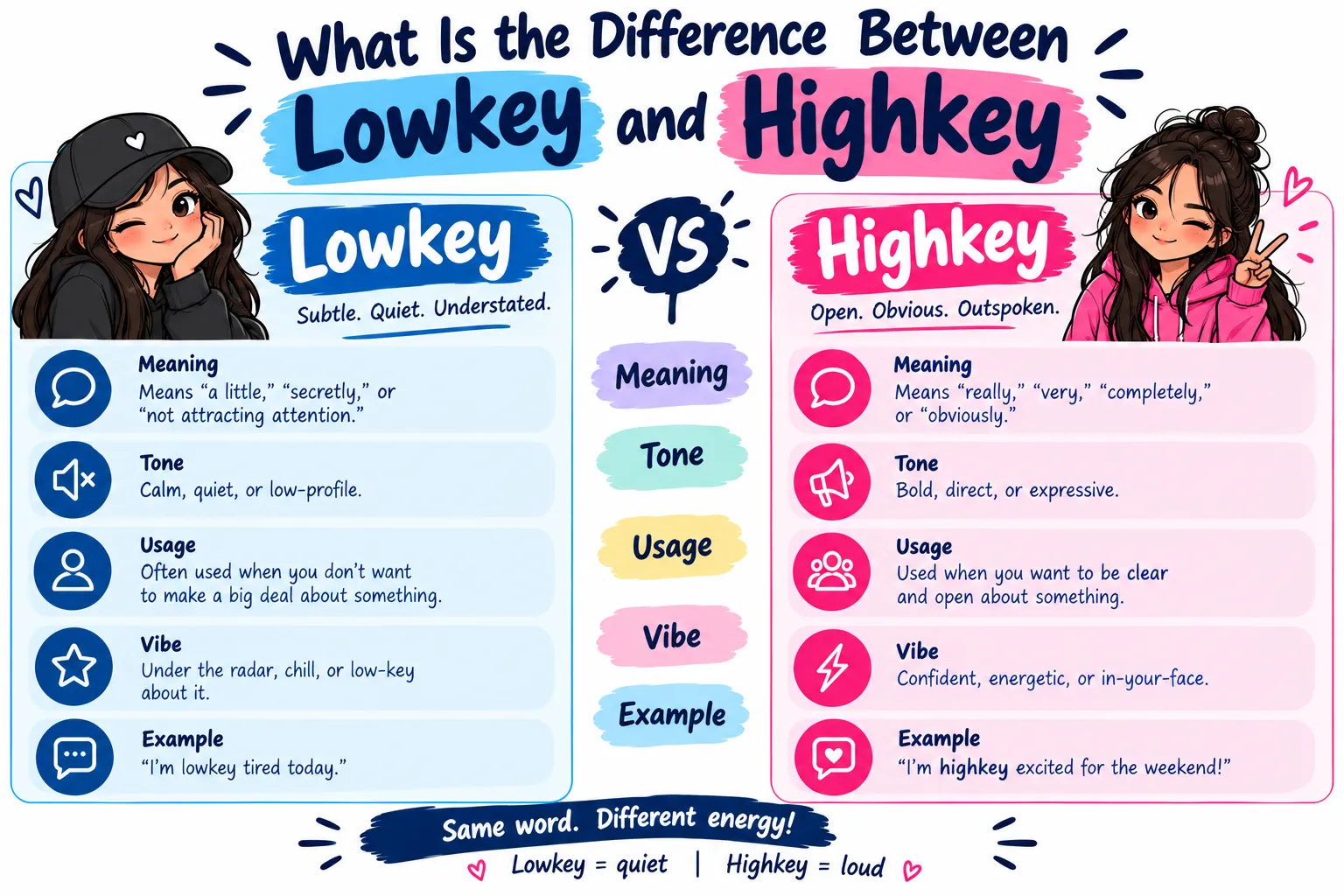
Lowkey and highkey are often used as opposites in modern slang. Lowkey tends to soften a statement or suggest that a feeling is private.
Highkey usually makes a feeling sound clear, strong, or openly expressed.
| Lowkey | Highkey |
| “I lowkey like this song.” | “I highkey love this song.” |
| A little or kind of | A lot or strongly |
| Casual or understated | Open or obvious |
| “I lowkey miss you.” | “I highkey miss you.” |
| May suggest a hidden feeling | Often emphasizes a clear feeling |
For example, “I lowkey want pizza” sounds casual. “I highkey want pizza” makes the desire sound stronger or more obvious.
These are flexible slang terms, not strict rules. People may use them differently depending on their tone and style.
What Is the Difference Between Lowkey and Secretly?
Lowkey and secretly can have similar meanings, but they are not always interchangeable.
Secretly usually means that something is hidden from other people. Lowkey can mean that too, but it can also mean “a little,” “kind of,” or “without much attention.”
Compare these examples:
- “I secretly like him.” — I do not want others to know that I like him.
- “I lowkey like him.” — I kind of like him, or I may not want to make my feelings obvious.
- “I secretly bought a gift.” — I kept the purchase hidden.
- “We had a lowkey wedding.” — We had a small or quiet wedding.
The first pair is about feelings. The second pair shows how lowkey can describe an event that is simple or private without necessarily involving a secret.
What Is the Difference Between Lowkey and Laid-Back?
Lowkey and laid-back can both describe a calm situation, but they are used in different ways.
- Lowkey: Quiet, simple, understated, or not too intense.
- Laid-back: Relaxed, easygoing, or not easily worried.
Examples:
“My birthday party was lowkey” means the party was small or simple.
“My friend is laid-back” means the friend is relaxed and easy to get along with.
A person can be laid-back and enjoy lowkey plans, but the words do not mean exactly the same thing.audience.
How to Use Lowkey in a Sentence
Using lowkey is simple once you know what you want to express. In casual slang, it often appears before a feeling, opinion, or action.
Put Lowkey Before a Feeling or Opinion
Examples:
- “I lowkey love this song.”
- “I lowkey feel nervous.”
- “I lowkey think you are right.”
- “I lowkey hate waking up early.”
In these sentences, lowkey makes the statement sound casual or less direct.
Use Lowkey to Describe a Plan
Examples:
- “Let’s have a lowkey night.”
- “We want a lowkey wedding.”
- “I prefer a lowkey birthday party.”
- “It was a lowkey family dinner.”
Here, lowkey means quiet, simple, or not too big.
Use Lowkey to Share a Private Feeling
Examples:
- “I lowkey have a crush on her.”
- “I lowkey miss my friends.”
- “I lowkey worry about the future.”
- “I lowkey want to tell him the truth.”
These sentences may suggest that the speaker is not sharing the feeling in a strong or direct way.
Avoid Using Lowkey in Every Sentence
Lowkey works best when it adds meaning or tone. If you use it in every message, your writing may sound repetitive.
Instead of saying, “I lowkey woke up, lowkey ate breakfast, and lowkey went to work,” you could simply say, “I woke up, ate breakfast, and went to work.”
Use the word when you want to soften a statement, express a feeling casually, or describe something understated.
Is Lowkey Formal or Informal?
Lowkey is most common in informal English. You will often see it in text messages, social media, conversations with friends, and casual online posts.
It is usually fine to use lowkey when chatting with friends or writing a relaxed caption.
However, it may not fit every professional or academic setting.
For example:
- Casual: “I lowkey think this is a great idea.”
- More formal: “I think this is a very good idea.”
- Casual: “We had a lowkey event.”
- More formal: “We held a small, informal event.”
The hyphenated adjective “low-key” is also used in standard English to describe something restrained or understated. The slang use of “lowkey” is more casual.
If you are writing an essay, business report, or formal email, choose a clearer phrase when the slang does not fit the tone.
Common Mistakes When Using Lowkey
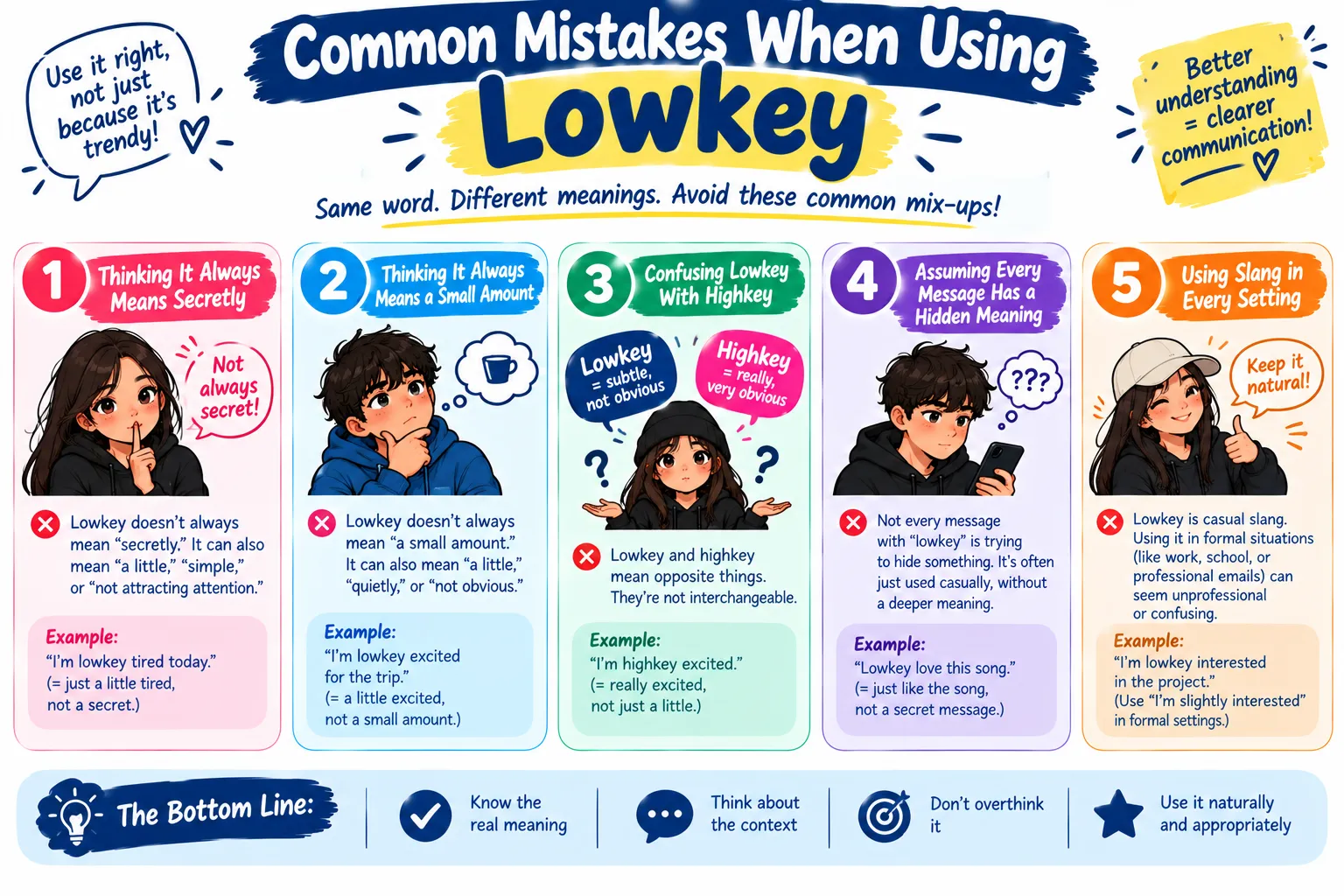
Lowkey is easy to understand, but a few common mistakes can lead to confusion.
Thinking It Always Means Secretly
Lowkey can suggest a hidden feeling, but it can also mean “a little” or “kind of.”
“I’m lowkey tired” usually means “I’m a little tired,” not “I am secretly tired.”
Thinking It Always Means a Small Amount
Lowkey can soften a statement even when the feeling is strong.
“I lowkey love this song” might mean the person likes the song a lot but is expressing that feeling casually.
Confusing Lowkey With Highkey
Lowkey usually softens or tones down a statement, while highkey tends to emphasize it.
“I lowkey want to leave” sounds less direct than “I highkey want to leave.”
Assuming Every Message Has a Hidden Meaning
A person who says, “I lowkey miss you,” may be sharing a real feeling in a casual way. But it does not always mean they are hiding deep emotions or want a relationship.
Consider the context before drawing conclusions.
Using Slang in Every Setting
Lowkey is natural in many casual conversations. In a formal report or professional email, words such as “somewhat,” “quiet,” “private,” or “understated” may be more suitable.
FAQ
What Does Lowkey Mean in Simple Words?
Lowkey means “a little,” “kind of,” “secretly,” or “quietly,” depending on the sentence.
For example, “I lowkey like this song” means you like it but are expressing that feeling casually.
Does Lowkey Mean You Like Someone?
It can. “I lowkey like you” often means that you have romantic interest in someone but are sharing it in a casual or less direct way. Still, the phrase alone does not tell you how serious the person is.
What Does Lowkey Mean From a Girl or a Guy?
The meaning is generally the same regardless of who says it. If someone says, “I lowkey miss you,” they may be expressing that they miss you without making a big deal out of it.
Context matters more than gender.
What Does “Keep It Lowkey” Mean?
“Keep it lowkey” means keep something quiet, private, simple, or away from too much attention. For example, friends may use it when planning a small gathering.
Is Lowkey a Compliment?
It can be. “You are lowkey amazing” is a compliment that expresses praise in a casual way.
But lowkey itself is not always positive; the meaning depends on the words that follow it.
What Does Lowkey Mean on Snapchat?
On Snapchat, lowkey usually means “kind of,” “a little,” or “secretly,” just as it does in other text messages. For example, “I lowkey miss you” means the sender misses you but is expressing it casually.
What Does Lowkey Mean in Gen Z Slang?
In Gen Z slang, lowkey is commonly used to soften a statement, share a feeling casually, or suggest that something is not being openly expressed.
Its meaning depends on context, and people of different ages may use it too.
What Is the Opposite of Lowkey?
Highkey is a common slang opposite. Lowkey tends to sound understated or less direct, while highkey makes a feeling or opinion sound stronger or more obvious.
Can Lowkey Be Used Positively and Negatively?
Yes. “I lowkey love this” is positive, while “I lowkey hate this weather” is negative.
Lowkey describes the way the feeling is expressed rather than whether the feeling is good or bad.
Is Lowkey the Same as Low-Key?
They are closely related. Low-key is a common standard spelling for something quiet or understated, while lowkey is widely used in informal slang and online messages.
The best form depends on how the word is used.
Article Summary
The word lowkey is common in modern slang, text messages, and social media. It can mean “a little,” “kind of,” “secretly,” or “without attracting much attention.”
Its exact meaning depends on the sentence.
People use lowkey to talk about feelings, share opinions, describe simple plans, or express something in a casual way.
For example, “I lowkey miss you” means someone misses you but expresses that feeling casually. “Keep it lowkey” means to keep something quiet, simple, or private.
Lowkey is informal and works well in everyday conversations.
Its common slang opposite is highkey, which often expresses a feeling more strongly or openly.
Conclusion
Understanding the lowkey meaning is easy when you pay attention to the context.
In slang, it often means “kind of,” “a little,” or “secretly.” When describing a plan or event, it usually means quiet, simple, or understated.
You may see lowkey in text messages, TikTok comments, Instagram captions, and everyday conversations.
It can express feelings, opinions, interests, and plans without making them sound too serious. Remember that lowkey does not always mean someone is hiding a secret.
Sometimes, it is just a casual way to say something.
Now that you know what lowkey means, you can understand it more easily and use it naturally in your own conversations.

Ryan Mitchell creates informative content about word definitions, acronyms, online slang, and modern communication. He enjoys exploring how people use language in text messages, on social media, and in daily life. Ryan focuses on delivering simple explanations and practical examples that help readers quickly understand the meaning of unfamiliar words and phrases.