
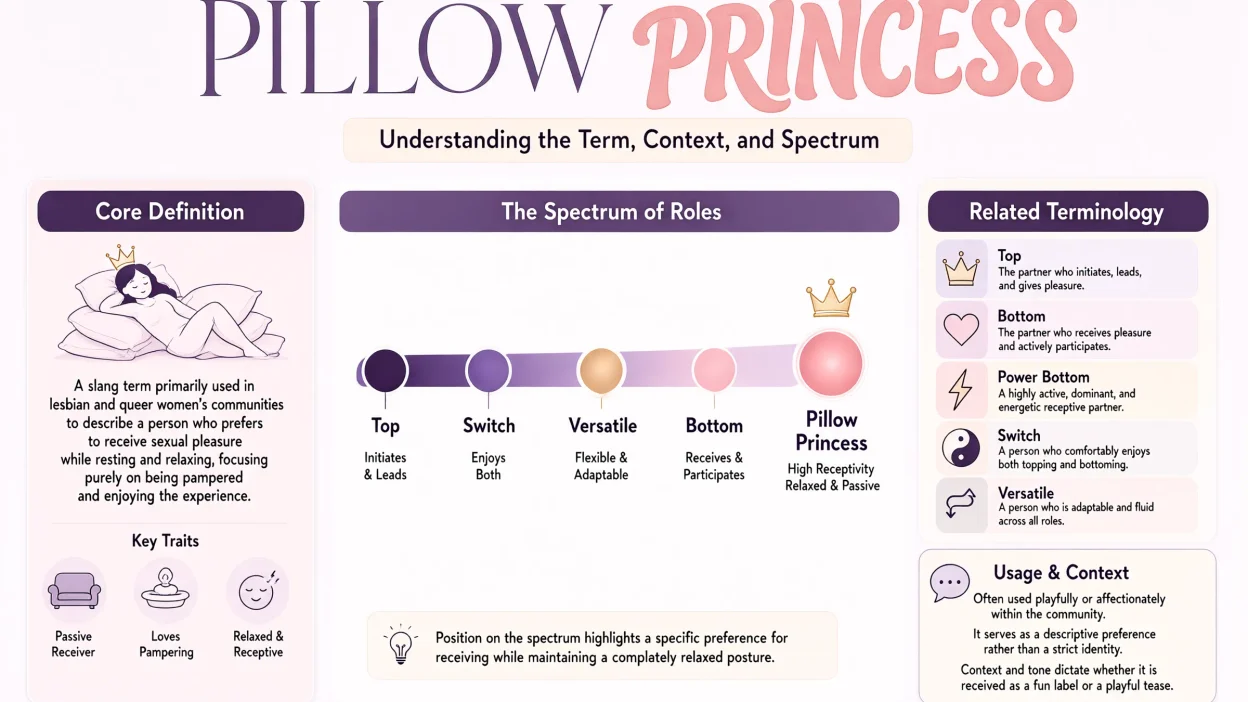
The term pillow princess describes someone who prefers to receive sexual pleasure instead of giving it in the same way.
It is informal slang, not a medical term or a formal relationship label.
The phrase is most often used in lesbian and queer communities.
However, it may also appear in conversations about straight relationships, dating apps, and social media.
Here is a simple example:
Imagine two partners who enjoy different roles during intimacy. One likes taking the lead and giving pleasure. The other prefers to relax and receive pleasure.
If both partners enjoy this arrangement and agree to it, the receiving partner might describe herself as a pillow princess.
The term does not automatically mean that someone is selfish or does not care about their partner.
The meaning depends on the person’s preferences and how the relationship works.
Where Did the Term Pillow Princess Come From?
The phrase has roots in LGBTQ+ culture, especially lesbian communities.
It appeared in discussions about relationships and intimacy during the 1990s and later became more common online.
Dictionary.com notes that the word “pillow” suggests comfort or passivity, while “princess” suggests being treated with special care.
The phrase combines these ideas to describe someone who prefers to receive pleasure.
The expression later spread through online magazines, dating websites, memes, and social media.
Today, people may use it as a personal label, a playful joke, or a criticism of a partner.
Although the term is now used more widely, its queer history is important. Understanding that history helps people use the phrase with care and respect.
How Is Pillow Princess Used in Dating and Relationships?
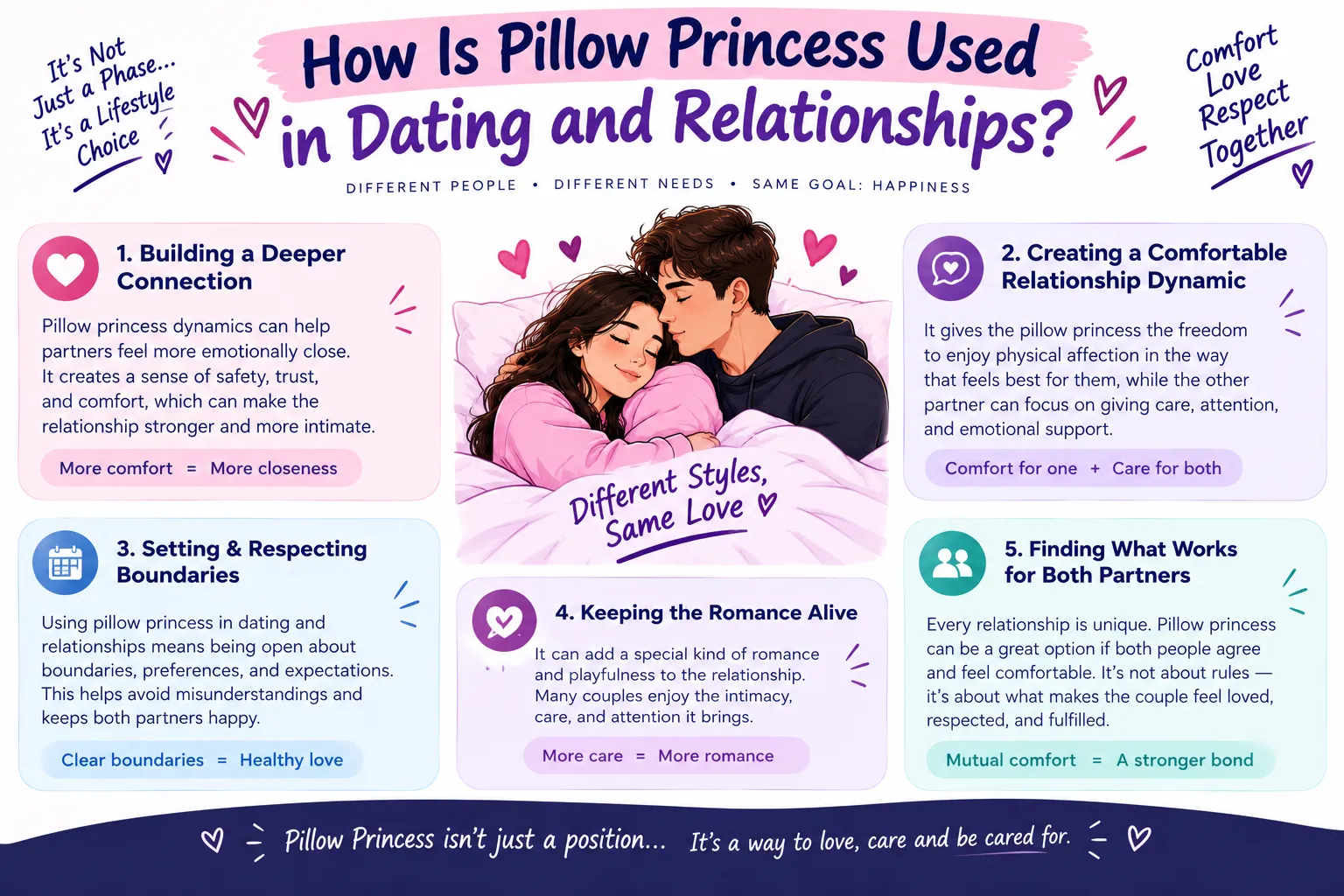
The phrase can mean different things depending on the people using it. It is not always a compliment, and it is not always an insult.
As a Personal Preference
Some people use the term to describe what they enjoy during intimacy. They may prefer receiving pleasure rather than taking an active role in giving it.
For example, someone might say, “I’m a pillow princess, and I like partners who enjoy taking the lead.”
In this case, the person is describing a preference. They are not necessarily unhappy with their relationship or unwilling to show love in other ways.
As a Playful Joke
Friends or partners may use the phrase in a joking way when everyone understands the meaning and feels comfortable with it.
For example, someone might laugh and say, “You’re such a pillow princess. You always want to be pampered!”
Whether this is funny or hurtful depends on the relationship, the tone, and the other person’s feelings.
As a Criticism
Sometimes, the term is used to complain about a partner who expects attention but rarely considers the other person’s needs.
For example, someone may call a partner a pillow princess because they feel that intimacy is one-sided.
In this situation, the real problem may be a lack of communication or mutual care. Using a label will not solve that problem. An honest conversation is usually more helpful.
Is Being a Pillow Princess a Bad Thing?
No, being a pillow princess is not automatically a bad thing.
People have different preferences when it comes to intimacy. Some enjoy taking the lead, while others prefer receiving pleasure.
Some like switching roles, and others prefer a more consistent arrangement.
There is no single way every couple must approach intimacy.
However, both partners should feel heard, respected, and comfortable with the arrangement. Problems may arise if one person feels pressured, ignored, or expected to meet the other’s needs without having their own needs considered.
Pillow Princess Meaning in LGBTQ+ and Lesbian Communities
The phrase has a special place in LGBTQ+ slang, particularly in lesbian and sapphic dating culture.
In these communities, a pillow princess is generally someone who prefers receiving sexual pleasure rather than giving it.
The term has often been discussed alongside different relationship roles and preferences.
Some people proudly use the label for themselves. Others avoid it because they feel it carries unfair assumptions about being passive or selfish.
The term may also be used by bisexual women and other queer people.
Its use is not limited to one sexual orientation, although its historical connection to lesbian culture remains important.
It is best not to assume that every lesbian, bisexual woman, or queer person fits this label. Sexual preferences vary from person to person.
What Does Pillow Princess Mean on a Dating App?
On a dating app, the phrase may help someone describe their preferences before meeting a potential partner.
For example, a person might include “pillow princess” in a profile to show that they prefer a receiving role during intimacy.
This can help people find partners with compatible expectations. Still, the label does not explain every detail about someone’s boundaries or preferences.
If you see the term on a profile and want to understand it, ask politely rather than making assumptions.
Pillow Princess vs. Pillow Prince
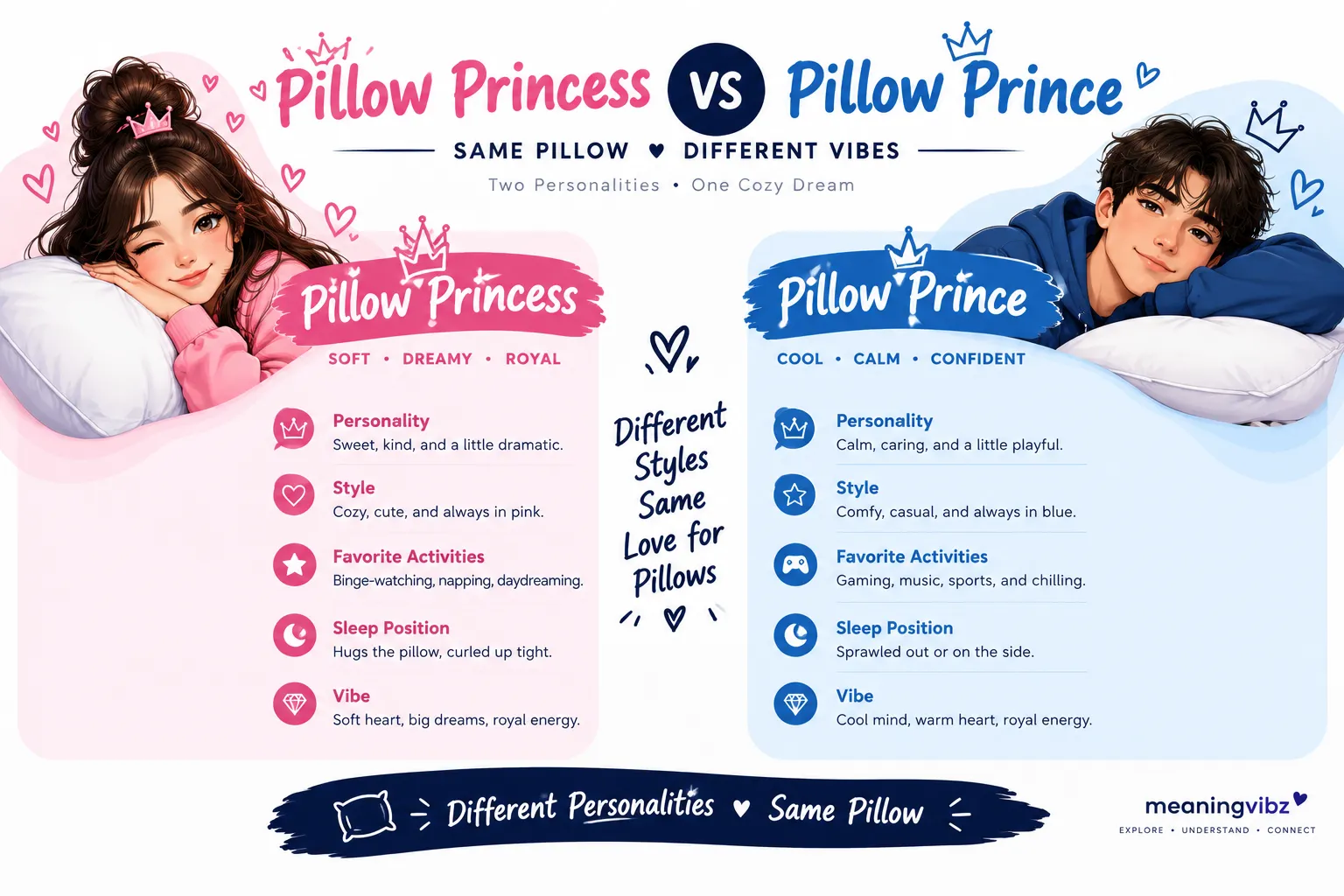
A pillow prince is a less common masculine version of the term. It generally describes a man who prefers receiving sexual pleasure rather than giving it.
The two expressions share the same basic meaning, but pillow princess is more widely recognized and is strongly associated with queer women’s dating culture.
Here is a simple comparison:
| Term | Meaning |
| Pillow princess | Someone, often a woman or queer person, who prefers receiving pleasure |
| Pillow prince | A less common term for a man who prefers receiving pleasure |
| Pillow queen | An occasional alternative for someone who prefers receiving pleasure |
These terms are informal slang. Their meanings may vary between communities, and not everyone uses or accepts them.
Pillow Princess vs. Bottom: What Is the Difference?
The terms pillow princess and bottom are related to intimacy, but they do not mean the same thing.
A bottom generally describes a person’s preferred role in a particular sexual activity or dynamic.
A pillow princess, by contrast, describes a preference for receiving pleasure rather than giving it.
A person may identify as a bottom without being a pillow princess. They may enjoy receiving pleasure while also enjoying giving it.
Likewise, someone who identifies as a pillow princess may have preferences that do not fit neatly into other sexual labels.
The key difference is that one term focuses on a role, while the other focuses on the direction of pleasure and willingness to reciprocate.
These labels should not be treated as strict rules. People can have different preferences in different situations.
Pillow Princess vs. Starfish
You may also see the word “starfish” used in discussions about dating and intimacy.
A starfish is slang for someone who is perceived as lying still or making very little effort during sexual activity.
The term is often used negatively to suggest that a partner is not engaged.
A pillow princess, however, is someone who prefers receiving pleasure rather than giving it.
The term does not necessarily mean that the person is completely still or uninterested.
The words can overlap in casual conversations, but they are not exact synonyms.
For example, someone may enjoy receiving pleasure and still communicate clearly, respond to their partner, and remain engaged.
That does not automatically make them a starfish.
It is better to talk about specific preferences and behaviors than to use labels that may embarrass or insult a partner.
What Is the Difference Between a Pillow Princess and a Selfish Partner?
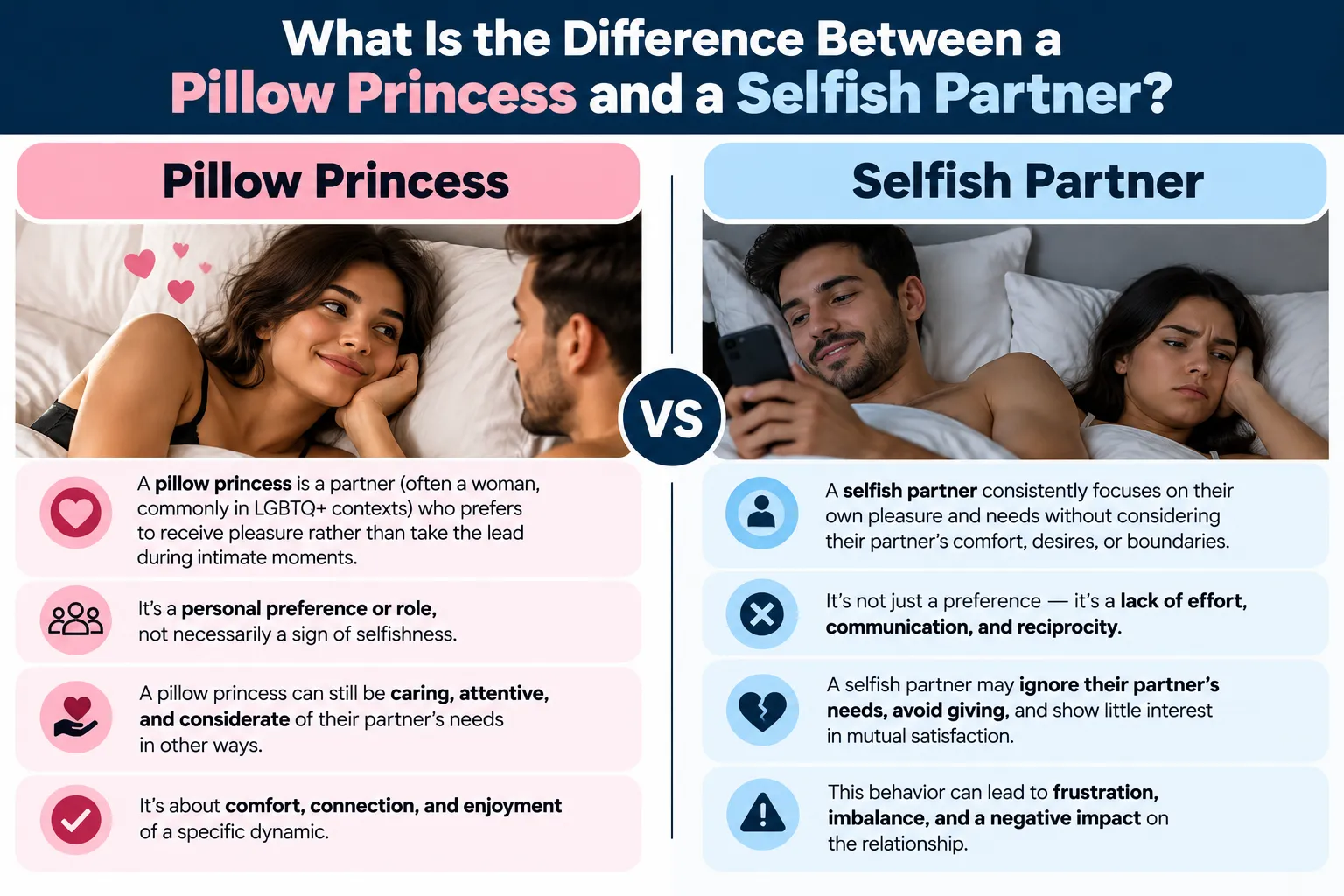
This is one of the most important distinctions to understand.
A pillow princess has a preference about receiving pleasure. A selfish partner is someone who repeatedly ignores another person’s needs, feelings, or boundaries.
These descriptions are not interchangeable.
Consider two examples:
Example 1: One partner prefers receiving pleasure. The other partner enjoys giving it, and both are happy with their arrangement. This can be a healthy relationship.
A healthy relationship does not require every action to be divided equally. Instead, both people should feel that their needs matter.
People can also change their preferences over time. Partners should be able to talk openly without fear of being mocked or pressured.
How to Talk About Pillow Princess Preferences With a Partner
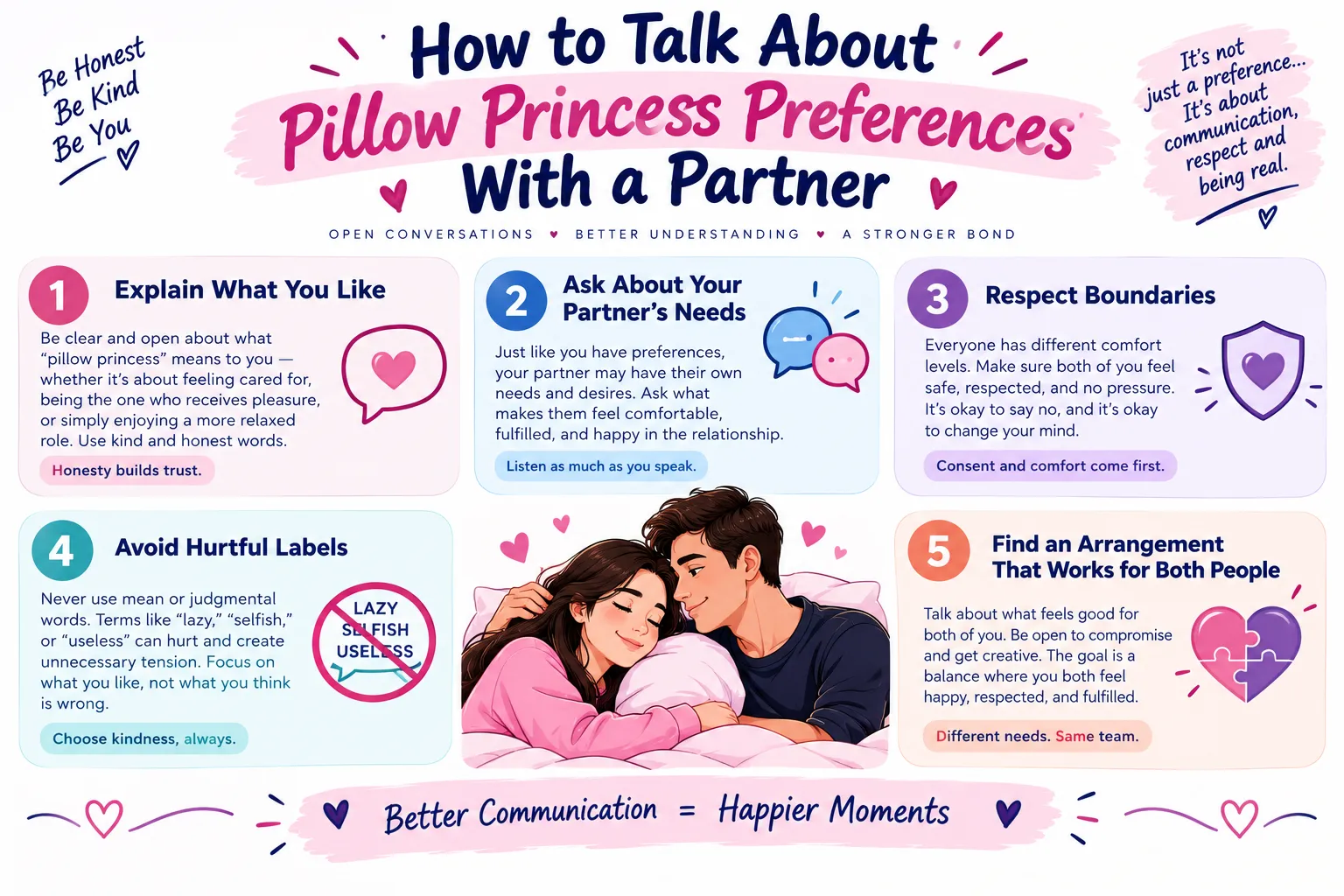
If you think the term describes you, or if your partner has used it, an honest conversation can help prevent misunderstandings.
Explain What You Like
Use simple words to describe what makes you comfortable. You do not have to adopt a label if it does not feel right.
For example, you could say, “I usually prefer receiving pleasure, and I want us to talk about what works for both of us.”
Ask About Your Partner’s Needs
Your partner may have different preferences. Give them room to explain what they enjoy and what they need from the relationship.
Listening does not mean that you must agree to every request. It means that both people have a chance to speak.
Respect Boundaries
Consent matters in every relationship. No one should feel forced to give or receive sexual attention to keep a partner happy.
Both people should feel free to say yes, say no, or change their minds.
Avoid Hurtful Labels
If your partner does not like being called a pillow princess, do not keep using the phrase as a joke. A label that feels playful to one person may feel insulting to another.
Focus on the behavior or preference you want to discuss instead.
Find an Arrangement That Works for Both People
Some couples prefer different roles, while others like to switch. There is no need to copy someone else’s relationship.
The goal is to find an arrangement that feels comfortable and fair to both partners.
How to Use Pillow Princess in a Sentence
Here are some simple examples that show how the term appears in everyday conversation.
- “She calls herself a pillow princess because she prefers receiving pleasure.”
- “I saw the phrase pillow princess on a dating app and wanted to know what it meant.”
- “They talked openly about their preferences before deciding whether they were compatible.”
- “He jokingly called himself a pillow prince.”
- “She does not like the term pillow princess, so her partner uses different words.”
- “Being a pillow princess does not automatically make someone selfish.”
- “The meaning of pillow princess depends on the context and the people involved.”
These examples show that the term can be used to describe a personal preference, discuss dating compatibility, or make a joke. The tone matters.
Is Pillow Princess an Offensive Term?
The term is not always offensive, but it can be hurtful in certain situations.
Some people use it proudly as a label for themselves. Others use it affectionately with a partner who enjoys the joke.
However, it can sound insulting when used to shame someone for their sexual preferences or suggest that they are lazy or selfish.
Context matters, but so does consent. Do not assume someone is comfortable with the term just because it appears frequently online.
If you are unsure whether the phrase is welcome, ask. If someone asks you not to use it, respect that choice.
FAQ
1. What does pillow princess mean in simple terms?
A pillow princess is someone who prefers to receive sexual pleasure rather than give it in the same way.
The phrase is informal slang commonly associated with lesbian and queer dating culture.
2. What does pillow princess mean sexually?
In a sexual context, the term describes a person who prefers a receiving role during intimacy.
It does not automatically mean they are inactive, selfish, or uninterested in their partner.
3. Is pillow princess a lesbian term?
The phrase has roots in lesbian and LGBTQ+ communities and is especially common in queer women’s dating culture.
It is also used more broadly in conversations about dating and intimacy.
4. Can a straight woman be a pillow princess?
Yes. The term is sometimes used in heterosexual relationships, too. However, it is important to understand its queer history and avoid using it to judge someone’s preferences.
5. Is being a pillow princess bad?
No. It is a preference, not a measure of someone’s character. It becomes a relationship concern if partners feel pressured, ignored, or unable to discuss their needs openly.
6. What is the male version of pillow princess?
Pillow prince is a less common term for a man who prefers receiving sexual pleasure rather than giving it.
7. What does pillow princess mean on TikTok?
On TikTok, the phrase is usually used as slang for someone who prefers receiving pleasure during intimacy.
Videos and comments may use it humorously, proudly, or critically, depending on the context.
8. What is the difference between pillow princess and pillow queen?
Pillow queen is sometimes used as an alternative to pillow princess. The terms can have similar meanings, although usage varies between people and communities.
9. Does pillow princess mean someone is lazy?
Not necessarily. The term describes a preference during intimacy. Calling someone lazy is a judgment about their behavior, not a complete or fair definition of the phrase.
10. Can a pillow princess have a healthy relationship?
Yes. A person with this preference can have a healthy relationship when both partners communicate openly, respect boundaries, and agree on what works for them.
11. What does pillow princess mean in a text message?
In a text message, it usually refers to someone who prefers receiving pleasure rather than giving it. The sender may be joking, flirting, describing themselves, or criticizing someone. The surrounding conversation helps explain the intended meaning.
12. Is pillow princess the same as bottom?
No. Bottom generally describes a preferred role in a particular sexual activity, while pillow princess refers to a preference for receiving pleasure. The terms can overlap, but they are not interchangeable.
Article Summary
The phrase “pillow princess” is informal slang that describes someone who prefers receiving sexual pleasure rather than giving it in the same way.
It is strongly associated with lesbian and queer communities, though it is also used in other dating contexts.
The term can be playful, positive, or critical, depending on who uses it and why. It does not automatically mean someone is lazy or selfish.
In a healthy relationship, partners communicate their preferences, respect each other’s boundaries, and agree on an arrangement that works for both.
Conclusion
Understanding the pillow princess meaning is about more than learning a slang phrase.
It also means recognizing that people have different preferences in dating and intimacy.
The term usually describes someone who prefers receiving pleasure rather than giving it.
It has roots in lesbian and LGBTQ+ culture and is now used more widely on dating apps and social media.
Being a pillow princess is not automatically a bad thing. What matters is how partners communicate, respect each other’s boundaries, and handle their needs.
The label should never be used to shame someone or make assumptions about their character.
If you hear the phrase in a conversation or see it online, consider the context before deciding what the speaker means.
A little understanding can help prevent confusion and support more respectful relationships.
Sources consulted for terminology and historical context: Dictionary.com, Wiktionary, and HER.

Emma Wilson is a writer at MeaningVibz who enjoys exploring emoji meanings, texting expressions, and online communication trends. She helps readers understand how emojis and slang are used in different situations by providing clear explanations and relatable examples for everyday messaging.