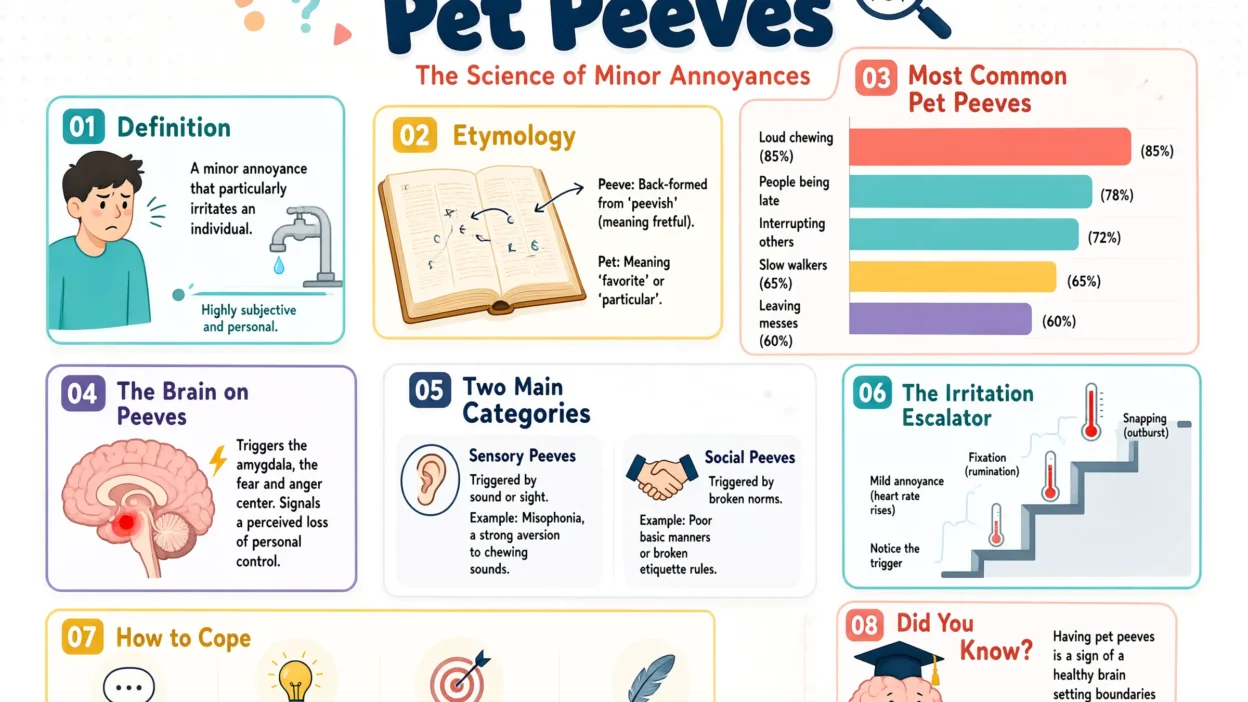
Pet peeves means small habits, actions, or things that annoy or bother a person, often more than they bother other people.
A pet peeve is something that gets on your nerves. It may seem unimportant to someone else, but it can be very irritating to you.
For example:
- Loud chewing is one of my pet peeves.
- My biggest pet peeve is when people are late.
- Leaving a mess in a shared space is a common pet peeve.
The phrase usually refers to everyday annoyances rather than serious problems. However, what counts as a pet peeve depends on the person.
Pet Peeve vs. Pet Peeves
The difference is simple:
- Pet peeve: One thing that annoys you.
- Pet peeves: Two or more things that annoy you.
Examples:
- “My biggest pet peeve is rude behavior.”
- “My pet peeves are loud chewing and constant interruptions.”
Both forms are correct. Use the singular form for one annoyance and the plural form for several.
What Is the Origin of Pet Peeves?
The word peeve means to annoy or irritate someone.
The phrase pet peeve developed as a way to describe a particular annoyance that a person feels strongly about.
Here, the word pet does not refer to a dog, cat, or other animal.
It suggests something personal or especially associated with a person.
Today, people commonly use pet peeve in casual conversations, workplace discussions, online posts, and social media comments.
25 Common Pet Peeves With Examples
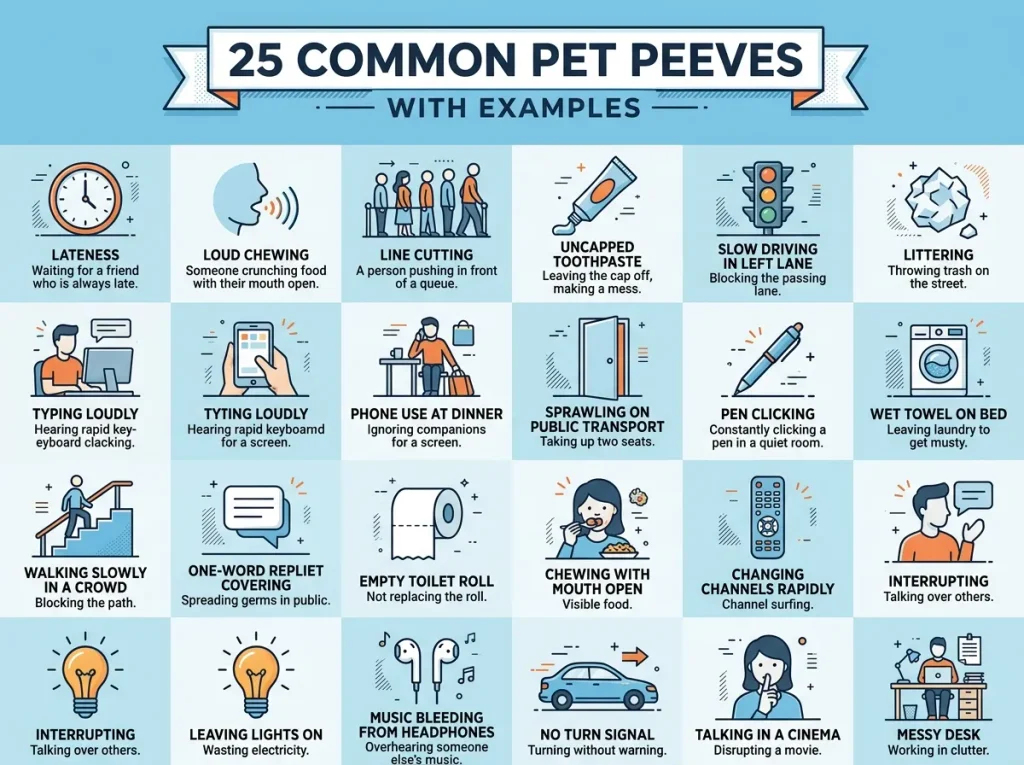
Everyone has different likes and dislikes. Still, some annoyances are widely recognized.
1. Loud Chewing
Some people cannot stand hearing others chew with their mouths open.
Example: “Loud chewing is one of my biggest pet peeves.”
2. Being Late
Waiting for someone who does not arrive on time can be frustrating.
Example: “My biggest pet peeve is when people are always late.”
3. Interrupting Others
Cutting someone off before they finish speaking can feel rude.
Example: “I hate being interrupted. It’s one of my main pet peeves.”
4. Leaving Dirty Dishes
Dirty plates and cups left around the house can bother people who like a clean kitchen.
Example: “Leaving dirty dishes in the sink is my pet peeve.”
5. Talking During Movies
Some people want to enjoy a movie without hearing other people talk.
Example: “Talking during a movie is a huge pet peeve of mine.”
6. Being Rude to Workers
Speaking harshly to waiters, cashiers, or other workers can upset people who value kindness.
Example: “Being rude to service workers is one of my biggest pet peeves.”
7. Constant Phone Checking
Checking a phone during a conversation may make others feel ignored.
Example: “My pet peeve is when someone checks their phone while I’m talking.”
8. Leaving a Mess
Some people get annoyed when others leave clothes, trash, or other items scattered around.
Example: “Leaving a mess in shared spaces is a major pet peeve.”
9. Poor Personal Hygiene
Strong body odor or poor hygiene may bother people in close spaces.
Example: “Poor personal hygiene is one of my pet peeves.”
10. Not Saying Please or Thank You
Some people expect basic manners in everyday life.
Example: “When people never say thank you, it really bothers me.”
11. Cutting in Line
Skipping ahead of people who have been waiting can seem unfair.
Example: “Cutting in line is a pet peeve of mine.”
12. Loud Music in Public
Playing music loudly in places where others want peace and quiet can be annoying.
Example: “People playing loud music on the bus is one of my pet peeves.”
13. Leaving Lights On
Some people dislike wasting electricity by leaving lights on in empty rooms.
Example: “Leaving every light on is my biggest pet peeve.”
14. Not Replacing Empty Items
Using the last of something without replacing it can frustrate other people.
Example: “Finishing the toilet paper and not replacing it is a pet peeve of mine.”
15. Spreading Rumors
People who value trust may dislike gossip or rumors.
Example: “Spreading rumors about friends is one of my biggest pet peeves.”
16. Slow Walkers in Busy Areas
People in a hurry may feel frustrated when others walk slowly and block the way.
Example: “People blocking the whole sidewalk while walking is a pet peeve of mine.”
17. Leaving Shopping Carts in Parking Spaces
Some people dislike finding abandoned shopping carts in parking spaces.
Example: “Leaving shopping carts in random parking spots is one of my pet peeves.”
18. Poor Listening
It can be annoying when someone asks a question but does not listen to the answer.
Example: “Not listening during a conversation is a major pet peeve.”
19. One-Word Replies
Some people find replies such as “K” or “Whatever” cold or unhelpful.
Example: “Getting one-word replies all the time is my pet peeve.”
20. Canceling Plans at the Last Minute
Sudden cancellations may upset people who have planned their day around a meeting.
Example: “Canceling plans at the last minute is one of my pet peeves.”
21. Spoiling Movies or Shows
Some people hate learning major plot details before watching a movie or show.
Example: “Movie spoilers are a huge pet peeve of mine.”
22. Poor Driving Manners
Tailgating, cutting people off, or failing to use turn signals can annoy other drivers.
Example: “Drivers who never use turn signals are my biggest pet peeve.”
23. Leaving Shared Spaces Dirty
Messy break rooms, bathrooms, or shared desks can create frustration.
Example: “Leaving the office kitchen dirty is one of my pet peeves.”
24. Sending Too Many Messages
Receiving repeated messages before having time to reply may feel stressful to some people.
Example: “People who send ten messages in a row are a pet peeve of mine.”
25. Taking Credit for Someone Else’s Work
People may feel upset when someone claims credit for an idea or task they did not do.
Example: “Taking credit for other people’s work is one of my biggest pet peeves.”
These examples show that pet peeves can involve manners, cleanliness, communication, time, and respect.
A habit that annoys one person may not bother another at all.
Why Do People Have Pet Peeves?
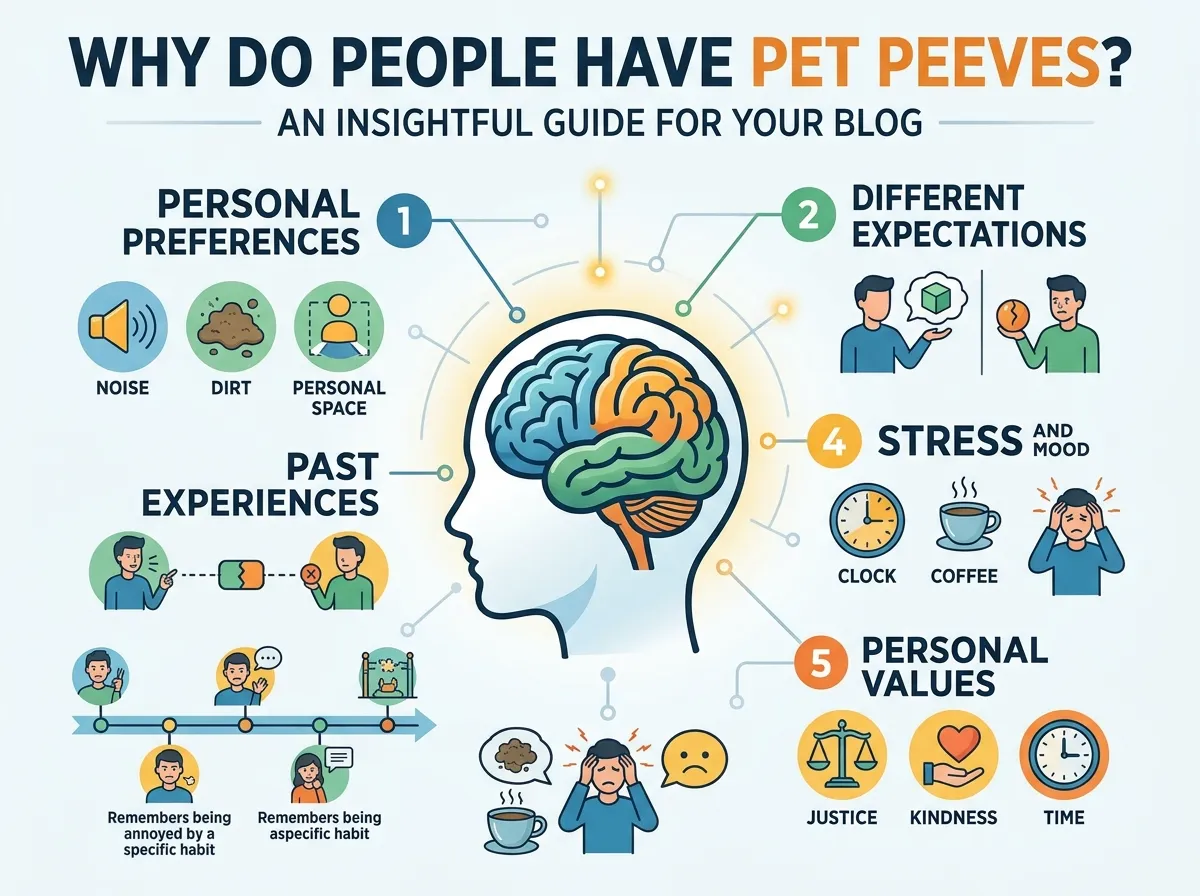
Pet peeves often develop from personal preferences, past experiences, and expectations about how people should behave.
Personal Preferences
Some people enjoy quiet places, while others do not mind noise. A person who loves a tidy home may be especially bothered by clutter.
Different Expectations
People often expect others to follow the same rules they follow themselves.
For example, someone who always arrives early may feel frustrated when a friend is regularly late.
Past Experiences
A repeated negative experience can make a particular behavior more annoying.
Someone who has often been interrupted may become especially sensitive to interruptions.
Stress and Mood
Small annoyances can feel bigger when a person is tired, busy, or stressed.
The same noise that seems harmless one day may feel unbearable on another.
Personal Values
People who value honesty may dislike lying. Those who value respect may be bothered by rude comments or poor manners.
Having pet peeves is normal. However, understanding that other people have different preferences can help prevent small disagreements from becoming bigger problems.
How to Use Pet Peeves in a Sentence
The phrase pet peeves is easy to use in daily English. It often appears in questions, statements, and casual conversations.
Common Sentence Patterns
1. “My biggest pet peeve is…”
Use this pattern when talking about one thing that annoys you.
Examples:
- My biggest pet peeve is being interrupted.
- My biggest pet peeve is people who never clean up after themselves.
2. “One of my pet peeves is…”
Use this when naming one annoyance from a longer list.
Examples:
- One of my pet peeves is loud chewing.
- One of my pet peeves is getting calls late at night.
3. “My pet peeves are…”
Use this when listing several things.
Examples:
- My pet peeves are lying, gossip, and bad manners.
- My pet peeves are loud music and people who cut in line.
4. “That is a pet peeve of mine.”
Use this to explain that something bothers you.
Examples:
- “People who leave trash behind really annoy me.”
- “That is a pet peeve of mine, too.”
5. “What are your pet peeves?”
Use this question to ask someone what annoys them.
Example:
- “What are your pet peeves when you live with roommates?”
Pet Peeves in Everyday Conversations
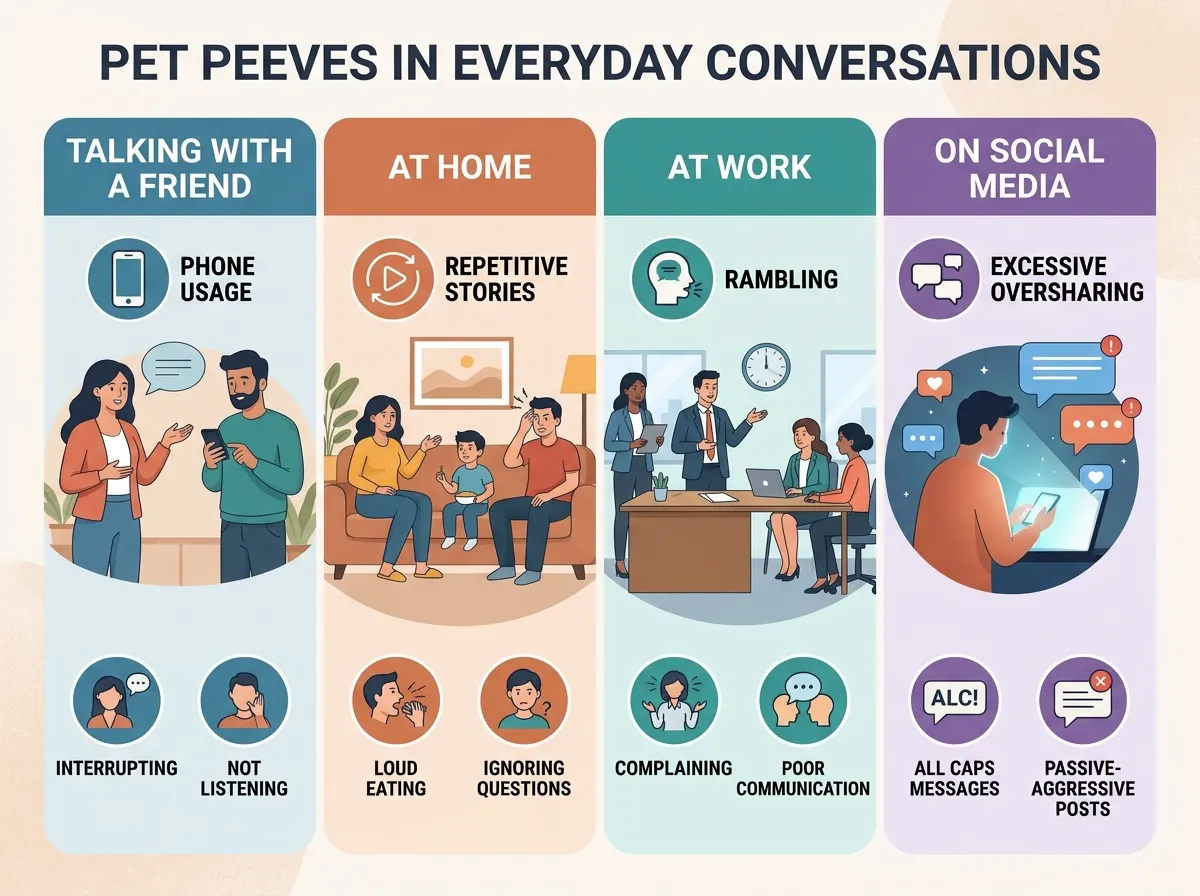
Here are a few natural conversations that show how people use the phrase.
Talking With a Friend
Alex: What are your biggest pet peeves?
Sam: I hate when people interrupt me while I’m talking.
Alex: I get that. Mine is when people are always late.
In this conversation, both people share habits they find annoying.
At Home
Mia: Why are you upset?
Jordan: Someone left dirty dishes on the counter again.
Mia: Oh, is that one of your pet peeves?
Jordan: Yes! I like keeping the kitchen clean.
Here, the phrase describes a repeated household annoyance.
At Work
Taylor: What bothers you most at work?
Chris: People taking credit for someone else’s ideas. That’s one of my biggest pet peeves.
This example shows how pet peeves can relate to fairness and respect in the workplace.
On Social Media
User 1: Tell me your biggest pet peeve.
User 2: When someone watches a video on full volume in a quiet room.
User 3: Mine is people who never reply but keep posting online!
The phrase is often used to invite funny, relatable, or personal answers online.
Pet Peeves Meaning in Text and Social Media
In text messages and social media posts, pet peeves has the same meaning as it does in spoken English. It refers to things that annoy someone.
People often use the phrase when asking questions, sharing opinions, or making jokes about daily life.
Examples include:
- “What’s your biggest pet peeve?”
- “My pet peeve is people who leave me on read.”
- “Pet peeves: loud chewing, fake friends, and slow Wi-Fi.”
- “Tell me your pet peeves, and I’ll tell you mine.”
The phrase can sound serious, playful, or humorous depending on the context.
For example, complaining about dirty dishes may be lighthearted, while discussing dishonesty may express a stronger personal value.
What Is the Difference Between Pet Peeves and Deal-Breakers?
A pet peeve is usually a small or repeated annoyance. A deal-breaker is something serious enough to make a person reject an option, end a relationship, or decide not to continue with a situation.
For example:
- Pet peeve: A friend always leaves cups on the table.
- Deal-breaker: A partner repeatedly lies about important matters.
The difference depends on the person and the situation. Something that seems minor to one person may be a serious issue to someone else.
Pet Peeves vs. Pet Hates
Pet peeve is common in American English. Pet hate is more commonly used in British English.
Both expressions describe something that especially annoys a person.
Examples:
- American English: “Loud chewing is my biggest pet peeve.”
- British English: “Loud chewing is my biggest pet hate.”
The meaning is almost the same, but pet peeve is the more familiar choice for most everyday American conversations.
What Are Some Funny Pet Peeves?
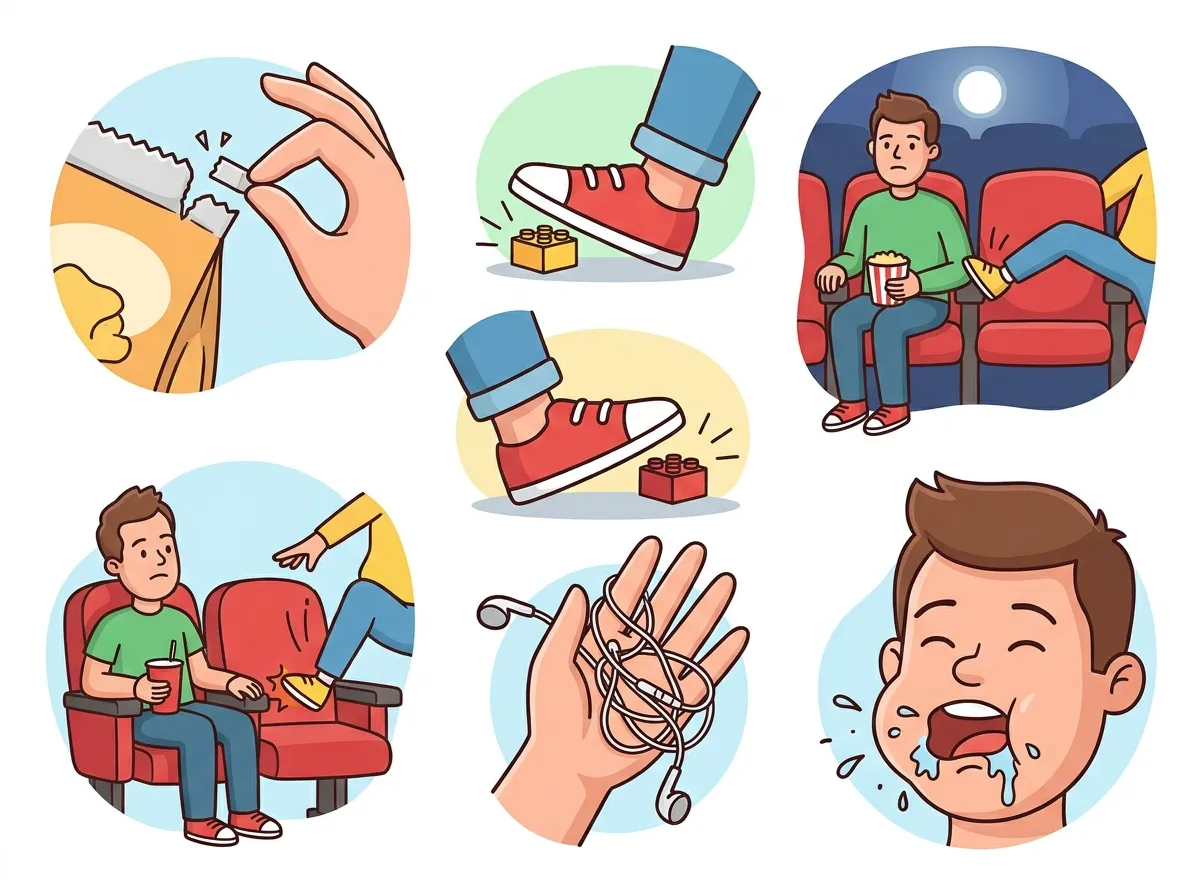
Funny pet peeves are small, harmless things that people find strangely annoying.
They often make good conversation starters because many people can relate to them.
Examples include:
- Someone stopping a video one second before the best part.
- A person who takes one fry from your plate without asking.
- People who say “I’m five minutes away” when they have not left home.
- Someone who watches a show ahead of you.
- A charger that only works at one exact angle.
- People who stop walking suddenly in the middle of a busy path.
- A person who sends “Hey” and waits for you to ask what they need.
- Someone who leaves just a tiny amount of milk in the carton.
- People who use all the hot water and say nothing.
- Someone who says “I told you so” after a mistake.
These examples can be funny because the problems are often small, familiar, and easy to imagine.
How to Talk About Pet Peeves Without Being Rude

It is fine to share what annoys you, but the way you say it matters.
Calling someone out harshly can hurt their feelings, especially when they do not realize their behavior bothers you.
Focus on the Behavior
Instead of saying, “You’re so annoying,” explain what bothers you.
Try: “I find it hard to focus when there’s loud music.”
Use a Calm Tone
A small annoyance usually does not need an argument. Speak politely and explain what would help.
Try: “Would you mind lowering the volume a little?”
Remember That Everyone Is Different
Your pet peeve may not bother another person. Likewise, something that seems unimportant to you may matter to them.
Know When to Let Things Go
Not every small annoyance needs to be discussed. If it is harmless and happens rarely, letting it go may be the easiest choice.
The goal is not to make everyone follow your personal rules. It is to communicate clearly and treat others with respect.
Article Summary
- Pet peeves meaning: Things or habits that annoy a person.
- Singular form: Pet peeve.
- Plural form: Pet peeves.
- Common examples: Loud chewing, being late, interrupting, and leaving a mess.
- Common question: “What are your pet peeves?”
- American English: Pet peeve is the usual expression.
- Similar phrase: Pet hate, which is more common in British English.
- Main idea: Pet peeves are personal, and different people can be annoyed by different things.
FAQs
1. What does pet peeves mean in simple words?
Pet peeves are things that annoy or bother someone. For example, loud chewing or being late may be a person’s pet peeve.
2. What is a pet peeve example?
An example is getting annoyed when someone interrupts you while you are speaking. Another is finding dirty dishes left in the sink.
3. Is pet peeve one word or two words?
Pet peeve is written as two words. Use pet peeve for one annoyance and pet peeves for more than one.
4. What does “What’s your biggest pet peeve?” mean?
It means “What bothers or annoys you the most?” It is a common question used to learn about someone’s dislikes.
5. Is a pet peeve a bad thing?
No. Having a pet peeve is normal. It simply means that something bothers you. Problems can arise if you react harshly or expect everyone to share your preferences.
6. What is another word for pet peeve?
Similar words and phrases include annoyance, irritation, bother, and something that gets on your nerves. The best choice depends on the sentence.
7. Can a person have more than one pet peeve?
Yes. Most people can name several things that annoy them. For example, someone may dislike loud chewing, rude behavior, and being kept waiting.
8. What is the difference between a pet peeve and a pet hate?
They mean nearly the same thing. Pet peeve is common in American English, while pet hate is more common in British English.
9. Is pet peeves slang?
It is an informal, everyday expression rather than new internet slang. People use it in normal conversation, writing, and social media.
10. How do you answer “What are your pet peeves?”
You can name one or more things that bother you.
For example: “My pet peeves are people who interrupt others and people who leave a mess.”
11. Can pet peeves be funny?
Yes. Many pet peeves involve small, relatable habits, such as someone taking food from your plate without asking or leaving only one drop of milk in the carton.
12. Does pet peeve mean something you hate?
It means something that annoys you, but it does not always mean you strongly hate it.
A pet peeve is often a smaller, everyday irritation.
Conclusion
The meaning of pet peeves is simple: they are habits, actions, or things that annoy a person.
Common examples include loud chewing, being late, interrupting others, and leaving a mess.
The singular form is pet peeve, while the plural form is pet peeves.
People have different pet peeves because they have different preferences, experiences, and expectations.
You can use the phrase in everyday conversations by saying, “My biggest pet peeve is…” or asking, “What are your pet peeves?”
Understanding this expression can help you speak more naturally in American English.
Just remember that what annoys you may not bother someone else, so sharing your pet peeves with kindness can make conversations easier and more enjoyable.

Emma Wilson is a writer at MeaningVibz who enjoys exploring emoji meanings, texting expressions, and online communication trends. She helps readers understand how emojis and slang are used in different situations by providing clear explanations and relatable examples for everyday messaging.