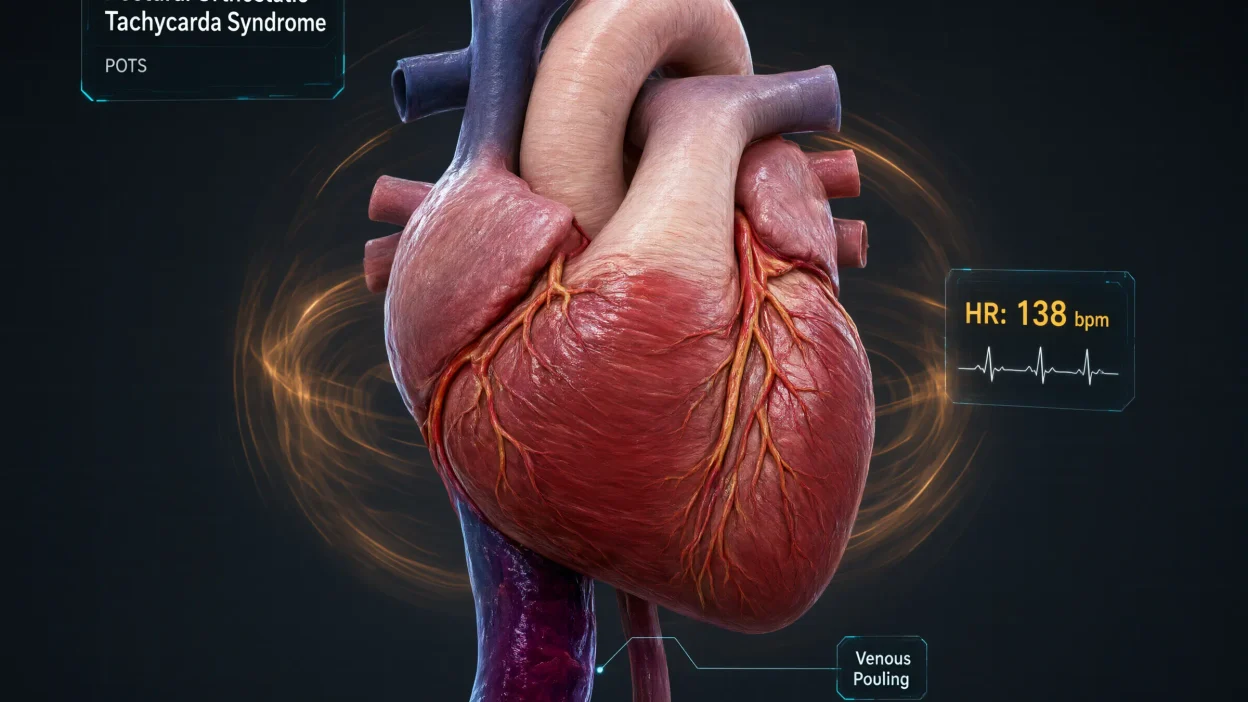
POTS stands for Postural Orthostatic Tachycardia Syndrome. Each word describes an important part of the condition.
- Postural: Related to body position.
- Orthostatic: Related to standing upright.
- Tachycardia: A faster-than-normal heart rate.
- Syndrome: A group of signs and symptoms that occur together.
In simple terms, POTS is a condition in which standing up can cause an unusual increase in heart rate and symptoms such as dizziness, weakness, or fatigue.
When a healthy person stands up, gravity pulls some blood toward the lower body. The body normally responds by adjusting blood vessels and heart rate to keep enough blood flowing to the brain.
In someone with POTS, this response does not work as it should. Blood flow and heart rate may not adjust properly, which can lead to symptoms.
POTS is not simply a fast heartbeat. It is a broader condition involving the body’s automatic nervous system and circulation.
What Is POTS in Simple Terms?
POTS is a condition that can make standing up difficult because the body’s heart rate and blood flow do not adjust normally.
Imagine getting out of bed in the morning. You stand up, but your heart suddenly starts racing. You may feel dizzy, shaky, weak, or as if you need to sit down.
For someone with POTS, this may happen often, especially when standing for a long time, taking a hot shower, or spending time in a warm place.
Symptoms often improve when the person lies down because this position makes it easier for blood to return to the heart and brain.
POTS is a real medical condition, not a sign of laziness or a lack of effort. Its symptoms can affect daily life even when a person looks healthy on the outside.
What Are the Common Symptoms of POTS?
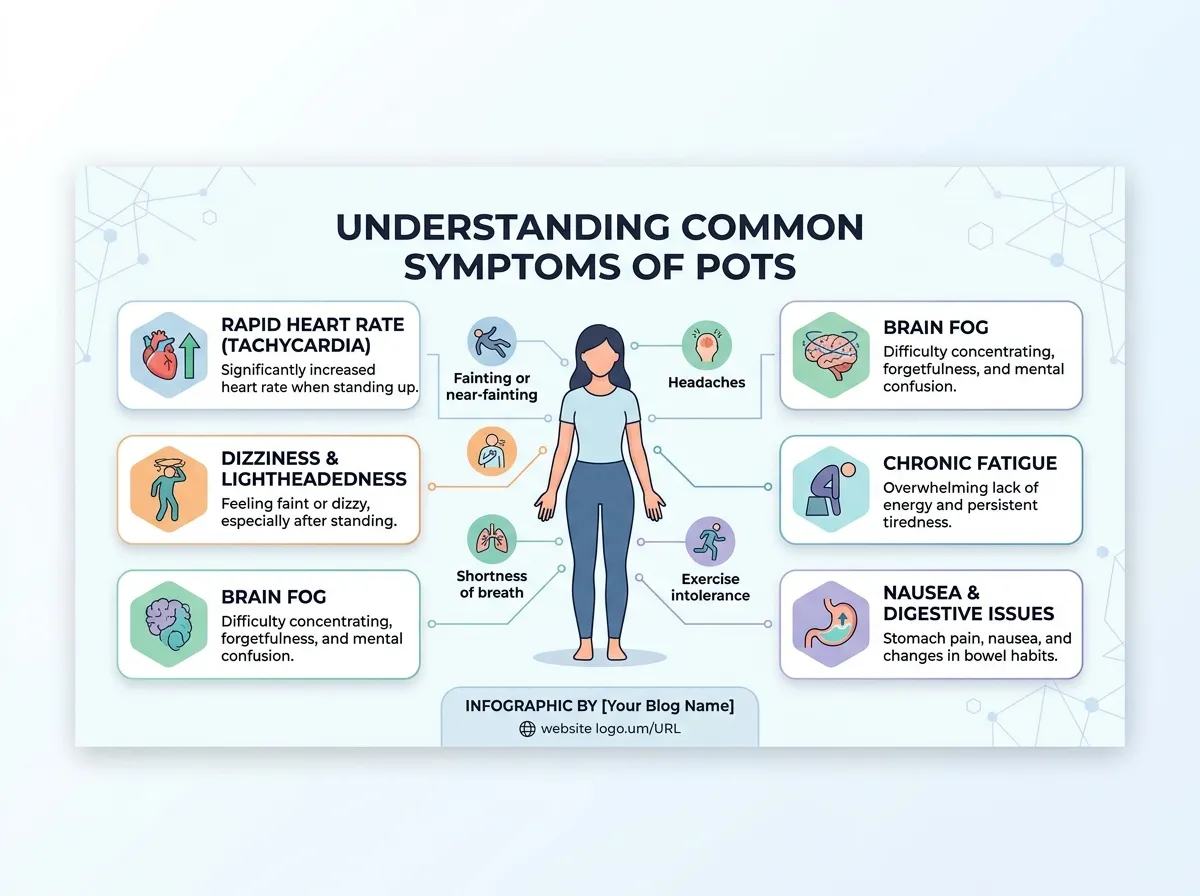
POTS can cause several symptoms, and not everyone experiences the same ones. Symptoms may also change from day to day.
1. Fast Heartbeat
One of the main signs of POTS is a heart rate that rises more than expected after standing. A person may feel their heart pounding, racing, or beating harder than usual.
This change may happen within minutes of standing up.
2. Dizziness or Lightheadedness
Some people feel dizzy, unsteady, or lightheaded when they stand. They may feel better after sitting or lying down.
In some cases, these symptoms can make it hard to walk or remain upright safely.
3. Extreme Tiredness
Fatigue is common among people with POTS. A person may feel tired even after getting enough sleep.
Everyday tasks, such as shopping, cooking, or walking across a room, may take more energy than expected.
4. Brain Fog
Brain fog means having trouble thinking clearly. People with POTS may find it harder to focus, remember details, read, or follow a conversation.
These problems may become worse when symptoms increase.
5. Weakness and Shaking
Some people experience shaky hands, weak legs, or a feeling that their body may give out when they stand.
This can make standing in a line or taking a shower uncomfortable.
6. Headaches
Headaches may occur in people with POTS. Some also experience migraines.
However, headaches have many possible causes, so they do not automatically mean someone has POTS.
7. Nausea and Digestive Problems
POTS may occur alongside digestive symptoms such as nausea, bloating, stomach discomfort, constipation, or diarrhea.
These symptoms can make eating and drinking difficult for some people.
8. Exercise Intolerance
Some people with POTS have trouble exercising because physical activity causes a fast heartbeat, dizziness, or unusual tiredness.
A suitable exercise plan may help, but it should be adjusted to the person’s symptoms and medical needs.
9. Blurred Vision
Changes in blood flow while standing may cause blurred vision, dimming of vision, or spots in front of the eyes.
A person who feels faint should sit or lie down to reduce the risk of falling.
10. Symptoms That Improve When Lying Down
A key feature of POTS is that symptoms often become worse while upright and improve when sitting or lying down.
Not every person has every symptom, and similar symptoms can occur with other health problems.
What Causes POTS?
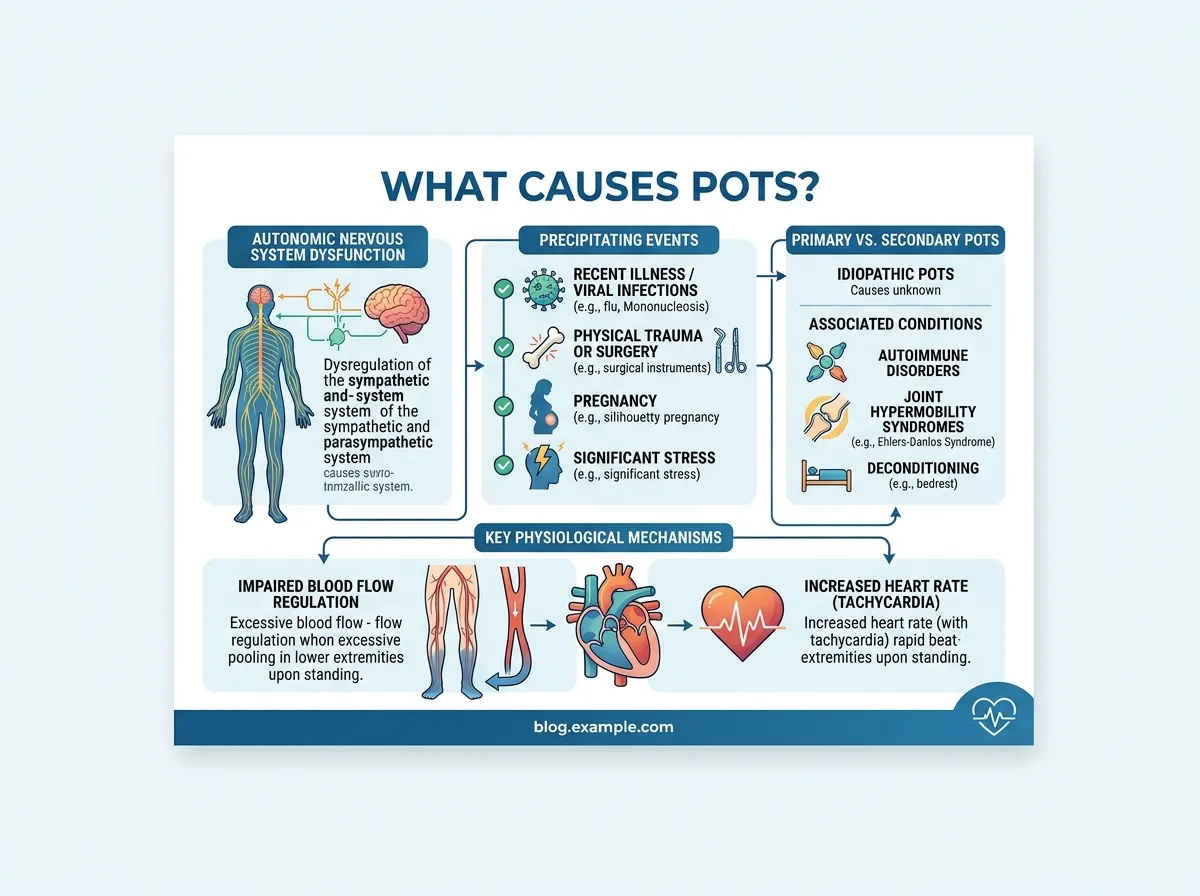
There is no single cause of POTS. Researchers believe that several body processes may contribute to the condition.
Problems With Blood Vessel Control
Blood vessels normally tighten when a person stands up. This helps move blood back toward the heart.
In some people with POTS, blood vessels may not tighten enough. Blood can collect in the lower body, making it harder to maintain normal circulation.
Low Blood Volume
Some people with POTS have less circulating blood volume than expected. This can make it harder for the body to maintain blood flow when standing.
Changes in the Autonomic Nervous System
The autonomic nervous system controls body functions that happen without conscious effort. These include heart rate, blood pressure, sweating, and digestion.
POTS involves problems with how the body regulates these functions when a person stands.
Possible Nerve Problems
Some people may have problems with the small nerves that help control blood vessel tightening. This can affect circulation in the legs and lower body.
After an Illness
POTS sometimes begins after an infection or another illness. Some people report that their symptoms started after a viral infection.
However, an infection is not the cause in every case, and researchers are still studying why POTS develops.
Other Possible Contributing Factors
POTS may be associated with conditions such as joint hypermobility, certain autoimmune diseases, and other health problems. These links do not mean that everyone with POTS has another condition.
In some cases, the exact cause remains unknown.
Who Can Get POTS?
POTS can affect people of different ages, but it is often diagnosed in teenagers and younger adults. It is more commonly reported in females than in males.
The condition may begin after puberty, an illness, surgery, pregnancy, or another major physical stressor, although these events do not always lead to POTS.
POTS can affect people who were active and healthy before their symptoms began. Being young, exercising regularly, or looking healthy does not rule it out.
Children and teenagers can also develop POTS. Their symptoms may affect school attendance, sports, friendships, and other daily activities.
Because symptoms overlap with other conditions, age and sex alone cannot establish a diagnosis.
How Is POTS Diagnosed?
There is no single symptom that proves a person has POTS. Doctors review the person’s medical history, symptoms, heart rate, blood pressure, and test results.
Medical History and Physical Exam
A doctor may ask:
- When did the symptoms begin?
- Do they get worse after standing?
- Do they improve when lying down?
- Does the heart feel as if it is racing?
- Have there been recent illnesses or medication changes?
- Are there other health conditions that could explain the symptoms?
The doctor may also check for signs of dehydration or other possible causes.
Standing Test
During a standing test, a medical professional measures heart rate and blood pressure while the person is lying down and then after standing.
The measurements may be repeated over several minutes to see how the body responds.
For adults, a sustained heart rate increase of at least 30 beats per minute within 10 minutes of standing is one important part of the usual diagnostic criteria. For ages 12–19, the threshold is generally at least 40 beats per minute.
These numbers alone do not confirm POTS. Symptoms, the duration of the problem, blood pressure findings, age, and other possible causes must also be considered.
Tilt Table Test
A tilt table test may be used when the diagnosis is unclear. The person lies on a special table that slowly tilts them into an upright position while medical staff monitor heart rate and blood pressure.
This test helps doctors study how the body responds to changes in position.
Other Tests
Depending on the person’s symptoms, a doctor may order an electrocardiogram (ECG or EKG), blood tests, or other tests.
These can help check for heart rhythm problems, anemia, thyroid disorders, dehydration, and other conditions that may cause similar symptoms.
Why Self-Diagnosis Is Not Enough
A fast heartbeat or dizziness after standing does not always mean POTS. Dehydration, medication effects, anemia, and other medical conditions can cause similar symptoms.
A qualified healthcare professional can help identify the cause and decide whether testing is needed.
How Is POTS Treated?
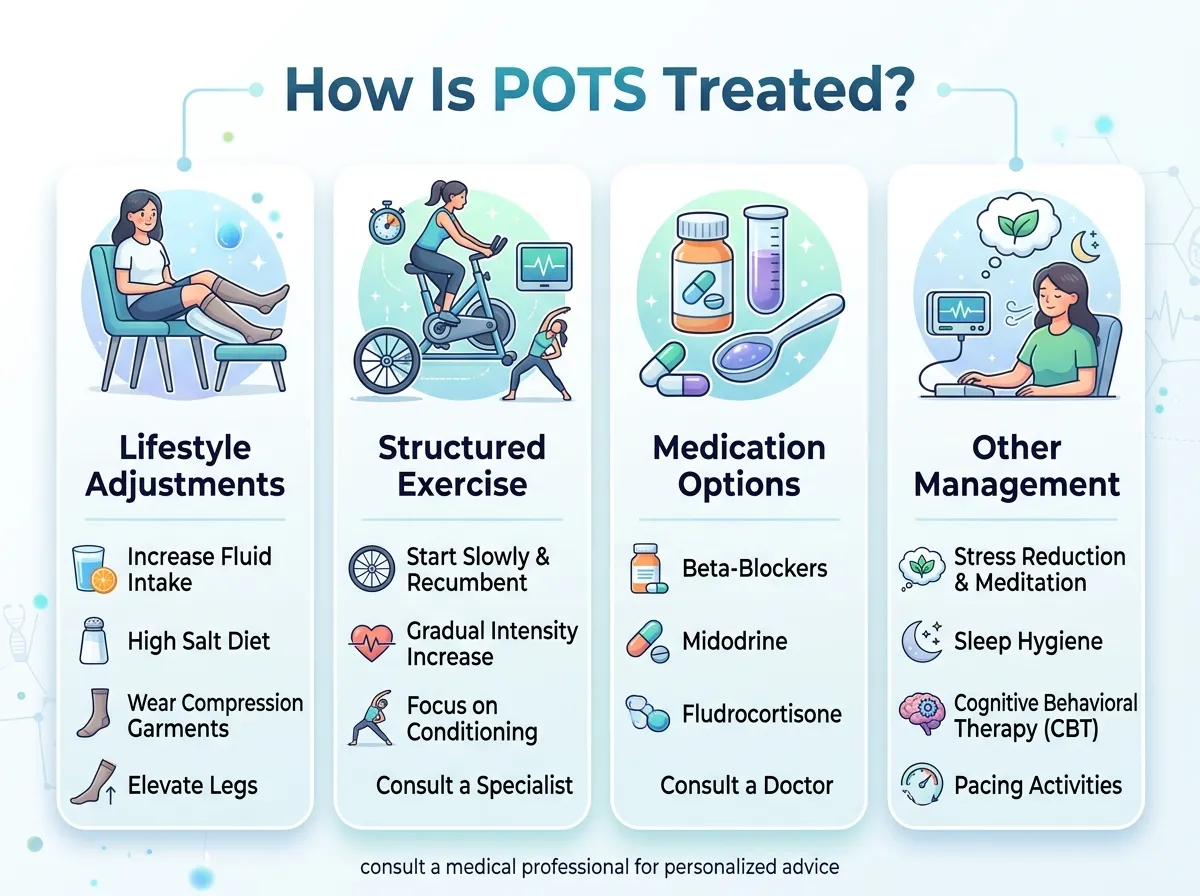
There is no single treatment that works for everyone with POTS. Care often focuses on reducing symptoms, improving circulation, and helping people return to daily activities.
A healthcare professional should help choose a treatment plan based on the person’s symptoms, medical history, and other conditions.
1. Drink Enough Fluids
Adequate fluid intake may help support blood volume and circulation.
Doctors often recommend increasing fluids for people with POTS, but the right amount depends on individual needs. People with kidney, heart, or other conditions may need special guidance.
2. Adjust Salt Intake When Appropriate
Some people may benefit from increased sodium intake because it can help the body retain fluid.
However, extra salt is not safe for everyone. People with high blood pressure, kidney disease, heart disease, or other relevant conditions should speak with a healthcare professional before increasing salt.
3. Wear Compression Garments
Compression garments can help limit blood from collecting in the legs and lower body. Some people benefit from waist-high compression garments or abdominal compression.
A clinician can help determine which type may be suitable.
4. Try a Gradual Exercise Plan
A carefully planned exercise program may improve physical fitness and tolerance for activity.
Some people begin with exercises performed while sitting or lying down, such as a stationary recumbent bike or certain strength exercises. Upright activity may be added gradually as tolerated.
Exercise should be adapted to the individual. People with severe symptoms or delayed worsening after activity should seek medical advice before starting or increasing a program.
5. Avoid Common Triggers
Certain situations may make POTS symptoms worse. These can include:
- Standing still for a long time
- Hot weather
- Hot showers or baths
- Dehydration
- Alcohol
- Large meals, especially if symptoms follow eating
- Skipping meals or becoming overtired
Not everyone has the same triggers. Keeping a symptom diary may help identify personal patterns.
6. Consider Medication
If lifestyle changes are not enough, a doctor may consider medication. The choice depends on the person’s symptoms, heart rate, blood pressure, and medical history.
Depending on the case, a clinician may prescribe medication to slow the heart rate, support blood vessel tightening, or help maintain blood volume.
There is no single medication approved or suitable for every person with POTS. Some medicines are used off-label, and each has possible side effects.
Do not start, stop, or change medication without medical guidance.
7. Support Sleep and Daily Routines
Regular sleep, balanced meals, pacing activities, and planning rest breaks may help some people manage their symptoms.
A person may also benefit from sitting while showering, taking breaks during chores, or avoiding long periods of standing.
These changes do not cure POTS, but they may make daily tasks easier.
Can POTS Be Cured?
There is no guaranteed cure for POTS, but many people can improve with the right care and time.
Some people experience a major reduction in symptoms, while others continue to need long-term treatment and adjustments to daily life.
The outlook varies from person to person. Age, the cause of symptoms, other health conditions, and response to treatment may all affect recovery.
POTS should not be dismissed as harmless simply because it is not always visible. Symptoms can be serious enough to interfere with school, work, exercise, and social life.
Early medical assessment and a suitable management plan can help people understand their condition and find ways to cope.
Is POTS a Serious Condition?
POTS can greatly affect quality of life, but its effects vary.
Some people have mild symptoms and can manage them with lifestyle changes. Others may have severe dizziness, fatigue, and difficulty standing or completing daily tasks.
POTS itself is not usually considered a life-threatening condition, but symptoms should be evaluated because other health problems can look similar.
Seek urgent medical care for chest pain, severe shortness of breath, fainting during exercise, a new or severe irregular heartbeat, or other sudden or alarming symptoms. Do not assume these symptoms are caused by POTS.
People who faint or feel close to fainting should take steps to prevent falls and discuss these episodes with a healthcare professional.
What Is the Difference Between POTS and Other Conditions?
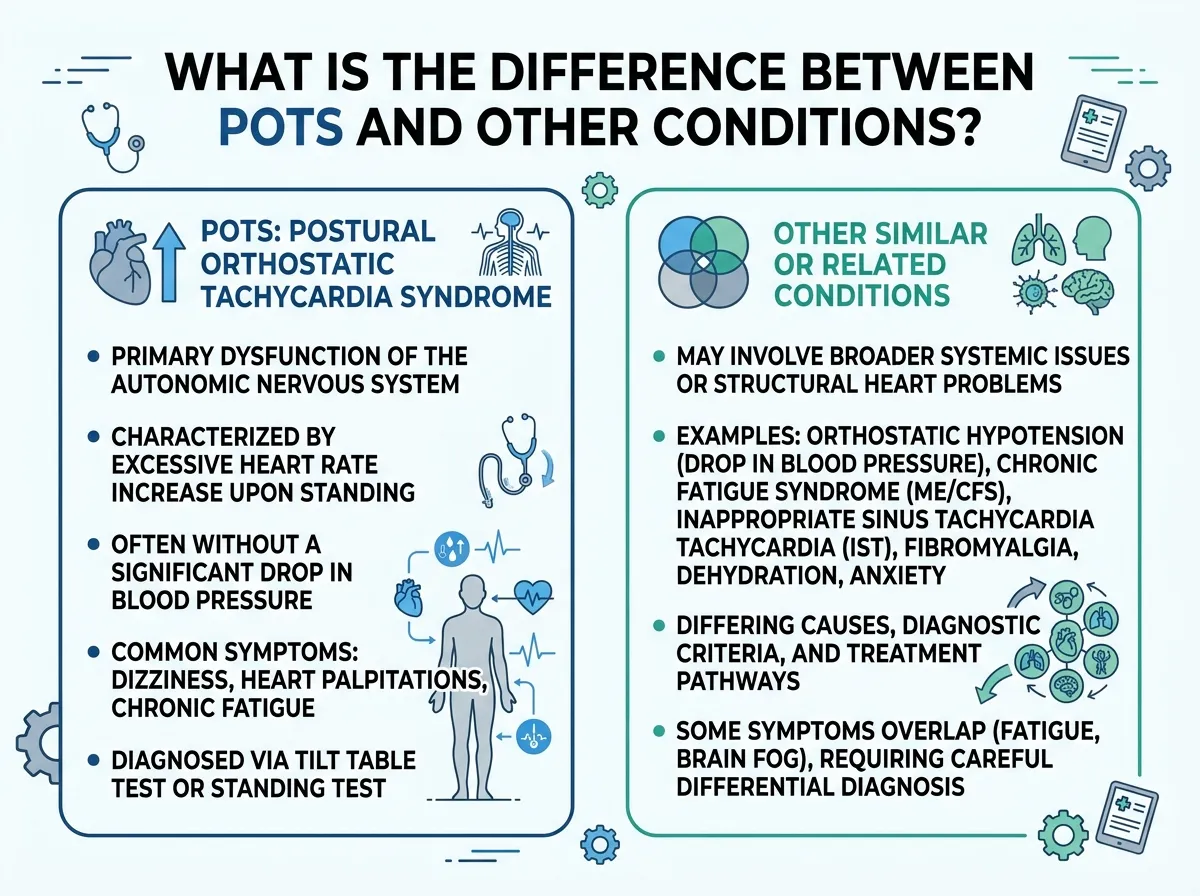
POTS can look like several other conditions, but there are important differences.
POTS vs. Low Blood Pressure
Low blood pressure can cause dizziness and weakness when standing. In POTS, a large increase in heart rate is a key feature, and blood pressure does not have to drop significantly.
However, some people with POTS may also have low blood pressure.
POTS vs. Anxiety
Anxiety can cause a racing heart, sweating, shaking, and dizziness. POTS can cause some of the same symptoms, especially when standing.
Symptoms alone cannot always tell these conditions apart, and they can occur together. A proper medical evaluation helps determine what is happening.
POTS vs. Inappropriate Sinus Tachycardia
Inappropriate sinus tachycardia is a condition in which the heart rate is unusually fast even when a person is resting or with minimal activity.
POTS is more closely linked to being upright. A doctor may use an ECG, heart rate monitoring, and other tests to help tell them apart.
POTS vs. Orthostatic Hypotension
Orthostatic hypotension occurs when blood pressure drops significantly after standing. POTS is mainly marked by an excessive rise in heart rate along with symptoms when upright.
The conditions have different diagnostic criteria, although symptoms may overlap and careful testing may be needed.
How Does POTS Affect Daily Life?
POTS can affect much more than heart rate. It may change how a person handles work, school, exercise, and social activities.
For example, a student may need extra breaks during class or find it difficult to stand during an assembly. An adult may struggle with grocery shopping, cooking, or commuting.
Symptoms can also be unpredictable. A person may feel well one day and have much less energy the next.
Friends and family may not understand why someone needs to sit down often or cancel plans. Because many symptoms are not visible, people with POTS may feel misunderstood.
Helpful steps include planning rest periods, drinking fluids as advised by a clinician, avoiding known triggers, and asking for reasonable support at school or work.
Pacing activities can also help people use their energy more carefully instead of trying to do everything at once.
Article Summary
POTS stands for Postural Orthostatic Tachycardia Syndrome. It is a condition that affects how the body controls heart rate and circulation when standing.
Common symptoms include a fast heartbeat, dizziness, fatigue, brain fog, weakness, headaches, and exercise intolerance. Symptoms often improve when a person lies down.
POTS can have several contributing factors, and the exact cause is not always known. Doctors may use a standing test, a tilt table test, medical history, and other tests to diagnose it.
Treatment may include fluids, adjusted salt intake when appropriate, compression garments, gradual exercise, trigger management, and medication when needed. There is no one-size-fits-all plan, so medical guidance is important.
FAQS
1. What does POTS mean in medical terms?
POTS means Postural Orthostatic Tachycardia Syndrome. It is a condition in which standing can cause an unusual rise in heart rate and symptoms such as dizziness, weakness, and fatigue.
2. What are the first signs of POTS?
Early signs may include a racing heart, dizziness, lightheadedness, fatigue, or weakness after standing. Some people also experience brain fog, nausea, or blurred vision.
3. What causes POTS?
POTS does not have one known cause. It may involve problems with blood vessel control, blood volume, or the autonomic nervous system. It can sometimes begin after an illness.
4. Can POTS go away on its own?
Some people improve over time, while others continue to have symptoms for years. The course varies, and appropriate treatment may help improve daily function.
5. Is POTS the same as anxiety?
No. Anxiety and POTS can cause similar symptoms, such as a racing heart or shaking, but they are different conditions. They can also occur together, so a medical evaluation may be needed.
6. How do doctors test for POTS?
Doctors review symptoms and medical history, measure heart rate and blood pressure while lying down and standing, and may perform a tilt table test or other tests to rule out similar conditions.
7. What is a normal heart rate increase with POTS?
For adults, the usual diagnostic threshold includes a sustained rise of at least 30 beats per minute within 10 minutes of standing. For ages 12–19, the threshold is generally at least 40 beats per minute. A heart rate change alone is not enough to diagnose POTS.
8. Can you live a normal life with POTS?
Many people with POTS can continue to work, study, and take part in daily activities with the right support and treatment. Others need more adjustments because their symptoms are severe.
9. What foods should people with POTS avoid?
There is no universal list of foods to avoid. Large meals, alcohol, or foods that trigger personal symptoms may make some people feel worse. A clinician or registered dietitian can help identify useful dietary changes.
10. Is POTS dangerous?
POTS can cause major symptoms and affect quality of life, but it is not usually considered life-threatening on its own. New, severe, or sudden symptoms should still be assessed rather than automatically blamed on POTS.
11. What is the difference between POTS and orthostatic hypotension?
POTS is characterized by an excessive rise in heart rate when upright, while orthostatic hypotension involves a significant drop in blood pressure after standing. Doctors use measurements and symptoms to distinguish them.
12. What helps POTS symptoms quickly?
Sitting or lying down may help symptoms that occur while standing. Drinking fluids as advised, avoiding excessive heat, and following a clinician-approved treatment plan may also help. Severe or unusual symptoms require medical attention.
Conclusion
POTS stands for Postural Orthostatic Tachycardia Syndrome, a condition that can cause a fast heartbeat, dizziness, fatigue, and other symptoms when a person stands up. It affects how the body manages heart rate and blood flow, and its effects can range from mild to severe.
Although POTS can make daily life difficult, treatment and practical lifestyle changes may help many people manage their symptoms. Doctors can assess symptoms, perform the right tests, and create a plan suited to each person’s needs.
If you often feel dizzy, weak, or unusually aware of your heartbeat after standing, speak with a healthcare professional. Understanding the cause of your symptoms is an important first step toward getting the right care.

Ryan Mitchell creates informative content about word definitions, acronyms, online slang, and modern communication. He enjoys exploring how people use language in text messages, on social media, and in daily life. Ryan focuses on delivering simple explanations and practical examples that help readers quickly understand the meaning of unfamiliar words and phrases.