

Introduction
Have you ever heard someone say “¡Salud!” while raising a glass, or after a friend sneezes? If you have, you may wonder what this simple Spanish word means. The word salud has more than one use, and its meaning depends on the situation.
In English, salud most often means “health.” But Spanish speakers also use it to say “Bless you” after a sneeze. When people raise their glasses for a drink, they use salud to mean “Cheers!” It is a common word that can show care, good wishes, or a wish for good health.
You may hear salud in Spanish-speaking homes, restaurants, movies, and everyday talks. It is also used in some other languages and cultures.
Once you know how it works, you can understand the word and use it with confidence. In this guide, you will learn the meaning of salud, how to say it, when to use it, and how it differs from similar words in English and Spanish.
What Does Salud Mean?
Salud is a Spanish word that means “health” in English. It can also mean “Cheers!” or “Bless you,” based on the situation.
Here are the three most common meanings:
- Health: The state of being well.
- Cheers: A friendly word used when people raise their glasses.
- Bless you: A polite response when someone sneezes.
For example:
- La salud es importante. — Health is important.
- ¡Salud! — Cheers!
- Someone sneezes, and you say, ¡Salud! — Bless you!
The key is to look at what is happening. If people are talking about fitness or well-being, salud means health. If they are drinking together, it means cheers. If someone sneezes, it works like “Bless you” in English.
What Does Salud Mean in English?
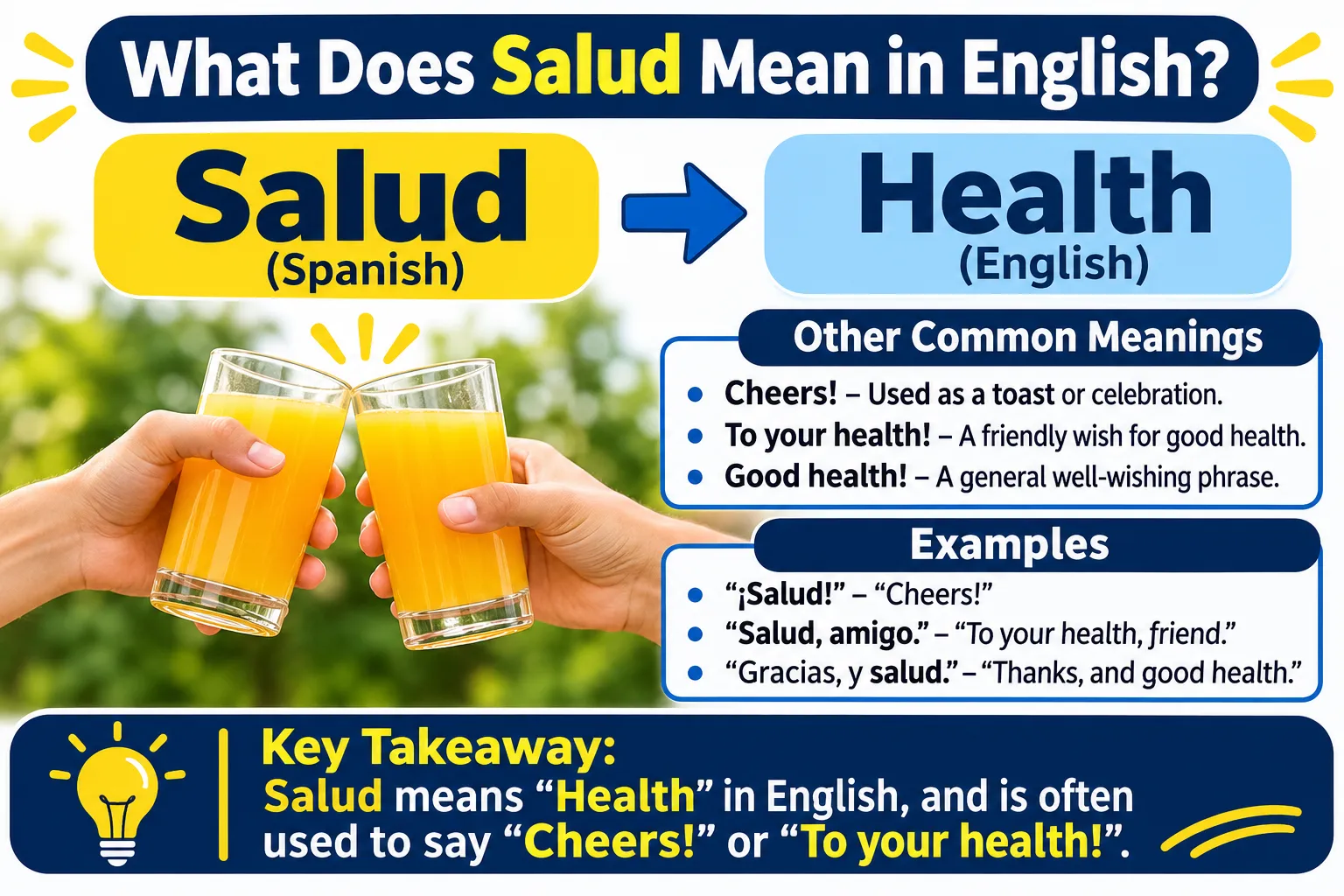
The direct English translation of salud is “health.” However, Spanish speakers use it in ways that do not always translate word for word into English.
Salud Means Health
This is the main meaning of the word. It can refer to a person’s physical or mental well-being, or to health care in general.
Examples:
- Buena salud means “good health.”
- La salud mental means “mental health.”
- El cuidado de la salud means “health care.”
You may see salud in news stories, health advice, school lessons, or talks about a healthy life.
Salud Means Cheers
When people raise their glasses before taking a drink, they may say ¡Salud! This is the Spanish version of “Cheers!”
It is a way to share good wishes with friends, family, or other people at the table. It can be used at a birthday dinner, a wedding, a holiday meal, or another social event.
Salud Means Bless You
In many Spanish-speaking communities, people say ¡Salud! after someone sneezes. It is much like saying “Bless you” in English.
For example:
- Person A sneezes.
- Person B says, “¡Salud!”
- Person A replies, “Gracias,” which means “Thank you.”
This use is polite and common in everyday life. It does not mean that the person is sick. It is simply a kind response to a sneeze.
What Does Salud Mean When Drinking?
When someone says salud while drinking, it means “Cheers!” People say it before taking a sip to share good wishes.
You may hear it at a family meal, a party, a restaurant, or a special event. People may raise their glasses, look at one another, and say ¡Salud! together.
How to Use Salud in a Toast
You can use the word in a simple way:
- Raise your glass.
- Look toward the people joining the toast.
- Say, “¡Salud!”
- Take a sip when everyone is ready.
You do not need to speak Spanish well to join in. The word is easy to learn and widely understood in Spanish-speaking settings.
Salud vs. Cheers
The two words serve the same purpose in a toast.
| Spanish | English |
| ¡Salud! | Cheers! |
| ¡Por tu salud! | To your health! |
| ¡Por nosotros! | To us! |
The phrase por tu salud is a more direct wish for someone’s health. In a casual toast, the single word salud is usually enough.
What Does Salud Mean After Someone Sneezes?
When a person sneezes, salud can mean “Bless you.” It is a common, polite response in many Spanish-speaking places.
In English, people often say “Bless you” after a sneeze. In Spanish, you may hear ¡Salud! instead.
The word is short and friendly. You can use it with friends, family, coworkers, or people you meet in daily life.
Why Does Salud Mean Bless You?
The word’s basic meaning is “health.” When someone sneezes, saying salud is a way to wish that person well.
It is not a word-for-word translation of “Bless you.” Instead, it serves a similar social purpose.What Should You Say After Someone Says Salud?
You can reply with gracias, which means “thank you.”
For example:
- Person A: ¡Salud!
- Person B: ¡Gracias!
This is a natural and polite exchange.
How Do You Pronounce Salud?
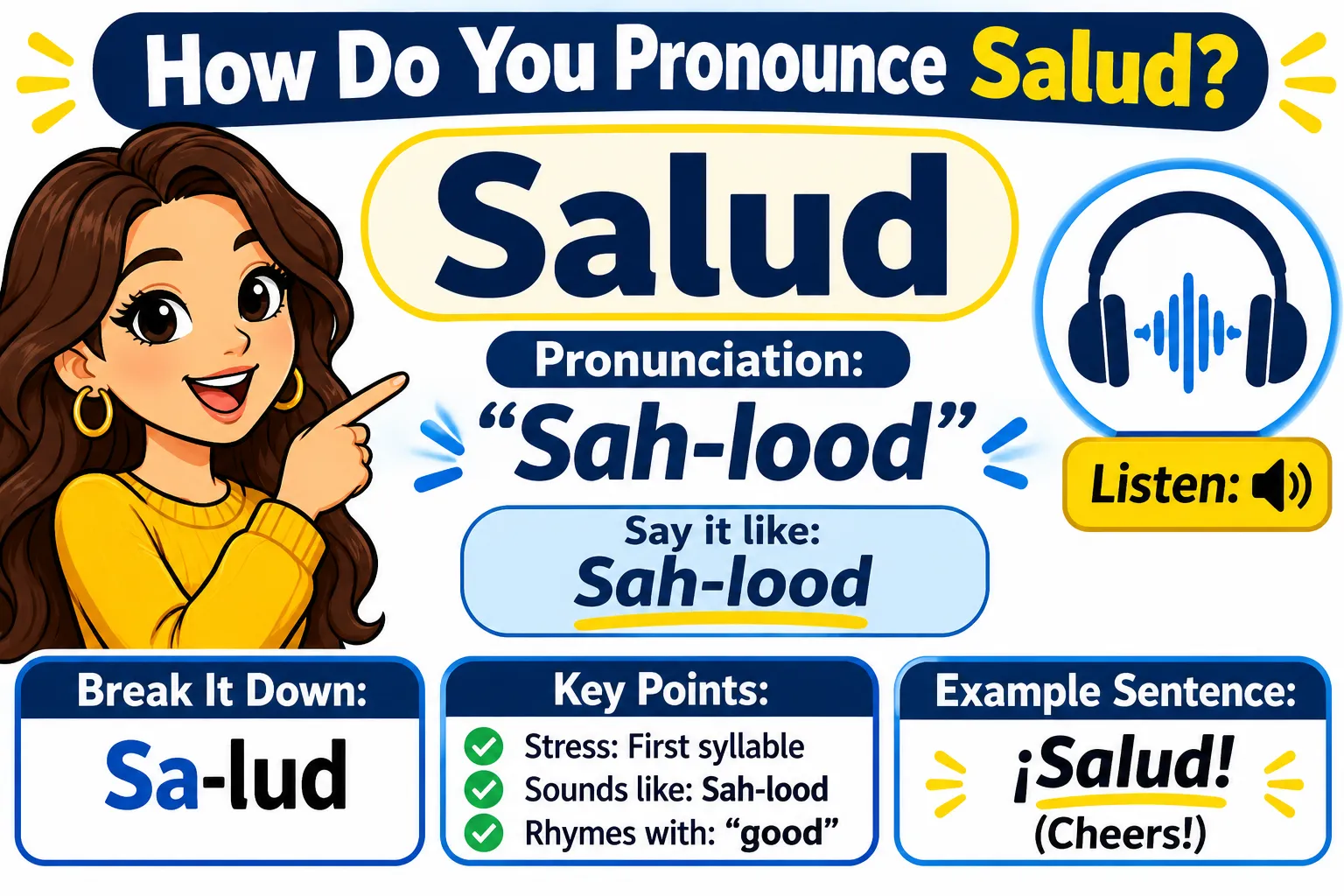
The Spanish word salud is pronounced roughly sah-LOOD.
The stress falls on the last part of the word: lud.
Here is a simple breakdown:
- Sa: Sounds like “sah.”
- Lud: Sounds roughly like “lood,” with a Spanish-style “d” at the end.
In Spanish, the letter u sounds like the “oo” in “food.” The final d may sound softer than the English letter D, depending on the speaker and region.
Try saying the word slowly first: sa-lud. Then say it at a natural pace: sah-LOOD.
You do not need a perfect accent to be understood. A clear, friendly pronunciation is enough for most everyday situations.
How to Use Salud in Everyday Spanish
You can use salud in several settings. The meaning changes with the words around it or the situation.
Talking About Health
Use salud when you discuss health or well-being.
Examples:
- Mi salud es importante. — My health is important.
- Cuida tu salud. — Take care of your health.
- La salud de los niños importa. — Children’s health matters.
These sentences use the word in its direct meaning.
Making a Toast
Use ¡Salud! when you want to share a toast.
Example:
“Happy birthday! ¡Salud!”
This is a warm way to celebrate with other people.
Wishing Someone Good Health
You can also use longer phrases to wish someone well.
- Te deseo buena salud. — I wish you good health.
- Por tu salud. — To your health.
- Que tengas buena salud. — May you have good health.
The best phrase depends on the situation. For a casual toast or sneeze, salud alone is often enough.
Common Spanish Phrases With Salud
Learning a few phrases can help you understand the word in real conversations.
| Spanish phrase | English meaning |
| Buena salud | Good health |
| Mala salud | Poor health |
| Salud mental | Mental health |
| Salud física | Physical health |
| Cuidado de la salud | Health care |
| Sistema de salud | Health system |
| ¡Salud! | Cheers! / Bless you! |
| Por tu salud | To your health |
| Salud pública | Public health |
Notice that salud keeps the basic idea of health in these phrases. In a toast or after a sneeze, the meaning becomes more social and depends on the moment.
What Is the Difference Between Salud and Salud Mental?
Salud means “health.” Salud mental means “mental health.”
Mental health refers to emotional and psychological well-being. The phrase is often used when people talk about stress, feelings, relationships, and how they handle daily life.
Examples:
- La salud es importante. — Health is important.
- La salud mental es importante. — Mental health is important.
The second phrase is more specific. It points to mental well-being rather than health as a whole.
You may see salud mental in schools, health articles, public messages, or conversations about self-care.
Is Salud Used Only in Spanish?
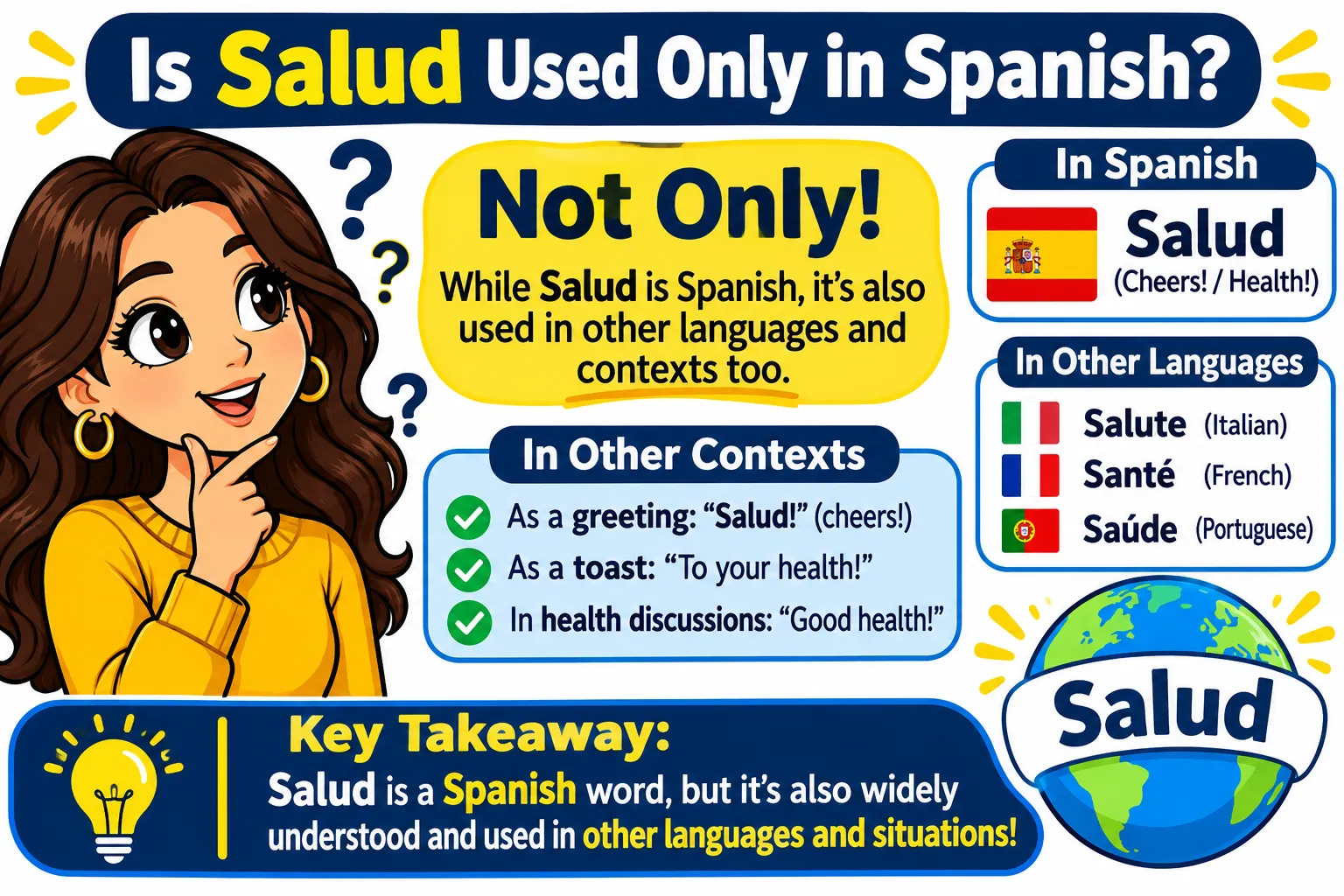
No. The word is also found in related languages and in cultural settings where people speak more than one language. However, its use and pronunciation can differ.
Salud in Spanish-Speaking Countries
Salud is used across the Spanish-speaking world. You may hear it in Spain, Mexico, much of Central and South America, and Spanish-speaking communities in the United States.
The exact customs around toasts and sneezes can vary by family and region, but the word is widely recognized.
Salud in the United States
Many people in the United States hear salud in Spanish-language movies, music, restaurants, and conversations with Spanish-speaking friends or coworkers.
It may also appear in the names of health programs, clinics, and community services because it means “health.”
Salud in Other Languages
Some related languages have similar words for health. For example, Portuguese uses saúde, which means “health” and can also be used in a toast.
The words look and sound similar because Spanish and Portuguese are related languages. Still, salud is the standard Spanish spelling.
Salud vs. Saúde: What Is the Difference?
Salud is Spanish, while saúde is Portuguese.
Both words mean “health,” and both can be used when people make a toast. However, they have different spelling and pronunciation.
| Word | Language | Meaning |
| Salud | Spanish | Health; cheers; bless you |
| Saúde | Portuguese | Health; cheers |
If you are speaking Spanish, use salud. If you are speaking Portuguese, use saúde.
The accent mark in saúde is part of the Portuguese spelling. Spanish does not write the word as saúde.
Is Salud Formal or Informal?
Salud can be used in both formal and informal settings. Its tone depends on how you use it.
When discussing public health or personal well-being, it can appear in formal writing and professional speech.
When saying ¡Salud! after a sneeze or during a toast, it is usually casual and friendly.
For example:
- Formal: La salud pública es importante. — Public health is important.
- Informal: ¡Salud! — Cheers!
- Everyday polite use: ¡Salud! — Bless you!
You can use the word with friends, family, and people you do not know well. In most everyday situations, it sounds natural and polite.
Common Mistakes to Avoid When Using Salud
The word is easy to learn, but beginners sometimes mix up its meanings.
Thinking Salud Always Means Cheers
Salud means “health” in its basic sense. It means “cheers” only when used in a toast.
For example, la salud pública means “public health,” not “public cheers.”
Using Salud as a Greeting Every Time
Salud is not the usual Spanish word for “hello.” To greet someone, you would normally say hola.
Use salud after a sneeze, in a toast, or when talking about health.
Confusing Salud With Gracias
These words have different meanings:
- Salud — Health, cheers, or bless you.
- Gracias — Thank you.
If someone says ¡Salud! after you sneeze, you can answer with gracias.
Spelling It as Sauld or Salood
The correct Spanish spelling is salud. The pronunciation guide sah-LOOD can help you say it, but it is not the written Spanish form.
Assuming Every Spanish Speaker Uses It in the Same Way
Language habits can vary by country, region, and family. Salud is widely understood, but people may have different customs around sneezing and toasting.
Real-Life Examples of Salud
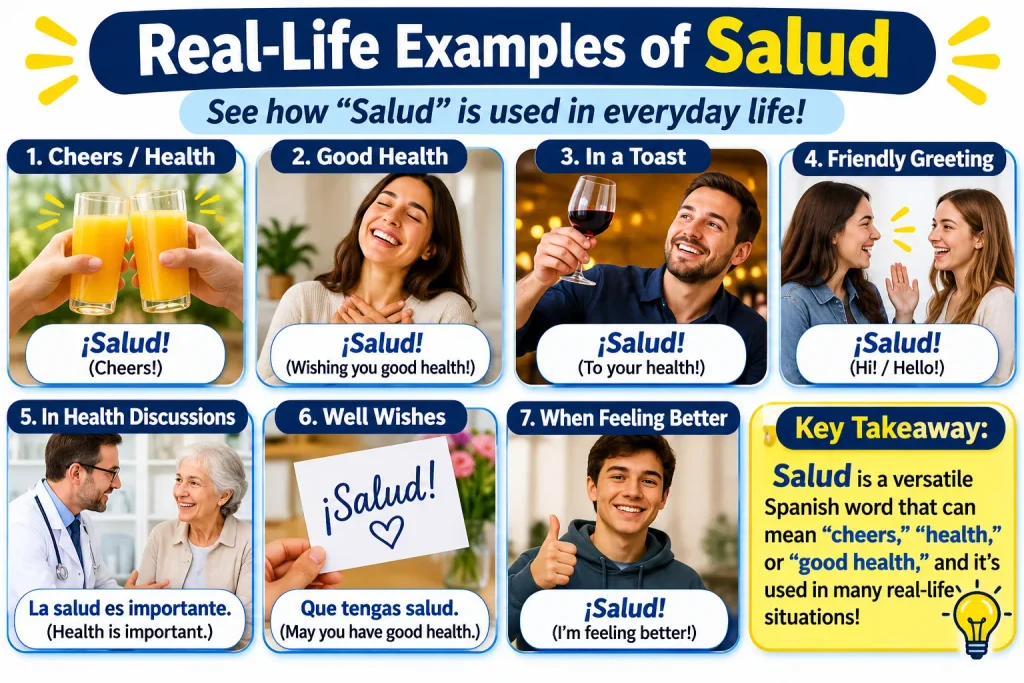
These examples show how the meaning changes with the situation.
At a Dinner
Mia: Here’s to a great year ahead!
Carlos: ¡Salud!
Meaning: Cheers!
After a Sneeze
Sofia: Achoo!
Daniel: ¡Salud!
Sofia: Gracias.
Meaning: Bless you! / Thank you.
Talking About Health
Elena: La salud es más importante que el dinero.
English: Health is more important than money.
Wishing Someone Well
Marco: Te deseo mucha salud.
English: I wish you good health.
Talking About Public Services
Lucía: El sistema de salud necesita apoyo.
English: The health system needs support.
These examples show why context matters. The same word can appear in a casual conversation, a toast, or a serious discussion about health.
Why Is Salud a Useful Spanish Word to Learn?
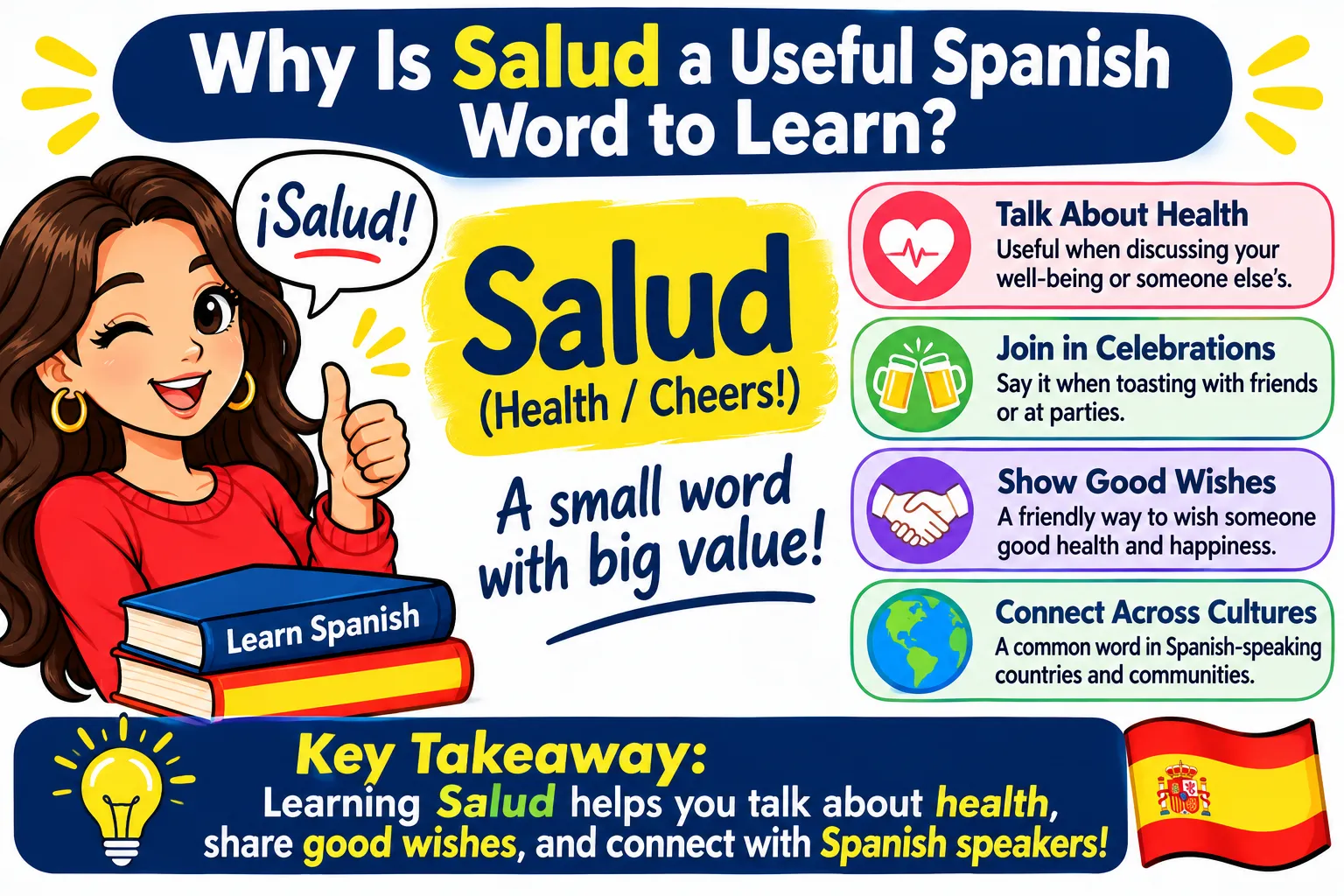
Salud is useful because you may hear it in many everyday situations. It helps you understand basic Spanish and respond politely.
Here are three reasons to learn it:
- It has a simple core meaning. You can remember that salud means health.
- It works in common social situations. You may hear it during a toast or after a sneeze.
- It helps you understand common phrases. Words such as salud mental and salud pública appear in health-related discussions.
You can start by learning three short expressions:
- La salud — Health.
- ¡Salud! — Cheers! / Bless you!
- Gracias — Thank you.
These phrases are easy to practice and can help you follow simple Spanish conversations.
FAQs
1. What does salud mean in English?
Salud is a Spanish word that means “health” in English. It can also mean “cheers” during a toast or “bless you” after someone sneezes.
2. Does salud mean cheers?
Yes. When Spanish speakers raise their glasses before a drink, they often say ¡Salud! It is the Spanish version of “Cheers!” and expresses good wishes.
3. Why do Spanish speakers say salud after a sneeze?
They say ¡Salud! to wish the person good health. It serves the same purpose as “Bless you” in English.
4. How do you pronounce salud?
The word is pronounced roughly “sah-LOOD,” with the stress on the final syllable. The final D may sound soft in natural Spanish speech.
5. What do you say when someone says salud?
If someone says ¡Salud! after you sneeze, you can reply with ¡Gracias!, which means “Thank you.” During a toast, you can simply smile, raise your glass, and join in.
6. Does salud mean health or bless you?
It can mean both, depending on the context. Its direct meaning is “health,” while its use after a sneeze is similar to saying “Bless you.”
7. Is salud a Spanish or Mexican word?
Salud is a Spanish word used in Mexico and many other Spanish-speaking countries. It is not limited to one country or region.
8. What is the difference between salud and hola?
Salud means “health” and can mean “cheers” or “bless you.” Hola means “hello” and is a common way to greet someone in Spanish.
9. What does mucha salud mean?
Mucha salud means “lots of health” or “good health.” It is often used to express a wish for someone’s well-being.
10. Is salud used in Portuguese?
The standard Portuguese word is saúde, which also means “health” and can be used in a toast. Spanish uses salud, without the accent mark.
Article Summary
- Salud meaning: Health.
- Salud in a toast: Cheers!
- Salud after a sneeze: Bless you!
- Language: Spanish.
- Pronunciation: Roughly sah-LOOD.
- Polite response after a sneeze: Gracias (thank you).
- Related phrases: Salud mental (mental health), salud pública (public health), and buena salud (good health).
The main thing to remember is that the situation tells you which meaning of salud applies.
Conclusion
The Spanish word salud is simple but useful. Its main meaning is “health,” yet it also has two common social uses: “cheers” when people raise their glasses and “bless you” after someone sneezes.
You can understand its meaning by paying attention to the situation. If people are discussing well-being, salud means health. If they are sharing a toast, it means cheers. If someone sneezes, it is a friendly way to wish them well.
Learning this word is a small step toward understanding everyday Spanish. Practice saying ¡Salud! and remember the simple reply gracias. With these phrases, you will be better prepared to understand and join common Spanish conversations.
Read More Posts
Good Riddance Meaning: What Does It Mean
Erm Meaning: What Does Erm Mean in Texting and Conversation
Smut Book Meaning: What Is a Smut Book

Emma Wilson is a writer at MeaningVibz who enjoys exploring emoji meanings, texting expressions, and online communication trends. She helps readers understand how emojis and slang are used in different situations by providing clear explanations and relatable examples for everyday messaging.