

Introduction
Have you ever heard someone say they are polyamorous and wondered what it means? You are not alone. Relationship terms can be confusing, especially when people use them to describe different ways of loving and dating.
The polyamory meaning is having, or being open to having, romantic relationships with more than one person at the same time, with the knowledge and consent of everyone involved.
It is often called consensual non-monogamy. This means the people in the relationship agree that having more than one romantic partner is okay.
Polyamory is not the same as cheating. Cheating involves breaking trust or going against agreed rules. In a polyamorous relationship, honesty, clear communication, and mutual respect are important.
Some polyamorous people have two partners, while others are part of a larger relationship network. Every relationship can look different. In this guide, you will learn what polyamory means, how it works, its common types, and how it differs from an open relationship or monogamy.
What Does Polyamory Mean?
Polyamory means having romantic or loving relationships with more than one person at a time, with everyone’s informed agreement.
The word comes from two parts:
- Poly: A word part that means many.
- Amory: A word part linked to love.
Together, the word is often understood as “many loves.”
A polyamorous person may love two people at once or build relationships with several partners. These relationships may be serious, casual, long-term, or different from one another.
The most important part is consent. Everyone who is affected by the relationship agreements should know what is happening and agree to the terms.
A Simple Example of Polyamory
Imagine that Alex is dating Jordan and also has a romantic relationship with Taylor. Jordan and Taylor both know about the other relationship, and everyone agrees to this arrangement.
This is an example of polyamory because Alex has two romantic relationships with the knowledge and consent of the people involved.
Now imagine Alex secretly dates Taylor while telling Jordan they are exclusive. That would break their agreement and could be considered cheating.
The difference is not simply the number of partners. It is whether people are honest and follow the agreements they have made.
How Do Polyamorous Relationships Work?

Polyamorous relationships work through communication, consent, trust, and clear boundaries. There is no single way to organize them.
Some people date separately. Others build close connections in which several partners know one another. Some share a home or raise children together, while others live apart.
1. Honest Communication
Partners need to talk openly about their feelings, plans, needs, and expectations.
For example, someone might tell their partner that they want to start dating another person. They can then discuss what this change means for their relationship.
Honest talks help people understand one another and reduce confusion.
2. Clear Boundaries
Boundaries are rules or limits that people set to feel safe and respected.
Partners may discuss topics such as:
- How much time they want to spend together.
- What information they want to share about other relationships.
- How they will handle dates, holidays, and special events.
- What privacy each person needs.
- How they will approach sexual health and safer sex.
Boundaries should be discussed openly. They may also change as relationships grow.
3. Consent From Everyone Involved
Consent means freely agreeing to something with a clear understanding of what it involves.
In polyamory, people should be able to ask questions, share concerns, and make choices without threats or pressure. Agreement to one relationship arrangement does not mean a person must accept every future change.
If someone feels uncomfortable, partners can discuss their concerns and decide what works for them.
4. Time and Attention
Managing more than one relationship can take planning. Each partner may have different needs, schedules, and expectations.
For example, a person might plan a weekly date with one partner and spend another evening with a different partner. They may also set aside time for friends, family, work, and rest.
Fairness does not always mean giving every person the same amount of time. It means being thoughtful about commitments and treating people with respect.
What Are the Different Types of Polyamory?
Polyamory can take many forms. The following are common terms people use to describe their relationships.
1. Hierarchical Polyamory
In hierarchical polyamory, some relationships have a higher level of priority than others.
For example, a person may have a spouse or long-term partner and also date another person. The established relationship may come with shared housing, parenting duties, or financial commitments.
The word “primary” is sometimes used for the relationship with the highest priority, while “secondary” may describe another relationship.
These labels mean different things to different people. They should not be used to assume that a partner’s feelings matter less.
2. Non-Hierarchical Polyamory
In non-hierarchical polyamory, people do not automatically rank relationships as primary or secondary.
Each relationship is treated as important in its own way. Partners may have different levels of closeness, time, and commitment, but no relationship is given a fixed higher rank simply because it began first.
For example, someone may have two committed partners and make plans with each based on their needs and shared agreements.
3. Solo Polyamory
Solo polyamory describes a person who has or seeks multiple relationships while keeping a strong sense of independence.
A solo polyamorous person may not want marriage, shared finances, or living with a partner. They can still have deep, loving, and committed relationships.
Solo polyamory does not mean a person avoids commitment. It means they choose a relationship style that protects their independence.
4. Kitchen-Table Polyamory
Kitchen-table polyamory describes a style in which partners and their partners can feel comfortable spending time together.
For example, three people in a relationship network may share a meal, attend a birthday party, or sit together at a kitchen table.
They do not have to be best friends. The main idea is that friendly contact and group interaction are welcome.
5. Parallel Polyamory
In parallel polyamory, partners keep their separate relationships mostly apart.
For example, someone may date two people who rarely meet. Both know about the other relationship, but they prefer to spend time together separately.
This arrangement can work well for people who value privacy or do not want close social ties with their partners’ other partners.
What Is the Difference Between Polyamory and Monogamy?
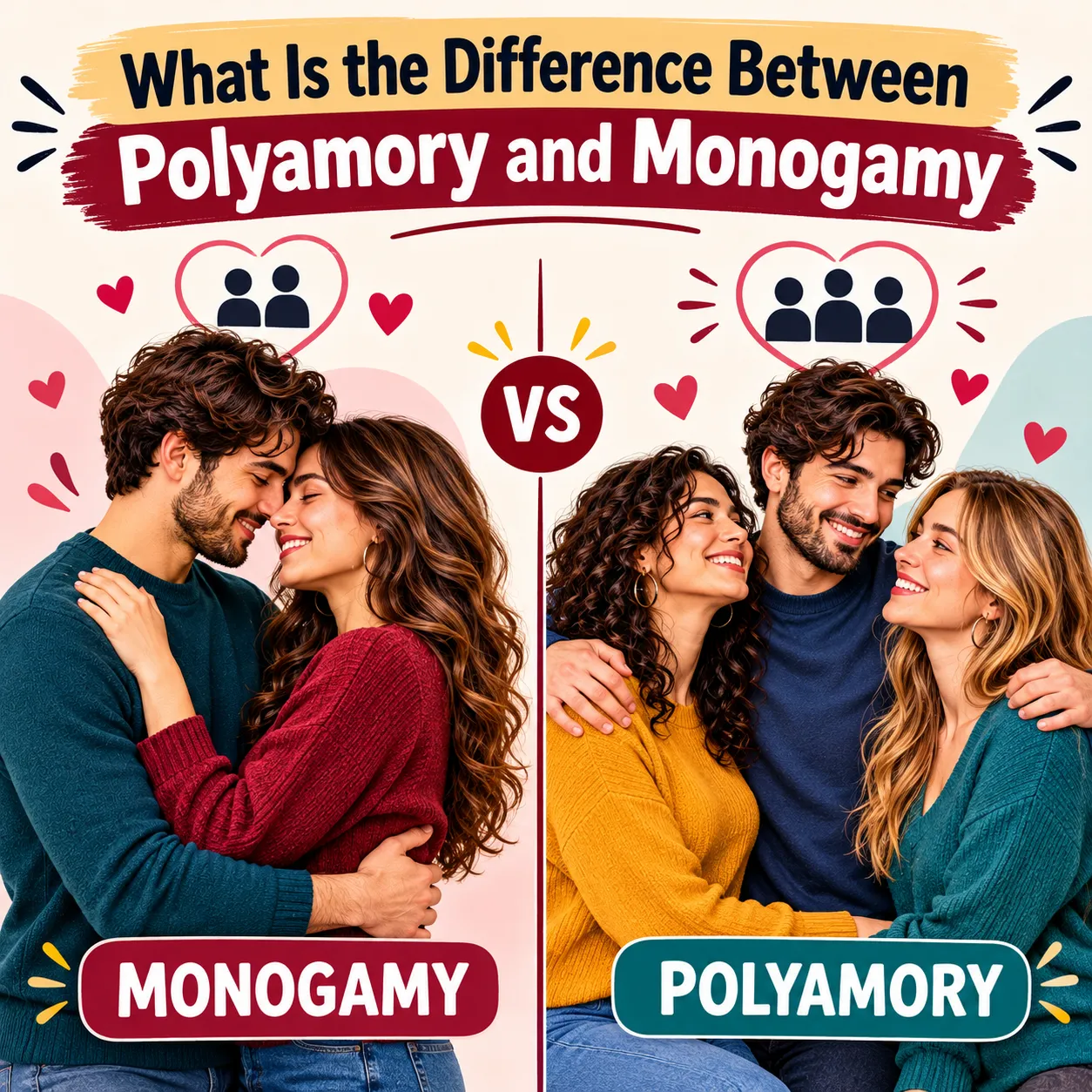
Monogamy means having one romantic partner within an agreed exclusive relationship. Polyamory allows for more than one romantic relationship with everyone’s consent.
Here are the key differences:
| Feature | Polyamory | Monogamy |
| Romantic partners | More than one may be allowed | One at a time within the agreed relationship |
| Relationship rules | Agreed by everyone involved | Often based on exclusivity |
| Communication | Needed to manage multiple connections | Needed to maintain trust and respect |
| Commitment | Can be serious and long-term | Can be serious and long-term |
| Cheating | Breaking agreed rules can be cheating | Breaking agreed rules can be cheating |
Neither relationship style is automatically better than the other. People have different needs, values, and comfort levels.
A healthy relationship depends on honesty, respect, consent, and agreements that work for the people involved.
What Is the Difference Between Polyamory and an Open Relationship?
Polyamory and open relationships are both forms of consensual non-monogamy, but they may have different goals.
Polyamory focuses on the possibility of having multiple romantic or loving relationships. An open relationship often refers to a couple who agree that one or both partners may date or have sexual connections with other people. The details depend on their agreement.
For example, a couple may allow sexual relationships outside their partnership but prefer not to pursue other romantic commitments. That may be described as an open relationship.
Another couple may welcome emotional and romantic connections with other people. They might describe their arrangement as polyamorous.
These labels can overlap. Some open relationships include romantic relationships, and some polyamorous relationships include sexual freedom. The best way to understand a couple’s arrangement is to ask what their agreements mean to them.
Is Polyamory the Same as Cheating?
No. Polyamory is not the same as cheating.
Polyamory involves honest agreement about having multiple romantic relationships. Cheating usually involves hiding a relationship, lying, or breaking an agreement about exclusivity.
Consider these examples:
- Polyamory: Sam tells their partner about a new romantic interest, and they discuss the change together.
- Cheating: Sam secretly dates another person after agreeing to remain exclusive.
- A broken agreement: A polyamorous person hides important information that their partners agreed to share.
Even in a polyamorous relationship, people can break trust. Having permission to date other people does not remove the need to respect boundaries.
The important question is whether everyone understands and follows the relationship agreements.
What Does It Mean to Be Polyamorous?
Being polyamorous means that a person practices or identifies with a relationship style that allows for multiple romantic relationships with informed consent.
Some people see polyamory as part of their identity. Others see it as a relationship choice that suits them at a certain stage of life.
A polyamorous person may be dating several people, have only one partner at the moment, or be single and open to future polyamorous relationships.
Being polyamorous does not mean someone must always have multiple partners. It describes their approach to relationships, not a required number of dates or partners.
It also does not tell you everything about their personality, values, or ability to love. Each person is different.
Can Polyamorous People Fall in Love With More Than One Person?
Yes. Polyamory allows for romantic love with more than one person at a time.
People who practice polyamory may develop different kinds of connections with different partners. One relationship may involve shared goals and daily life, while another may grow through shared interests or emotional closeness.
Love does not always feel exactly the same from one relationship to another. People may also experience jealousy, fear, or uncertainty.
Polyamory does not guarantee that everyone will feel happy all the time. Like any relationship style, it can involve challenges that require patience and honest communication.
Do Polyamorous People Get Jealous?
Yes. Polyamorous people can experience jealousy, just like people in monogamous relationships.
Jealousy may come from fear of losing a partner, feeling left out, comparing oneself with another person, or worrying about changes in a relationship.
Some people use the word compersion to describe feeling happy when a partner experiences joy with someone else. Compersion can happen in polyamorous relationships, but not everyone feels it, and it does not have to replace jealousy.
How Can Partners Handle Jealousy?
Helpful steps may include:
- Naming the feeling without blaming another person.
- Talking about the worry behind the feeling.
- Asking for reassurance when needed.
- Reviewing boundaries and shared plans.
- Making time for connection and rest.
- Seeking a qualified relationship counselor when problems are hard to resolve.
Jealousy is a feeling, not proof that a relationship is wrong. What matters is how people respond to it.
What Are the Benefits of Polyamory?

People choose polyamory for different reasons. Some feel it fits their values, while others prefer the freedom to form more than one romantic connection.
Possible benefits include:
More Room for Different Connections
Different partners may share different interests, values, or life goals. A person may enjoy outdoor activities with one partner and creative hobbies with another.
This does not mean one person must meet every need in a relationship.
Honest Talks About Relationship Needs
Polyamory often calls for direct talks about dating, time, boundaries, and feelings. These talks may help partners better understand what each person wants.
Open communication is useful in any relationship, though it does not guarantee that conflicts will disappear.
Freedom to Choose a Relationship Style
Some people find that monogamy does not fit their wishes. Polyamory can offer another way to build romantic connections, as long as everyone involved freely agrees.
However, it is not right for everyone. People should not feel pressured to try it just because a partner wants to.
What Challenges Can Polyamorous Relationships Have?
Polyamory can be rewarding for some people, but it also comes with real challenges.
Managing Time
More relationships can mean more plans, dates, and commitments. People may need to balance time with partners, family, friends, and themselves.
Dealing With Jealousy
Seeing a partner spend time with someone else can bring up strong feelings. Partners may need patience and reassurance as they work through those emotions.
Setting Clear Boundaries
People may have different ideas about privacy, safer sex, time, and commitment. These differences need honest discussion.
Facing Social Judgment
Some people may not understand polyamory or may judge those who practice it. This can make it hard to talk openly with relatives, friends, or coworkers.
How Do You Know if Polyamory Is Right for You?
There is no single test that can tell you whether polyamory is right for you. It helps to think carefully about your values, needs, and comfort with non-monogamy.
Ask yourself:
- Am I interested in having more than one romantic relationship?
- Can I talk openly about difficult feelings?
- Am I willing to respect my partners’ independence?
- Can I make time for the relationships I choose?
- Do I feel free to say no without fear or pressure?
- Can I accept that my partners may develop meaningful connections with other people?
You do not need to answer yes to every question right away. It is okay to take time to learn and reflect.
If you already have a partner, talk honestly about your wishes. Do not assume that they will agree. A partner who wants monogamy is not wrong, and a person who wants polyamory is not wrong either. Sometimes people have different needs that cannot be matched in one relationship.
The goal is not to convince someone to change. It is to find a relationship arrangement that respects everyone’s choices.
How Can You Talk to a Partner About Polyamory?
If you want to discuss polyamory with a partner, choose a calm time when you can both talk without rushing.
Start by explaining what interests you and what you hope to understand. Make it clear that you want an honest conversation, not an immediate decision.
You could say:
“I’ve been learning about polyamory, and I’d like to talk about what it means to me. I want to understand how you feel about it, too. We don’t have to decide anything today.”
Listen to your partner’s concerns without dismissing them. They may need time to think or may not want a non-monogamous relationship.
Common Myths About Polyamory
Several common myths can make polyamory harder to understand.
Polyamory Is Just Cheating
Fact: Polyamory is based on informed agreement. Cheating involves dishonesty or breaking relationship rules.
Polyamorous People Cannot Commit
Fact: Polyamorous people can make long-term commitments. Their commitments may involve more than one partner.
Everyone in Polyamory Dates Everyone
Fact: People can have separate relationships. Some partners are close friends, while others rarely meet.
Polyamory Means Never Feeling Jealous
Fact: Jealousy can happen in any relationship. Polyamorous people may need to work through it just like anyone else.
Polyamory Is Right for Everyone
Fact: People have different relationship needs. Some prefer monogamy, some prefer polyamory, and others choose different arrangements.
Polyamory Has No Rules
Fact: Polyamorous people often make clear agreements about honesty, time, boundaries, privacy, and safer sex. The rules depend on the people involved.
How Is Polyamory Different From Polygamy?
Polyamory and polygamy are not the same thing.
Polyamory refers to having or being open to multiple romantic relationships with everyone’s informed consent.
Polygamy generally means being married to more than one person at the same time. The word is most often used to describe a marriage arrangement, while polyamory does not require marriage.
A person can be polyamorous without being married. They may have romantic partners who live separately or choose not to marry at all.
The terms can overlap in some situations, but they describe different ideas. It is best not to assume that every polyamorous person wants multiple spouses.
Polyamory Terms You Should Know
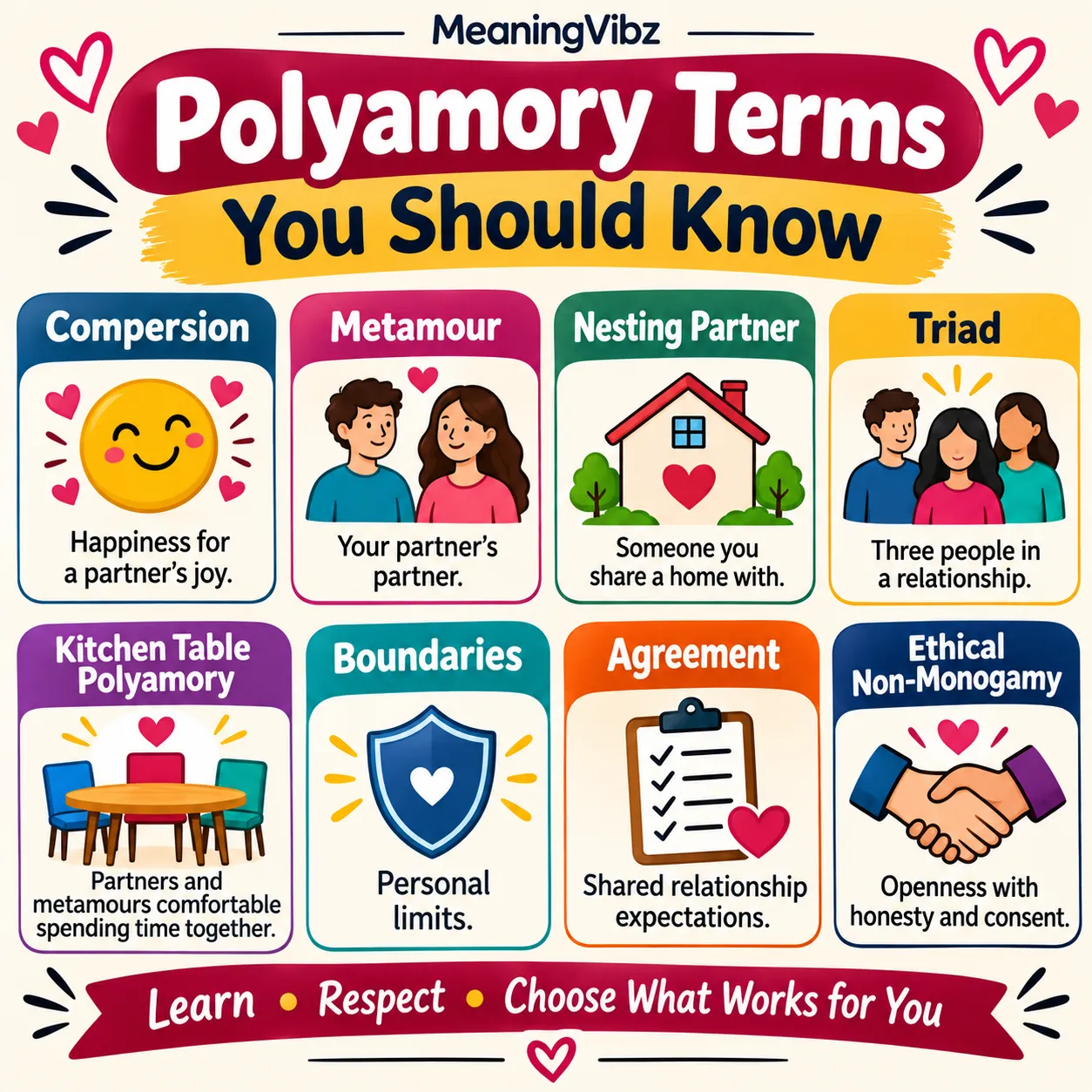
If you are learning about polyamory, these common terms can help.
- Consensual non-monogamy: An umbrella term for relationship arrangements in which people agree that romantic or sexual connections outside a single exclusive partnership are allowed.
- Metamour: A partner of your partner with whom you are not necessarily romantically involved.
- Compersion: A feeling of happiness about a partner’s positive experience with another person.
- Primary partner: A partner who holds a central role in a hierarchical relationship arrangement.
- Secondary partner: A partner in a relationship that has a lower priority within a hierarchical arrangement.
- Boundary: A personal limit or agreement about what someone is comfortable with.
- Triad: A relationship structure involving three people.
- Kitchen-table polyamory: An approach in which partners and their partners are comfortable spending time together.
- Parallel polyamory: An approach in which separate relationships are kept mostly apart.
People may use these terms in slightly different ways. When in doubt, ask what a person means by a particular label.
Article Summary
Polyamory means having or being open to more than one romantic relationship at a time, with the informed consent of everyone involved. It is different from cheating because it relies on honesty and agreed boundaries.
There are many forms of polyamory, including hierarchical, non-hierarchical, solo, kitchen-table, and parallel polyamory. Some people build relationships with several partners, while others keep their connections separate.
Polyamory can offer freedom and meaningful connections, but it also requires time, communication, trust, and care. It is not right for everyone, and no one should feel pressured to accept it. A healthy relationship depends on respect and choices that work for all involved.
FAQs
1. What is the simple meaning of polyamory?
Polyamory means having or being open to more than one romantic relationship at the same time, with the knowledge and consent of everyone involved.
2. What does polyamorous mean in a relationship?
It means the people involved agree that having multiple romantic relationships is allowed. They use honesty, communication, and shared boundaries to guide their relationships.
3. Is polyamory the same as an open relationship?
Not exactly. Polyamory focuses on the possibility of multiple romantic relationships. An open relationship often allows outside dating or sexual connections. The two can overlap.
4. Is polyamory cheating?
No. Polyamory involves informed consent and agreed relationship rules. Cheating involves dishonesty or breaking those rules.
5. Can a polyamorous person have only one partner?
Yes. A polyamorous person may have one partner or no partners at a particular time. Polyamory does not require someone to date multiple people at all times.
6. Can polyamorous people get married?
Yes. A polyamorous person can marry one partner while having other consensual romantic relationships. Polyamory itself does not require marriage.
7. What is a polyamorous relationship called?
It is usually called a polyamorous relationship or simply polyamory. Depending on its structure, it may also be described as a triad, a quad, or another relationship network.
8. Do all partners in a polyamorous relationship date each other?
No. Some people date separately, while others build relationships in which everyone is romantically connected. The structure depends on the people involved.
9. What is the opposite of polyamory?
Monogamy is often treated as the opposite of polyamory. Monogamy generally involves one romantic partner within an exclusive relationship, while polyamory allows multiple romantic relationships with consent.
10. Why do people choose polyamory?
People choose polyamory for different reasons, such as wanting the freedom to build multiple romantic connections or finding that non-monogamy better fits their values. Others prefer monogamy, and both choices can be valid when they are freely made.
11. What is the difference between polyamory and polygamy?
Polyamory involves multiple consensual romantic relationships and does not require marriage. Polygamy generally refers to being married to more than one person at the same time.
12. Can polyamory work long-term?
Yes, it can work long-term for people who want this relationship style and can maintain honest communication, clear agreements, and mutual respect. Like any relationship, it can also face challenges.
Conclusion
The meaning of polyamory is simple: it is a relationship style that allows people to have more than one romantic connection with everyone’s knowledge and consent.
It is not the same as cheating, and it does not mean every partner must date one another. Polyamorous relationships can take many forms, from separate partnerships to close relationship networks.
Like any relationship style, polyamory has benefits and challenges. Honest communication, clear boundaries, mutual respect, and freely given consent are key to making it work.
Whether you prefer monogamy, polyamory, or another relationship style, what matters most is that everyone involved feels respected, safe, and free to make their own choices.
Read More Posts
WBU Meaning: What Does WBU Mean in Text and Chat?
Pandering Meaning: Definition, Examples, and Usage
GFE Meaning: What Does GFE Stand For in Text and Slang?

Ryan Mitchell creates informative content about word definitions, acronyms, online slang, and modern communication. He enjoys exploring how people use language in text messages, on social media, and in daily life. Ryan focuses on delivering simple explanations and practical examples that help readers quickly understand the meaning of unfamiliar words and phrases.