Passover is a Jewish holiday that celebrates the freedom of the Israelites from slavery in ancient Egypt.
It honors the story of their escape, as told in the Bible’s Book of Exodus.
In simple words, Passover means remembering freedom from slavery and God’s role in the Israelites’ escape from Egypt.
The holiday is both a time to look back at history and a chance to teach younger generations about faith, courage, and freedom.
What Is the Meaning of the Word Passover?
The English word “Passover” comes from the biblical account in which God passed over the homes of the Israelites during the final plague in Egypt.
According to Exodus 12, the Israelites marked their doorposts with the blood of a lamb.
This sign told God to pass over their homes when the plague struck Egypt’s firstborn.
This event became a key part of the Passover story. It explains the name of the holiday and its link to protection and freedom.
What Does Pesach Mean?
Pesach is the Hebrew name for Passover. It is linked to the Hebrew word for “pass over.”
Jewish people use the name Pesach when talking about this holiday in Hebrew. It is also used in Jewish prayers, books, and holiday greetings.
Passover and Pesach refer to the same holiday.
Why Is Passover Celebrated?
Passover is celebrated to remember the Israelites’ escape from slavery in Egypt.
According to the Bible, the Israelites lived under Pharaoh’s rule and were forced to work as slaves.
God called Moses to lead them out of Egypt.
Pharaoh refused at first, even after Moses warned him about the plagues that would come upon the land.
The final plague led Pharaoh to release the Israelites. They then began their journey away from Egypt.
Passover helps Jewish people remember several key ideas:
- Freedom: The Israelites were freed from slavery.
- Faith: The story shows the importance of trusting God.
- Family: Families gather to share the story and their traditions.
- Memory: The holiday keeps an important part of Jewish history alive.
- Hope: The story reminds people that hardship can lead to a new beginning.
Passover is not just a look back at the past. It is also a time to think about freedom, justice, and the value of helping others.
The Biblical Story of Passover
The story of Passover is found in the Book of Exodus, mainly in chapters 1 through 15.
It tells how the Israelites left Egypt and began their journey toward freedom.
1. The Israelites Become Slaves in Egypt
According to Exodus, the Israelites lived in Egypt for many years.
A new Pharaoh came to power who feared their growing numbers. He forced them into hard labor and treated them cruelly.
The Israelites suffered and called out to God for help.
2. Moses Is Chosen to Lead the Israelites
God called Moses to lead the Israelites out of Egypt. Moses went to Pharaoh and asked him to let the people go.
Pharaoh refused many times. In response, God sent a series of plagues upon Egypt.
3. The Ten Plagues of Egypt
The Bible describes ten plagues that affected Egypt. They included water turning to blood, frogs, insects, darkness, and other disasters.
The tenth plague was the death of the firstborn in Egypt.
Before it happened, God instructed the Israelites to mark their doorposts with the blood of a lamb.
According to the biblical account, God passed over the marked homes. This event gave the holiday its name.
4. Pharaoh Lets the Israelites Leave
After the final plague, Pharaoh allowed the Israelites to leave Egypt. They departed quickly and began their journey toward freedom.
The Bible says they did not have enough time for their bread dough to rise. This is why unleavened bread, called matzah, became a major part of Passover.
5. The Exodus Becomes a Story of Freedom
The Israelites’ departure from Egypt is known as the Exodus.
It became a central story in Jewish history and faith.
Passover keeps this story alive through prayer, food, reading, and family gatherings. Each year, Jewish people remember the journey from slavery to freedom.
When Is Passover Celebrated?
Passover begins on the 15th day of the Hebrew month of Nisan. This date usually falls in March or April on the modern calendar.
The Hebrew calendar follows a different system from the Gregorian calendar used in the United States. As a result, the date of Passover changes each year on the regular calendar.
In Israel, Passover is observed for seven days.
In many Jewish communities outside Israel, including traditional Jewish communities in the United States, it is observed for eight days.
The holiday begins at sundown, so the first Seder takes place in the evening at the start of Passover.
Because the Hebrew calendar sets the dates, it is best to check a Jewish calendar for the exact dates in any given year.
What Is a Passover Seder?
A Passover Seder is a special meal and ceremony held at the start of the holiday. The Hebrew word Seder means “order.”
During the Seder, families follow a set order of readings, prayers, songs, questions, and foods. These steps help tell the story of the Israelites’ freedom from Egypt.
The Seder is one of the best-known Passover traditions.
Why Is the Seder Important?
The Seder helps families pass the Passover story from one generation to the next.
Children are encouraged to ask questions, and adults explain the meaning of the holiday.
The ceremony also reminds people to think about freedom and the hardships faced by those who lived in slavery.
Many families use a book called the Haggadah. It guides them through the Seder and includes the story, prayers, and other readings.
What Happens During a Seder?
A typical Passover Seder may include:
- Blessings over wine or grape juice.
- Washing hands as part of the ritual.
- Eating symbolic foods.
- Reading from the Haggadah.
- Asking the Four Questions.
- Singing traditional songs.
- Sharing a festive meal.
The exact customs can differ among families and Jewish communities.
What Foods Are Eaten During Passover?
Passover foods carry special meaning. Many remind people of the Israelites’ suffering in Egypt or their quick escape to freedom.
Matzah: Unleavened Bread
Matzah is flat bread made without yeast or another rising agent. It is one of the main foods eaten during Passover.
According to the Exodus story, the Israelites left Egypt in such a hurry that their bread dough did not have time to rise.
Matzah reminds Jewish people of that hurried departure. It is also a symbol of the hardship and freedom remembered during the holiday.
Maror: Bitter Herbs
Maror means bitter herbs. These foods remind people of the bitterness of slavery in Egypt.
Horseradish and romaine lettuce are common choices, though customs vary.
Charoset: A Sweet Mixture
Charoset is a sweet mixture often made with apples, nuts, cinnamon, and wine or grape juice, depending on the recipe and tradition.
Its texture and color are said to remind people of the mortar used by the Israelites when they were enslaved and forced to build.
The sweet taste also adds contrast to the bitter herbs.
Karpas: A Green Vegetable
Karpas is a green vegetable, often parsley or celery, served during the Seder. It is commonly dipped in salt water.
The green vegetable may represent spring and new life, while the salt water can remind people of tears and suffering.
A Roasted Bone or Other Symbolic Substitute
Some Seder plates include a roasted shank bone, called zeroa, which recalls the Passover sacrifice in biblical tradition.
Vegetarian families may use a suitable symbolic substitute, such as a roasted beet, depending on their customs.
Eggs and Other Seder Foods
A hard-boiled or roasted egg is often placed on the Seder plate.
It can symbolize mourning, renewal, or other ideas depending on the tradition.
Other foods may be served as part of the holiday meal.
Customs differ by family and community.
What Is a Passover Seder Plate?
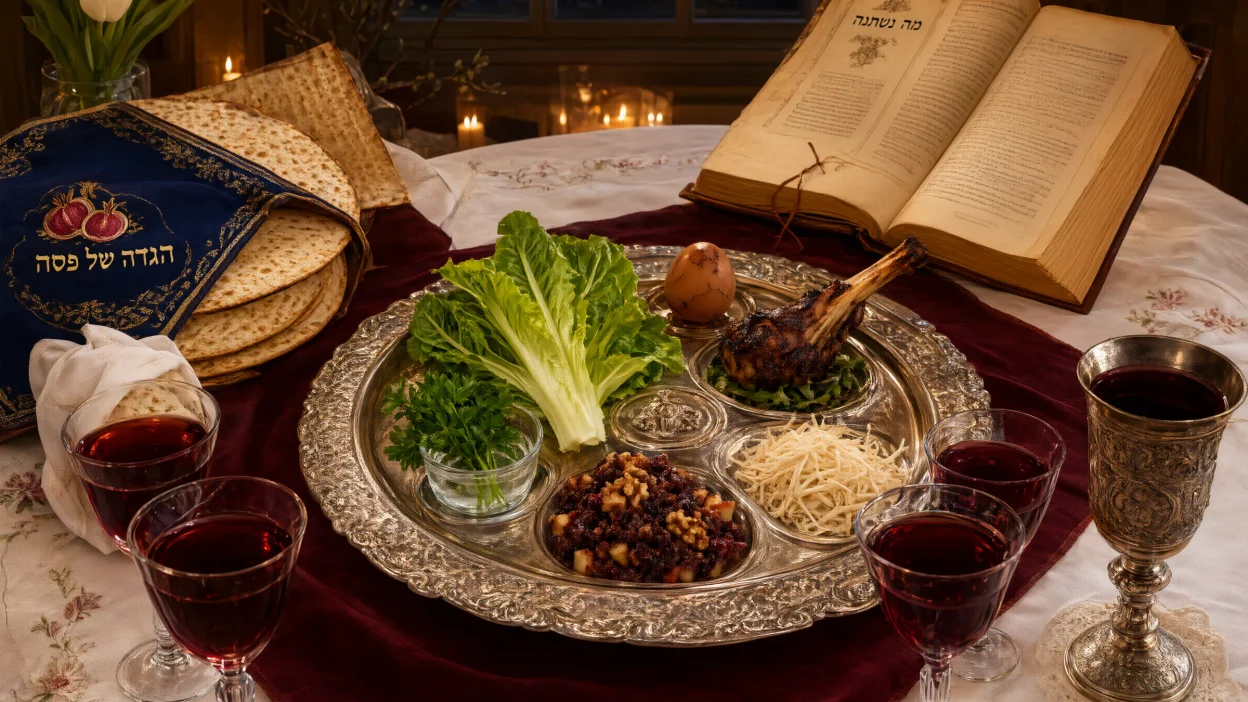
A Seder plate is a special plate that holds symbolic foods used during the Passover ceremony. Each food helps tell part of the Exodus story.
A traditional Seder plate may include:
| Food | Meaning |
| Matzah | The bread that did not have time to rise |
| Maror | The bitterness of slavery |
| Charoset | Mortar used in forced labor |
| Karpas | Often linked to spring and new life |
| Zeroa | A reminder of the Passover sacrifice |
| Egg | Linked to mourning, renewal, or tradition |
Some families also include salt water in a separate bowl.
The Seder plate and its foods help make the story easier to understand, especially for children.
What Is the Meaning of the Four Questions?
The Four Questions are a traditional part of the Passover Seder.
They are often asked by the youngest person at the table who can recite them.
The questions ask why this night is different from other nights.
They point to special Passover practices, such as eating matzah and bitter herbs, dipping foods, and reclining while eating.
The questions invite children to take part and encourage everyone to learn the story.
Their main purpose is not simply to get answers. They help open a discussion about the meaning of Passover, the history of slavery, and the value of freedom.
The wording and presentation of the questions may vary among Jewish communities.
What Does Passover Symbolize?
Passover has several important meanings in Jewish life. Its symbols help connect the ancient story to values people can think about today.
Freedom From Oppression
The central theme of Passover is freedom. The story remembers the Israelites’ release from slavery and their journey toward a new life.
For many people, it is also a time to think about those who still face unfair treatment or a lack of freedom.
Faith and Trust in God
The Passover story describes how God heard the Israelites’ cries and helped lead them out of Egypt.
For Jewish believers, this is an important reminder of God’s care, power, and promises.
Family and Community
Passover brings families and communities together. People share meals, tell stories, sing songs, and take part in familiar customs.
These traditions help children learn about their heritage and keep the holiday meaningful across generations.
Remembering the Past
Passover teaches the importance of remembering hardship and freedom.
The Seder turns the story into a shared experience rather than a simple history lesson.
By retelling the story, Jewish people connect their lives today with the experiences and faith of earlier generations.
What Is the Difference Between Passover and Easter?
Passover and Easter are different religious holidays, but they have an important historical and religious connection.
Passover is a Jewish holiday that remembers the Israelites’ freedom from slavery in Egypt. Easter is a Christian holiday that celebrates the resurrection of Jesus Christ.
The Last Supper, described in the New Testament, is widely connected to the Passover setting.
The relationship between the Last Supper and the timing of Passover is understood differently across Christian traditions and scholarly views.
Here is a simple comparison:
| Feature | Passover | Easter |
| Religion | Judaism | Christianity |
| Main meaning | Freedom from slavery in Egypt | Resurrection of Jesus |
| Main text | Book of Exodus | New Testament accounts |
| Common traditions | Seder, matzah, Haggadah | Church services, Easter meals, and other customs |
| Calendar | 15th of Nisan begins Passover | Date varies according to the Christian calendar |
Both holidays hold deep meaning for the people who celebrate them.
However, their central stories and religious practices are not the same.
How Do Jewish People Celebrate Passover Today?
Jewish families celebrate Passover in different ways, depending on their beliefs, traditions, and community.
Many begin with a Seder at home. Family members read from the Haggadah, eat symbolic foods, and share the story of the Exodus.
Other common customs include:
- Eating matzah instead of regular leavened bread.
- Avoiding certain leavened foods during the holiday.
- Attending synagogue services.
- Spending time with family and friends.
- Teaching children about the meaning of Passover.
- Preparing special holiday meals.
Many Jewish households remove or avoid chametz, which generally refers to certain grain products that have leavened.
The exact rules and practices vary by Jewish tradition.
For some families, Passover is a time for large gatherings.
Others celebrate with a smaller meal or observe the holiday through prayer and reflection.
Although customs differ, remembering freedom and retelling the Exodus story remain central to Passover.
How Can You Wish Someone a Happy Passover?
If someone you know celebrates Passover, a warm greeting is a thoughtful way to recognize the holiday.
Common greetings include:
- “Happy Passover!” A simple greeting in English.
- “Chag Pesach Sameach!” A Hebrew greeting that means “Happy Passover holiday!”
- “Chag Sameach!” A general Hebrew greeting meaning “Happy holiday!”
You do not need to know every tradition to show respect. A kind greeting and an interest in learning about the holiday can mean a lot.
If you are invited to a Passover Seder, ask your host whether there are any food or dress customs you should know about.
This is especially helpful because Passover food rules can be different from those followed during other holidays.
Is Passover Mentioned in the Bible?
Yes. Passover is described in the Old Testament, especially in the Book of Exodus.
Exodus 12 explains the first Passover, including the instructions given to the Israelites before the final plague in Egypt.
It also describes how they were to remember the event.
Other books of the Hebrew Bible refer to Passover and its observance. These include Leviticus, Numbers, Deuteronomy, and accounts of later celebrations.
The New Testament also mentions Passover in the context of Jesus’ life and the events leading to his crucifixion.
For Jewish people, the biblical story is central to the holiday’s meaning.
It explains why Passover is observed and why the themes of freedom, memory, and faith remain important.
Why Is Passover Still Important Today?
Passover remains important because it connects Jewish people with their history, faith, and community.
The holiday gives families a set time each year to remember a story that has shaped Jewish religious life for generations.
Through the Seder, children hear the story, ask questions, and learn why the traditions matter.
Passover also encourages people to reflect on freedom and human dignity.
Remembering the Israelites’ suffering can lead to conversations about fairness, kindness, and the treatment of others.
For many Jewish people, the holiday is both a religious observance and a strong family tradition.
It links the past to the present and gives each generation a way to keep the story alive.
FAQs
1. What does Passover mean in simple words?
Passover is a Jewish holiday that remembers how God freed the Israelites from slavery in ancient Egypt. It celebrates freedom, faith, and the story of the Exodus.
2. Why is it called Passover?
It is called Passover because, according to Exodus 12, God passed over the homes of the Israelites during the final plague in Egypt.
Their marked doorposts identified their homes in the biblical story.
3. What is Passover called in Hebrew?
Passover is called Pesach in Hebrew. The name is linked to the biblical event in which God passed over the homes of the Israelites.
4. What is the main purpose of Passover?
The main purpose of Passover is to remember the Israelites’ freedom from slavery in Egypt. The holiday also teaches lessons about faith, family, hope, and freedom.
5. What is a Passover Seder?
A Passover Seder is a special meal and ceremony held at the beginning of Passover. It includes prayers, readings, symbolic foods, and the retelling of the Exodus story.
6. Why do Jewish people eat matzah during Passover?
Jewish people eat matzah because the Israelites left Egypt in a hurry, and their bread did not have time to rise. Matzah reminds them of this part of the Exodus story.
7. When does Passover begin?
Passover begins on the 15th day of the Hebrew month of Nisan. On the Gregorian calendar, this usually falls in March or April. The holiday begins at sundown.
8. How long does Passover last?
Passover lasts seven days in Israel and in many Reform Jewish communities.
Many traditional Jewish communities outside Israel observe it for eight days.
9. Is Passover the same as Easter?
No. Passover is a Jewish holiday that remembers the Israelites’ freedom from slavery in Egypt. Easter is a Christian holiday that celebrates the resurrection of Jesus Christ.
10. What foods are eaten during Passover?
Common Passover foods include matzah, bitter herbs, charoset, green vegetables, and other foods served at the Seder.
Specific dishes and customs vary by family and community.
11. Can non-Jewish people celebrate Passover?
People who are not Jewish can learn about Passover and may be invited to join a Seder.
Anyone attending should respect the host’s religious customs and ask questions when unsure.
12. What is a common Passover greeting?
A common greeting is “Happy Passover!” In Hebrew, people may say “Chag Pesach Sameach,” meaning “Happy Passover holiday!”
Article Summary
- Passover meaning: A Jewish holiday that remembers the Israelites’ freedom from slavery in Egypt.
- Hebrew name: Pesach.
- Biblical story: The Exodus, described in the Book of Exodus.
- Main themes: Freedom, faith, memory, family, and hope.
- Key tradition: The Passover Seder, a special meal and ceremony.
- Important food: Matzah, or unleavened bread.
- Seder guide: The Haggadah, which helps tell the Exodus story.
- When it occurs: It begins on the 15th day of Nisan, usually in March or April.
Passover helps Jewish people remember their past, share their faith, and teach future generations about freedom.
Conclusion
Passover is a Jewish holiday that celebrates the Israelites’ escape from slavery in Egypt.
Its name comes from the biblical story in which God passed over the homes of the Israelites during the final plague.
Known in Hebrew as Pesach, the holiday is a time for prayer, family gatherings, special foods, and the Passover Seder.
The meaning of Passover goes beyond remembering an ancient event. It also teaches lessons about freedom, faith, hope, and the importance of remembering those who suffered.
Through traditions such as eating matzah and reading the Haggadah, Jewish families keep the Exodus story alive.
Understanding Passover meaning can help anyone learn more about Jewish history, faith, and culture.
At its heart, Passover is a reminder of the value of freedom and the power of passing important stories from one generation to the next.

Ryan Mitchell creates informative content about word definitions, acronyms, online slang, and modern communication. He enjoys exploring how people use language in text messages, on social media, and in daily life. Ryan focuses on delivering simple explanations and practical examples that help readers quickly understand the meaning of unfamiliar words and phrases.