
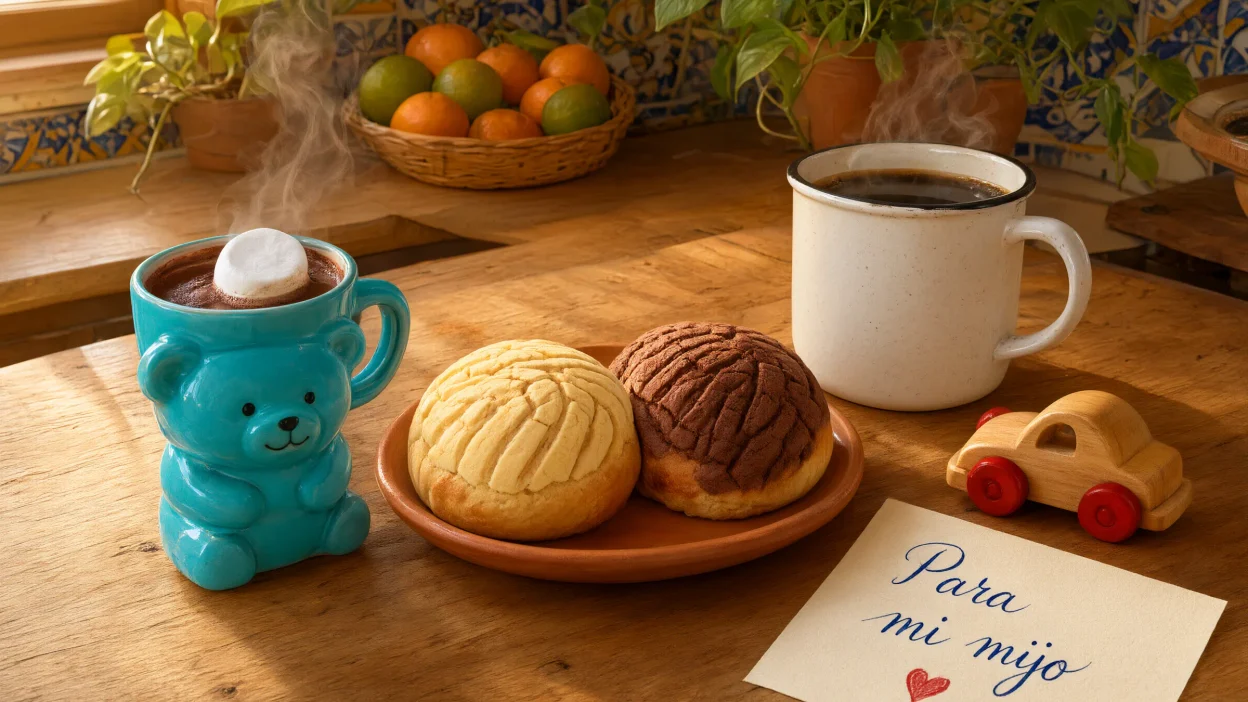
Mijo means “my son” in Spanish, but it is also used as a loving way to address someone.
It comes from mi hijo, which literally means “my son.” In everyday speech, the two words often blend together to form mijo.
Here are the main meanings:
- My son: A parent speaking to their son.
- Dear: An affectionate way to address someone.
- Sweetheart: A warm term used with a child or loved one.
- Kid or young man: A friendly way an older person may address a younger male.
- A term of care: A way to show kindness, comfort, or concern.
The exact meaning depends on who says it and how they say it.
For example, a mother might say, “Ven aquí, mijo,” which means “Come here, my son” or “Come here, dear.”
An older neighbor might use mijo when talking to a young man, even if they are not related.
In that case, it may express warmth rather than a family connection.
Mijo Meaning in English
Mijo Meaning in English
The English meaning of mijo depends on the person speaking and the situation.
The most direct translation is “my son,” but that is not always the best way to translate it in a conversation.
Here is a simple guide:
| Spanish word | English meaning |
| Mijo | My son, dear, or buddy |
| Mija | My daughter, dear, or sweetie |
| Mijito | Dear son, little buddy, or sweetheart |
| Mijita | Dear daughter, little sweetheart, or sweetie |
| Mi hijo | My son |
| Mi hija | My daughter |
For example, if a grandmother says, “¿Cómo estás, mijo?” she is asking, “How are you, dear?” or “How are you, son?”
The word may sound more loving than its direct English translation. This is because mijo often expresses a close bond between people.
The SpanishDictionary and Collins dictionaries also list affectionate meanings such as “dear,” “darling,” and “buddy.”
These translations show why the situation matters when you interpret the word.
Where Does the Word Mijo Come From?
The word mijo comes from the Spanish phrase mi hijo.
Let’s look at the two parts:
- Mi means “my.”
- Hijo means “son.”
When Spanish speakers say these words quickly in everyday conversation, the sounds can blend together. This informal contraction gives us mijo.
The same pattern appears in mija, which comes from mi hija, meaning “my daughter.”
Over time, these forms became common ways to address children and other people with warmth.
They are used in many Spanish-speaking communities, especially throughout Latin America.
It is important to know that mijo is not simply a random slang word.
It has a clear link to standard Spanish words and is widely understood in many everyday settings.
However, mijo also has another meaning in Spanish: millet, a type of grain. This is a separate meaning with a different origin.
If someone uses it to address another person, they usually mean “dear,” “son,” or something similar. In a discussion about food or farming, they may mean the grain instead.
How Do You Pronounce Mijo?
The word mijo has two syllables: mi-jo.
A simple pronunciation guide for English speakers is “MEE-hoh,” although the Spanish sounds are not exactly the same as English sounds.
Here is how to say it:
- Start with “mee,” using the Spanish i sound.
- Move to “hoh,” with a breathy Spanish j sound.
- Keep the two syllables smooth and connected.
In most Spanish accents, the letter j makes a sound similar to the English h, but it can sound rougher or stronger. The exact sound changes by region.
The word is stressed on the first syllable: MI-jo.
A common mistake is to pronounce the j like the English letter J in “jump.” That is not the usual Spanish pronunciation.
Try saying these phrases aloud:
- “Hola, mijo.” — Hello, dear.
- “Gracias, mijo.” — Thank you, dear.
- “Ven aquí, mijo.” — Come here, son.
With practice, the word becomes easy to recognize in natural Spanish speech.
What Is the Difference Between Mijo and Mija?
The main difference between mijo and mija is grammatical gender.
Mijo is the masculine form, while mija is the feminine form. Both can be used to show affection, care, or closeness.
Mijo: The Masculine Form
People commonly use mijo when speaking to a son, boy, young man, or male friend in an affectionate way.
Examples:
- “Buenos días, mijo.” — Good morning, son.
- “Ten cuidado, mijo.” — Be careful, dear.
- “¿Qué pasó, mijo?” — What happened, buddy?
The word does not always mean the person is the speaker’s actual son. It can be used outside the family.
Mija: The Feminine Form
People commonly use mija when speaking to a daughter, girl, young woman, or female friend.
Examples:
- “Hola, mija.” — Hello, dear.
- “No te preocupes, mija.” — Don’t worry, sweetie.
- “Ven conmigo, mija.” — Come with me, dear.
Like mijo, mija can express affection without a family relationship.
Can Mijo and Mija Be Used for Friends?
Yes. In some Spanish-speaking communities, people use these words with friends, younger people, and even romantic partners.
The choice depends on local habits, personal relationships, and the way people speak to each other. Not every Spanish speaker uses the terms in the same way.
How Is Mijo Used in Everyday Conversation?
Mijo can appear in many types of casual conversation. It may express love, comfort, concern, friendship, or mild frustration.
Here are some common situations.
1. When Parents Talk to Their Children
One of the most common uses is between parents and children.
A parent may use mijo when calling a son to dinner, asking about school, or offering advice.
Example:
“Ven a cenar, mijo.”
English: “Come to dinner, son.”
The word makes the sentence feel warm and personal. It is similar to an English-speaking parent saying “son,” “sweetheart,” or “my boy.”
2. When Grandparents Show Affection
Grandparents may use mijo when talking to their grandchildren.
For example:
“¿Quieres más comida, mijo?”
English: “Do you want more food, dear?”
In this case, the word can show love and care. It may be used while sharing a meal, giving a hug, or asking how someone is doing.
3. When Older People Talk to Younger People
An older adult may call a younger person mijo even when they are not related.
Example:
“Escucha, mijo, debes tener cuidado.”
English: “Listen, kid, you need to be careful.”
Here, the word may sound friendly, protective, or caring. The speaker does not need to be the person’s parent.
4. When Friends Speak Casually
Some Spanish speakers use mijo with friends as a familiar way to get someone’s attention.
Example:
“¿Qué haces, mijo?”
English: “What are you doing, buddy?”
Depending on the region and relationship, it may sound friendly, playful, or affectionate.
However, it is not a universal substitute for “bro” or “dude.” Some people use those English words or other local expressions instead.
5. When Someone Offers Comfort
Mijo can also be used when someone is upset or needs support.
Example:
“No llores, mijo. Todo va a estar bien.”
English: “Don’t cry, dear. Everything will be okay.”
The word adds warmth to the message. It helps the speaker sound caring and reassuring.
6. When Someone Gives Advice or Mildly Scolds Another Person
The word can also appear in a serious conversation.
Example:
“Mijo, tienes que estudiar más.”
English: “Son, you need to study more.”
The meaning depends on the speaker’s voice. It might sound loving, firm, or slightly annoyed.
So, mijo does not always mean that the speaker is happy. It can express different feelings while keeping a familiar tone.
Is Mijo a Slang Word?
Mijo is an informal, everyday expression in Spanish. People sometimes call it slang because it is common in casual speech, but it is more accurately described as an affectionate contraction and form of address.
It comes from mi hijo, meaning “my son.”
Unlike rude or offensive slang, mijo is usually friendly or caring. Still, its meaning can change with the situation.
For example:
- A parent may use it lovingly.
- A friend may use it casually.
- An older person may use it when giving advice.
- A romantic partner may use it as a term of affection in some communities.
It is best suited to informal conversations. In a formal meeting, business email, or conversation with someone you do not know well, a person’s name or a polite form of address is usually a safer choice.
Is Mijo a Term of Endearment?
Yes. In many situations, mijo is a term of endearment. A term of endearment is a word or phrase used to express affection or closeness.
English examples include:
- Dear
- Sweetheart
- Honey
- My boy
- Buddy
- Kiddo
These words are not exact matches for mijo, but they can express a similar feeling.
For example, a mother might say, “Come here, sweetheart,” in English. In Spanish, she might say, “Ven aquí, mijo.”
Both phrases can show love and closeness.
However, the word does not always have a romantic meaning. In fact, it is often used by parents, grandparents, relatives, and family friends.
You should not assume that someone is flirting with you just because they call you mijo.
Their age, relationship with you, tone, and cultural background all matter.
What Does Mijo Mean in Mexican Spanish?
In Mexican Spanish, mijo is a familiar and affectionate way to address a son or another male person.
It may be used with children, younger people, friends, or loved ones. In some situations, it can be translated as “son,” “dear,” “buddy,” or “my boy.”
For example:
“¿Qué pasó, mijo?”
This could mean “What’s wrong, son?” or “What’s up, buddy?” depending on the situation.
A Mexican parent might use the word with a child, while an older person might use it with a younger adult.
The word can make a conversation feel more personal.
Still, usage varies between families and regions. Not everyone in Mexico uses mijo in the same way, and some speakers may prefer other affectionate terms.
The word is also understood in many other Spanish-speaking communities, so it is not limited to Mexico.
Is Mijo Used Outside Mexico?
Yes. The affectionate use of mijo is found in many Spanish-speaking communities across Latin America and in Spanish-speaking communities in the United States.
Its exact use varies by country and region.
The Association of Academies of the Spanish Language documents its use for addressing children and, in some places, friends, companions, and romantic partners.
You may hear the word in:
- Mexican and Mexican American families.
- Central American communities.
- Caribbean Spanish-speaking communities.
- Parts of South America.
- Some Spanish-speaking communities outside Latin America, including the Canary Islands.
This does not mean every Spanish speaker uses the word every day. Language habits vary between individuals, families, and places.
If you hear mijo in a Spanish conversation, the most useful clue is the relationship between the people speaking.
What Does Mijito Mean?
Mijito is an affectionate form related to mijo. It adds the Spanish diminutive ending -ito, which can express smallness, tenderness, or affection.
In everyday English, it may be translated as “dear son,” “sweetheart,” “little buddy,” or simply “dear.”
For example:
“Ven, mijito.”
English: “Come here, sweetheart.”
The ending does not always mean the person is physically small. Adults may use diminutive forms to express tenderness toward children or loved ones.
The feminine form is mijita.
Examples:
- “Gracias, mijito.” — Thank you, dear.
- “¿Cómo estás, mijita?” — How are you, sweetie?
- “Cuídate, mijito.” — Take care, dear.
As with mijo and mija, the meaning depends on the relationship and the speaker’s tone.
Common Phrases With Mijo and Their English Meanings
Here are useful phrases to help you understand the word in everyday Spanish.
| Spanish phrase | English meaning |
| Hola, mijo. | Hello, dear. |
| Buenos días, mijo. | Good morning, son. |
| Ven aquí, mijo. | Come here, son. |
| Gracias, mijo. | Thank you, dear. |
| ¿Qué pasó, mijo? | What happened, buddy? |
| ¿Cómo estás, mijo? | How are you, dear? |
| No llores, mijo. | Don’t cry, dear. |
| Cuídate, mijo. | Take care, son. |
| Adiós, mijo. | Goodbye, dear. |
| Está bien, mijo. | It’s okay, son. |
These are simple examples of how the word can fit into a sentence. The best English translation may change depending on the speaker and situation.
Is It Okay for Non-Spanish Speakers to Say Mijo?
Yes, a non-Spanish speaker can use mijo when speaking Spanish, especially if they understand its meaning and use it naturally.
However, it is worth paying attention to the relationship and setting.
If you are learning Spanish, you can start by recognizing the word when other people use it.
You can also practice it in simple sentences with Spanish-speaking friends or family members who are comfortable with it.
Keep these tips in mind:
- Use it in casual settings. It is an informal expression.
- Pay attention to local habits. People may use it differently across communities.
- Respect personal comfort. Not everyone likes familiar terms from people they do not know well.
- Avoid assuming a relationship. Calling someone mijo does not mean you are their parent or close friend.
- Listen to native speakers. Their tone and word choice can help you understand how it is used.
You do not need to force the word into every conversation. A simple hola or a person’s name works well in many situations.
Common Misunderstandings About Mijo
Even though mijo is a short word, people can misunderstand it when they translate it directly.
Misunderstanding 1: Mijo Always Means My Biological Son
Not always. It comes from mi hijo, but it can also be used with a younger person, friend, or loved one who is not related to the speaker.
Misunderstanding 2: Mijo Is Always Romantic
No. It is often used by parents, grandparents, and other adults to show care. A romantic meaning is possible in some relationships, but it is not the default meaning.
Misunderstanding 3: Mijo Is Only Used in Mexico
No. The word is used in many Spanish-speaking communities, although its popularity and meaning can vary by region.
Misunderstanding 4: Mijo Is a Rude Word
Usually, it is not rude. It is commonly affectionate or familiar. However, the tone and situation can make it sound impatient or overly familiar.
Misunderstanding 5: Mijo and Mija Mean Exactly the Same Thing
They have similar uses, but mijo is the masculine form and mija is the feminine form.
Misunderstanding 6: Mijo Has Only One Meaning
In everyday conversation, it often means “son” or “dear.” In another context, mijo can mean millet, the grain. Context helps you tell the difference.
Article Summary: Mijo Meaning at a Glance
Here is a quick summary of the main points:
- Mijo meaning: “My son,” “dear,” “buddy,” or another affectionate term, depending on context.
- Origin: A contraction of the Spanish phrase mi hijo.
- Pronunciation: Approximately “MEE-hoh,” with a Spanish j sound.
- Feminine form: Mija, from mi hija, meaning “my daughter.”
- Common use: Family conversations, friendly chats, and informal expressions of care.
- Cultural use: Common in many Spanish-speaking communities, with regional differences.
- Tone: Usually affectionate, but it can also sound firm or playful.
- Other meaning: Millet, a type of grain, in a separate dictionary sense.
The main thing to remember is that mijo often communicates warmth rather than just a literal family relationship
FAQs About Mijo Meaning
1. What does mijo mean in English?
Mijo usually means “my son.” It can also mean “dear,” “buddy,” “sweetheart,” or “my boy,” depending on the relationship and context.
2. Is mijo Spanish slang?
Mijo is an informal Spanish expression formed from mi hijo. People sometimes call it slang, but it is more precisely an affectionate contraction used in everyday speech.
3. What does mijo mean in Mexican slang?
In Mexican Spanish, mijo is commonly used to address a son, boy, younger man, or someone close to the speaker. It may mean “son,” “dear,” or “buddy.”
4. What does mija mean?
Mija is the feminine form of mijo. It comes from mi hija, meaning “my daughter,” and can also mean “dear,” “sweetie,” or “girl” in informal conversation.
5. Can mijo mean sweetheart?
Yes. When used affectionately, mijo can be translated as “sweetheart” or “dear.” The best translation depends on who is speaking and to whom.
6. How do you pronounce mijo?
Mijo has two syllables: mi-jo. A simple English pronunciation guide is “MEE-hoh.” The Spanish letter j sounds similar to an English h in many accents.
7. Is mijo a romantic word?
It can be used between romantic partners in some communities, but it is not automatically romantic. Parents, grandparents, and friends also use it.
8. Is mijo only used for children?
No. Although it is often used for children and sons, some speakers also use it with younger adults, friends, or loved ones.
9. What is the difference between mijo and mi hijo?
Mi hijo is the standard phrase meaning “my son.” Mijo is its informal contracted form, often used when addressing someone affectionately.
10. What does mijo mean in a text message?
In a text message, mijo usually means “son,” “dear,” or “buddy.” The meaning depends on the sender, your relationship, and the message around it.
11. Is mijo a compliment?
Not exactly. It is usually a familiar or affectionate way to address someone, rather than a direct compliment. It can still make a message feel warm and caring.
12. What is the female version of mijo?
The feminine version is mija. It is commonly used with daughters, girls, women, or female loved ones in informal Spanish.
13. What does mijo mean in a song?
In a song, mijo may mean “my son,” “dear,” or “sweetheart.” The lyrics and relationship between the people in the song help determine the intended meaning.
14. Does mijo mean millet in Spanish?
Yes. Mijo also means millet, a type of grain.
This meaning is different from the affectionate term used to address a person.
The context makes the intended meaning clear.
15. Can I call my friend mijo?
You can if it fits your friendship and the way Spanish is used in your community.
Some speakers use it warmly with friends, while others may prefer different terms of address.
Conclusion
The word mijo is a simple but meaningful part of everyday Spanish.
It comes from mi hijo, which means “my son,” and is often used to express love, care, or familiarity.
Depending on the situation, it can also mean “dear,” “buddy,” “sweetheart,” or “my boy.”
You may hear it from parents, grandparents, older relatives, friends, or romantic partners in some Spanish-speaking communities.
Its feminine form, mija, comes from mi hija, meaning “my daughter.”
Now that you know the mijo meaning, you can better understand it in conversations, movies, songs, and everyday life.
Just remember that tone, context, and local customs help explain what the speaker really means.

Emma Wilson is a writer at MeaningVibz who enjoys exploring emoji meanings, texting expressions, and online communication trends. She helps readers understand how emojis and slang are used in different situations by providing clear explanations and relatable examples for everyday messaging.