

PACU stands for Post-Anesthesia Care Unit. It is a hospital unit where patients receive care after anesthesia.
Anesthesia is medicine that helps prevent pain during surgery or certain medical procedures. Depending on the type used, it may make a person fully unconscious, numb a part of the body, or feel calm and sleepy.
After a procedure, the patient is moved to the PACU so the medical team can check that they are waking up safely.
What Does Each Letter in PACU Stand For?
Each letter in PACU has a meaning:
- P — Post: After something has happened.
- A — Anesthesia: Medicine used to prevent pain or create a controlled state during a procedure.
- C — Care: Medical help, monitoring, and treatment.
- U — Unit: A special area in a hospital.
Together, these words describe a unit that provides care after anesthesia.
Is PACU the Same as a Recovery Room?
Yes. PACU is the medical name for a post-anesthesia recovery room.
Health care workers may use either term when talking about where patients go after surgery. The PACU is designed for patients who need close observation as they recover from anesthesia.
However, not every recovery area in a hospital is a PACU. Some hospitals also have other units for patients who need longer-term or more specialized care.
What Is the Purpose of a PACU?

The main purpose of a PACU is to help patients recover safely after anesthesia and surgery.
Anesthesia can affect breathing, blood pressure, alertness, and other body functions. Patients may also feel pain, nausea, chills, or dizziness as they wake up.
PACU staff watch for these problems and treat them when needed.
Monitoring Vital Signs
Nurses regularly check a patient’s vital signs. These checks help show how well the body is recovering.
Common checks include:
- Heart rate
- Blood pressure
- Breathing rate
- Oxygen level
- Body temperature, when needed
The care team may use monitors to track these signs while the patient rests.
Managing Pain
Some pain or discomfort may be normal after surgery. PACU nurses assess the patient’s pain and may give medicine or other treatment as ordered.
The goal is to make the patient comfortable while keeping breathing and alertness at safe levels.
Treating Nausea and Vomiting
Anesthesia and surgery can cause nausea or vomiting. The PACU team can provide medicine and other care to help control these symptoms.
Checking Alertness and Recovery
Staff members check whether the patient is waking up as expected. They may ask simple questions or ask the patient to follow basic instructions.
They also watch for unusual confusion, heavy sleepiness, or other signs that may need medical attention.
What Happens in the PACU After Surgery?
The PACU process begins when the patient leaves the operating room or procedure area. The exact steps depend on the type of surgery, anesthesia, and the patient’s health.
The Patient Arrives in the PACU
A nurse receives the patient from the anesthesia team. The team shares important details about the procedure, medicines, and any concerns that need close attention.
The patient is moved to a recovery bed or stretcher. Monitors may be attached to check vital signs.
Nurses Check Breathing and Vital Signs
The team checks that the patient is breathing well and getting enough oxygen. They also monitor heart rate and blood pressure.
If needed, the patient may receive oxygen or other support.
The Patient Wakes Up
As the effects of anesthesia wear off, the patient slowly becomes more alert.
Some people wake up quickly. Others feel sleepy, confused, cold, or slightly sick for a while. The team watches each patient and provides care based on their needs.
Staff Treat Pain or Other Symptoms
The nurse asks about pain when the patient is able to answer. The team may also check for nausea, dizziness, bleeding, or other problems related to the procedure.
Treatment depends on the patient’s symptoms and medical condition.
The Team Decides Where the Patient Goes Next
Once the patient meets the hospital’s recovery and safety requirements, the care team decides on the next step.
The patient may go to a hospital room, return home after outpatient surgery, or move to a higher level of care if more monitoring is needed.
How Long Do Patients Stay in the PACU?
Many patients stay in the PACU for about 30 minutes to a few hours. However, there is no single time that applies to everyone.
The length of stay depends on several factors, including:
- The type and length of surgery
- The kind of anesthesia used
- How quickly the patient wakes up
- Pain or nausea after surgery
- Breathing and vital signs
- Other health conditions
- Whether the patient needs more treatment or monitoring
A short procedure may require a shorter recovery period. A major operation may require a longer stay and further care in the hospital.
Why Might Someone Stay Longer in the PACU?
A patient may need extra time if they are very sleepy, have uncontrolled pain, feel sick, or need help with breathing or blood pressure.
A longer stay does not always mean something serious has gone wrong. Sometimes the team simply needs more time to make sure the patient is safe to move.
If you are worried about a patient, ask the care team for an update.
Who Works in the PACU?
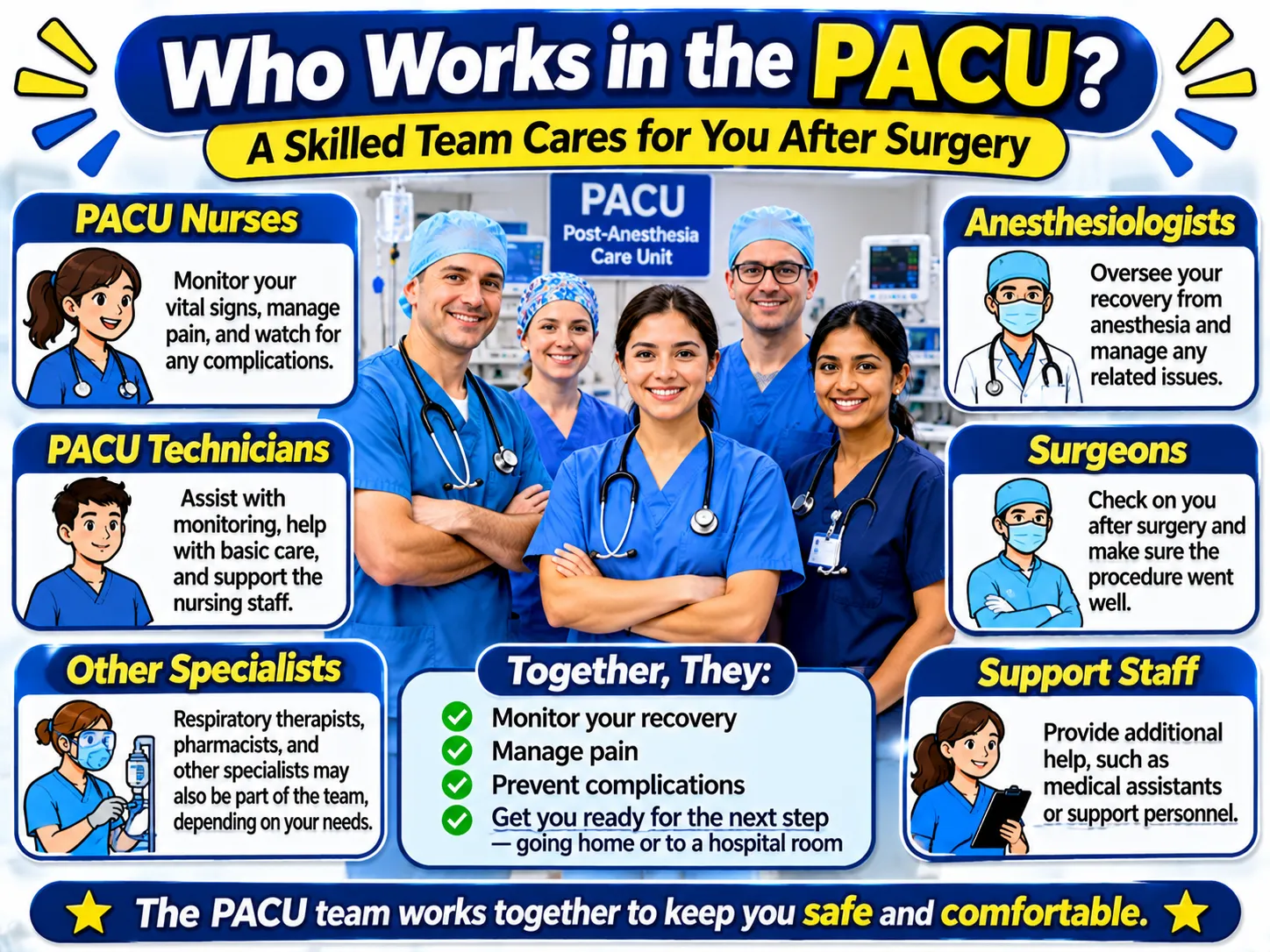
The PACU team includes trained health care workers who help patients recover after anesthesia.
PACU Nurses
PACU nurses monitor patients, check vital signs, assess pain, give ordered medicines, and watch for changes in the patient’s condition.
They also help prepare patients for the next stage of care.
Anesthesiologists and Other Anesthesia Professionals
Anesthesiologists and other qualified anesthesia professionals may assess patients, manage anesthesia-related problems, and guide treatment when needed.
Their role depends on the hospital’s staffing model and the patient’s condition.
Surgeons and Other Medical Staff
The surgeon or procedure team may provide instructions about wound care, movement, eating, drinking, and other parts of recovery.
Other staff members may help with patient transport, respiratory care, or additional treatment when needed.
What Is the Difference Between PACU and ICU?
PACU and ICU are both hospital units where patients may receive close monitoring. However, they have different main purposes.
PACU means Post-Anesthesia Care Unit. It focuses on recovery after anesthesia and surgery.
ICU means Intensive Care Unit. It provides intensive treatment and monitoring for patients who are critically ill or need advanced support.
PACU vs. ICU
| Feature | PACU | ICU |
| Full name | Post-Anesthesia Care Unit | Intensive Care Unit |
| Main purpose | Recovery after anesthesia | Care for critically ill patients |
| Typical patients | Patients waking up after surgery | Patients who need intensive medical care |
| Length of stay | Often minutes to hours | May be hours, days, or longer |
| Level of care | Close recovery monitoring | Intensive monitoring and treatment |
These are general differences. Some patients may go from the operating room directly to the ICU if their condition requires it. Others may move from the PACU to the ICU after the first stage of recovery.
A PACU stay alone does not mean a patient is critically ill.
What Is the Difference Between PACU and a Hospital Room?
A PACU is usually a short-term recovery area where patients are watched closely after anesthesia.
A regular hospital room is used for ongoing care, rest, treatment, and recovery after the patient is ready to leave the PACU.
In a hospital room, nurses continue to check the patient’s condition, but the type and frequency of monitoring may differ from the PACU.
For example, a patient who has knee surgery may first recover in the PACU. After meeting the required safety checks, the patient may move to a hospital room for pain control, movement practice, and further recovery.
Some patients who have outpatient surgery may go home instead of staying overnight.
What Does PACU Mean in Nursing?
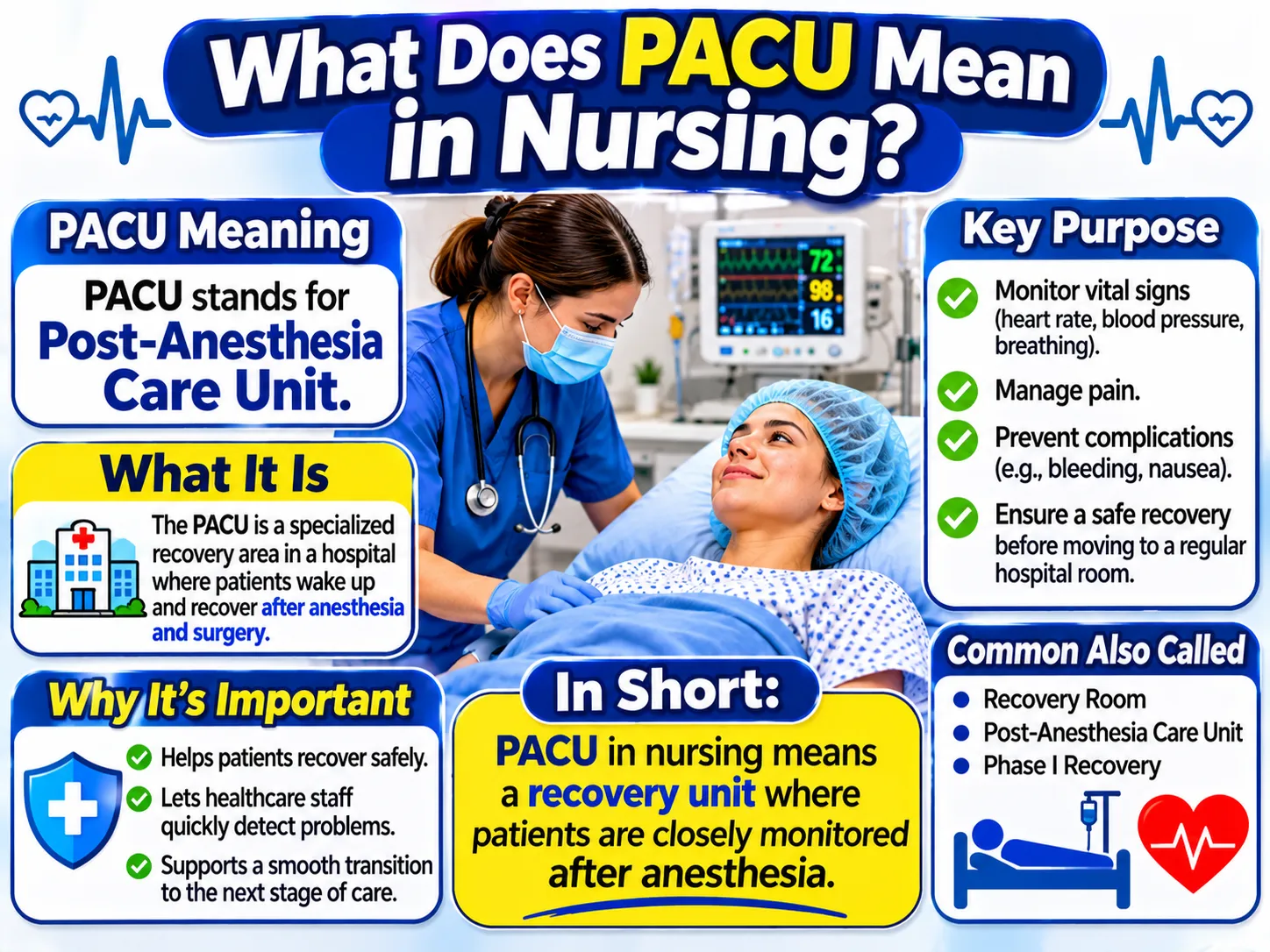
In nursing, PACU refers to the Post-Anesthesia Care Unit and the specialized care provided there.
PACU nursing focuses on keeping patients safe as they recover from anesthesia. It requires close attention because a patient’s condition can change quickly during this period.
Common PACU Nurse Duties
PACU nurses may:
- Check breathing and oxygen levels.
- Monitor heart rate and blood pressure.
- Assess pain and give ordered medicine.
- Watch for nausea, vomiting, or bleeding.
- Check alertness and response to instructions.
- Keep the patient warm and comfortable.
- Report changes to the medical team.
- Help decide when the patient is ready for the next stage of care.
PACU nurses work with other members of the medical team to follow the patient’s recovery plan.
What Is a PACU Nurse?
A PACU nurse is a registered nurse who cares for patients recovering from anesthesia. The nurse needs the right education, clinical skills, and training for the role.
The job calls for careful observation, clear communication, and the ability to respond to changes in a patient’s condition.
What Are PACU Discharge Criteria?
PACU discharge criteria are the safety checks a patient must meet before leaving the unit.
The exact criteria vary by hospital, procedure, and type of anesthesia. The team considers the patient’s overall condition rather than relying on just one measurement.
Common checks may include:
- Stable vital signs
- Adequate breathing and oxygen levels
- A suitable level of alertness
- Pain that is controlled well enough for the next stage of care
- Nausea and vomiting that are controlled
- No signs of a problem that requires continued PACU treatment
- Any procedure-specific checks required by the care team
Some patients may need to drink fluids, move safely, or meet other requirements before going home. These steps are not necessary for every patient.
The care team makes the final decision about when it is safe to transfer or discharge the patient.
Can Family Members Visit the PACU?
Family visits depend on the hospital’s rules, available space, and the patient’s condition.
Some hospitals allow one visitor for a short time. Others limit visits to protect patient privacy, reduce infection risks, and give staff room to provide care.
If you are waiting for someone who has had surgery, ask the hospital staff about its PACU visitor policy.
You can also ask whether the patient has arrived in the recovery unit and when updates may be available. Staff may not be able to share information until they confirm who is allowed to receive it.
What Should Patients Expect After Leaving the PACU?
Leaving the PACU means the patient has reached the next stage of care. It does not mean that every effect of anesthesia has worn off.
Depending on the procedure, a patient may still feel tired, sore, dizzy, or mildly nauseated.
After Moving to a Hospital Room
The care team may continue to check vital signs, manage pain, and help the patient begin eating, drinking, or moving when appropriate.
The patient may also receive instructions about medicines, wound care, and activity.
After Outpatient Surgery
Patients who go home may need someone to drive them. After many procedures involving anesthesia or sedation, patients are told not to drive or make important decisions for a period set by their care team.
Follow the discharge instructions closely. The rules can differ based on the medicines used and the type of procedure.
When Should a Patient Get Medical Help?
After discharge, contact the medical team if you have concerns or symptoms that match the warning signs in your instructions.
Seek emergency help for severe trouble breathing, chest pain, fainting, heavy bleeding, or another serious or rapidly worsening symptom.
Do not wait for a routine follow-up if you think the patient may be in danger.
Common PACU Terms You May Hear

Health care workers may use several terms when discussing recovery after anesthesia.
- Anesthesia: Medicine used to prevent pain or change awareness during a procedure.
- Vital signs: Basic body measurements, such as heart rate, blood pressure, and breathing.
- Oxygen saturation: A measure of how much oxygen the blood is carrying.
- Postoperative: The period after surgery.
- Sedation: Medicine that helps a person relax or become sleepy.
- Recovery room: A common name for the PACU.
- Discharge: Permission to leave a unit or health care facility.
- Monitoring: Checking a patient’s condition over time.
Knowing these terms can make conversations with doctors and nurses easier to follow.
Why Is the PACU Important?
The PACU is important because the period after anesthesia calls for careful observation. Patients may still be affected by medicines and may need help as they wake up.
The recovery team can spot changes, treat symptoms, and decide whether a patient needs more care before moving to the next stage.
For families, understanding the PACU can also reduce confusion. If a nurse says a loved one is in the PACU, it usually means they are in the recovery area after a procedure. It does not, by itself, tell you whether the surgery went well or whether there are complications.
For updates about a specific patient, the treating medical team is the best source of information.
Article Summary
- PACU meaning: Post-Anesthesia Care Unit.
- Other name: Recovery room.
- Main purpose: To monitor patients as they recover from anesthesia.
- Common checks: Breathing, oxygen levels, heart rate, blood pressure, alertness, and pain.
- Typical stay: Often 30 minutes to a few hours, depending on the patient and procedure.
- Next step: The patient may go to a hospital room, go home after outpatient care, or receive further treatment.
- PACU vs. ICU: PACU focuses on recovery after anesthesia, while ICU provides intensive care for critically ill patients.
FAQs
1. What does PACU stand for in a hospital?
PACU stands for Post-Anesthesia Care Unit. It is the area where patients receive close monitoring after anesthesia and surgery.
2. Is PACU the same as a recovery room?
Yes. PACU is the medical term for a post-anesthesia recovery area. Many people simply call it the recovery room.
3. How long does a patient stay in the PACU?
Many patients stay for about 30 minutes to a few hours. The length of stay depends on the procedure, anesthesia, symptoms, and recovery progress.
4. Is the PACU a serious or dangerous place?
No. The PACU is a routine part of care after many surgeries. Patients are monitored there because they may need help as the effects of anesthesia wear off.
5. What happens to patients in the PACU?
Staff monitor vital signs, breathing, oxygen levels, alertness, and pain. They may also treat nausea, vomiting, chills, or other symptoms.
6. What is the difference between PACU and ICU?
The PACU focuses on recovery after anesthesia. The ICU provides intensive monitoring and treatment for patients who are critically ill or need advanced support.
7. What does PACU mean in nursing?
In nursing, PACU refers to the Post-Anesthesia Care Unit. PACU nurses care for patients as they wake up, monitor their condition, manage symptoms, and help prepare them for the next stage of care.
8. Can a patient go straight home from the PACU?
Yes. After outpatient surgery, some patients can go home once they meet the required discharge criteria and have the support and transport they need.
9. Why would a patient stay longer in the PACU?
A patient may need more time because of pain, nausea, sleepiness, changes in vital signs, or a need for extra monitoring. A longer stay does not automatically mean there is a serious complication.
10. Does being in the PACU mean surgery went well?
Not by itself. Most patients go to the PACU for routine recovery after anesthesia, but the location alone does not show the outcome of surgery. Ask the medical team for an update about the patient’s condition.
Add a brief medical disclaimerClarify outpatient discharge instructions
Conclusion
The PACU meaning is Post-Anesthesia Care Unit, a special hospital area where patients are monitored after surgery or a procedure involving anesthesia. It is also commonly called the recovery room.
In the PACU, nurses and other health care professionals check breathing, vital signs, alertness, and pain. They treat symptoms and make sure the patient is ready for the next stage of care.
Some patients stay for a short time before going home, while others need a hospital room or more advanced care.
If you hear that someone is in the PACU, remember that this is a normal part of care after many procedures. The patient’s care team can explain their progress and answer questions about their recovery.
Read More Posts
EYP Meaning: What Does EYP Mean in Text and Slang?
DILF Meaning: What Does DILF Stand For in Slang
Petty Meaning: What Does Petty Mean in Slang and Everyday Life?

Emma Wilson is a writer at MeaningVibz who enjoys exploring emoji meanings, texting expressions, and online communication trends. She helps readers understand how emojis and slang are used in different situations by providing clear explanations and relatable examples for everyday messaging.