
What Does Clout Mean?
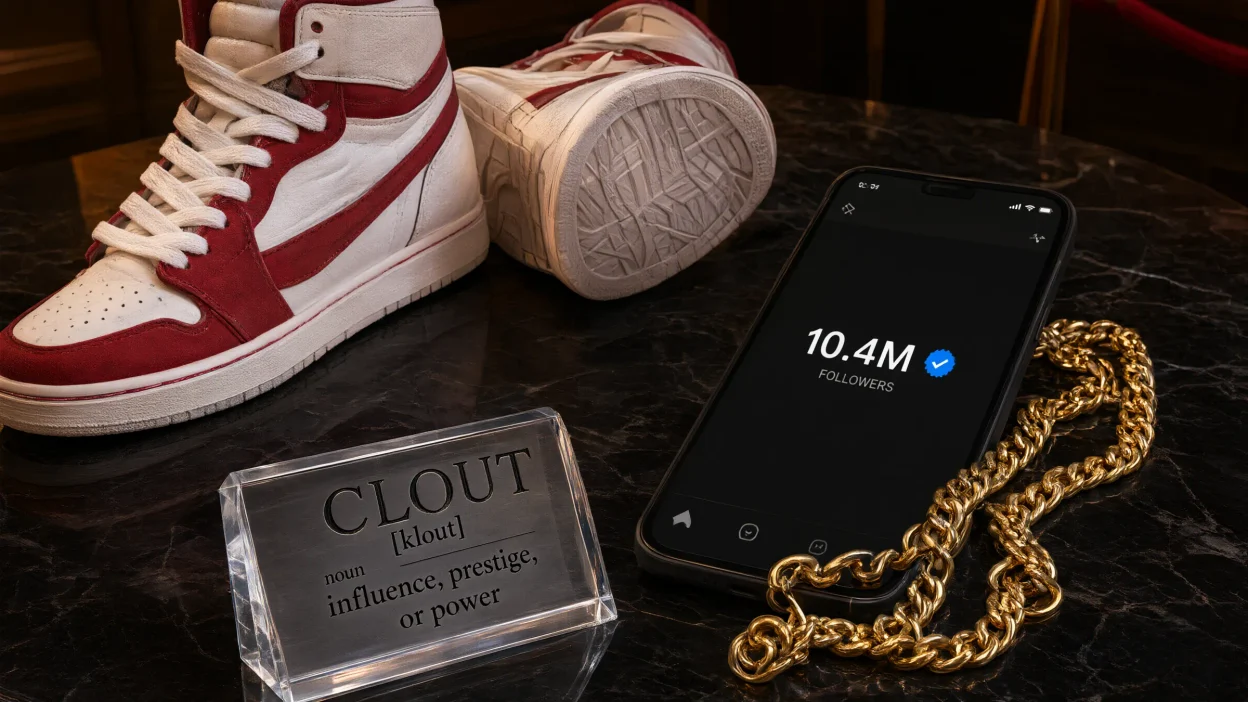
Clout means power, influence, or the ability to affect what other people think or do.
In modern slang, clout can also mean popularity, fame, attention, or social status, especially online.
For example:
- “She has a lot of clout in the music industry.”
→ She has strong influence in the music industry. - “He posted that video for clout.”
→ He posted it mainly to get attention or become more popular. - “That creator has serious clout on TikTok.”
→ That creator has a strong online influence.
The word is usually a noun, but clout can also be used as a verb in informal English when it means to hit someone or something.
Cambridge Dictionary lists both the influence meaning and the informal “hit” meaning.
Clout Meaning in Slang
In slang, clout usually means popularity, influence, recognition, or social power.
This use is common in conversations about:
- Social media
- TikTok
- YouTube
- X
- Celebrities
- Music
- Sports
- Online communities
- Influencers
When someone says, “He has clout,” they usually mean that the person is important, popular, well-known, or influential.
For example:
“She has enough clout to make that trend popular.”
This means her influence is strong enough to help make something popular.
Slang use can be positive or negative. Saying someone “has clout” can be a compliment. Saying someone is “doing it for clout” often suggests that the person is seeking attention for the wrong reasons.
Dictionary.com describes modern slang clout as influence, power, popularity, or social standing and notes its strong connection with social media culture.
What Does Clout Mean in Texting?
In texting, clout usually means influence, popularity, status, or attention.
The exact meaning depends on the message.
For example:
“Why are you doing this?”
“For clout.”
This means:
“I am doing this to get attention, popularity, or recognition.”
Another example:
“He has no clout here.”
This means:
“People here do not see him as influential or important.”
If a friend says:
“She got clout after that video went viral.”
They mean that the person gained more attention, popularity, or influence because of the viral video.
What Does Clout Mean on Social Media?
On social media, clout means online influence, popularity, recognition, or the ability to attract attention.
A person may have clout because they have:
- A large audience
- Strong engagement
- A trusted reputation
- Viral content
- A respected skill
- Celebrity status
- Influence within a specific community
However, clout does not always mean having the most followers.
Someone with 20,000 followers may have more influence in a specific community than someone with 1 million followers who has little trust or engagement.
That is why clout is more about influence than simple follower count.
SocialBee similarly defines social-media clout as the influence or power someone has to attract engagement, shape conversations, and affect trends.
What Does “For Clout” Mean?
“For clout” means doing something mainly to gain attention, popularity, influence, or social status.
For example:
“He started an argument online for clout.”
The speaker believes the person wanted attention rather than solving the problem.
Another example:
“She posted the celebrity photo for clout.”
This suggests she shared the photo because it could make her seem more important or popular.
The phrase can be neutral in some situations, but it often has a negative tone.
What Does “Clout Chasing” Mean?
Clout chasing means trying hard to gain attention, popularity, fame, or influence.
A person who repeatedly does this may be called a clout chaser.
For example:
“He keeps starting online drama because he is clout chasing.”
This means the person may be creating drama mainly to attract attention.
Clout chasing can happen through:
- Starting online arguments
- Posting shocking content
- Creating fake drama
- Using a famous person’s name for attention
- Making controversial posts
- Trying to go viral
- Joining popular trends only to gain attention
Not every attempt to become popular is clout chasing. The phrase usually suggests that attention is the main goal, especially when the behavior seems forced or dishonest.
Dictionary.com notes that “clout chaser” is often used for people who seek attention or try to appear more socially important online.
What Is a Clout Chaser?
A clout chaser is someone who tries to gain clout, usually through attention, controversy, popularity, or association with influential people.
For example:
“He only talks about famous people because he is a clout chaser.”
The speaker thinks the person is using famous people to gain attention.
Another example:
“She started unnecessary drama just to become a clout chaser.”
In this case, the person is believed to be seeking attention rather than acting for a genuine reason.
The term is usually negative.
Is Clout a Good Thing or a Bad Thing?
Clout can be either positive or negative.
It depends on how the word is being used.
Positive clout
Clout can mean respected influence.
For example:
“The scientist has a lot of clout in her field.”
This suggests that people respect her knowledge and opinions.
Negative clout
Clout can also mean attention gained through questionable behavior.
For example:
“He only posted that story for clout.”
This suggests that his main goal was attention.
So, having clout is not automatically bad. The negative meaning usually comes from the way someone tries to get it.
Clout vs. Popularity
Clout and popularity are related, but they are not exactly the same.
Popularity means being liked, known, or noticed by many people.
Clout focuses more on influence or power.
For example, a person could be popular but have little influence.
Another person might have a smaller audience but have strong influence within a certain group.
Consider this example:
“She is popular, but he has more clout in the industry.”
This means she may be better known by the public, while he has more power or influence among important people in that field.
Clout vs. Influence
The words clout and influence are very close in meaning.
Both can describe someone’s ability to affect people, decisions, or events.
However, clout is more informal.
Compare:
- “She has a lot of influence in the company.”
- “She has a lot of clout in the company.”
Both sentences suggest that she has power and influence.
The second sentence sounds more casual.
Cambridge defines clout as “power and influence over other people or events,” making influence one of its main standard meanings.
Clout Meaning in TikTok
On TikTok, clout usually refers to popularity, attention, or influence gained through content and audience reach.
Someone may be described as having clout if their videos:
- Get many views
- Attract strong engagement
- Start trends
- Influence other creators
- Gain public attention
You may also see phrases such as:
- “Doing it for clout”
- “Clout chaser”
- “He wants clout”
- “She has clout”
- “That gave him clout”
For example:
“He made that video just for clout.”
The speaker believes the creator wanted attention rather than sharing the video for a genuine reason.
Clout Meaning on Instagram
On Instagram, clout can refer to social influence, online popularity, or status.
For example:
“She gained a lot of clout after her Reel went viral.”
This means the viral Reel increased her online attention and influence.
A person may also gain clout through:
- Followers
- Viral Reels
- Brand partnerships
- Celebrity connections
- Strong engagement
- Community reputation
Again, clout is not simply a follower count. Influence and recognition matter too.
Clout Meaning in Business
Clout is not only internet slang.
In business, clout means influence or power that can affect decisions and outcomes.
For example:
“The company has enough clout to negotiate a better deal.”
This means the company has enough influence or power to negotiate effectively.
Another example:
“She has a lot of clout in the technology industry.”
This means she is influential and respected in that industry.
This is closer to the traditional meaning of the word than the social-media slang meaning.
Clout Meaning in Politics
In politics, clout means political influence or power.
For example:
“The senator has considerable political clout.”
This means the senator has influence over political decisions or other politicians.
The traditional use of clout in political and professional settings has existed long before modern social media slang. Dictionary.com notes that the word was used for political influence as far back as the 19th century.
Where Did the Word Clout Come From?
The history of clout is older than today’s internet slang.
The word has had several meanings over time. Its history includes senses connected with hitting and force, while the influence meaning developed into established English usage.
Today, two major meanings are especially important:
- Power or influence
- A hit or blow
Modern internet slang developed from the idea of influence and turned it into a word commonly associated with popularity, attention, and online status.
Dictionary.com explains that the influence sense predates Instagram and later became strongly associated with social media culture.
How to Use Clout in a Sentence
Here are simple examples of the word clout in different situations.
Influence
“She has a lot of clout at work.”
Meaning: She has a lot of influence at work.
Social media
“That creator has serious clout online.”
Meaning: That creator is very influential online.
Attention
“He posted the story for clout.”
Meaning: He posted it to gain attention or popularity.
Politics
“The group has political clout.”
Meaning: The group has political influence.
Business
“The brand has enough clout to attract major partners.”
Meaning: The brand has enough influence or reputation to attract important partners.
Clout chasing
“Stop clout chasing.”
Meaning: Stop trying so hard to get attention or popularity.
Clout Synonyms
Depending on the context, useful synonyms for clout include:
- Influence
- Power
- Authority
- Pull
- Status
- Prestige
- Popularity
- Recognition
- Fame
- Social influence
- Social power
- Importance
However, these words are not perfect replacements in every sentence.
For example, authority often means official power, while clout can mean informal influence.
Likewise, popularity means being well-liked or widely known, while clout focuses more on the ability to influence others.
Common Phrases With Clout
Here are some of the most common expressions you may see.
“Have clout”
Means to have influence or status.
“She has a lot of clout in the industry.”
“Gain clout”
Means to become more influential or popular.
“The creator gained clout after the video went viral.”
“Lose clout”
Means to lose influence, status, or attention.
“The controversy caused him to lose clout.”
“For clout”
Means for the purpose of gaining attention or popularity.
“He did it for clout.”
“Clout chasing”
Means trying to gain attention or influence.
“Everyone knows he is clout chasing.”
“Clout chaser”
Means a person who seeks clout.
“People called him a clout chaser.”
Is Clout the Same as Fame?
No.
Fame means being widely known. Clout means having influence or social power.
A celebrity may be famous but have little influence in a particular field.
A respected expert may have strong clout without being famous to the general public.
For example:
“He is not famous, but he has a lot of clout among professional photographers.”
This means the person may not be widely known, but people in that community respect his opinion and listen to him.
Is “Clout” a Bad Word?
No. Clout is not inherently a bad word.
The word itself is neutral.
Its tone depends on the context.
For example:
“She has clout in the fashion industry.”
This is usually positive or neutral.
But:
“He is only doing that for clout.”
This is usually critical.
The related phrase clout chasing is more often negative because it suggests that someone is seeking attention in an artificial or excessive way.
What Does Clout Mean in Simple Terms?
Clout means influence, power, popularity, or social status.
Online, it often means having enough attention or influence that people notice, follow, or listen to you.
What Does It Mean to Do Something for Clout?
It means doing something mainly to gain attention, popularity, fame, or influence.
For example:
“She posted the argument for clout.”
This suggests that getting attention was her main reason for posting it.
What Does Clout Mean on TikTok?
On TikTok, clout usually means online popularity, attention, or influence.
Someone can gain clout when their content becomes widely viewed, shared, or discussed.
What Is a Clout Chaser?
A clout chaser is someone who tries to gain popularity, attention, or influence, often by using controversy, drama, trends, or connections with famous people.
The term is usually negative.
Is Clout the Same as Popularity?
Not exactly.
Popularity means being well-known or liked by many people. Clout means having influence or social power.
A person can be popular without having much influence, and someone can have strong clout within a small community without being widely famous.
What Does “You Have Clout” Mean?
If someone says “you have clout,” they usually mean you have influence, status, popularity, or the ability to get people’s attention.
For example:
“You have clout in this community.”
This means people recognize and respect your influence in that community.
What Does “No Clout” Mean?
“No clout” means having little or no influence, status, popularity, or social power.
For example:
“He has no clout in the industry.”
This means people in that industry do not see him as influential.
Related Searches for Clout Meaning
People searching for clout meaning may also want to understand these related phrases:
- Clout meaning slang
- Clout meaning in text
- Clout meaning on social media
- Clout meaning TikTok
- Clout meaning Instagram
- What does clout mean?
- What does clout mean in slang?
- What does clout chasing mean?
- What is a clout chaser?
- Doing it for clout meaning
- Clout meaning in texting
- Clout synonym
- Clout definition
- Social media clout
- Online clout
These searches all point to a similar goal: understanding how clout is used in modern conversation and online culture.
Clout Meaning: Quick Examples
| Phrase | Simple Meaning |
| “He has clout.” | He has influence or status. |
| “She gained clout.” | She became more influential or popular. |
| “He lost clout.” | He lost influence or status. |
| “They did it for clout.” | They wanted attention or popularity. |
| “He is clout chasing.” | He is trying to gain attention. |
| “She is a clout chaser.” | She seeks attention or influence. |
| “He has political clout.” | He has political influence. |
| “She has social media clout.” | She has online influence. |
| “They have no clout.” | They have little influence or status. |
FAQs About Clout Meaning
What is the basic meaning of clout?
The basic meaning of clout is power or influence over people, decisions, or events.
In slang, it can also mean popularity, attention, or online status.
What does clout mean in slang?
In slang, clout means popularity, influence, fame, attention, or social status, especially on social media.
What does clout mean in texting?
In texting, clout usually means influence, popularity, or attention. “For clout” usually means doing something to gain attention.
What does clout mean on social media?
On social media, clout refers to someone’s online influence, recognition, popularity, or ability to attract attention.
What does clout chasing mean?
Clout chasing means trying to gain attention, popularity, influence, or fame, often through dramatic or controversial behavior.
Is a clout chaser a bad thing?
Usually, clout chaser has a negative meaning. It suggests that someone is seeking attention mainly for personal popularity or status.
Can a normal person have clout?
Yes. A person does not need to be famous to have clout. Someone can have strong influence within a workplace, friend group, online community, industry, or hobby.
Does clout mean money?
Not directly. Clout means influence or status, not money. A wealthy person may have clout, but wealth and clout are different things.
Does clout mean fame?
Not exactly. Fame means being widely known, while clout focuses more on influence, power, or social status.
Is clout positive or negative?
It can be either. Having clout can be positive or neutral, while clout chasing is usually negative.
Article Summary
Clout mainly means power, influence, or social status. In modern slang, especially online, it often refers to popularity, attention, recognition, or influence on social media.
If someone has clout, they have influence or status. If someone does something for clout, they are usually trying to gain attention or popularity.
A clout chaser is someone who actively seeks that attention, often in a way that others view as fake or excessive.
The key difference is simple:
Clout = influence or status.
For clout = to gain attention or popularity.
Clout chasing = actively trying to gain that attention.
Conclusion
The clout meaning is simple once you look at the context. In standard English, clout means power or influence.
In modern slang, it often means popularity, attention, fame, or social influence, especially online.
You may see the word in texts, TikTok comments, Instagram posts, YouTube discussions, music, sports, and everyday conversations.
Phrases such as “for clout,” “clout chasing,” and “clout chaser” usually focus on the desire to gain attention or status.
The easiest way to remember it is this: clout is the influence or status you have, while clout chasing is the effort to get more of it.

Emma Wilson is a writer at MeaningVibz who enjoys exploring emoji meanings, texting expressions, and online communication trends. She helps readers understand how emojis and slang are used in different situations by providing clear explanations and relatable examples for everyday messaging.