

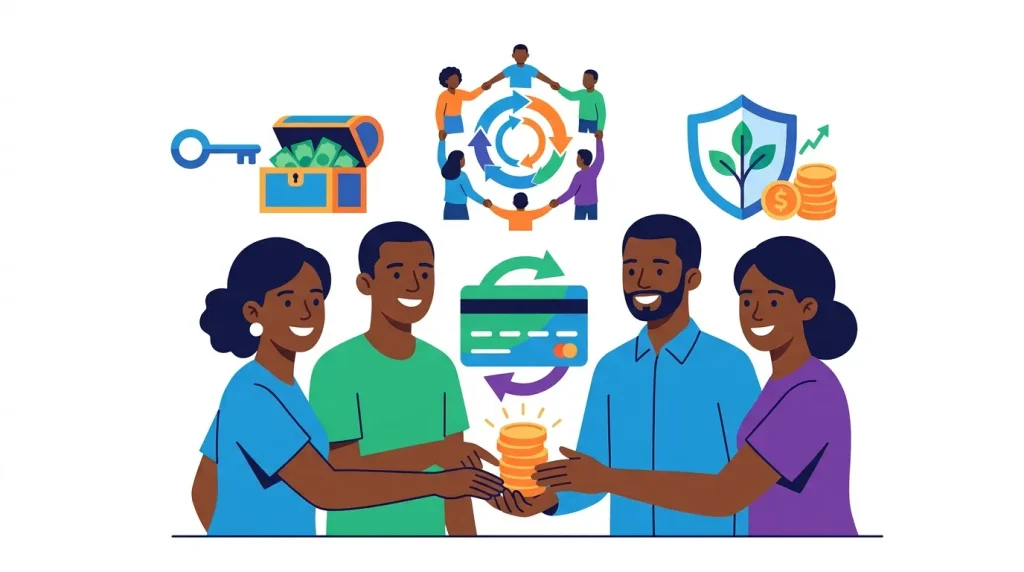
The word chama most commonly refers to a savings or investment group in East Africa, particularly in Kenya. Members of a chama put money together to save, invest, or meet shared financial goals.
For example, a group of friends may agree to contribute $20 each month. They can use the money to start a small business, buy land, or help a member who needs support. That group may be called a chama.
A chama is more than a place to save money. It can also be a way for people to build trust, share ideas, and work toward a common goal.
However, the word does not have the same meaning in every language or setting. The context is important when deciding what someone means by chama.
Simple Definition of Chama
In simple words, a chama is a group of people who join together to save money, invest, or support one another.
Chama Meaning in One Sentence
A chama is a community-based savings or investment group in which members pool their money to reach shared financial goals.
What Is the Origin of the Word Chama?
The word chama is widely used in Kenya and other parts of East Africa to describe informal savings and investment groups. These groups often grow from friendships, family ties, workplace connections, or local communities.
The word is associated with the Swahili language, where chama can mean an association, group, or society. Its exact meaning depends on how it is used.
Over time, the term became strongly linked to community savings groups. People use it to describe groups that collect regular contributions and decide together how to use the funds.
These groups reflect an important idea: people can often reach financial goals more easily when they work together.
Why Are Chamas Popular?
Chamas are popular because they can make saving feel easier and more social. Members agree on a plan and encourage one another to follow it.
Common reasons people join a chama include:
- Saving money on a regular basis
- Building funds for a future goal
- Starting or growing a business
- Investing in property or other assets
- Helping members during emergencies
- Sharing financial knowledge
- Building stronger community ties
The rules and goals can differ from one group to another. Some focus on savings, while others make investments or provide financial support to members.
How Does a Chama Work?
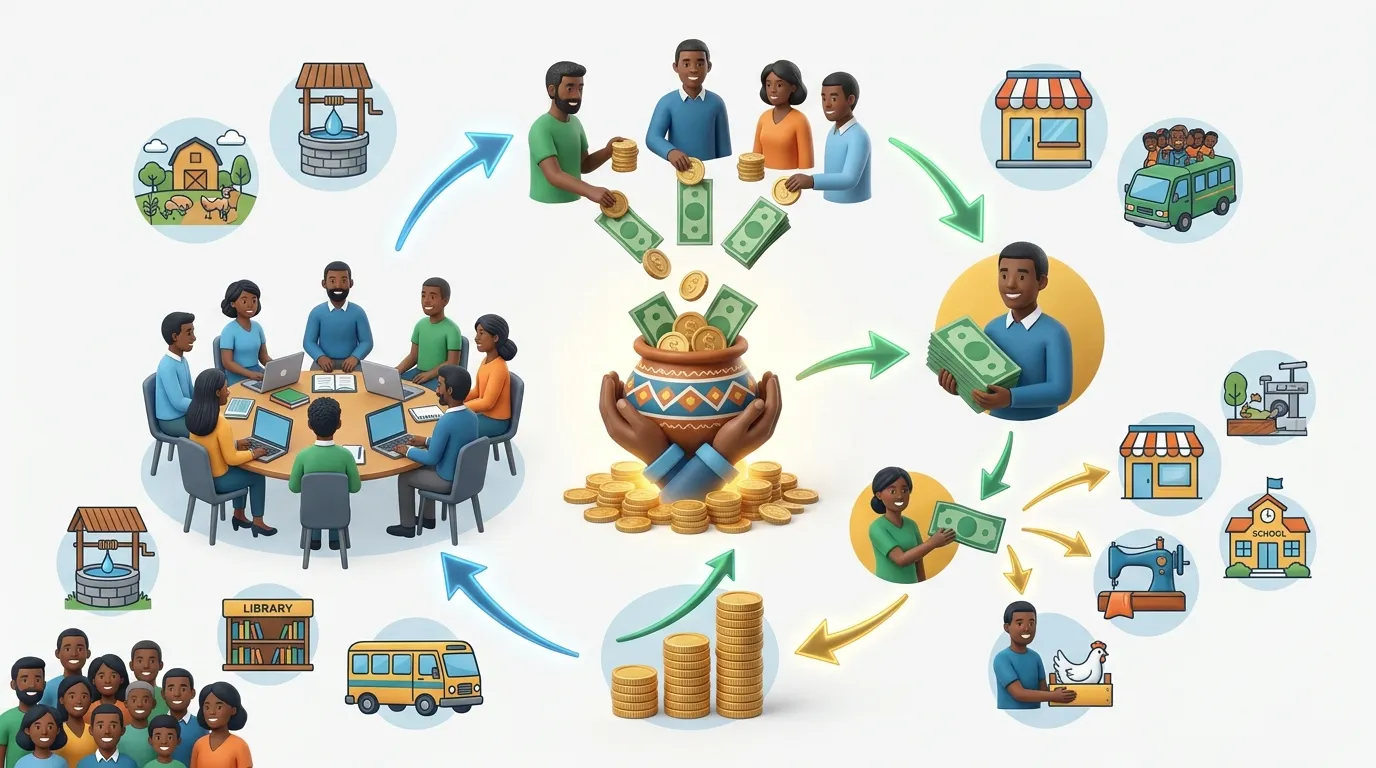
A chama works by bringing people together under a shared set of rules. Each member agrees to contribute money or other resources. The group then decides how to use those contributions.
The exact process depends on the type of chama.
1. Members Make Regular Contributions
Members agree on how much money to contribute and how often to pay. They may pay weekly, monthly, or on another schedule.
For example, 10 friends may each contribute $50 per month. Together, they collect $500 each month.
2. The Group Decides How to Use the Money
The members agree on the purpose of the money. They may save it for future needs, lend it to members, or invest it in a shared project.
Clear rules help everyone understand how the money will be used.
3. Members Receive Benefits
Depending on the group’s rules, members may take turns receiving the pooled money. Other groups keep the money together and use it for investments.
Some chamas also offer loans to members who need money for school fees, family needs, or business costs.
4. The Group Tracks Its Money
Members may choose a treasurer to keep records of payments and spending. Some groups use bank accounts or digital tools to track their funds.
Good records help members see where their money goes and reduce the chance of disputes.
What Are the Different Types of Chamas?
Not every chama works in the same way. Some focus on short-term savings, while others aim to build wealth over time.
Rotating Savings Groups
In a rotating savings group, members contribute money to a shared fund. One member receives the full amount during each round.
For example, five members each contribute $100 every month. The group collects $500, which goes to one member. The next month, another member receives the $500.
The process continues until every member has had a turn.
This type of group can help members plan for large expenses without taking out a bank loan. However, members need to trust one another and follow the agreed schedule.
Investment Chamas
An investment chama collects money to buy or build assets. Members may invest in land, property, shares, or a small business.
For example, eight friends may contribute money each month to build a shared investment fund. They can use the fund to buy an asset that they could not easily afford on their own.
Investment groups need clear agreements about ownership, costs, profits, and what happens if a member leaves.
Savings and Loan Groups
Some chamas collect savings and lend money to members. A member may borrow from the group and repay the loan under agreed terms.
For example, a member who needs money to repair a car may request a loan from the chama. The group reviews the request and decides whether to approve it.
These groups should set clear rules for loan amounts, repayment dates, and any fees or interest.
Welfare Chamas
Welfare chamas focus on helping members during important life events or difficult times.
They may collect money to support a member after a family loss, during an emergency, or when another agreed need arises.
The main goal is to share the burden and make sure members do not have to face every problem alone.
What Is the Difference Between a Chama and a Regular Savings Account?
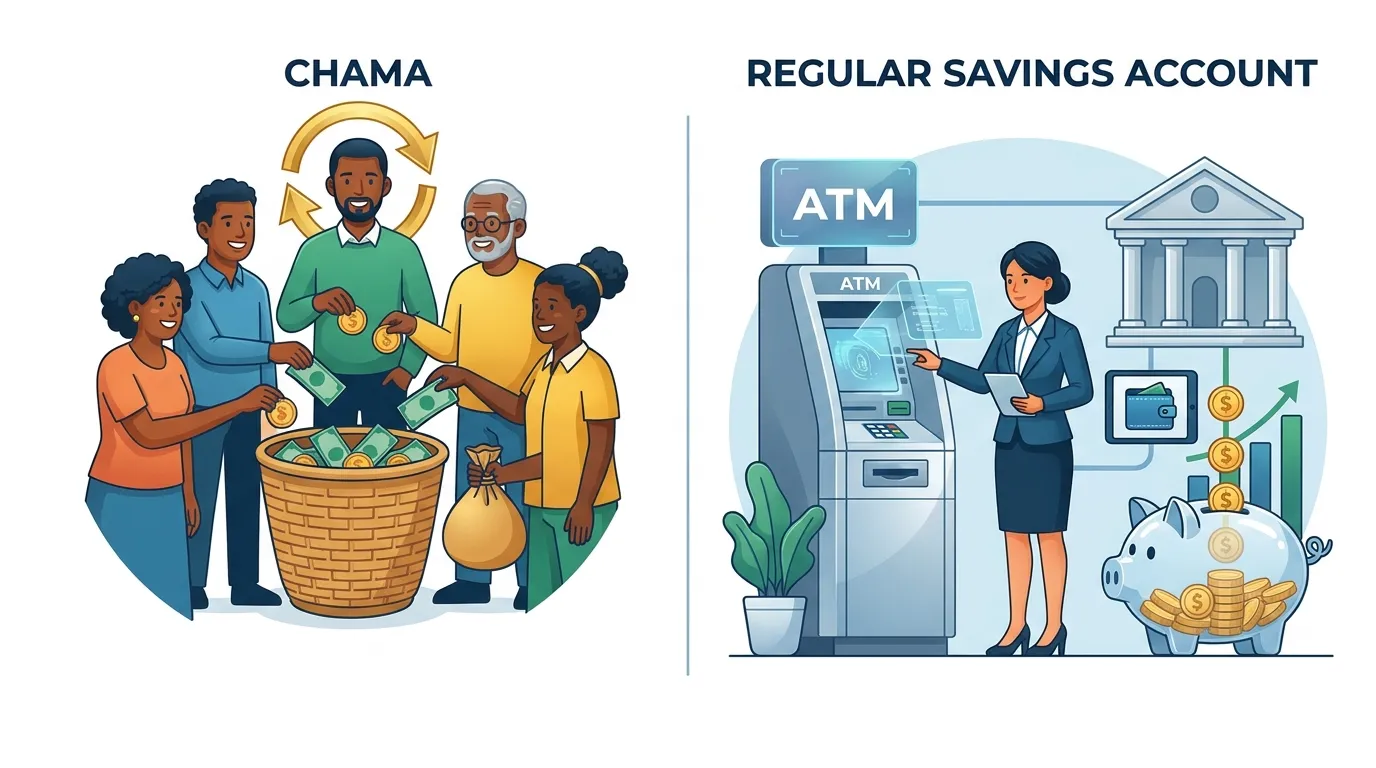
A chama and a savings account can both help people save money, but they work in different ways.
A savings account is held with a bank or other financial provider. A chama is a group arrangement in which members agree to save, invest, or support one another.
Here are the main differences:
| Feature | Chama | Savings account |
| Who takes part? | A group of members | An account holder or joint holders |
| How is it managed? | Under group rules | By the financial provider and account holder |
| Main purpose | Shared savings, loans, or investments | Saving and managing personal money |
| Decision-making | Members make group decisions | The account holder controls the money |
| Risk | Depends on group rules and activities | Depends on the account and provider |
| Social support | Often an important part | Usually not a main feature |
Neither option is best for every person. A chama may suit someone who enjoys saving with a group. A personal savings account may suit someone who wants more direct control over their money.
Some people use both to meet different goals.
What Are the Benefits of Joining a Chama?
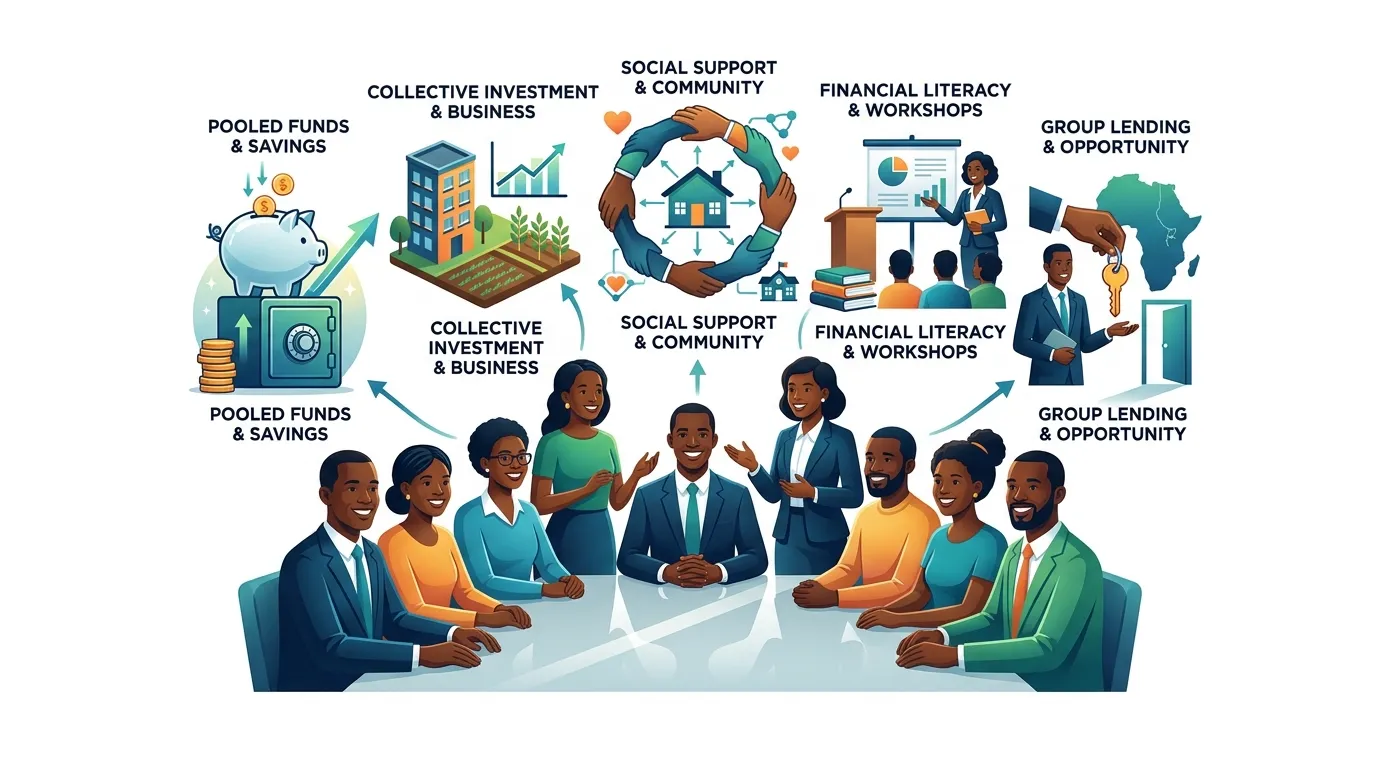
A chama can offer several benefits when it is well managed. Its value depends on the members, their goals, and the rules they follow.
It Encourages Regular Saving
Saving can be hard when you do it alone. Regular contributions create a routine and give members a shared goal.
For example, a person who struggles to save $25 each month may find it easier when the group agrees to make the same payment.
It Helps Members Reach Larger Goals
Pooling money can help a group work toward goals that may be difficult for one person to reach alone.
Members may use their funds to start a business, buy property, or invest for the future.
It Builds Community
Chama members often know one another through family, work, friendship, or local groups. Regular meetings give them a chance to share ideas and offer support.
This social connection can be just as important as the money.
It Can Improve Financial Knowledge
Members can learn from one another by discussing budgets, savings plans, and investment ideas.
Someone with business experience may help the group understand costs and profits. Another member may have useful knowledge about keeping records.
It May Offer Access to Group Loans
Some chamas let members borrow from their shared funds. This may provide another way to meet planned expenses or deal with an unexpected cost.
However, loan terms and available funds vary. Members should never assume that a loan will always be available.
What Are the Risks of Joining a Chama?
Although a chama can be useful, it is not risk-free. Members should understand the rules before contributing money.
Poor Money Management
A group can face problems if its leaders fail to keep clear records or use the money without approval.
To reduce this risk, members should review financial reports and agree on who can access the funds.
Missed Payments
If members stop paying their contributions, the group may not have enough money to meet its goals.
The group should decide in advance how to handle late payments and members who cannot pay.
Disagreements Between Members
People may disagree about investments, loans, or how to share profits. Written rules can help prevent small disagreements from becoming serious problems.
Investment Losses
An investment chama can lose money if an asset falls in value or a business fails. Pooling money does not guarantee a profit.
Members should understand the risks before agreeing to an investment.
Fraud or Misuse of Funds
Trust is important, but trust alone is not enough. A group should use receipts, clear records, agreed approval steps, and regular reviews.
Members should also understand whether their money is protected and what options they have if something goes wrong.
How to Start a Chama
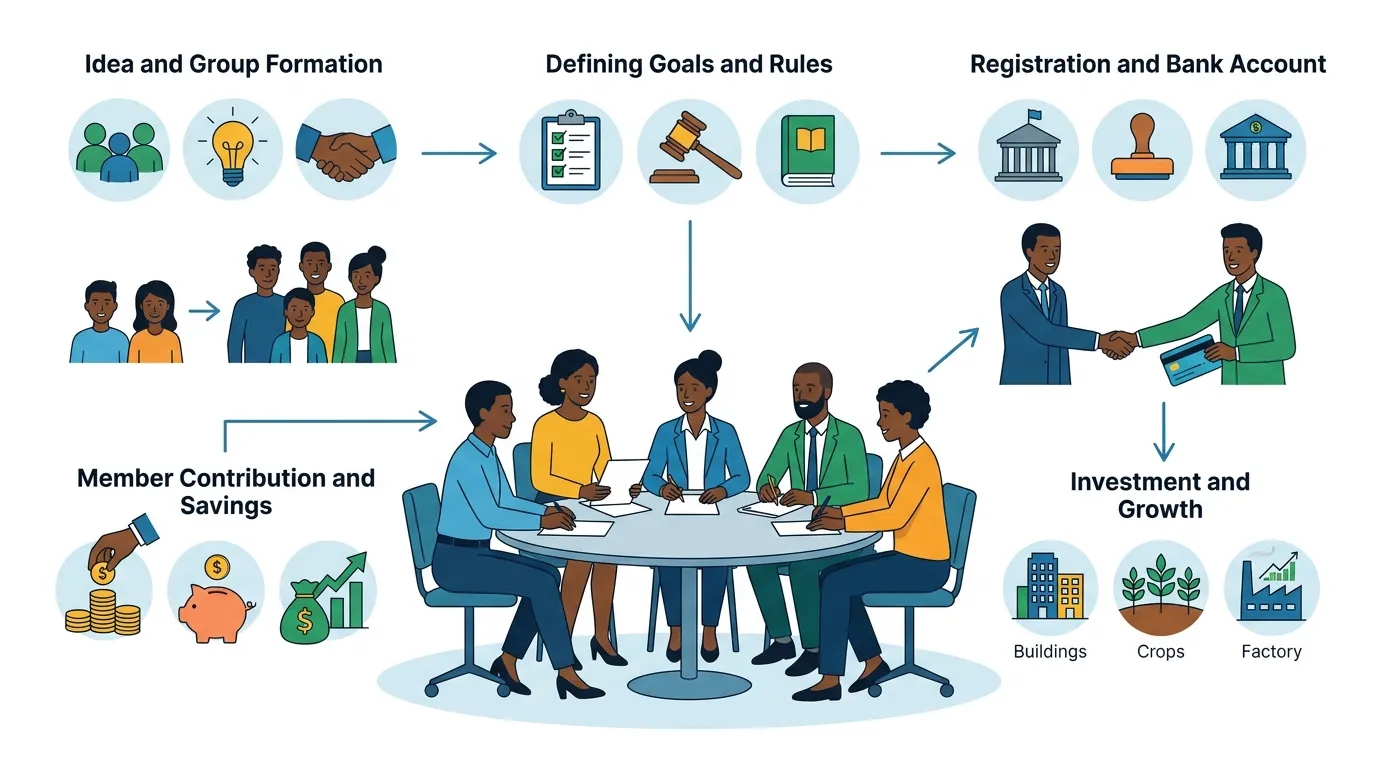
Starting a chama begins with a clear goal and people who are willing to work together.
Step 1: Choose a Clear Goal
Decide what the group wants to do. Will it save money, make loans, invest in property, or support members during emergencies?
A clear goal helps everyone understand why the group exists.
Step 2: Choose Members Carefully
Look for people who understand the goal and are willing to follow the rules. Members should be honest about what they can afford to contribute.
Step 3: Set Contribution Rules
Agree on the amount each person will pay, the payment schedule, and what happens if someone misses a payment.
Choose an amount that members can manage without putting their basic needs at risk.
Step 4: Write Down the Rules
Create a written agreement that explains how the group will operate.
It should cover membership, leadership, contributions, spending, loans, investments, withdrawals, and leaving the group.
Step 5: Choose Group Leaders
Members may choose a chairperson, treasurer, and secretary. Each role should have clear duties.
For example, the treasurer may track payments, while another member checks the records.
Step 6: Keep Clear Financial Records
Record every contribution, withdrawal, loan, and expense. Share reports with members so everyone can see how the group is doing.
Step 7: Review Progress Regularly
Meet often enough to check the group’s progress and discuss problems. Members should be able to ask questions and review important decisions.
If the group plans to register formally or make large investments, it should check the local legal and financial rules first.
How Do You Use the Word Chama in a Sentence?
The word chama is usually used as a noun. In everyday conversation, it often refers to a savings group, investment club, or association.
Here are some examples:
- “My friends and I started a chama to save for a business.”
- “She joined a chama to help her build better saving habits.”
- “Our chama plans to invest in land next year.”
- “The group meets every month to discuss its chama contributions.”
- “He borrowed money from his chama and agreed to repay it.”
- “Their chama helps members during family emergencies.”
These examples show how the word is used in sentences about money and group support.
In Swahili, chama can also refer to a general association, society, club, or political party. For example, chama cha siasa means a political party. The words around it help explain the intended meaning.
Is Chama a Slang Word?
No, chama is not simply a slang word. It is a recognized Swahili word that means an association, group, or society.
In East African English, especially in Kenya, it is commonly used to describe an informal savings or investment group.
People may use the word in casual conversations, text messages, and social media posts. However, its meaning is cultural and practical rather than just internet slang.
If you see someone write, “We are meeting with our chama,” they may mean that they are meeting with their savings group or association.
What Is the Difference Between Chama and Harambee?
Chama and harambee are related to group cooperation, but they do not mean exactly the same thing.
Chama refers to a group or association. In Kenya, it often means a group that saves or invests money together.
Harambee is a Swahili term commonly understood as “all pull together.” It expresses the idea of people working together to meet a shared need.
For example, a chama may collect regular contributions for a long-term investment. A harambee may involve people raising money for a community project or a family need.
Both ideas highlight cooperation, but chama usually describes the group, while harambee describes the act or spirit of coming together to help.
What Does Chama Mean in Different Languages and Contexts?
The meaning of chama can change depending on the language and setting.
In Swahili
In Swahili, chama can mean a group, association, club, society, or political party. The meaning depends on the phrase in which it appears.
In Kenyan Culture
In Kenya, chama often refers to a savings or investment group. Members pool their money to save, invest, provide loans, or support one another.
In Online Conversations
If someone uses chama in a social media post, the meaning depends on what they are discussing. A post about money or investing likely refers to a savings group. A post about politics may use the word to mean a political party or association.
As a Name or Place
Chama can also appear in personal names, place names, and other proper names. In those cases, it may not refer to a savings group at all.
The best way to understand the word is to look at the full sentence and the topic being discussed.
People Also Ask About Chama Meaning
What Does Chama Mean in English?
Chama is a Swahili word that can mean group, association, club, society, or political party. In Kenya, it often refers to a group of people who save or invest money together.
What Is a Chama in Kenya?
A chama in Kenya is a group that brings people together to save money, make investments, provide loans, or support members. Each group sets its own rules and goals.
What Is the Plural of Chama?
In English, the plural is usually chamas. In Swahili, the standard plural form of the noun is vyama, depending on the noun class and grammatical context.
Is a Chama the Same as a Bank?
No. A chama is a group arrangement, while a bank is a financial institution. A chama may offer group savings or loans, but its protections and services are not necessarily the same as those offered by a bank.
Can Anyone Join a Chama?
That depends on the group. Some accept new members who meet their rules, while others are limited to friends, relatives, coworkers, or people in a particular community.
Can You Lose Money in a Chama?
Yes. Members may lose money because of poor management, fraud, missed payments, or unsuccessful investments. Written rules and clear records can help reduce these risks, but they cannot remove every risk.
Is Chama Used in American English?
Chama is not a common everyday word for most Americans. It may appear in discussions about East African culture, savings groups, Swahili, or community finance.
FAQs
1. What Is the Simple Meaning of Chama?
Chama means a group or association. In Kenya, it commonly refers to a group of people who pool money to save, invest, or help one another.
2. Where Did the Word Chama Come From?
The word comes from Swahili, an East African language. It refers to a group or association and is widely used in Kenya to describe community savings groups.
3. Why Do People Join Chamas?
People join chamas to save regularly, build investments, access group loans, and support one another. The benefits depend on how the group is managed.
4. How Much Money Do You Need to Join a Chama?
There is no single amount. Each group sets its own contribution rules based on its goals and what its members can afford.
5. Are Chamas Only for Women?
No. Chamas have a strong history of supporting women, but people of different genders can take part. Membership depends on the group’s rules.
6. Is a Chama a Good Way to Save Money?
It can be useful for people who prefer shared goals and regular contributions. However, members should review the rules, financial records, and risks before joining.
7. What Is a Chama Meeting?
A chama meeting is a gathering where members discuss contributions, review records, make decisions, and plan savings or investments.
8. What Does Chama Mean in a Text Message?
In a text message, chama may refer to a savings group, club, association, or political party. Read the surrounding words to identify the intended meaning.
Article Summary
- Chama meaning: A group or association, often a savings or investment group in Kenya.
- Language of origin: Swahili.
- Common purpose: Saving money, investing, lending, and supporting members.
- Common types: Rotating savings groups, investment groups, savings and loan groups, and welfare groups.
- Main benefits: Regular saving, shared financial goals, and community support.
- Main risks: Poor management, missed contributions, disagreements, fraud, and investment losses.
- Important point: A chama is not automatically a bank or a guaranteed way to make money.
Conclusion
The word chama has a simple meaning, but it can describe several types of groups. In Swahili, it means a group or association.
In Kenya, it is widely used for a savings or investment group in which members pool their money and work toward shared goals.
Chamas can help people save, invest, and support one another. They can also create risks if members do not follow clear rules or manage their money well.
When you see the word chama in a message, article, or conversation, look at the context to understand its exact meaning.
If the topic is money, it most likely refers to a community savings or investment group. If the topic is politics or another association, it may have a broader meaning.
Understanding the chama meaning gives you a better view of the word, its Swahili roots, and its role in East African community life.

Emma Wilson is a writer at MeaningVibz who enjoys exploring emoji meanings, texting expressions, and online communication trends. She helps readers understand how emojis and slang are used in different situations by providing clear explanations and relatable examples for everyday messaging.