Introduction
Have you ever heard a Muslim say “Subhanallah” and wondered what it really means?
You may hear this beautiful Arabic phrase during prayer, after good news, when someone sees something amazing, or while remembering Allah.
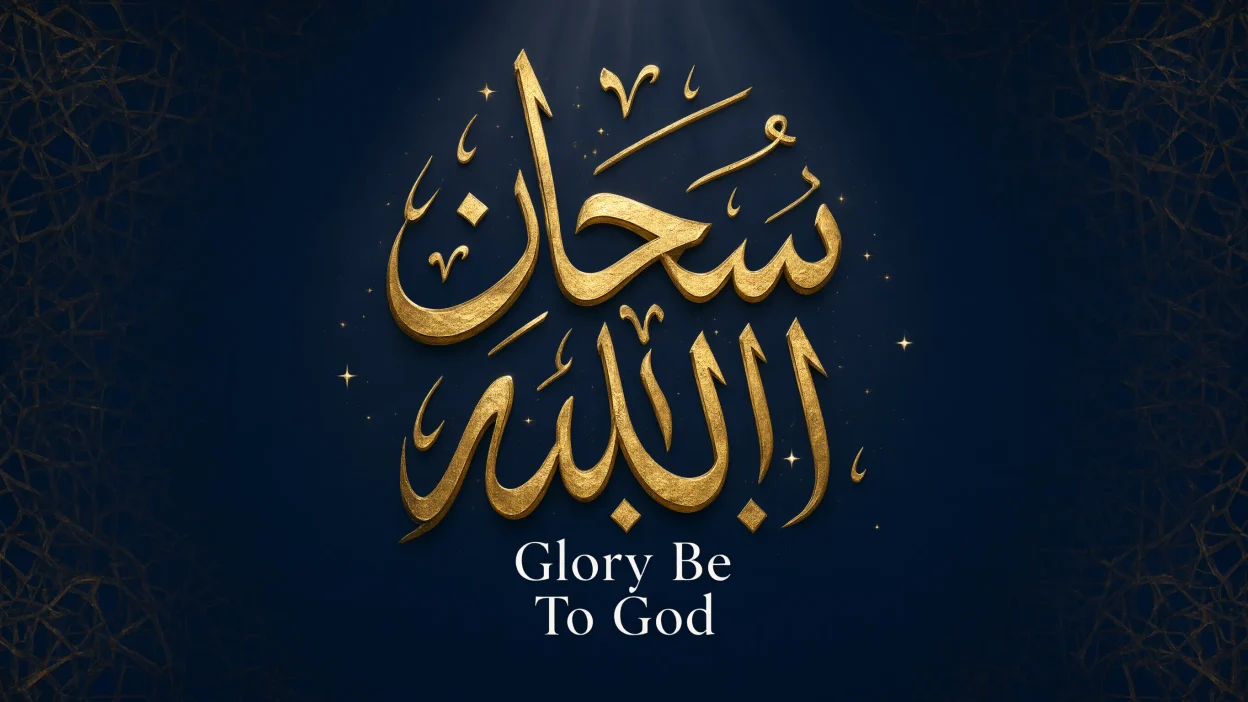
The Subhanallah meaning is commonly translated as “Glory be to Allah.” A fuller meaning is that Allah is free from every imperfection, weakness, or fault.
It is a short phrase, but it carries a deep message about the greatness and perfection of Allah.
In this guide, you will learn what Subhanallah means in English and Arabic, how to pronounce it, when Muslims say it, what it means as dhikr, and how it differs from phrases such as Alhamdulillah, Mashallah, and Allahu Akbar.
You will also find simple examples and answers to common questions.
What Does Subhanallah Mean?
Subhanallah (سُبْحَانَ اللَّهِ) means:
“Glory be to Allah.”
It can also be understood as:
- Allah is free from every imperfection.
- Allah is far above every flaw or weakness.
- Allah is perfect and exalted.
- Allah is free from anything unworthy of Him.
The phrase is an expression of tasbih, which means glorifying and declaring the perfection of Allah.
Islamic explanations of the phrase emphasize that saying Subhanallah is not simply saying “wow.”
Its deeper meaning is a statement about Allah: He is above every defect, limitation, or false description. (Islam-QA)
So, when a Muslim says Subhanallah, they are remembering the perfection and greatness of Allah.
Subhanallah in Arabic
The Arabic spelling is:
سُبْحَانَ اللَّهِ
Without vowel marks, it is commonly written:
سبحان الله
The common transliteration is:
Subhanallah
or
Subhan Allah
The more detailed transliteration is:
Subḥān Allāh
The phrase has two main parts:
- Subhan — declaring Allah free from imperfection
- Allah — the name of God
Together, Subhanallah expresses the glorification and perfection of Allah. (Islam-QA)
How Do You Pronounce Subhanallah?
For an English speaker, a simple pronunciation guide is:
Sub-haan-al-lah
The “aa” sound in “haan” is held a little longer.
You do not need to speak with a perfect Arabic accent to understand the phrase. However, when reciting Arabic as part of worship, it is good to keep learning the correct pronunciation.
The phrase is often written in English as Subhanallah, but you may also see:
- Subhan Allah
- SubhanAllah
- Subḥān Allāh
- Subhana Allah
These spellings generally refer to the same Arabic phrase.
What Is the Deeper Meaning of Subhanallah?
The simple translation “Glory be to Allah” is useful, but it does not explain the whole idea.
When someone says Subhanallah, they are declaring that Allah is above every imperfection.
This includes the idea that Allah is not like His creation and is not limited by the weaknesses and faults found in created beings.
In other words, Subhanallah points the heart toward the greatness, purity, and perfection of Allah.
Islamic scholars explain tasbih as declaring Allah to be above deficiencies and unworthy descriptions. (Islam-QA)
A simple way to understand it
Imagine seeing something in creation that makes you stop and think about how amazing it is.
You might see:
- A beautiful sunset
- A clear night sky
- A newborn baby
- A beautiful mountain
- The ocean
- A powerful act of kindness
- Something unexpected or amazing
A Muslim may say:
“Subhanallah.”
The meaning is deeper than simply “That is amazing.”
It can express awe while turning the heart toward the Creator.
When Do Muslims Say Subhanallah?
There is no single situation in which Muslims must say Subhanallah.
It is commonly used as dhikr, or remembrance of Allah, and it can be said at many times.
1. When Seeing Something Amazing
A Muslim may say Subhanallah when seeing something beautiful or remarkable.
For example:
“Look at those stars. Subhanallah.”
Here, the phrase expresses awe and reminds the speaker of Allah’s creation.
2. During Dhikr
Subhanallah is one of the well-known phrases used for remembering Allah.
A person can say it while sitting, walking, resting, or during other suitable moments of remembrance.
3. During Prayer
Tasbih is also part of the formal prayer.
For example, Subhan Rabbiyal Adheem is said while bowing, and Subhan Rabbiyal A’la is said while prostrating.
These are related to the same idea of glorifying Allah, although they are not exactly the same phrase as simply saying Subhanallah.
4. After the Obligatory Prayer
Subhanallah is commonly included in the dhikr recited after the five daily obligatory prayers.
One well-known form is:
- Subhanallah — 33 times
- Alhamdulillah — 33 times
- Allahu Akbar — 34 times
This makes 100 repetitions.
There are also authentic narrations describing another form involving 33 repetitions of each phrase followed by a statement of Allah’s oneness. (Quran Book Online)
5. When Hearing Something Shocking or Unexpected
In everyday Muslim speech, Subhanallah may also be used when something surprising happens.
For example:
“Subhanallah, I did not expect that.”
The exact feeling can depend on the situation. It may express amazement, surprise, awe, or a reminder of Allah.
Is Subhanallah Only Used When Something Good Happens?
No.
Subhanallah is not limited to happy or beautiful moments.
It is fundamentally a statement of Allah’s perfection and freedom from imperfection.
A person can use it as general dhikr without waiting for something special to happen.
For example, someone might quietly repeat:
Subhanallah, Subhanallah, Subhanallah
while remembering Allah.
At other times, a person may say it after seeing something remarkable.
The context affects the emotional feeling behind the phrase, but the core meaning remains the glorification of Allah.
What Is Subhanallah as Dhikr?
Dhikr means remembering Allah.
Muslims use many phrases as dhikr, including:
- Subhanallah
- Alhamdulillah
- Allahu Akbar
- La ilaha illallah
- Astaghfirullah
Subhanallah is specifically connected with tasbih, or declaring Allah free from imperfection.
This makes it more than an ordinary expression.
It can be a short act of worship and remembrance when said with sincere intention.
What Does “Subhanallahi wa Bihamdihi” Mean?
You may also hear:
Subhanallahi wa bihamdihi
Arabic:
سُبْحَانَ اللَّهِ وَبِحَمْدِهِ
A common English translation is:
“Glory be to Allah and praise be to Him.”
This phrase combines tasbih, glorifying Allah and declaring Him free from imperfection, with hamd, praising Allah. (Islam-QA)
It is especially well known because authentic hadith describe great virtue for saying it.
For example, Sahih al-Bukhari reports that whoever says Subhan Allah wa bihamdihi 100 times in a day has their sins forgiven, even if they are like the foam of the sea. (Sunnah.com)
This does not mean a person should treat dhikr as a mechanical formula while ignoring repentance or righteous actions.
Rather, it shows the importance and virtue of remembering Allah.
Why Is Subhanallah Important in Islam?
Subhanallah is important because it teaches a basic idea of Islamic belief: Allah is perfect and above every deficiency.
The phrase helps a Muslim remember:
- Allah’s greatness
- Allah’s perfection
- Allah’s power
- Allah’s purity from every fault
- The difference between the Creator and creation
- The importance of remembering Allah
It can also help shift attention away from the self and toward Allah.
A person may be busy, worried, amazed, thankful, or simply going through a normal day.
A short phrase such as Subhanallah can bring the mind back to remembrance.
Subhanallah vs. Alhamdulillah
These two phrases are often used together, but they have different meanings.
Subhanallah
Meaning: Glory be to Allah; Allah is free from imperfection.
It focuses on Allah’s perfection and freedom from flaws.
Alhamdulillah
Meaning: All praise is for Allah.
It focuses on praising and thanking Allah.
For example:
“Subhanallah, the sky is beautiful.”
This highlights awe and glorification.
You might say:
“Alhamdulillah, Allah has blessed me with a healthy family.”
This highlights gratitude and praise.
The meanings can overlap in real life, but they are not identical.
One emphasizes glorification and Allah’s freedom from imperfection, while the other emphasizes praise and gratitude. (About Islam)
Subhanallah vs. Mashallah
Mashallah means approximately:
“What Allah has willed.”
It is commonly said when admiring a blessing, achievement, person, or beautiful thing.
For example:
“Mashallah, your new home is beautiful.”
Subhanallah has a different core meaning. It declares Allah’s perfection and glory.
A person can sometimes use both phrases in the same situation, but they are not interchangeable.
For example:
“Mashallah, what a beautiful garden. Subhanallah!”
Here, Mashallah acknowledges what Allah has willed, while Subhanallah expresses glorification and awe.
Subhanallah vs. Allahu Akbar
Allahu Akbar means:
“Allah is the Greatest.”
It declares the greatness of Allah.
Subhanallah means:
“Glory be to Allah” or “Allah is free from imperfection.”
Both phrases glorify Allah, but they express different meanings.
A simple comparison is:
| Phrase | Basic Meaning |
| Subhanallah | Glory be to Allah; Allah is free from imperfection |
| Alhamdulillah | All praise is for Allah |
| Allahu Akbar | Allah is the Greatest |
| Mashallah | What Allah has willed |
| La ilaha illallah | There is no god worthy of worship except Allah |
Understanding these differences makes everyday Islamic expressions easier to understand.
Is There a Reward for Saying Subhanallah?
Yes. Authentic Islamic sources mention rewards for particular forms of tasbih.
One famous hadith states that Subhanallahi wa bihamdihi said 100 times a day is a means of forgiveness for sins, as reported in Sahih al-Bukhari. (Sunnah.com)
Another well-known hadith says that two statements are light on the tongue, heavy on the Scale, and beloved to Allah:
Subhanallahi wa bihamdihi
Subhanallahil Azeem
This narration is reported in both Sahih al-Bukhari and Sahih Muslim. (Sunnah.com)
These teachings show why Muslims value regular dhikr.
However, the goal is not simply to count words. The deeper purpose of dhikr is to remember Allah with sincerity and understanding.
How Many Times Should You Say Subhanallah?
The answer depends on the specific form of dhikr.
There is no need to assume that every use of the single phrase “Subhanallah” must be repeated a fixed number of times.
However, specific numbers are established for certain acts of dhikr.
For example, after obligatory prayer, authentic narrations report forms that include 33 repetitions of Subhanallah along with Alhamdulillah and Allahu Akbar. (Quran Book Online)
Another well-known practice is saying:
Subhanallahi wa bihamdihi — 100 times
The hadith about this practice is found in Sahih al-Bukhari. (Sunnah.com)
So it is useful to separate general dhikr from specific Sunnah practices with specific numbers.
Can You Say Subhanallah Anytime?
Yes.
Subhanallah can be used as general remembrance of Allah.
You do not need to wait for a special event before saying it.
For example, you can say it:
- In the morning
- In the evening
- While walking
- While thinking about Allah’s creation
- During personal reflection
- During general dhikr
- After noticing something amazing
Specific acts of worship can have their own rules and recommended times, but general remembrance of Allah is not limited to one moment.
Simple Examples of Using Subhanallah
Here are some natural examples.
Example 1: Seeing Nature
“Subhanallah, look at the mountains.”
This expresses awe while remembering Allah.
Example 2: Seeing Something Beautiful
“Subhanallah, the sunset is amazing.”
The phrase can express wonder and glorification.
Example 3: During Dhikr
“Subhanallah. Alhamdulillah. Allahu Akbar.”
These are common phrases of remembrance.
Example 4: Hearing Something Unexpected
“Subhanallah, I never knew that.”
Here, it may express surprise while bringing Allah to mind.
Example 5: Quiet Personal Remembrance
Someone may simply repeat:
“Subhanallah”
while reflecting on Allah’s greatness.
The phrase does not always need a long explanation. Its power can also come from understanding what the words mean.
Is Subhanallah Mentioned in the Quran?
The concept of glorifying Allah is strongly present throughout the Quran, and forms of the word Subhan appear in Quranic verses.
For example, the Quran describes the heavens, earth, and everything within them as glorifying Allah.
This reflects the broader Islamic concept of tasbih: Allah is exalted and glorified, and creation points toward His greatness.
The phrase is therefore not simply a modern expression or casual saying. It is rooted in the language of Islamic revelation and worship.
Does Subhanallah Mean “Wow”?
Sometimes, in everyday English, people use “wow” as an approximate way to explain how Subhanallah may sound in casual conversation.
But Subhanallah does not simply mean “wow.”
“Wow” expresses surprise or amazement.
Subhanallah has a religious meaning: it is a declaration of Allah’s glory and perfection.
So, if someone asks:
“What does Subhanallah mean in English?”
The best short answer is:
“Glory be to Allah.”
For a fuller explanation:
“It declares that Allah is free from every imperfection and worthy of all glory.”
Common Mistakes About the Meaning of Subhanallah
Mistake 1: Thinking It Only Means “Amazing”
The phrase can express amazement, but that is not its complete meaning.
Its central meaning concerns Allah’s perfection and glorification.
Mistake 2: Thinking It Is the Same as Alhamdulillah
They are related but different.
Subhanallah focuses on glorifying Allah and declaring Him free from imperfection.
Alhamdulillah focuses on praise and gratitude.
Mistake 3: Treating It as Only a Casual Expression
Muslims may use it in everyday speech, but it remains a phrase of remembrance.
Understanding its meaning can make saying it more meaningful.
Mistake 4: Assuming One Fixed Number Applies Every Time
Specific forms of dhikr have specific numbers in authentic reports.
General use of Subhanallah should not automatically be treated as requiring a particular number.
A Simple Way to Remember the Meaning
If you want an easy definition, remember:
Subhanallah = Glory be to Allah.
Then remember the deeper idea:
Allah is free from every imperfection.
That gives you both the common English translation and the core Islamic meaning.
People Also Ask About Subhanallah
What does Subhanallah mean in English?
Subhanallah means “Glory be to Allah.” It also conveys that Allah is free from every imperfection, fault, and deficiency. (Islam-QA)
What does Subhanallah mean in Arabic?
سُبْحَانَ اللَّهِ means that Allah is glorified and free from every imperfection. It is an expression of tasbih, or glorification of Allah.
When should I say Subhanallah?
You can say Subhanallah as general dhikr and when reflecting on Allah’s greatness.
Muslims also say it in specific acts of worship, including forms of prayer and post-prayer remembrance.
What is the difference between Subhanallah and Alhamdulillah?
Subhanallah declares Allah free from imperfection and glorifies Him. Alhamdulillah means “All praise is for Allah” and is often used to express praise and gratitude.
What does Subhanallahi wa bihamdihi mean?
It means “Glory be to Allah and praise be to Him.” It combines glorification of Allah with praise of Him. (Islam-QA)
Can I say Subhanallah when I am amazed?
Yes. Muslims commonly say Subhanallah when something causes awe or wonder, while remembering Allah’s greatness.
How many times do Muslims say Subhanallah after prayer?
A well-known form of post-prayer dhikr includes saying Subhanallah 33 times, along with Alhamdulillah and Allahu Akbar.
Authentic narrations also describe other forms. (Quran Book Online)
Does Subhanallah mean “Allah is perfect”?
That is a useful way to explain the idea. More precisely, it declares that Allah is free from every imperfection or deficiency. (Islam-QA)
Is Subhanallah a form of dhikr?
Yes. Subhanallah is a common phrase of dhikr, or remembrance of Allah.
What is the meaning of Subhanallah wa bihamdihi?
It means “Glory be to Allah and praise be to Him.” The phrase is mentioned in authentic hadith and is associated with great virtue. (Sunnah.com)
Article Summary
Subhanallah (سُبْحَانَ اللَّهِ) is an important Islamic phrase that means “Glory be to Allah.”
Its deeper meaning is that Allah is completely free from every imperfection, fault, weakness, and deficiency.
Muslims say Subhanallah as dhikr, during prayer, after prayer, and in moments of awe or amazement. It can also be used as general remembrance of Allah.
The phrase is different from Alhamdulillah, which focuses on praise and gratitude, and Allahu Akbar, which means that Allah is the Greatest.
Another related expression, Subhanallahi wa bihamdihi, means “Glory be to Allah and praise be to Him.”
Understanding the meaning behind the words can make this short phrase much more meaningful when it is spoken.
Conclusion
The Subhanallah meaning is much deeper than simply saying “wow.” It is a declaration that Allah is glorious, perfect, and free from every imperfection.
The Arabic phrase سُبْحَانَ اللَّهِ is a simple but powerful form of dhikr.
Muslims may say it while remembering Allah, during prayer, after prayer, or when something fills them with awe.
Once you understand what Subhanallah means, the phrase becomes more than a familiar expression.
Each time you say it, you are remembering the greatness and perfection of Allah.

Emma Wilson is a writer at MeaningVibz who enjoys exploring emoji meanings, texting expressions, and online communication trends. She helps readers understand how emojis and slang are used in different situations by providing clear explanations and relatable examples for everyday messaging.